
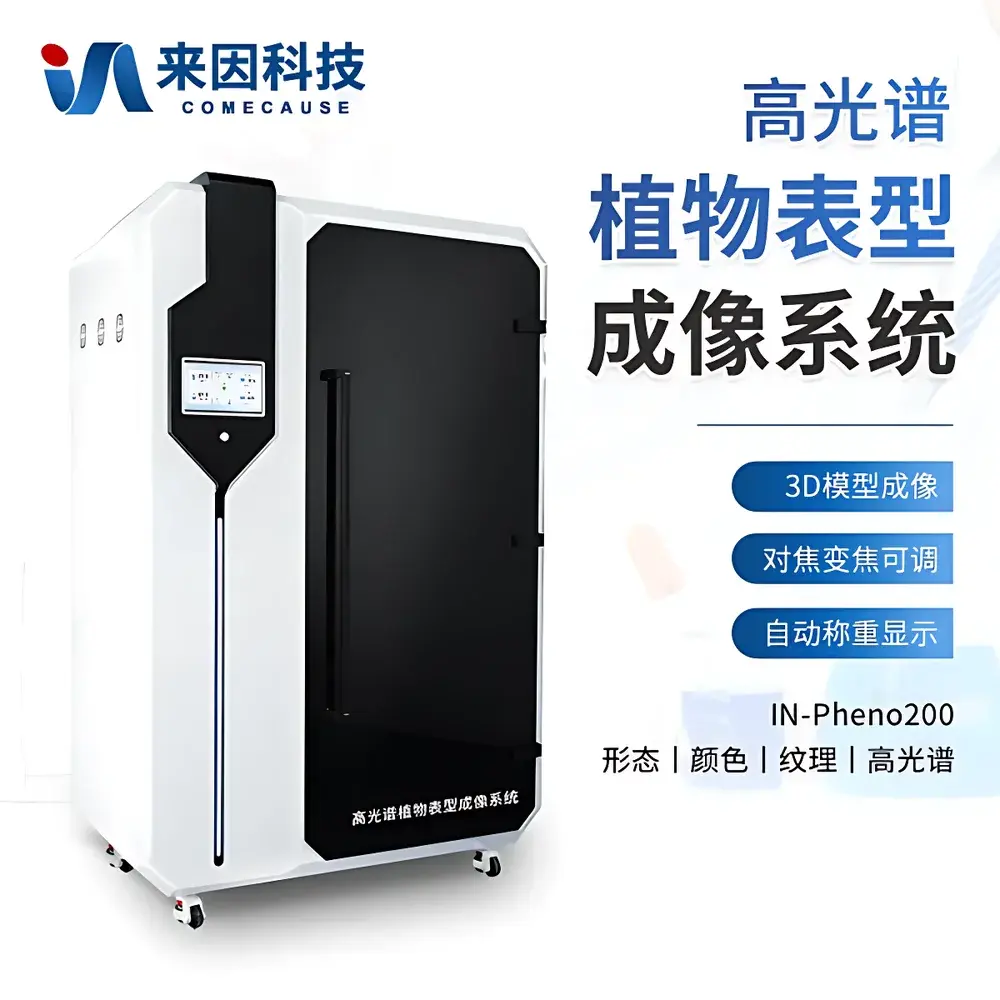
COMECAUSE IN*Pheno200 High-Spectral Plant Phenotyping Imaging System with 3D Structural Reconstruction
| Brand | COMECAUSE |
|---|---|
| Origin | Shandong, China |
| Manufacturer Type | OEM Manufacturer |
| Country of Origin | China |
| Model | IN*Pheno200 |
| Price | USD 76,500 (FOB Qingdao) |
| Plant Height Range | 300–1000 mm |
| Plant Width Range | 100–500 mm |
| Fresh Weight Capacity | 100–75,000 g |
| Enclosure Dimensions | 1400 × 830 × 2140 mm (L×W×H) |
| Camera Resolution | Up to 12 MP |
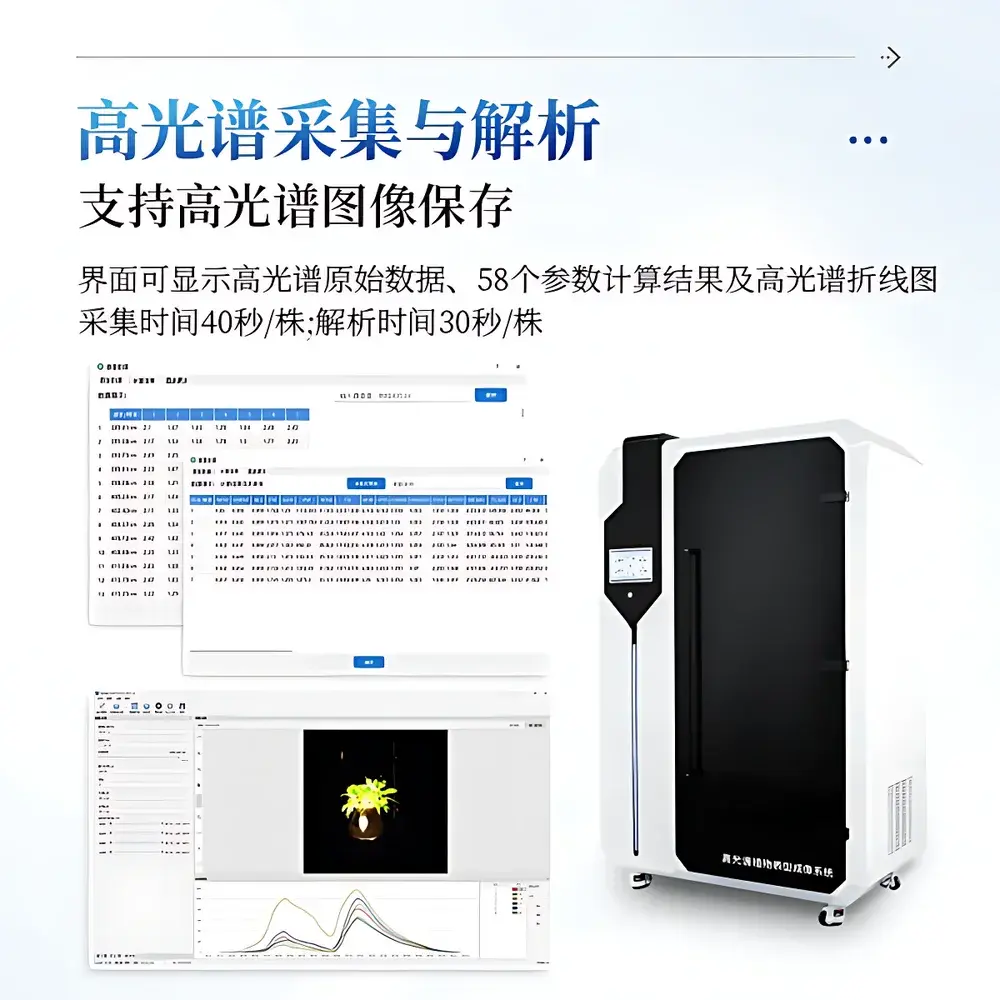
| Spectral Acquisition Time | 40 s per plant |
| Data Processing Time | ≤30 s per plant |
| Operating System | Windows 10/11 (64-bit) |
| GPU Requirement | NVIDIA GPU with ≥8 GB VRAM |
| CPU Requirement | Intel Core i5 or higher |
| RAM Requirement | ≥8 GB |
Overview
The COMECAUSE IN*Pheno200 is a fully integrated high-spectral plant phenotyping imaging system engineered for non-invasive, quantitative, and multi-dimensional characterization of plant structure, physiology, and biochemistry. It operates on the principle of push-broom hyperspectral imaging coupled with multi-angle visible-light photogrammetry, enabling simultaneous acquisition of spectral reflectance data across 200+ contiguous narrow bands (typically spanning 400–1000 nm) and spatially registered 2D/3D morphological data. Unlike conventional RGB or multispectral systems, the IN*Pheno200 captures a full reflectance spectrum at each pixel—generating a hyperspectral data cube (x, y, λ)—which serves as a biochemical fingerprint for in vivo quantification of chlorophyll a/b, carotenoids, anthocyanins, water content, nitrogen status, and secondary metabolites. The system integrates a motorized rotating turntable, three synchronized visible-light imaging units (top, upper-side, lower-side), and a calibrated hyperspectral line-scanning camera mounted on a precision linear stage. All optical paths are thermally stabilized and mechanically damped to ensure spectral fidelity and geometric reproducibility under controlled-environment conditions. Designed for laboratory-based high-throughput phenotyping, it supports standardized experimental protocols compliant with FAO, CGIAR, and EPPN2020 framework guidelines.
Key Features
- Tri-axial visible-light imaging architecture for complete 360° plant surface coverage without manual repositioning
- Automated adaptive imaging: real-time size estimation triggers optimal camera height adjustment and image stitching for oversized specimens
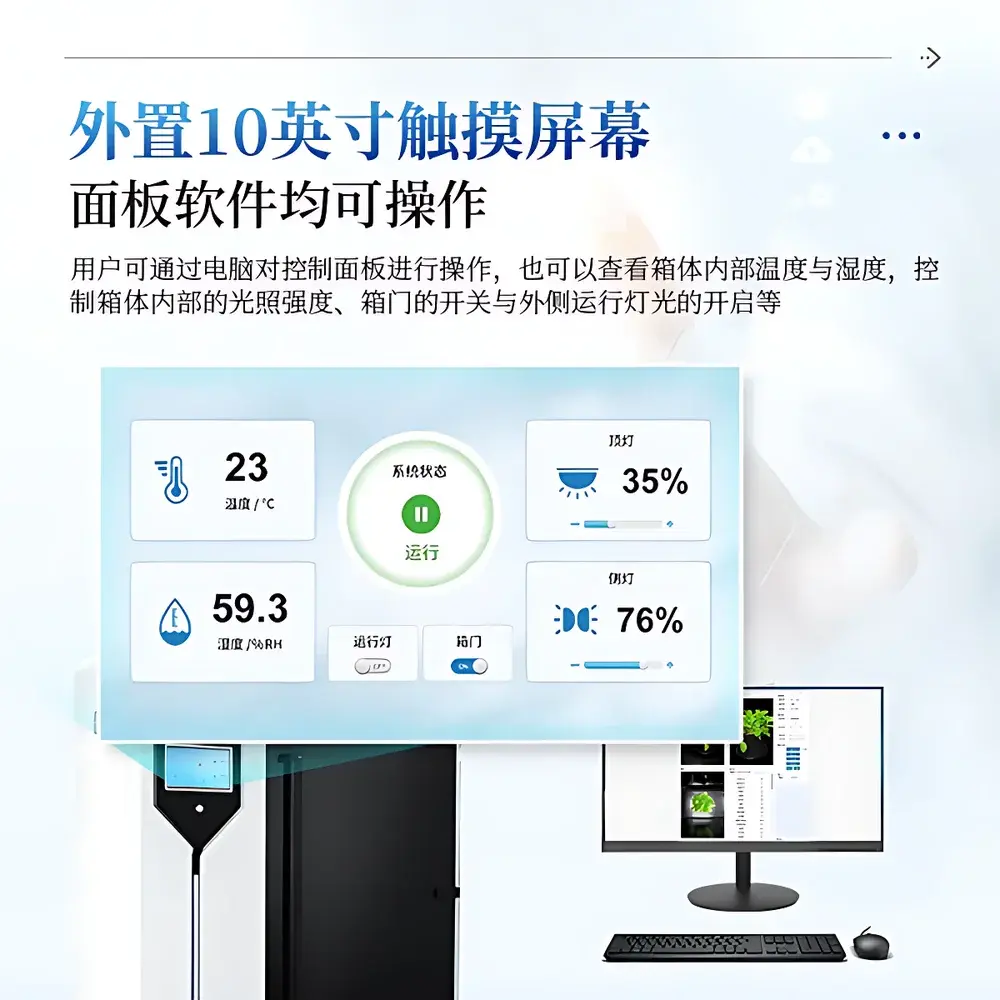
- Integrated environmental monitoring: onboard temperature and relative humidity sensors with logging capability (±0.3°C, ±2% RH)
- Motorized lens positioning: software-controlled vertical translation of optics (±150 mm range) and zoom/focus actuation for specimen-specific optical optimization
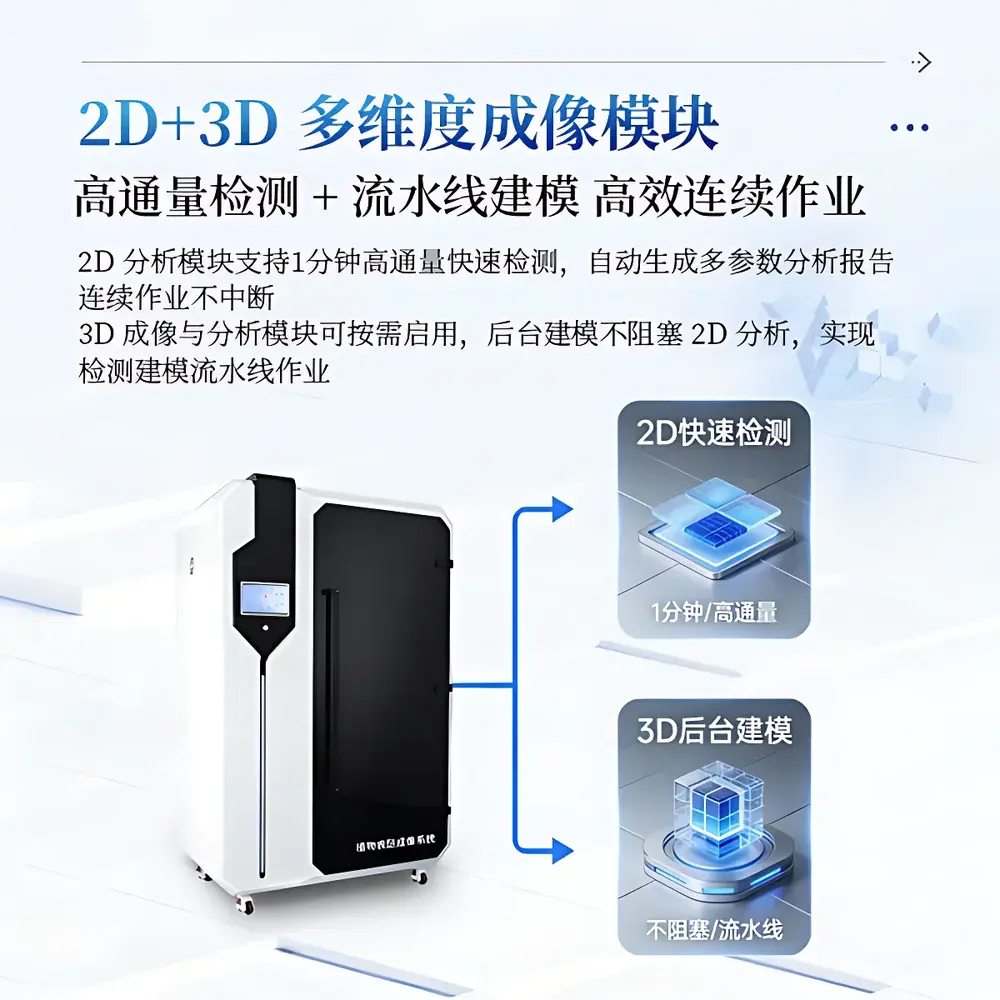
- Dual-mode analysis pipeline: parallel execution of 2D high-throughput screening (≤60 s/sample) and background-queued 3D reconstruction (mesh + texture mapping)
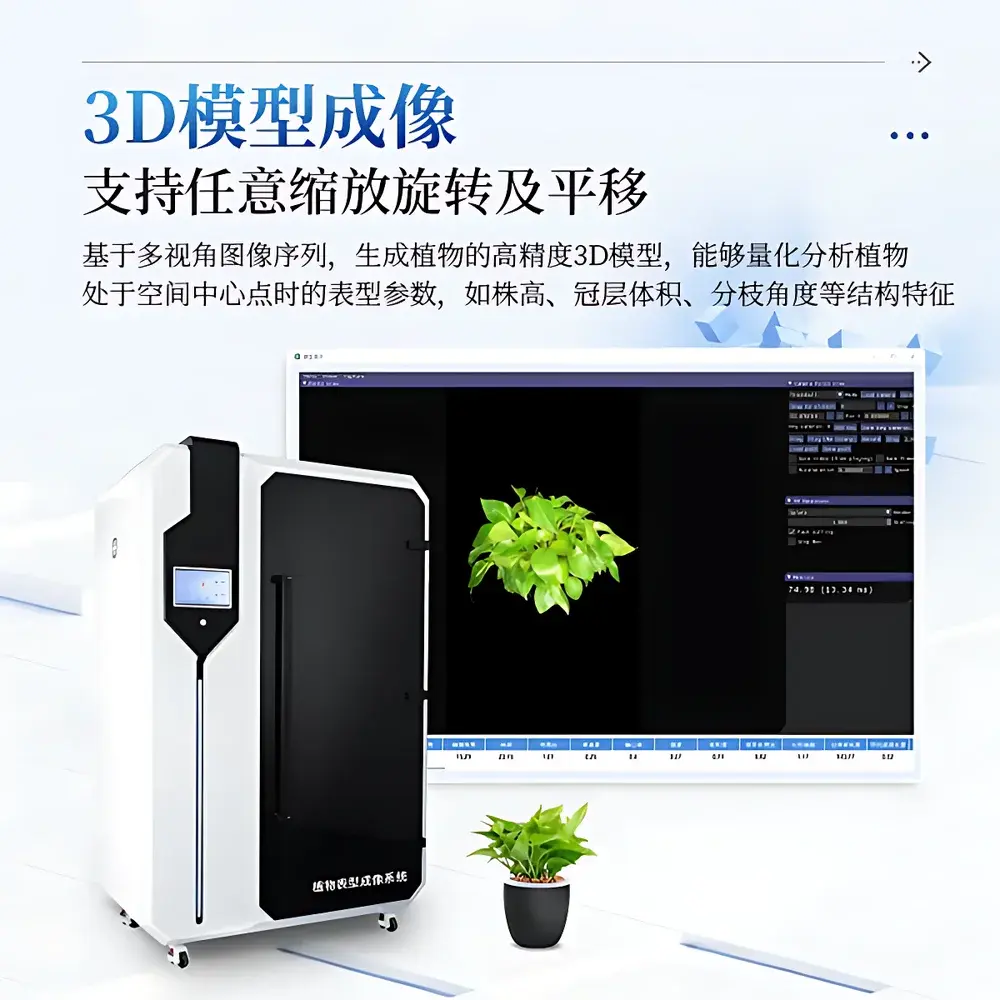
- High-fidelity 3D modeling: photogrammetric reconstruction from ≥12 multi-view images yields watertight meshes with sub-millimeter vertex accuracy; supports volumetric, angular, and topological parameter extraction (e.g., canopy volume, branch angle distribution, skeleton topology)
- Cloud-synced data management: encrypted upload of phenotypic parameters, spectral files (.spe), JSON-formatted analysis results, and annotated 3D model videos to secure S3-compatible storage
- Full hardware safety compliance: mechanical limit switches, IR proximity sensors, emergency stop circuitry, and interlocked enclosure doors meeting IEC 61000-6-2/6-4 EMC standards
Sample Compatibility & Compliance
The IN*Pheno200 accommodates intact, living plants across major botanical families—including Poaceae (e.g., rice, wheat, maize), Solanaceae (tomato, tobacco), Brassicaceae (Arabidopsis, rapeseed), and Fabaceae (soybean, pea)—within defined dimensional and mass limits (300–1000 mm height; 100–500 mm width; 100–75,000 g fresh weight). Its enclosed design enables reproducible measurements under standardized light spectra (programmable LED arrays, CCT 4000–6500 K), eliminating ambient interference. The system adheres to ISO/IEC 17025 principles for measurement traceability: hyperspectral calibration is performed using NIST-traceable reflectance standards (Spectralon®), and geometric calibration employs checkerboard-based Zhang’s method with residual reprojection error <0.3 pixels. All software modules comply with ALCOA+ data integrity criteria; audit trails, electronic signatures, and role-based access control are implemented per FDA 21 CFR Part 11 requirements for regulated research environments.
Software & Data Management
The proprietary IN*PhenoSuite v3.2 software provides a unified interface for instrument control, acquisition, processing, and reporting. It features modular architecture with validated analytical engines: (1) a 2D morphometric engine computing 42 shape descriptors (e.g., convex hull perimeter ratio, fractal dimension, ASM, SSIM); (2) a colorimetric module calculating CIELAB (D65/2°), HSV, and grayscale statistics separately for top and side views; (3) a texture analysis library implementing GLCM-derived metrics (contrast, homogeneity, entropy, variance); and (4) a hyperspectral quantification module applying peer-reviewed vegetation indices (e.g., NDVI, PRI, WI, NDI) and custom PLSR/MLR models trained on reference biochemical assays. Raw data export supports open formats: .spe (ENVI-compatible), .csv (tabular phenotypes), .json (structured metadata + derived parameters), .ply/.obj (3D mesh), and .mp4 (rotational model playback). All operations generate timestamped, immutable log entries with user ID, parameter set, and checksum validation—ensuring full GLP/GMP audit readiness.
Applications
The IN*Pheno200 delivers actionable phenotypic intelligence across translational plant science domains. In functional genomics, it enables high-resolution mapping of QTLs associated with drought-responsive stomatal conductance gradients or nitrogen-use efficiency via spatially resolved spectral derivatives (e.g., first-derivative absorption at 970 nm for water index). In breeding programs, it accelerates selection cycles by identifying elite lines exhibiting stable photosynthetic performance under controlled abiotic stress—quantified through time-series canopy-level PRI dynamics and chlorophyll fluorescence proxies. For precision agronomy R&D, it validates sensor fusion algorithms by providing ground-truth 3D structural + spectral datasets for UAV- and satellite-based crop monitoring models. In ecotoxicology, it detects early biomarkers of heavy metal stress (e.g., cadmium-induced anthocyanin shifts at 530 nm) before visible symptomatology emerges. Its capacity to co-localize anatomical structure (from 3D mesh) with biochemical distribution (from hyperspectral maps) makes it indispensable for mechanistic studies linking genotype to phenotype across scales—from leaf mesophyll organization to whole-canopy resource partitioning.
FAQ
What spectral range and resolution does the hyperspectral camera cover?
The system utilizes a cooled CCD-based line-scan spectrometer covering 400–1000 nm with spectral sampling intervals of ≤3 nm and optical resolution (FWHM) of 5 nm. Calibration is traceable to NIST SRM 2035.
Is the 3D reconstruction algorithm validated against physical measurements?
Yes—validation studies using laser-scanned ground-truth phantoms and destructively measured Arabidopsis rosettes show mean absolute error of 0.82 mm for height, 1.34 mm for width, and R² = 0.987 for projected area.
Can the system operate outside controlled-environment chambers?
It is designed for indoor use only; ambient light rejection is achieved via active shutter synchronization and spectral bandpass filtering—not suitable for field deployment.
Does the software support custom model training for novel traits?
Yes—IN*PhenoSuite includes a Python API (v3.2+) enabling integration of user-trained scikit-learn or PyTorch models; exported .csv/.npy files are compatible with standard ML workflows.
What maintenance is required for long-term spectral stability?
Annual recalibration using factory-provided reflectance standards and dark-current correction routines is recommended; no consumables or optical alignment tools are required during routine operation.



