
Compton Camera Gamma-Ray Imager Spectrometer V2 by Damavan Imaging
| Origin | France |
|---|---|
| Manufacturer Type | Authorized Distributor |
| Origin Category | Imported |
| Model | V2 |
| Price | USD 138,000 (FOB) |
Overview
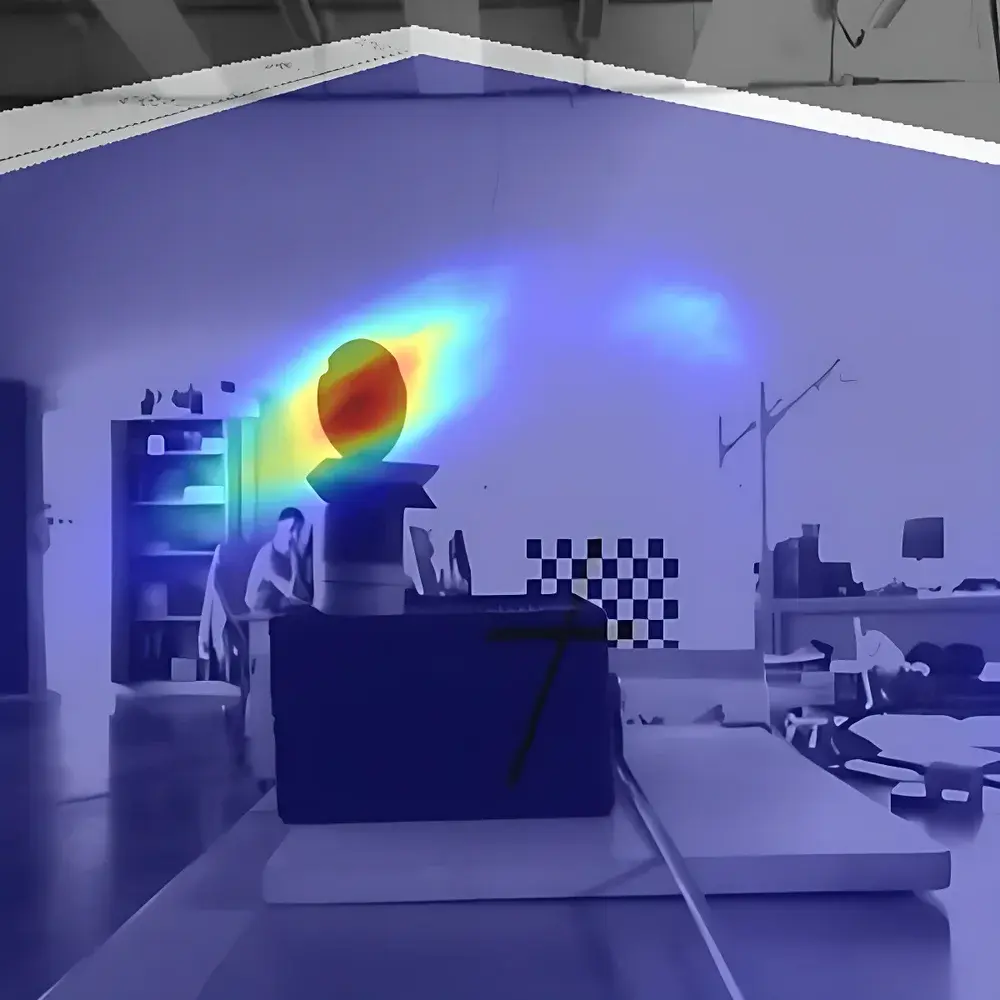
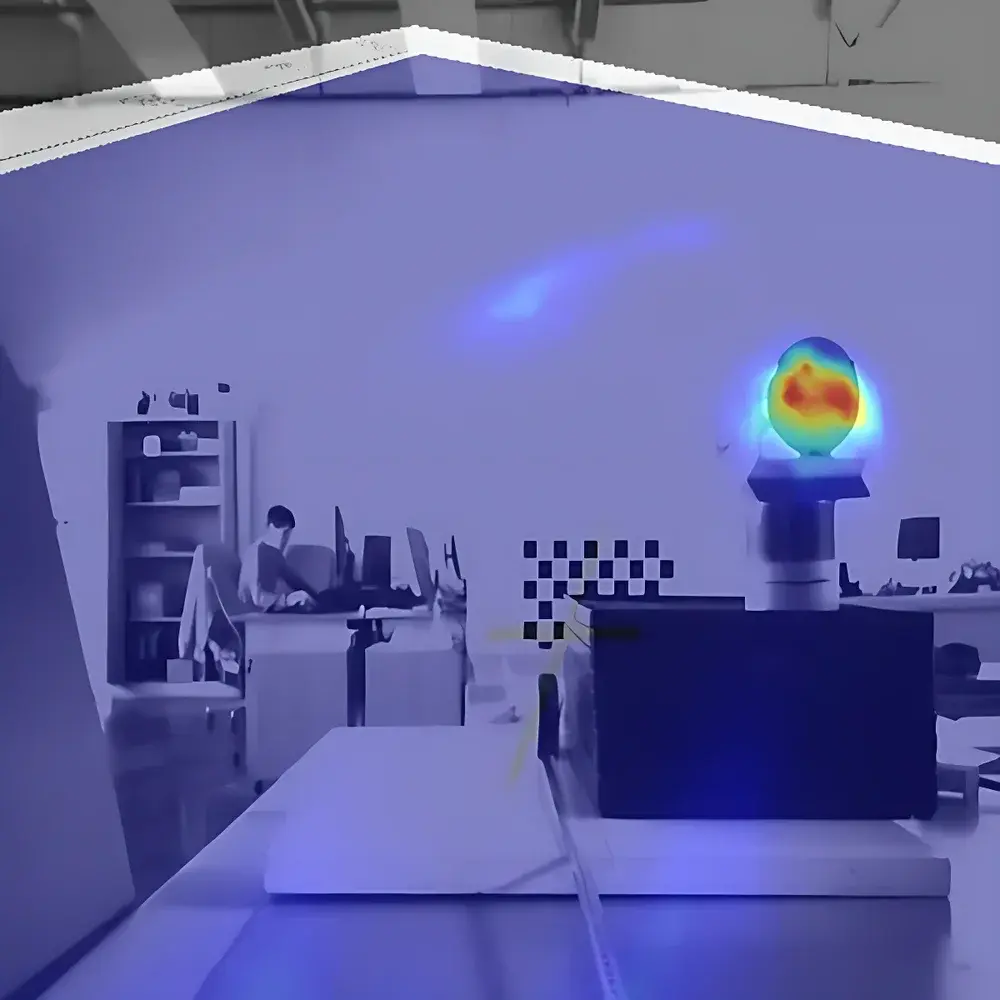
The Compton Camera Gamma-Ray Imager Spectrometer V2 is a next-generation portable radiation imaging system developed by Damavan Imaging (France), engineered for high-fidelity, energy-resolved gamma-ray imaging based on temporal coincidence and Compton kinematics. Unlike conventional collimated or coded-aperture gamma cameras, the V2 implements Temporal δ imaging—a novel paradigm that reconstructs the 4D event space (X, Y, Z, T) and energy (E) of each scintillation interaction by precisely measuring the spatiotemporal distribution of optical photons in CeBr3 crystals. This approach eliminates mechanical collimation, enabling electronic focusing and background suppression via time-gated, energy-selective reconstruction. Designed for field-deployable operation in nuclear safety, decommissioning, and environmental monitoring, the V2 delivers isotropic angular resolution down to 1° (energy-gated), sub-300 ps coincidence timing, and spectroscopic capability across 100 keV–3 MeV—making it uniquely suited for discriminating mixed radionuclide fields and imaging extended or overlapping sources.
Key Features
- Temporal δ Imaging Architecture: Leverages ultrafast photodetection and waveform digitization to resolve photon arrival times and positions with picosecond precision, enabling Compton event reconstruction without physical collimators.
- Dual 32×32 mm CeBr3 Scintillator Array: High-light-yield, fast-decay crystal configuration optimized for 511 keV and 662–1332 keV gamma lines; provides intrinsic detection efficiency >12% at 662 keV (unshielded).
- Energy-Resolved Imaging: Simultaneous spectral acquisition and spatial mapping across 400 keV–3 MeV (imaging mode) and 100 keV–3 MeV (spectroscopy mode); energy resolution <7% FWHM at 662 keV (Cs-137), <1.5% at 1.332 MeV (Co-60) under gated conditions.
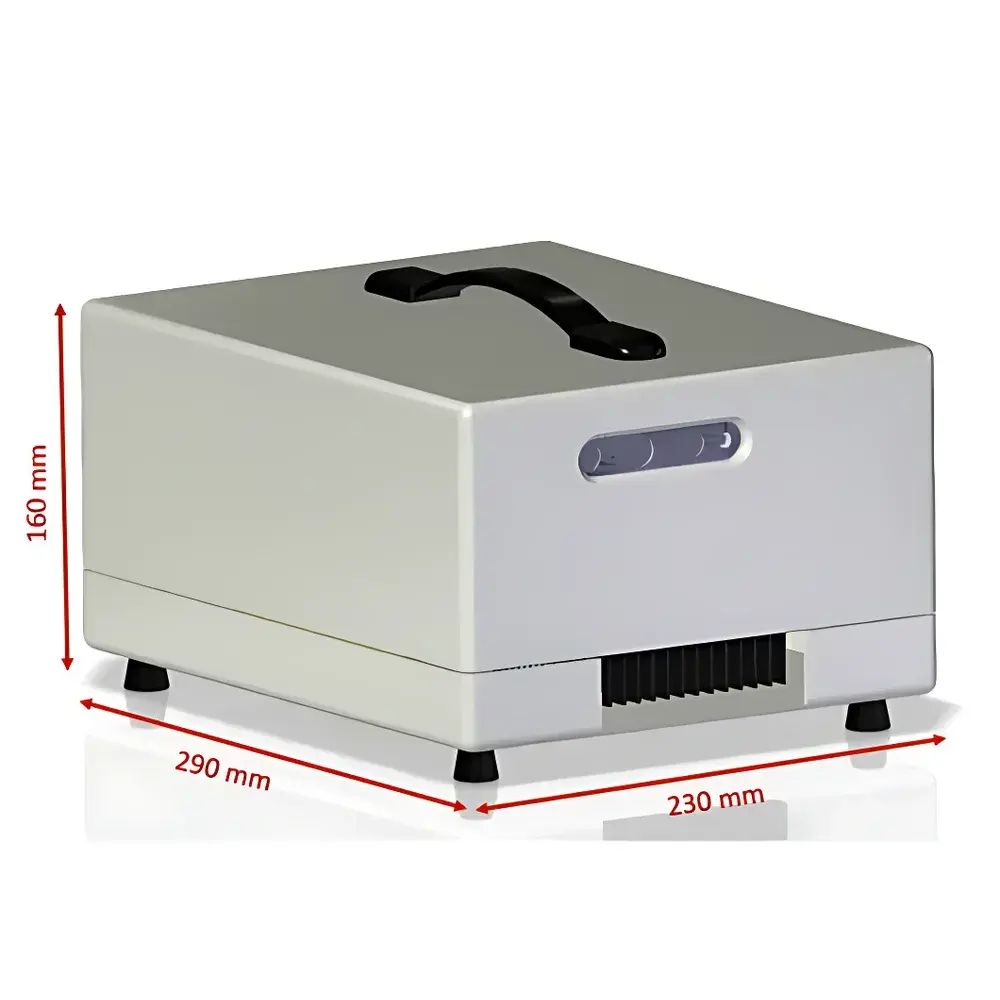
- Portable Ruggedized Design: Integrated detector and processing unit (21 × 29 × 16 cm, 3.9 kg); active temperature stabilization ensures spectral stability across −20°C to +50°C ambient range.
- Electronic Source Gating: Time- and energy-windowing capability allows selective suppression of dominant isotopes (e.g., Co-60 at 1332 keV), revealing weak secondary sources otherwise masked in conventional imaging.
- Real-Time Data Streaming: Ethernet interface (Gigabit) and optional Wi-Fi (IEEE 802.11ac) support remote acquisition, live reconstruction, and integration into centralized radiation monitoring networks.
Sample Compatibility & Compliance
The V2 is compatible with point, distributed, and extended radioactive sources—including natural radionuclides (K-40, U-238 series, Th-232 series), medical isotopes (Tc-99m, I-131, F-18), and industrial emitters (Co-60, Cs-137, Ir-192). Its energy calibration traceability aligns with ISO/IEC 17025-accredited procedures, and spectral data output conforms to ANSI N42.42-2022 (radiation spectroscopy data format). The system supports audit-ready metadata logging (timestamp, GPS if equipped, temperature, HV settings) required for GLP-compliant environmental surveys and IAEA safeguards verification workflows.
Software & Data Management
Acquisition and reconstruction are managed via Damavan’s proprietary TempoView software suite (Windows/Linux), which includes real-time Compton back-projection, maximum-likelihood expectation-maximization (MLEM), and energy-gated tomographic slicing. All raw waveforms and reconstructed sinograms are stored in HDF5 format with embedded calibration metadata. Software features FDA 21 CFR Part 11–compliant user access control, electronic signatures, and immutable audit trails for QA/QC documentation in regulated nuclear facilities. Export options include DICOM-SR (for radiological health records), CSV (for dose rate modeling), and GeoTIFF (for GIS-integrated contamination mapping).
Applications
- Nuclear facility decommissioning and waste characterization (e.g., identifying hot spots in spent fuel casks or contaminated concrete)
- Environmental radioactivity mapping (soil, sediment, water effluents) with isotopic discrimination
- Medical physics: verification of radiopharmaceutical distribution in phantoms and preclinical models
- Border security and customs screening for illicit radioactive materials (SNM, RDDs)
- Emergency response: rapid localization of orphan sources or post-accident dispersion patterns
- Regulatory compliance: routine dose rate verification, ALARA monitoring, and license condition reporting
FAQ
What is the minimum detectable activity (MDA) for Cs-137 at 1 meter?
The V2 achieves an MDA of 1 kBq for Cs-137 at 1 m within a 2-hour acquisition under typical background conditions (0.1 μSv/h), as validated per ISO 11929:2019.
Can the system operate unattended for long-term monitoring?
Yes—when connected to external power and a ruggedized laptop or edge server, the V2 supports continuous acquisition with automated daily calibration checks and cloud-synced data backup.
Is CZT add-on module included in the base V2 configuration?
No—the CZT pixelated spectrometer is an optional upgrade for enhanced low-energy sensitivity (<100 keV) and improved photopeak identification; base V2 relies on CeBr3 for optimal performance above 400 keV.
Does the system meet IEC 62327:2017 requirements for handheld radiation imagers?
The V2 satisfies all mechanical, electrical safety, and electromagnetic compatibility clauses of IEC 62327:2017; its angular resolution and energy linearity have been independently verified per IEC 62495:2013 Annex B.
How is energy calibration maintained during field use?
Active temperature stabilization of the CeBr3 array, combined with on-board 22Na reference source pulses (optional), enables drift correction to ≤0.05% channel shift over 8 hours.





