
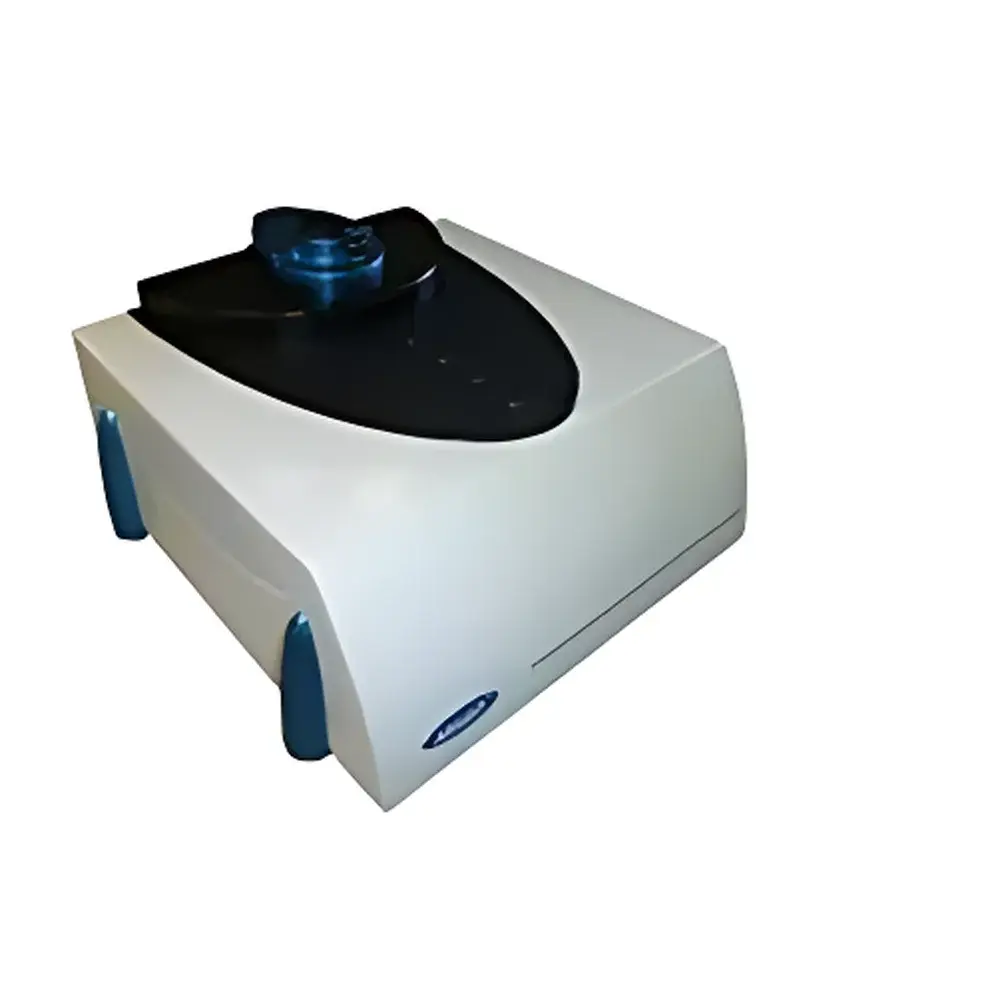
CORDOUAN Arago ε/ω/∞ Refractometer
| Origin | France |
|---|---|
| Manufacturer Type | Authorized Distributor |
| Origin Category | Imported |
| Model | Arago ε / Arago ω / Arago ∞ |
| Price | Upon Request |
Overview
The CORDOUAN Arago ε/ω/∞ Refractometer is a high-precision, temperature-controlled laboratory instrument engineered for absolute refractive index (nD) measurement of transparent to highly absorbing liquid samples. Unlike conventional Abbe-type refractometers, the Arago series employs critical-angle measurement via total internal reflection at the sample–prism interface—operating on the fundamental optical principle of Snell’s law under controlled thermal conditions. Its design eliminates reliance on visual interpolation or subjective scale reading, replacing it with digital laser-based angular detection and real-time Peltier-driven temperature stabilization. This architecture delivers metrological traceability aligned with ISO 17025–accredited calibration practices and supports compliance-critical workflows in regulated environments including food safety (Codex Alimentarius), pharmaceutical QC (USP , EP 2.2.2), and petrochemical analysis (ASTM D1218, ISO 2592).
Key Features
- Three modular configurations (Arago ε, ω, ∞) optimized for distinct refractive index ranges and sample classes—from low-index hydrocarbons to high-index molten polymers and ionic liquids.
- Ultra-high resolution: up to ±0.000001 nD (Arago ∞), enabled by stabilized 658 nm laser diode illumination and sub-microradian angular detection.
- Peltier-controlled prism temperature regulation: 15 °C to 80 °C (Arago ∞), with ±0.01 °C stability, ensuring thermally invariant measurements per ISO 21148.
- Prism material options: BK7 optical glass (ε), fused silica (ω), or sapphire (∞)—each selected for chemical inertness, thermal conductivity, and transmission window compatibility.
- Sample chamber constructed from electropolished 316 stainless steel or Inconel® 625 alloy—resistant to corrosion, thermal shock, and aggressive solvents.
- Fresnel-angle compensation algorithm eliminates systematic error near nD = 1.0, enabling accurate measurement of volatile, dark, or low-refractive-index fluids without dilution or filtration.
- Integrated eye-safety interlock: automatic laser shutoff upon chamber opening, compliant with IEC 60825-1 Class 1 requirements.
- Intuitive 7-inch capacitive touchscreen interface with multilingual (English/French) GUI; full remote control via USB 2.0 and native Windows/Linux drivers.
Sample Compatibility & Compliance
The Arago platform accommodates samples ranging from volatile light hydrocarbons (e.g., pentane, ether) to viscous, opaque, or thermally sensitive media—including crude oil fractions, essential oils, syrups, honey, polymer melts, and pharmaceutical excipients. Its non-destructive, <100 µL sample requirement minimizes waste and enables repeat testing under identical thermal history. All models meet CE marking requirements and are validated for GLP/GMP environments: audit trails, electronic signatures, and 21 CFR Part 11–compliant software modules (optional) support FDA-regulated laboratories. Calibration traceability is maintained to NIST SRM 1484 (refractive index standards) and accredited national metrology institutes.
Software & Data Management
CORDOUAN’s proprietary AragoControl™ software provides full instrument orchestration—including automated temperature ramping, multi-point calibration, Brix/sugar concentration conversion (per ICUMSA Method GS4/4-12), and density correlation tables (ASTM D1250). Data export supports CSV, XML, and PDF report generation with embedded metadata (operator ID, timestamp, environmental conditions, calibration certificate ID). Version-locked firmware ensures reproducibility across installations; software updates are delivered via secure HTTPS portal with SHA-256 integrity verification. Optional LIMS integration (via ASTM E1384-compliant HL7 messaging) enables seamless data flow into enterprise quality management systems.
Applications
- Petrochemical QC: Refractive index profiling of naphtha, kerosene, and reformate streams for hydrocarbon type characterization (paraffinic vs. naphthenic vs. aromatic content) per IP 177 and ASTM D1218.
- Food & Beverage: Direct Brix determination in fruit juices, syrups, and fermented beverages; validation of olive oil authenticity (EU Regulation No. 2568/91); monitoring starch hydrolysis in corn syrup production.
- Pharmaceuticals: Excipient identity verification (e.g., propylene glycol, glycerin, PEGs); purity assessment of volatile active ingredients (e.g., menthol, camphor) without solvent interference.
- Flavor & Fragrance: Batch-to-batch consistency control of essential oils (citrus, lavender, eucalyptus) where minor adulteration alters nD beyond ±0.00005.
- Academic Research: Solvation studies, polymer solution thermodynamics, and ionic liquid phase behavior—leveraging the ∞ model’s extended range up to nD = 3.10.
FAQ
What is the minimum sample volume required for measurement?
Typically 50–80 µL, depending on prism geometry and surface tension. The Arago ∞ model supports as little as 30 µL for high-viscosity samples using optional micro-chamber accessories.
Can the instrument measure turbid or colored liquids?
Yes. Unlike traditional refractometers, the Arago series uses collimated laser detection at the critical angle—not transmitted intensity—making it insensitive to optical absorption or scattering. Validation data exists for black bitumen, caramelized sucrose solutions, and anthocyanin-rich grape must.
Is temperature calibration traceable to national standards?
Yes. Each unit ships with a factory calibration certificate traceable to LNE (Laboratoire National de Métrologie et d’Essais, France) and includes on-board PT100 sensor verification against certified reference thermometers per ISO/IEC 17025.
Does the software support automated compliance reporting for FDA audits?
With the optional 21 CFR Part 11 Module, AragoControl™ provides electronic signatures, role-based access control, immutable audit logs, and electronic record retention—all validated per Annex 11 and ALCOA+ principles.
How often does the instrument require recalibration?
Annual calibration is recommended for routine QC use. For GMP environments, calibration frequency follows risk-based assessment per ICH Q9; drift monitoring via daily standard checks (e.g., distilled water, certified sugar standards) is supported in software.



