
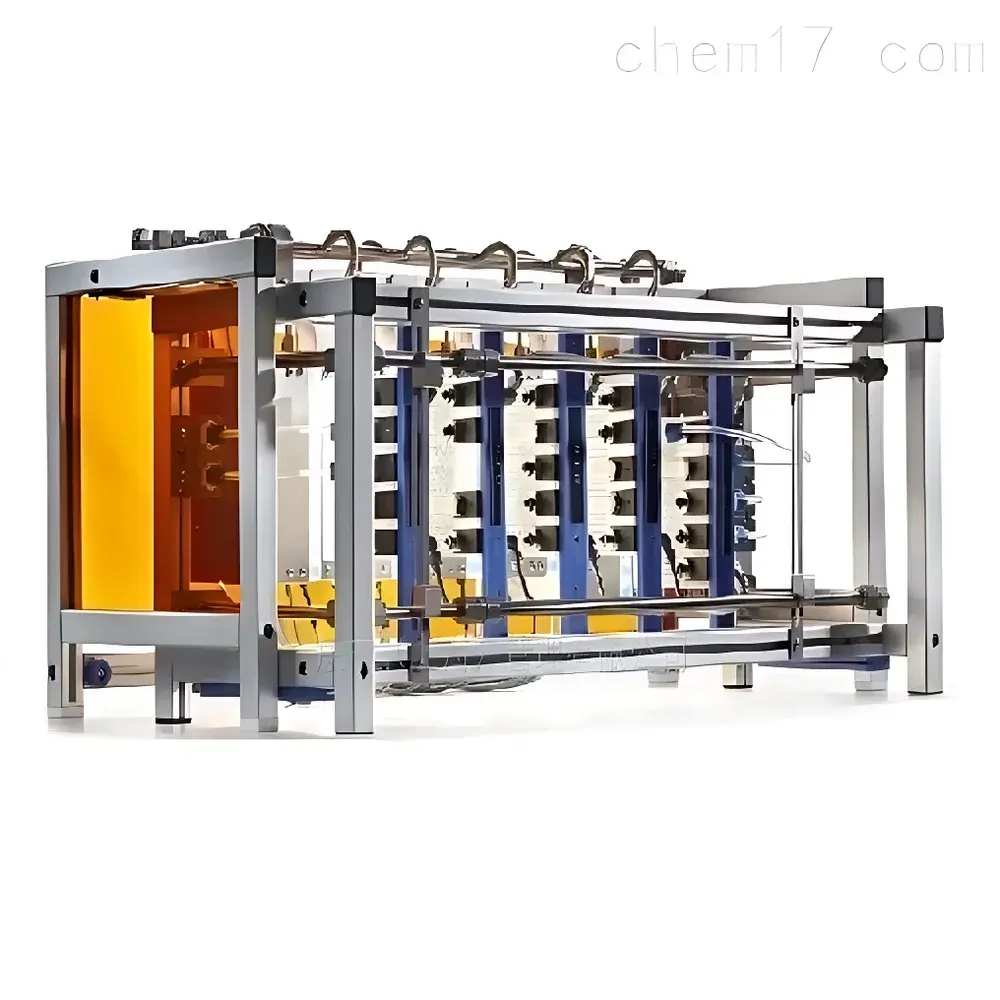
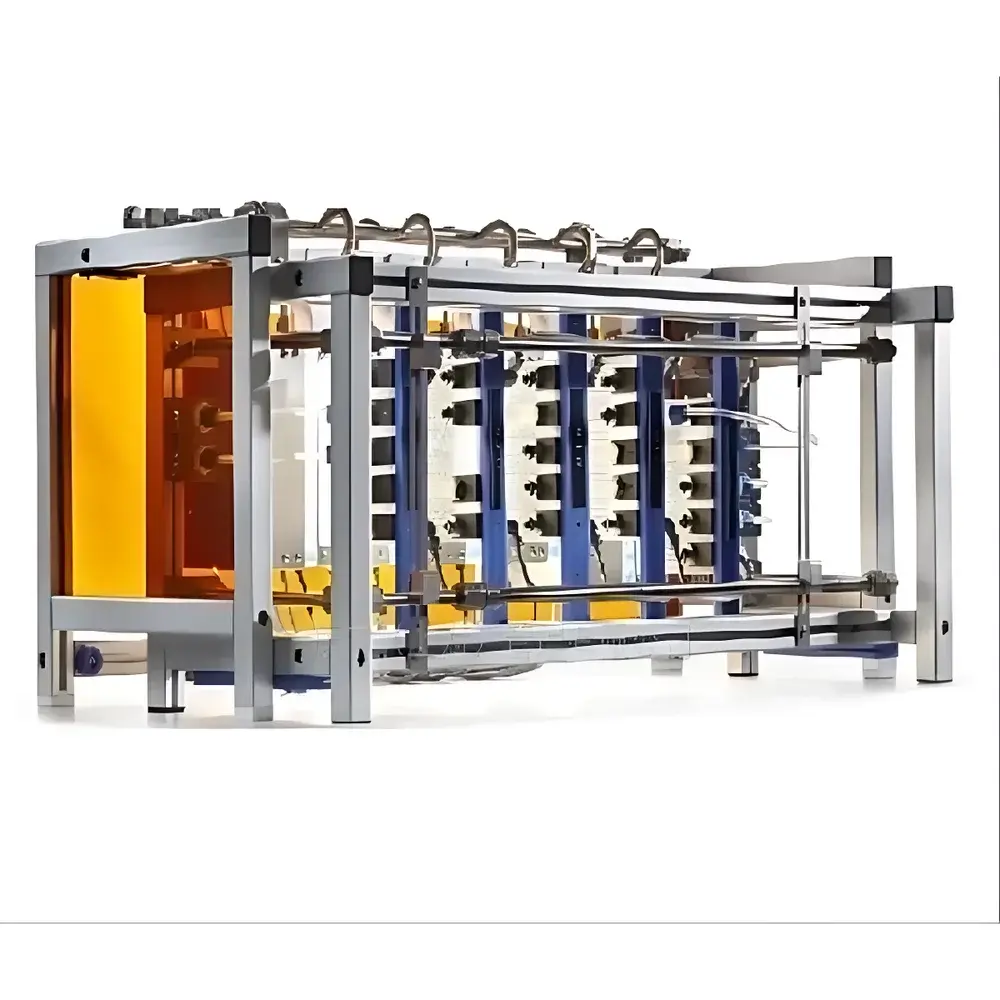
Corning Advanced-Flow® G1 Photochemical Microchannel Reactor
| Brand | Corning |
|---|---|
| Origin | USA |
| Manufacturer Status | Authorized Distributor |
| Product Category | Imported Instrument |
| Model | G1 Photochemical |
| Instrument Type | Microchannel Reactor |
| Usable Volume | Small-scale |
| Construction Material | Borosilicate Glass |
| Operating Pressure | Low-pressure (up to 18 bar) |
| Flow Rate Range | 15–250 mL/min |
| LED Wavelength Options | 365 nm, 385 nm, 405 nm, 485 nm, 610 nm, and 4000 K White Light |
| Illumination Intensity | Up to 100 mW/cm² |
| Illumination Geometry | Dual-side transverse illumination through glass walls |
| Thermal Management | Integrated liquid-cooled LED array |
| Scalability Path | Direct process transfer to Corning G3 Photochemical Reactor |
Overview
The Corning Advanced-Flow® G1 Photochemical Microchannel Reactor is an engineered platform for precise, scalable, and reproducible photochemical synthesis under continuous flow conditions. Built upon Corning’s proprietary Advanced-Flow® microstructured glass reactor architecture, the G1 Photochemical variant integrates a purpose-built, multi-wavelength LED illumination system directly into the reactor housing—enabling uniform photon delivery across all microchannels via dual-side transverse illumination. Unlike conventional batch photoreactors suffering from exponential light attenuation and thermal gradients, this system leverages the intrinsic optical transparency and thermal stability of borosilicate glass to ensure consistent photon flux, rapid heat dissipation, and high mass-transfer efficiency. The device operates on the principle of laminar flow photolysis within precisely defined microchannels (hydraulic diameter < 1 mm), where residence time, irradiance, and mixing are independently controllable parameters—critical for kinetic studies, quantum yield determination, and reaction optimization in photo-redox catalysis, [2+2] cycloadditions, C–H functionalization, and singlet oxygen-mediated oxidations.
Key Features
- Monolithic borosilicate glass reactor core with chemically inert, UV-transparent walls—ensuring compatibility with aggressive reagents (e.g., halogenated solvents, strong acids/bases) and minimizing photocatalyst adsorption or leaching.
- Dual-side LED illumination architecture providing >95% spatial uniformity of irradiance across the entire active channel volume—validated per ASTM E2917 for radiometric mapping.
- Modular, multi-array LED system supporting six discrete wavelengths (365, 385, 405, 485, 610 nm, and 4000 K white) with independent intensity control (0–100 mW/cm²) per zone—enabling wavelength-dependent reaction screening and spectral optimization.
- Liquid-cooled LED subassemblies maintaining junction temperatures < 45 °C during extended operation—extending diode lifetime beyond 15,000 hours and eliminating thermal drift in irradiance output.
- Integrated pressure monitoring and safety interlocks compliant with PED 2014/68/EU; maximum operating pressure rated at 18 bar (261 psi) with burst pressure > 54 bar.
- Scalable modular design: up to five G1 modules can be serially connected while preserving laminar flow profiles and photon flux homogeneity—facilitating residence time distribution (RTD) studies and multi-step photochemical sequences.
Sample Compatibility & Compliance
The G1 Photochemical Reactor accommodates a broad range of liquid-phase photochemical systems—including homogeneous photocatalytic reactions (e.g., Ru(bpy)₃²⁺, Ir(ppy)₃), heterogeneous semiconductor suspensions (TiO₂, CdS), and direct substrate excitation pathways. Its all-glass fluidic path eliminates metal contamination risks critical in pharmaceutical intermediate synthesis (aligned with ICH Q5A and USP ). The system supports GLP-compliant operation when paired with validated data acquisition software: full audit trail, electronic signatures, and 21 CFR Part 11–compliant user access controls are achievable via optional Corning FlowManager™ integration. Reaction protocols adhere to ISO 17025 calibration traceability standards for flow rate (±0.5% FS) and temperature (±0.2 °C) instrumentation.
Software & Data Management
Corning FlowManager™ software (v3.2+) provides real-time synchronization of flow rate, LED intensity/wavelength, reactor temperature, and backpressure—enabling closed-loop parameter optimization and DoE-driven experimental planning. All sensor data are timestamped and stored in vendor-neutral HDF5 format, supporting post-acquisition analysis in MATLAB, Python (via h5py), or commercial chemometrics platforms. Batch export includes metadata tags for wavelength-specific quantum efficiency calculations and conforms to ISA-88/ISA-95 data structuring conventions for seamless integration into LIMS or MES environments in regulated manufacturing settings.
Applications
- Development of photoredox-catalyzed C–N and C–O bond formations under GMP-aligned conditions for API intermediates.
- High-throughput screening of photocatalyst performance across UV–vis spectrum—reducing screening time by >70% versus batch alternatives.
- Kinetic modeling of photochemical elementary steps using controlled residence time distributions and calibrated actinometry (ferrioxalate or potassium iodide methods).
- Process intensification of ozone- or singlet oxygen–mediated oxidations in fine chemical synthesis—achieving >99% selectivity at 10× higher space-time yield than stirred-tank reactors.
- Technology transfer validation: identical reaction performance (conversion, selectivity, impurity profile) demonstrated between G1 lab-scale and G3 pilot-scale systems per Corning’s documented scale-up protocol (Corning Technical Bulletin AF-G1-G3-PT-2023).
FAQ
Is the G1 Photochemical Reactor suitable for reactions requiring deep-UV irradiation below 300 nm?
No—the borosilicate glass construction transmits effectively down to ~300 nm; for sub-300 nm applications (e.g., 254 nm mercury lamp chemistry), fused silica modules are available as custom-engineered variants.
Can the system operate with opaque or highly scattering slurries?
It is optimized for transparent or low-turbidity solutions; particle loadings >0.5 wt% may reduce photon penetration—slurry compatibility requires empirical validation using inline UV-Vis transmission probes.
What validation documentation is provided for regulatory submissions?
Factory calibration certificates (flow, temperature, pressure), material compliance declarations (USP Class VI, REACH, RoHS), and IQ/OQ protocols are supplied standard; PQ support is available upon request.
Does Corning offer application support for photochemical route development?
Yes—Corning’s Application Science Team provides remote and on-site technical assistance, including kinetic modeling, LED spectral matching, and seamless G1-to-G3 scale-up strategy development.



