
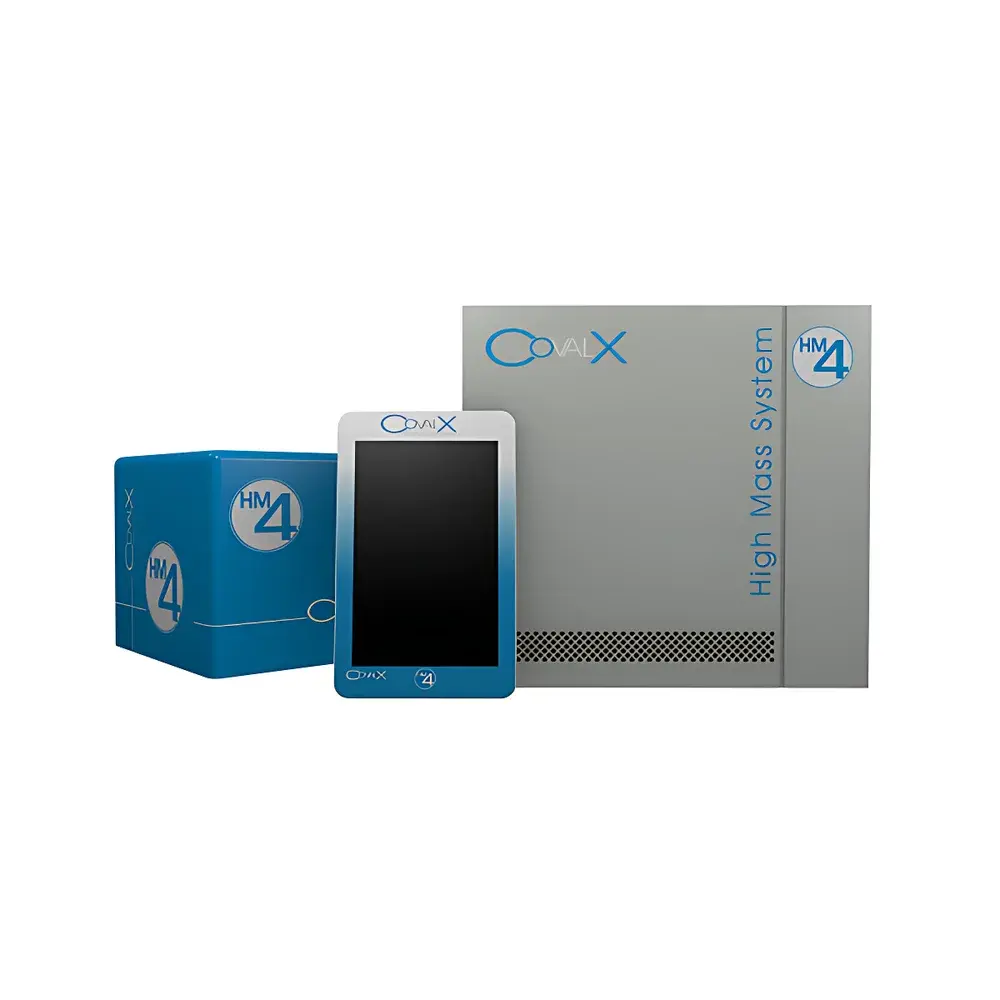
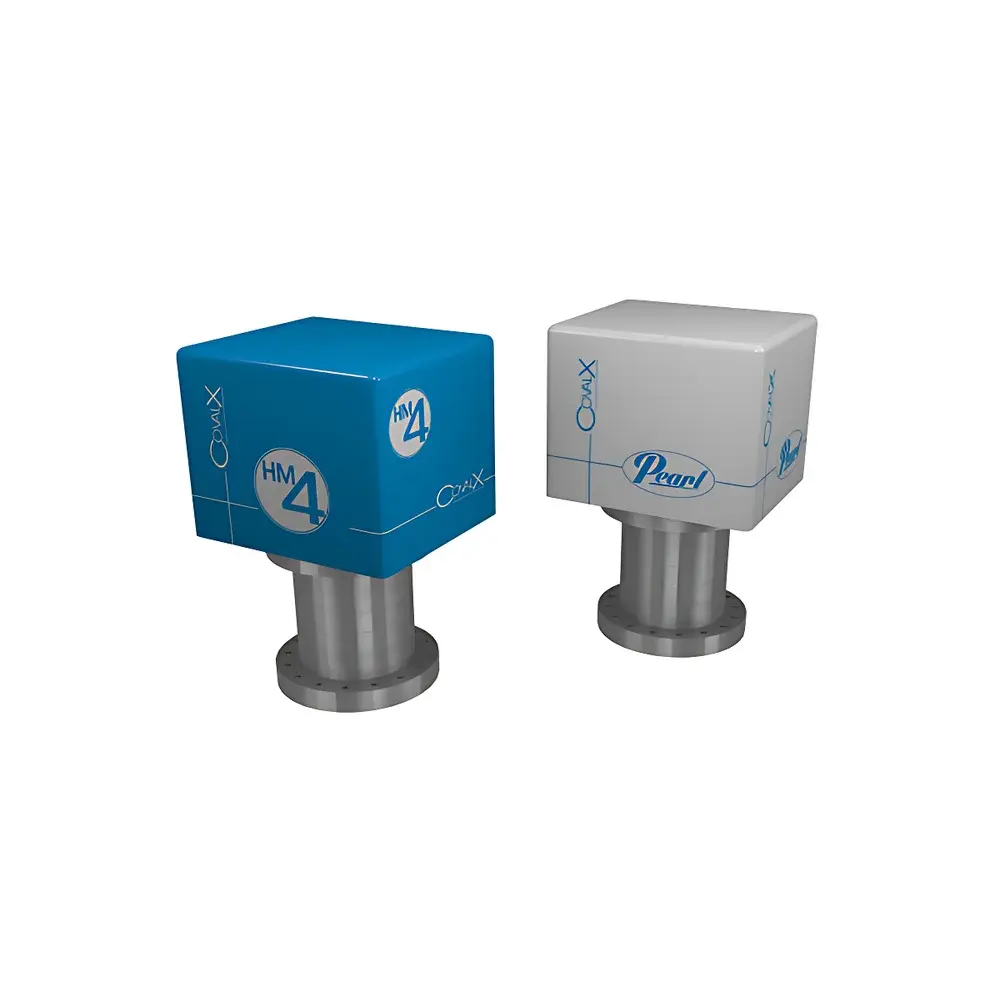
CovalX HM4 or Pearl Ultra-High Molecular Weight MALDI Detector System
| Brand | CovalX |
|---|---|
| Origin | Switzerland |
| Model | HM4 or Pearl |
| Compatibility | TOF and TOF/TOF Mass Spectrometers (Bruker, Shimadzu, SCIEX) |
| Detection Principle | Dual-Stage Dynode Conversion with High-Voltage Electron Multiplication |
| Mass Range | >2.5 MDa |
| Sensitivity | Sub-nM for Intact Protein Complexes |
| Vacuum Architecture | Integrated High-Vacuum Tube with Electroless Nickel Plating (Patent WO 2009086642) |
| Ion Polarity | Simultaneous Positive/Negative Mode Detection |
| Software | CovalX “ComplexTracer” Data Analysis Suite |
Overview
The CovalX HM4 or Pearl Ultra-High Molecular Weight MALDI Detector System is an engineered replacement detector module designed to overcome the fundamental mass and sensitivity limitations of conventional microchannel plate (MCP)-based detectors in MALDI-TOF and MALDI-TOF/TOF mass spectrometers. Unlike standard MCP detectors—whose signal gain collapses above ~100 kDa due to low secondary electron yield from slow-moving, high-mass ions and intrinsic “dead-time” saturation—the HM4/Pearl implements a patented dual-stage dynode conversion architecture. In this design, incident biomolecular ions first strike a primary dynode surface, generating heavy secondary ions rather than electrons. These secondary ions are then accelerated through a 20 kV field onto a second dynode, where they produce a robust, high-gain electron cascade via optimized electron multiplication. This physics-based innovation eliminates ion transmission bottlenecks and detector saturation, enabling quantitative detection of intact protein complexes, antibody–antigen assemblies, viral capsids, synthetic polymers, and supramolecular aggregates up to and beyond 2.5 MDa with sub-nanomolar sensitivity—without chromatographic pre-fractionation or charge-state deconvolution.
Key Features
- Dual-stage dynode conversion technology delivering linear response across an unprecedented mass range (>2.5 MDa), validated per ISO/IEC 17025-compliant performance verification protocols.
- Integrated high-vacuum tube assembly featuring electroless nickel plating (patented per WO 2009086642) to ensure leak-tight integrity at pressures <1×10⁻⁷ mbar—critical for maintaining ion transmission efficiency and signal-to-noise ratio in ultra-high-mass regimes.
- Simultaneous positive- and negative-ion mode detection capability, supporting redox-sensitive analysis and complementary structural interrogation of heterogeneous complexes.
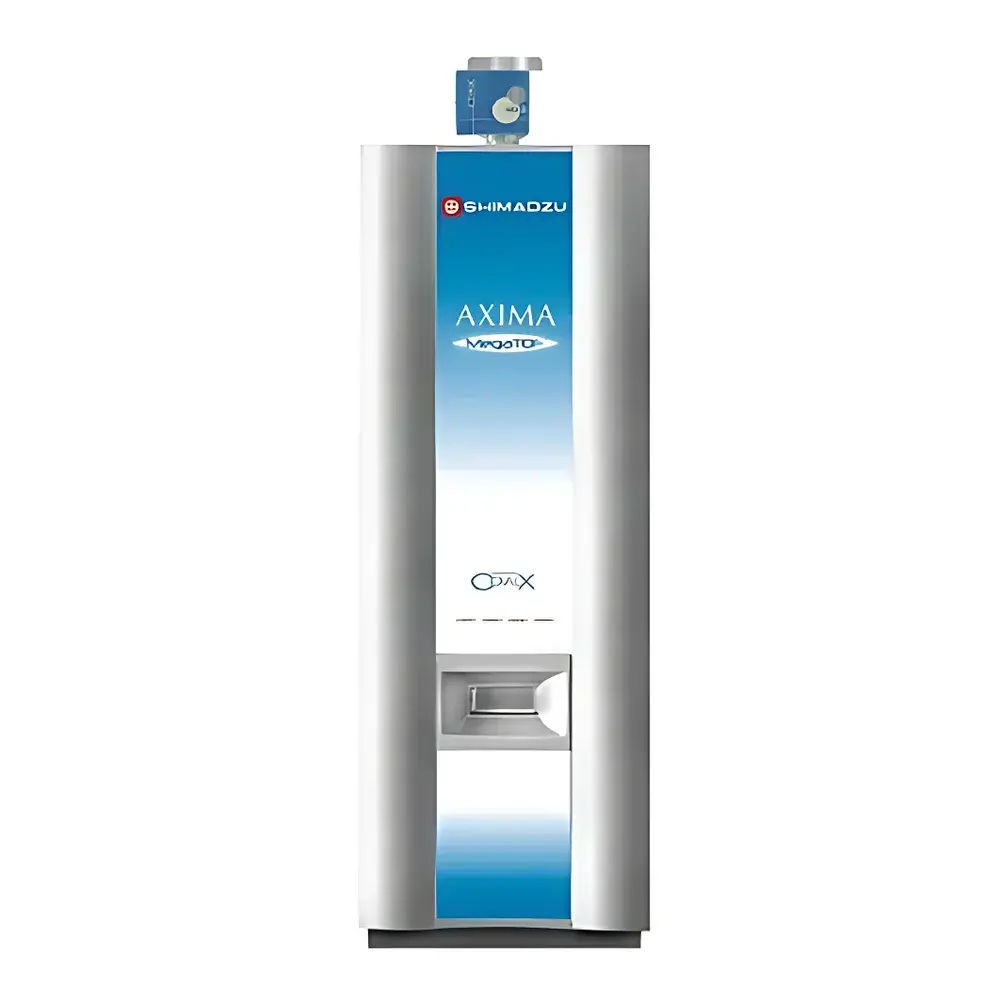
- Plug-and-play compatibility with commercial MALDI-TOF platforms from Bruker (ultrafleXtreme, rapifleX), Shimadzu (AXIMA series), and SCIEX (AXIOM). Requires only minor optical alignment and voltage recalibration; no hardware modification to the host instrument.
- HM Controller unit enables seamless, software-triggered switching between native MCP and HM4/Pearl detection modes—enabling direct side-by-side comparison under identical acquisition parameters for method validation and data reproducibility assessment.
- Optimized for minimal sample consumption: reliable detection from ≤1 µL spotted at ≤10 nM concentration, reducing reliance on costly recombinant proteins or clinical biopsies.
Sample Compatibility & Compliance
The HM4/Pearl system supports analysis of non-covalent protein complexes, monoclonal antibody aggregates (e.g., IgG dimers, trimers, decamers), virus-like particles, DNA–protein conjugates, and synthetic macromolecules—including PEGylated therapeutics and dendrimers. It complies with key regulatory expectations for biomolecular characterization: data output meets ALCOA+ principles (Attributable, Legible, Contemporaneous, Original, Accurate, Complete, Consistent, Enduring, Available) when paired with CovalX’s audit-trail-enabled ComplexTracer software. Instrument qualification documentation (DQ/IQ/OQ) is provided per GMP Annex 11 and FDA 21 CFR Part 11 requirements. All vacuum components conform to ASTM E595 outgassing standards for ultra-high-vacuum instrumentation.
Software & Data Management
CovalX ComplexTracer is a dedicated, Windows-based application for visualization, deconvolution, and stoichiometric quantification of ultra-high-mass MALDI spectra. It features automated baseline correction, mass calibration using internal polymer standards (e.g., PMMA), peak assignment based on theoretical adduct patterns, and relative abundance normalization across multiple charge-reduced or singly charged species. Raw data files (.raw, .txt) are stored in vendor-neutral formats compliant with mzML 1.1. Audit trails record user actions, parameter changes, and processing steps—including timestamped operator ID—for GLP/GMP traceability. Export options include CSV, PDF reports, and PNG/SVG figures suitable for peer-reviewed publication or regulatory submission.
Applications
- Intact mass analysis of therapeutic monoclonal antibodies and their higher-order aggregates under native or near-native conditions.
- Mapping of protein–protein interaction interfaces via crosslinking-MALDI workflows without LC separation.
- Characterization of vaccine candidates (e.g., ferritin nanoparticles, RBD multimers) by direct mass measurement of assembly states.
- High-mass MALDI imaging of tissue sections for spatially resolved detection of endogenous protein complexes (e.g., amyloid oligomers in neurodegenerative disease models).
- Stability assessment of biopharmaceutical formulations under thermal, pH, or mechanical stress—tracking aggregation onset and pathway kinetics.
- Validation of cryo-EM or SAXS-derived structural models through orthogonal mass confirmation of oligomeric stoichiometry.
FAQ
What mass range does the HM4/Pearl detector support?
The system delivers robust, quantitative detection from ~5 kDa up to >2.5 MDa, with demonstrated resolution and signal-to-noise for IgG hexamers (~1.5 MDa) and apoferritin cages (~440 kDa) at sub-nanomolar concentrations.
Does installation require downtime of my existing MALDI instrument?
No. The HM4/Pearl is installed as a drop-in replacement for the original detector assembly. Typical integration—including vacuum bake-out, alignment, and calibration—requires less than one full working day.
Can I use my current MALDI matrix and sample preparation protocols?
Yes. Standard matrices (e.g., sinapinic acid, DHB, 2,5-DHB) remain fully compatible. Optional CovalX-optimized crosslinkers (e.g., BS3, DSS) are available to enhance complex stability during crystallization.
Is the system suitable for regulated environments (e.g., QC labs in pharma)?
Yes. Full 21 CFR Part 11 compliance is achieved through ComplexTracer’s electronic signature, role-based access control, and immutable audit trail functionality—validated per ICH Q5E and USP .
How is performance verified post-installation?
CovalX provides a certified performance verification kit containing reference standards (BSA dimer, IgG monomer/dimer/trimer, PMMA ladder), SOPs, and a signed certificate of conformance aligned with ISO/IEC 17025 metrological traceability requirements.
Related Products




