
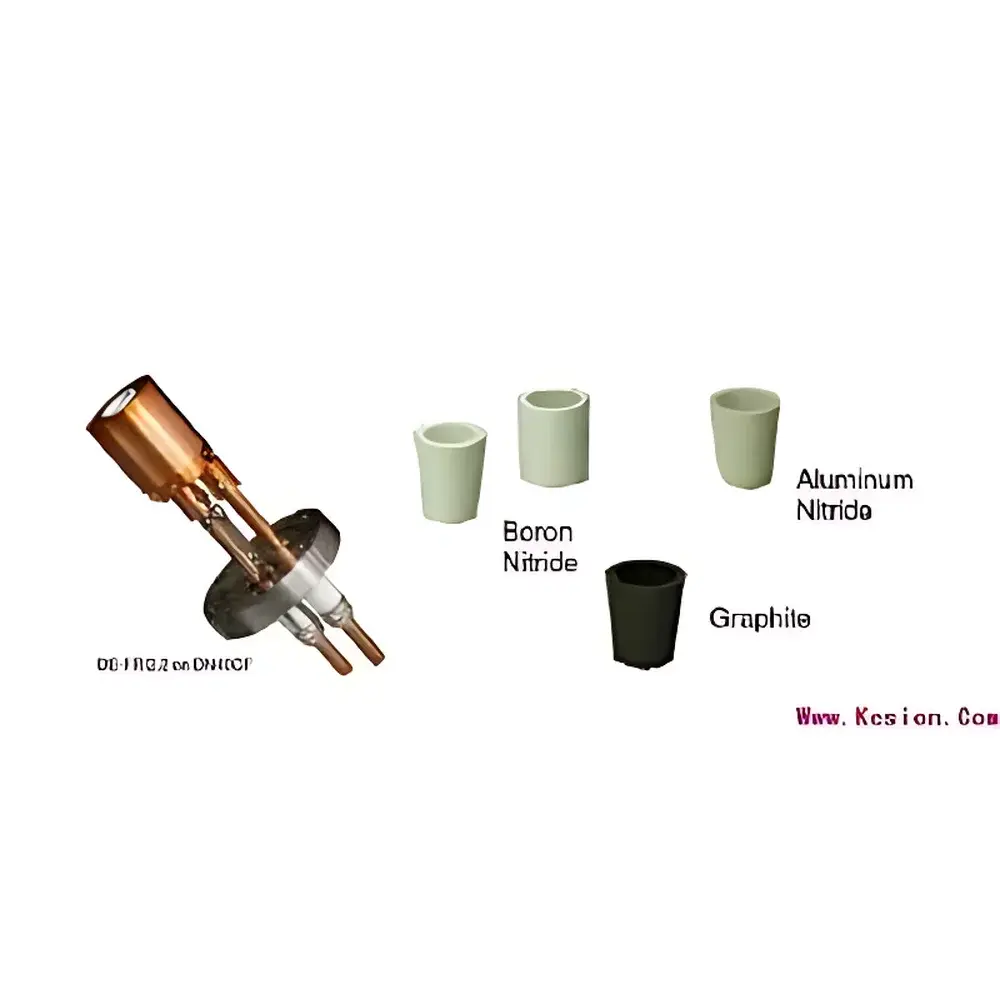
CreaPhys DSU Series Miniature Organic Sublimation Unit
| Brand | CreaPhys |
|---|---|
| Origin | Germany |
| Model | DSU Series |
| Crucible Volumes | 0.5, 1, 2, 4, and 8 cm³ (custom volumes available) |
| Crucible Shapes | Conical, cylindrical, with/without central aperture |
| Crucible Materials | Al₂O₃, BN, AlN, graphite, quartz |
| Deposition Rate | 1×10⁻³ to 5 nm/s at 150 mm substrate distance (material-dependent) |
| Heating System | Tungsten coil with ceramic thermal insulation, 8 A / 60 W (size-dependent) |
| Temperature Range | 50 °C to 600 °C |
| Temperature Stability | < ±0.1 K (PID-controlled) |
| Thermocouple | Type K |
| Optional Features | Integrated safety guard, stainless-steel chamber housing |
Overview
The CreaPhys DSU Series Miniature Organic Sublimation Unit is a precision-engineered vacuum deposition system designed for controlled thermal sublimation and condensation of organic molecular materials under high-vacuum (HV) or ultra-high-vacuum (UHV) conditions. Based on the principle of solid–vapor phase transition under thermodynamic equilibrium, the DSU enables reproducible, solvent-free purification and thin-film fabrication of thermally stable organic compounds—including small-molecule semiconductors, OLED emitters, pharmaceutical intermediates, and model systems for surface science studies. Its compact footprint and modular crucible architecture make it ideal for research laboratories requiring low-material-consumption processing (< 10 mg per run), iterative process optimization, and compatibility with in-situ characterization setups such as XPS, UPS, or reflection-absorption infrared spectroscopy (RAIRS).
Key Features
- Modular crucible system supporting rapid exchange and configuration flexibility—no tooling required for swapping between standard volumes (0.5–8 cm³) or custom geometries (conical, cylindrical, apertured, or stepped profiles).
- High-temperature resistive heating using tungsten filament coils integrated with ceramic thermal insulation, delivering stable power delivery (up to 60 W) and minimizing radial thermal gradients across the crucible base.
- Precise temperature control via PID-regulated feedback loop with Type K thermocouple monitoring, achieving thermal stability better than ±0.1 K over extended dwell periods—critical for controlling sublimation kinetics and stoichiometric fidelity in multi-component evaporation.
- Vacuum-compatible construction: all wetted surfaces are fabricated from UHV-grade stainless steel; optional stainless-steel main chamber housing ensures compatibility with bake-out protocols up to 150 °C.
- Integrated safety guard prevents accidental exposure to hot surfaces and provides mechanical shielding during pump-down and venting cycles—compliant with DIN EN 61000-6-4 electromagnetic compatibility requirements and IEC 61010-1 laboratory safety standards.
- Crucible material selection optimized for chemical inertness and thermal shock resistance: aluminum oxide (Al₂O₃) for general-purpose use; boron nitride (BN) and aluminum nitride (AlN) for enhanced thermal conductivity and low reactivity with halogenated organics; high-purity graphite for reducing atmospheres; fused quartz for UV-transparent applications and low-metal contamination.
Sample Compatibility & Compliance
The DSU Series accommodates a broad range of thermally sublimable organic solids—including acenes (e.g., pentacene, rubrene), triarylamines (e.g., TPD, NPB), phosphorescent metal complexes (e.g., Ir(ppy)₃), and functionalized fullerenes. It supports both single-source and co-sublimation configurations when paired with multi-zone effusion cells (optional upgrade). All components meet ISO 8573-1 Class 2 compressed air purity requirements for auxiliary gas lines and conform to EU Directive 2014/30/EU (EMC) and 2014/35/EU (LVD). The system is fully compatible with GLP-compliant workflows when used with validated temperature calibration procedures and audit-trail-enabled data logging software (see Software & Data Management).
Software & Data Management
Control is executed via CreaPhys SubliControl™ v3.2—a Windows-based application supporting real-time temperature ramping, dwell scheduling, and synchronized vacuum pressure logging (via optional Pirani/cold cathode gauge interface). The software generates timestamped CSV reports compliant with 21 CFR Part 11 requirements—including electronic signatures, user access levels, and immutable audit trails for temperature setpoints, actual readings, and system status events. Exported datasets are structured for direct import into MATLAB, Python (Pandas), or OriginLab for kinetic modeling (e.g., Langmuir evaporation rate analysis) and Arrhenius parameter extraction.
Applications
- Preparative purification of organic electronic materials prior to device fabrication (OFETs, OPVs, OLEDs).
- In-situ growth of monolayer and multilayer organic films on cryogenic or heated substrates for fundamental interfacial studies.
- Isolation of volatile degradation products during thermal stability assessment of APIs (per ICH Q1A–Q1E guidelines).
- Deposition of calibration standards for secondary ion mass spectrometry (SIMS) and time-of-flight secondary ion mass spectrometry (ToF-SIMS).
- Micro-scale synthesis support for radiochemical labeling where solvent removal must avoid decomposition (e.g., [¹⁸F]-labeled tracers).
FAQ
What vacuum level is required for optimal operation?
Operation is validated down to 1×10⁻⁶ mbar (high vacuum); for reduced thermal background and improved film uniformity—especially with low-vapor-pressure compounds—integration with a turbomolecular pumping station capable of reaching ≤5×10⁻⁹ mbar (UHV) is recommended.
Can the DSU be integrated into an existing UHV cluster tool?
Yes. The DSU features CF-40 and CF-63 flange options (ISO-KF adaptors available), standardized electrical feedthroughs (SHV and D-Sub 9), and programmable RS-232/RS-485 interfaces for seamless integration with UHV cluster control systems (e.g., Leybold, Pfeiffer, or SPECS platforms).
Is calibration traceable to national standards?
All factory calibrations are performed using NIST-traceable reference thermocouples and verified against fixed-point cells (e.g., In, Sn, Zn). A certificate of calibration—including uncertainty budget per ISO/IEC 17025—is supplied with each unit.



