
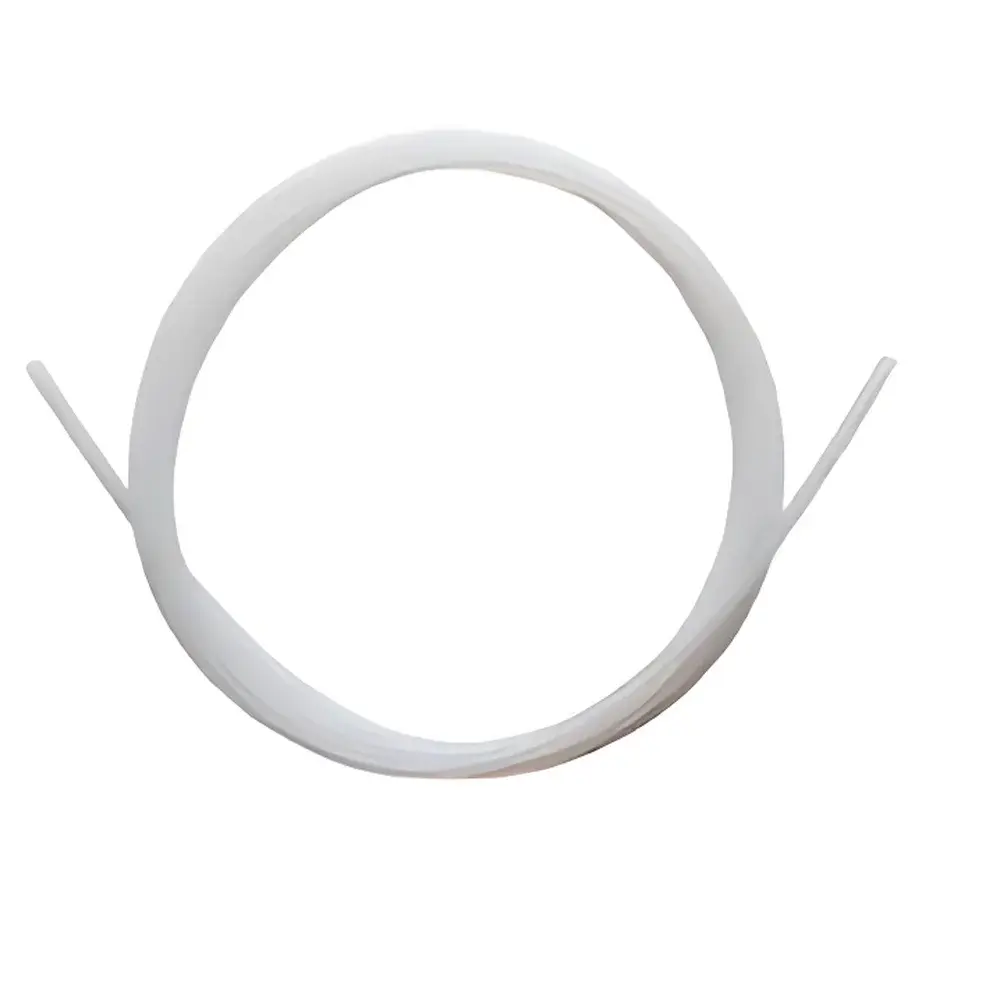
CT-4 Stainless Steel Capillary Tubing (Ø2 mm OD)
| Brand | NARISHIGE |
|---|---|
| Origin | Japan |
| Model | CT-4 |
| Material | 304 Stainless Steel (optional PTFE-lined) |
| Outer Diameter | 2.0 mm |
| Length per Coil | 1 m (standard) |
| Working Pressure | up to 20 MPa |
| Temperature Range | −20 °C to +150 °C |
| Surface Finish | Electropolished, Ra < 0.4 µm |
| Compliance | ISO 13485, RoHS, REACH, FDA-compliant variants available |
Overview
The CT-4 stainless steel capillary tubing is a precision-engineered fluidic conduit developed by NARISHIGE—a Japanese manufacturer with decades of expertise in micro-manipulation and life science instrumentation. Designed for integration into high-accuracy cell analysis systems—including automated cell counters, microfluidic sample introduction modules, and closed-loop aspiration/wash manifolds—the CT-4 delivers consistent laminar flow characteristics under precisely controlled pressure differentials. Its 2.0 mm outer diameter enables seamless compatibility with compact benchtop cell counters (e.g., those utilizing impedance-based or image-based enumeration), while its electropolished 304 stainless steel construction ensures minimal protein adsorption, low extractables, and resistance to mechanical fatigue during repeated actuation cycles typical in syringe-pump-driven sample handling. Unlike polymer-based tubing, the CT-4 maintains dimensional stability across thermal gradients and exhibits negligible swelling or creep when exposed to organic solvents, aqueous buffers, or sterilants—critical attributes for GLP-compliant cell viability assays and QC workflows in biopharmaceutical manufacturing.
Key Features
- Precision-machined 304 stainless steel tubing with tightly controlled outer diameter (2.00 ± 0.02 mm) and wall thickness uniformity (±5% tolerance), ensuring repeatable hydraulic resistance and predictable flow profiles.
- Electropolished internal surface (Ra < 0.4 µm) minimizes turbulent boundary layers and reduces shear-induced cell lysis during low-flow-rate transport (e.g., <50 µL/min in single-cell suspension delivery).
- Rated for continuous operation at pressures up to 20 MPa—enabling integration into high-pressure microfluidic cytometry platforms and automated liquid handlers requiring backpressure resilience.
- Thermal stability from −20 °C to +150 °C supports steam-in-place (SIP) validation protocols and autoclave-compatible system architectures without degradation of structural integrity or surface passivation.
- Available with optional PTFE inner lining for enhanced chemical inertness against aggressive reagents (e.g., high-concentration ethanol, sodium hypochlorite, or acidic fixatives), extending service life in multi-step staining workflows.
Sample Compatibility & Compliance
The CT-4 tubing is validated for use with mammalian cell suspensions (including primary T-cells, PBMCs, and adherent line passaged cells), bacterial cultures (OD600 ≤ 1.0), and fluorescently labeled microbeads used in instrument calibration. Its non-pyrogenic, low-metal-leaching profile meets ISO 13485 requirements for medical device component sourcing. RoHS and REACH compliance ensures absence of restricted heavy metals (Pb, Cd, Hg) and SVHC substances. Select lots are certified to FDA 21 CFR 177.1550 for indirect food contact—making them suitable for cell therapy process equipment where regulatory traceability is mandated. All batches undergo helium leak testing (≤1 × 10⁻⁹ mbar·L/s) and visual inspection under 100× magnification to exclude microcracks or surface defects.
Software & Data Management
While the CT-4 itself is a passive hardware component, its geometric consistency directly impacts data fidelity in software-controlled cell counting systems. When paired with NARISHIGE-compatible fluidics controllers (e.g., MO-10 micromanipulator pump interfaces) or third-party platforms supporting IEC 61508–compliant motion sequencing, the tubing enables precise synchronization between valve actuation timing, pressure ramp rates, and image capture triggers—reducing inter-run CVs in concentration-dependent enumeration. Audit trails generated by host instruments (e.g., Countess™ III or Luna™ FL firmware) remain unaffected by tubing selection, but the CT-4’s reproducible internal geometry contributes to long-term calibration stability, reducing frequency of recalibration events required under ISO/IEC 17025-accredited laboratory quality management systems.
Applications
- Cell counter inlet/outlet lines for automated dilution and waste evacuation in hematology analyzers and research-grade viability platforms.
- Microfluidic interconnects between sample reservoirs, filtration membranes, and detection chambers in impedance-based cell sorters.
- High-fidelity fluid paths in closed-system cell washing stations compliant with USP sterility testing guidelines.
- Pressure-stable conduits for integrating on-chip lysate transfer in single-cell RNA-seq library prep workflows.
- Replacement tubing in OEM-built diagnostic instruments requiring CE-marked, ISO 13485–certified components for Class IIa/IIb device registration.
FAQ
Is the CT-4 tubing compatible with peristaltic pumps?
Yes—its 2 mm OD and wall thickness (~0.3 mm standard) are optimized for engagement with standard 2 mm-compatible pump heads; however, continuous rotation at >60 rpm may accelerate fatigue; intermittent duty cycles are recommended.
Can it be sterilized using ethylene oxide (EtO)?
Yes—validated per ISO 11135; no outgassing residues detected via GC-MS analysis post-aeration.
What is the maximum bending radius before permanent deformation occurs?
Minimum recommended static bend radius is 15 mm; dynamic flexing should not exceed 20,000 cycles at 10 mm radius under 5 MPa internal pressure.
Does NARISHIGE provide lot-specific certificates of conformance?
Yes—each coil ships with CoC including material test report (MTR) per ASTM A269, surface roughness verification, and pressure test record.
How does CT-4 compare to fused silica capillaries in cell counting applications?
Unlike brittle silica, CT-4 offers superior impact resistance and thermal shock tolerance; while silica provides lower autofluorescence, CT-4’s polished metal surface yields negligible background in brightfield and phase-contrast imaging modes commonly used in benchtop counters.




