
CUBIC Gasboard-3000UV UV-DOAS Flue Gas Analyzer for Desulfurization & Denitrification
| Brand | CUBIC INSTRUMENTS |
|---|---|
| Origin | Hubei, China |
| Model | Gasboard-3000UV |
| Measurement Principle | UV-Differential Optical Absorption Spectroscopy (UV-DOAS) for SO₂/NO/NO₂ |
| Measurement Range | SO₂/NO/NO₂: 0–100 mg/m³ |
| O₂ | 0–25% (selectable) |
| Accuracy | ±2% F.S. |
| Repeatability | ≤2% |
| Response Time (T90) | ≤30 s |
| Stability | ≤±2% F.S./24 h |
| Linearity Error | ≤±2% F.S. |
| Sample Requirements | Condensate-free, particulate filtration <1 µm |
| Operating Humidity | 5–85% RH |
| Ambient Pressure | 86–108 kPa |
| Communication | Dual RS-232/RS-485 ports, Modbus RTU protocol (customizable) |
| Power Supply | AC 220 V, 50 Hz |
| Max Power Consumption | 200 W |
Overview
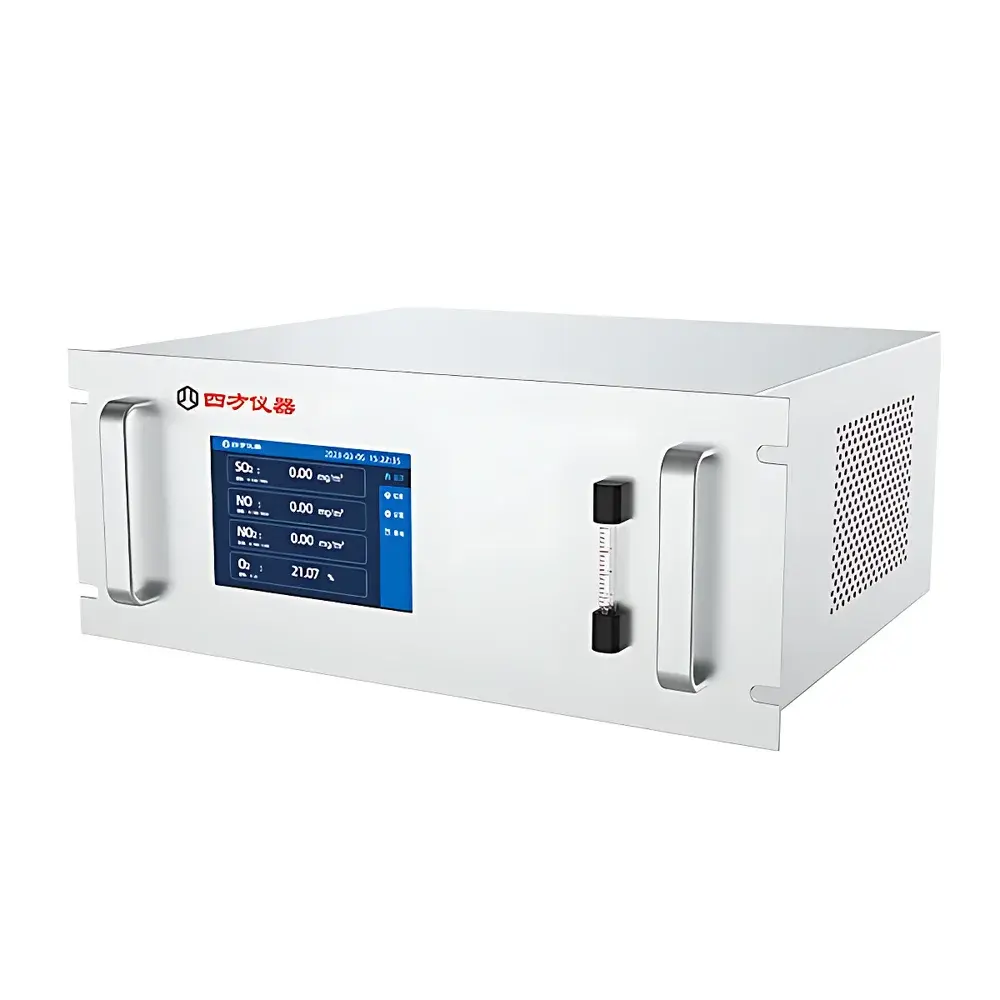
The CUBIC Gasboard-3000UV is an online, continuous emission monitoring system (CEMS) engineered for high-precision, real-time quantification of sulfur dioxide (SO₂), nitrogen monoxide (NO), nitrogen dioxide (NO₂), and oxygen (O₂) in flue gas streams from petroleum refining, petrochemical cracking units, fluid catalytic cracking (FCC) facilities, and coal-fired utility boilers undergoing flue gas desulfurization (FGD) and selective/non-selective catalytic reduction (SCR/SNCR) processes. Its core analytical architecture integrates ultraviolet differential optical absorption spectroscopy (UV-DOAS) for SO₂, NO, and NO₂—leveraging characteristic absorption bands in the 190–230 nm and 300–350 nm spectral windows—with a dedicated electrochemical cell (ECD) for O₂ measurement. The instrument employs a multi-pass, long-path optical cell (effective path length >1.2 m) to amplify absorbance signals and enhance detection sensitivity at ultra-low concentration levels (down to sub-5 mg/m³), meeting stringent regulatory thresholds under China’s GB 13223–2011 and EU’s IED 2010/75/EU Annex VI for power and industrial combustion plants.
Key Features
- UV-DOAS optical engine with temperature-stabilized xenon lamp source (rated lifetime ≥2 years under continuous operation) and high-resolution grating spectrometer (spectral resolution <0.5 nm)
- Dual-spectrum interference compensation algorithm minimizing cross-sensitivity between NO₂ and SO₂, and between NO and NO₂, validated per ISO 12039:2000 Annex B
- Integrated thermoelectric cooling and PID-controlled optical chamber maintaining ±0.1°C stability to suppress thermal drift of spectral baseline
- Modular gas conditioning unit (GCU) with heated sample line (180°C), ceramic filter (<1 µm), and condensate separator compliant with EN 15267-3 requirements for particulate removal
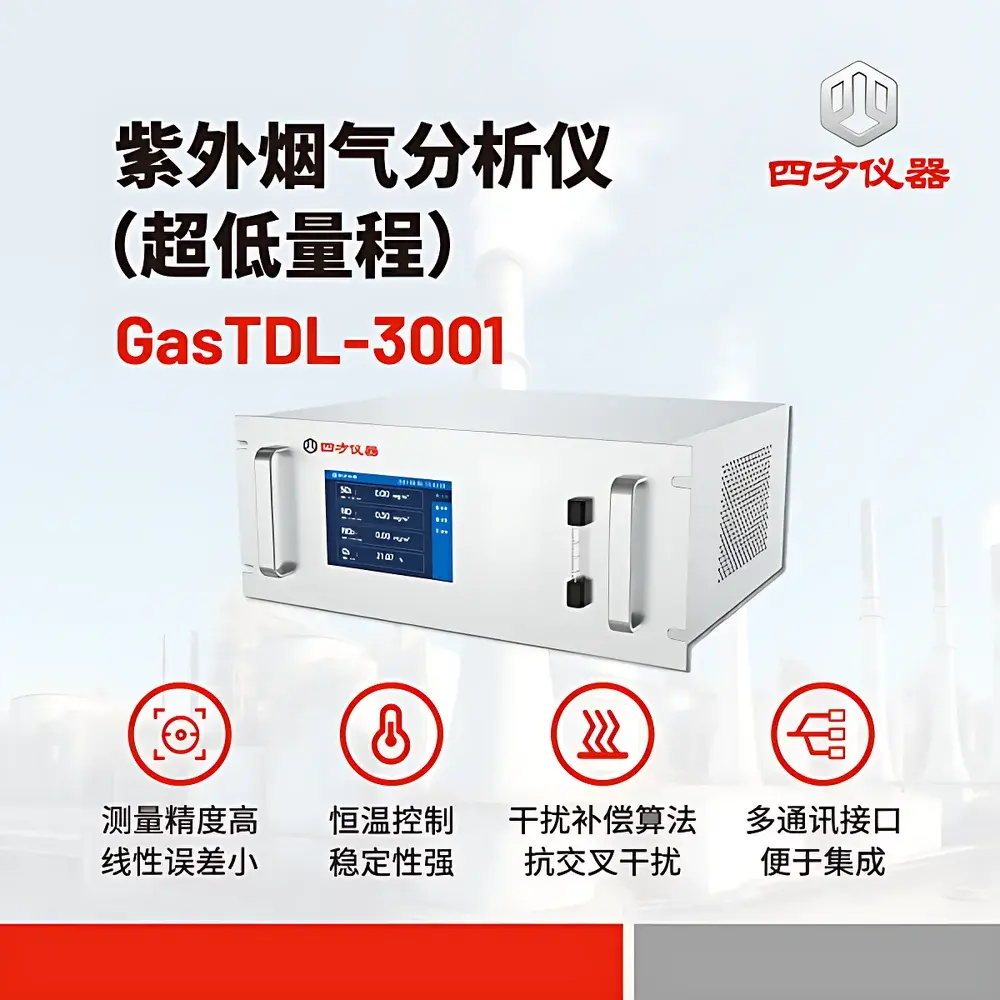
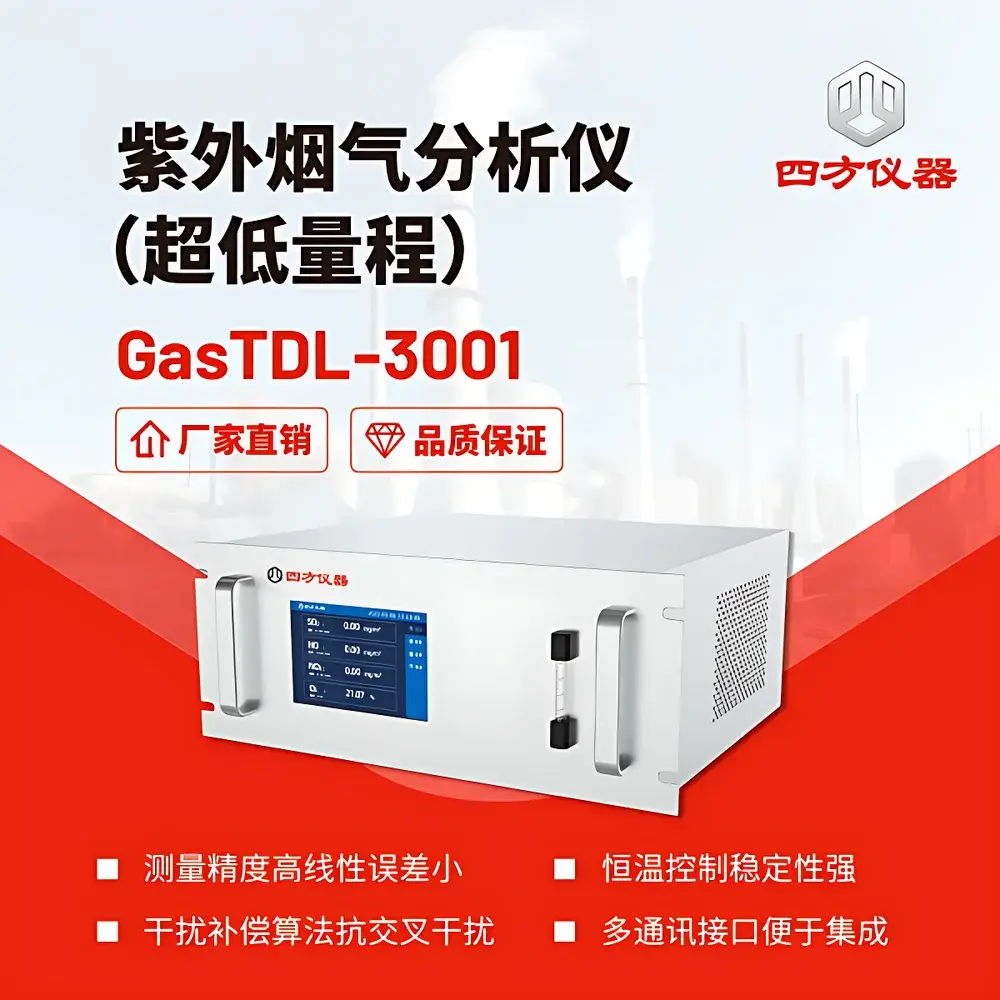
- Standard 4U 19-inch rack-mount chassis (483 × 177 × 450 mm) designed for industrial control room integration and certified to IEC 61000-6-2 EMC immunity standards
- Dual isolated RS-232/RS-485 serial interfaces supporting Modbus RTU protocol natively; optional analog outputs (4–20 mA) available for PLC interfacing
Sample Compatibility & Compliance
The Gasboard-3000UV is validated for use with hot, humid, and particulate-laden flue gases typical of refinery FCC regenerators, delayed cokers, and hydroprocessing off-gas streams. It complies with sampling interface requirements specified in EPA Method 6C (SO₂), Method 7E (NOₓ), and EN 14792 (UV-DOAS performance criteria). All wetted materials—including stainless-steel sample manifold, PTFE-coated optical windows, and chemically resistant gaskets—meet ASTM F2248 for resistance to acidic condensates (pH 1–3). The analyzer supports audit-ready data integrity through internal timestamped logging (≥30 days buffer) and optional 21 CFR Part 11-compliant software configuration when paired with CUBIC’s CEMS Data Acquisition System (DAS).
Software & Data Management
Embedded firmware includes automated zero/span calibration routines traceable to NIST-certified gas standards, with configurable calibration intervals (1–24 h). Raw spectral data and processed concentration values are logged at user-defined intervals (1–60 s) with checksum validation. The optional CUBIC CEMS Manager v3.2 software provides real-time trend visualization, alarm management (exceedance, sensor fault, flow loss), and export to CSV or XML formats compatible with national environmental monitoring platforms (e.g., China’s MEP Online Monitoring System). Audit trails record all configuration changes, calibration events, and manual overrides with operator ID and timestamp—supporting GLP/GMP-aligned operational review.
Applications
- Continuous monitoring of SO₂ and NOₓ emissions pre- and post-FGD/SCR systems in refinery sulfur recovery units (SRUs) and tail gas treatment (TGT) trains
- Process optimization of amine-based SO₂ capture and urea-based NOₓ reduction by correlating real-time gas composition with catalyst bed temperatures and reagent injection rates
- Compliance verification for permit conditions under local environmental protection bureaus (e.g., Hubei Provincial EPB) and transnational frameworks including the Paris Agreement reporting protocols
- Stack testing support for third-party verification per HJ/T 76–2017 (Chinese technical specification for CEMS) and ISO 14064-3 greenhouse gas assertion standards
- Integration into distributed control systems (DCS) for closed-loop feedback control of limestone slurry feed rate in wet FGD scrubbers
FAQ
What regulatory standards does the Gasboard-3000UV meet for stack emission monitoring?
It satisfies HJ/T 76–2017 (China), EN 15267–3 (EU), and EPA Performance Specification 2 (PS-2) for SO₂ and NOₓ analyzers, including requirements for accuracy, drift, and interference rejection.
Can the instrument operate continuously without manual intervention?
Yes—fully automated zero/span calibration, self-diagnostic routines, and remote firmware updates enable unattended operation for ≥30 days between maintenance cycles.
Is O₂ measurement integrated or requires a separate module?
O₂ is measured in situ using a factory-calibrated electrochemical sensor housed within the main analyzer chassis; no external module or auxiliary gas supply is required.
How is spectral interference from water vapor and CO₂ addressed?
The UV-DOAS algorithm applies multi-wavelength least-squares fitting with reference spectra of H₂O and CO₂ included in the inversion matrix, reducing residual interference to <0.5% of full scale per EN 15267 Annex D.
Does the system support data transmission to government environmental monitoring networks?
Yes—Modbus RTU output is preconfigured for direct connection to national-level data acquisition terminals (e.g., China’s “National Platform for Pollution Source Monitoring”) via standard RS-485 infrastructure.
Related Products







