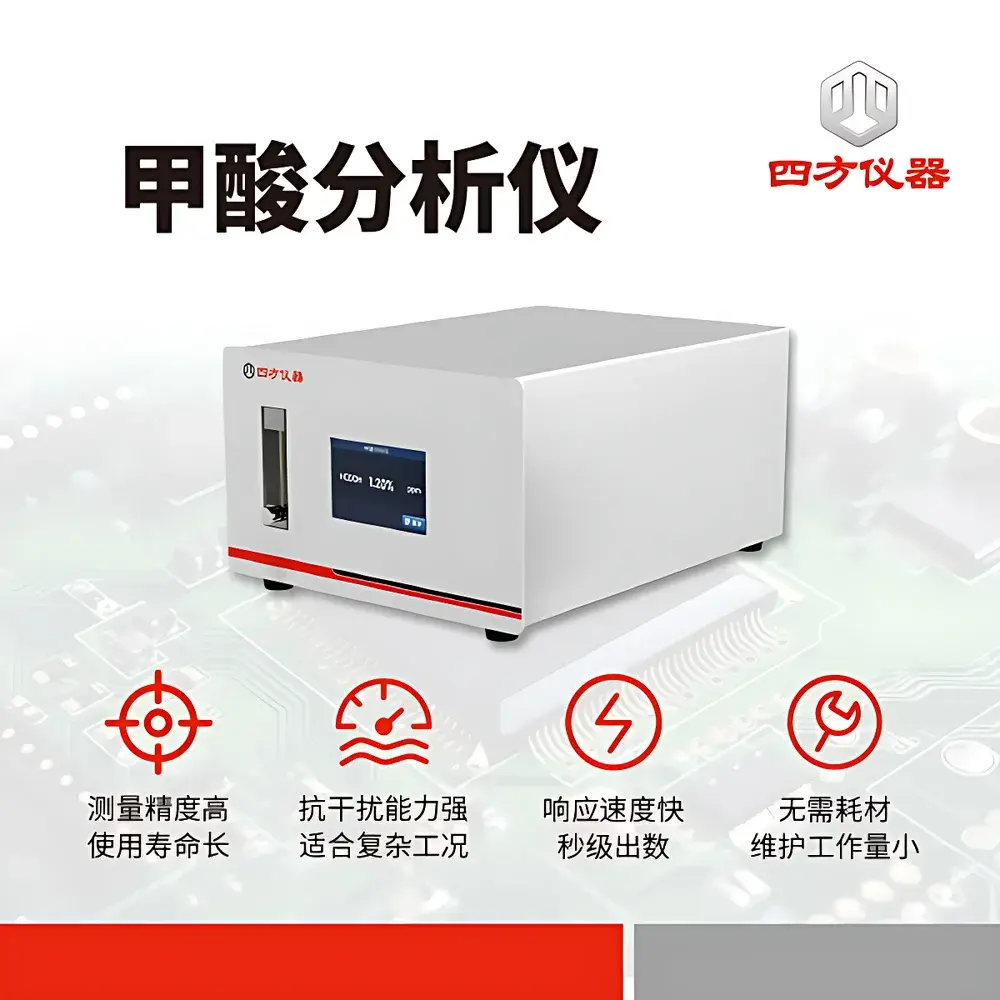
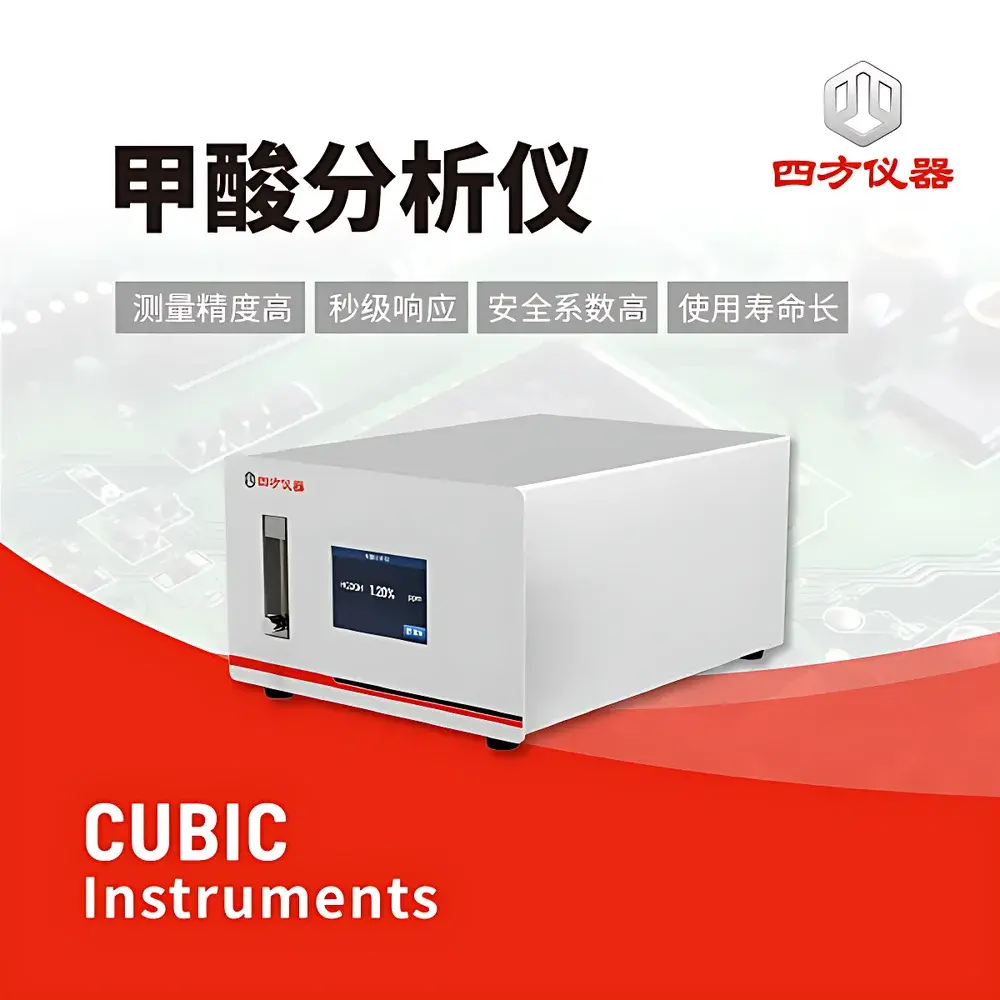
CUBIC INSTRUMENTS Formic Acid Analyzer for Semiconductor Vacuum Reflow Monitoring
| Brand | CUBIC INSTRUMENTS |
|---|---|
| Origin | Hubei, China |
| Manufacturer Type | Authorized Distributor |
| Regional Category | Domestic (PRC) |
| Model | Not Specified |
| Pricing | Upon Request |
| Measurement Principle | Non-Dispersive Infrared (NDIR) |
| Range Options | 0–5% v/v, 0–10% v/v, 0–30% v/v |
| Accuracy | ≤ ±2% FS |
| Repeatability | ≤ ±1% FS |
| Response Time (T90) | ≤ 60 s |
| Operating Temperature | 0–50 °C |
| Relative Humidity | 0–95% RH (non-condensing) |
| Communication Interfaces | RS-232, RS-485 |
| Power Supply | 24 VDC or 100–240 VAC |
Overview
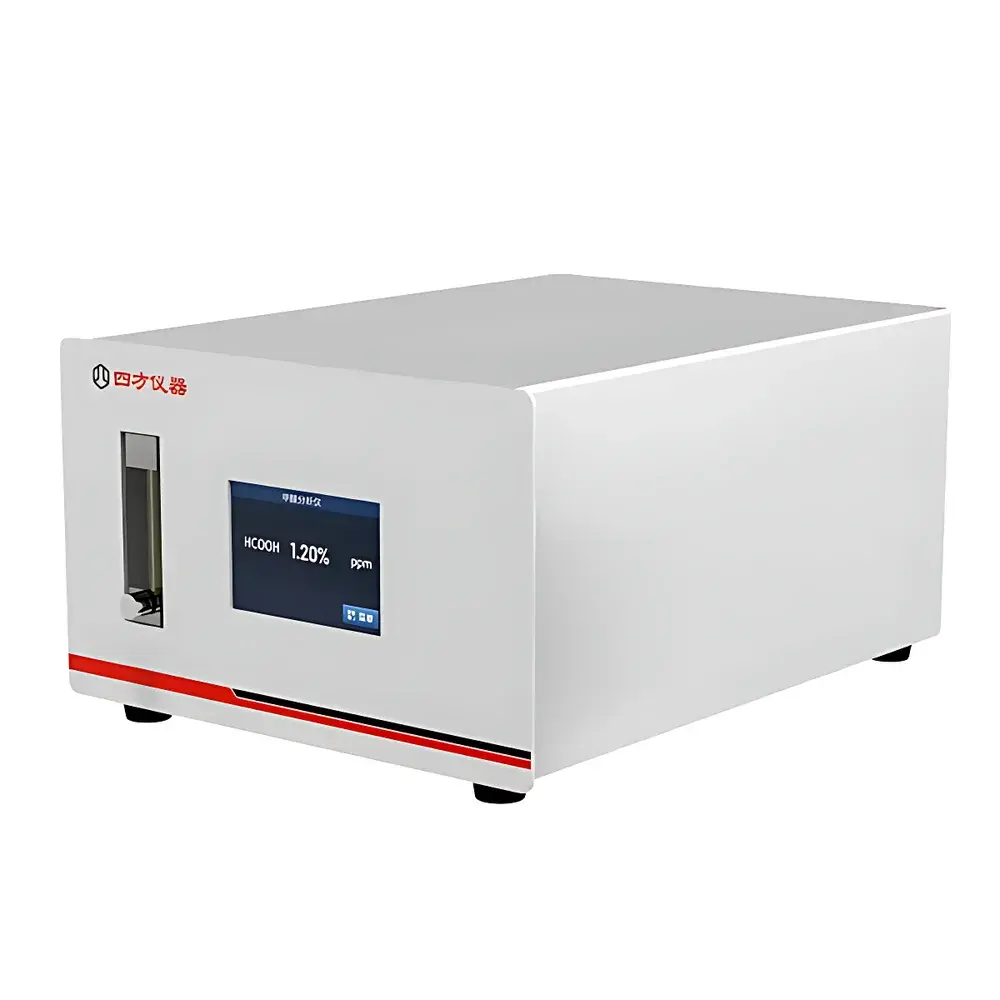
The CUBIC INSTRUMENTS Formic Acid Analyzer is an industrial-grade, process-integrated gas monitoring system engineered specifically for real-time quantification of formic acid (HCOOH) vapor concentration in vacuum reflow soldering environments used in semiconductor packaging. Leveraging non-dispersive infrared (NDIR) spectroscopy, the analyzer detects the characteristic absorption band of formic acid near 1770 cm⁻¹ with high spectral selectivity and minimal cross-sensitivity to common process gases such as H₂, N₂, CO₂, and H₂O vapor. Unlike catalytic or electrochemical sensors, NDIR technology provides inherent stability, zero drift over extended operation, and immunity to poisoning—critical attributes for unattended, long-term deployment inside vacuum chambers and inert-atmosphere conveyors. Designed for integration into automated semiconductor assembly lines, the instrument delivers continuous, trace-level monitoring during critical phases including preheat, soak, reflow, and cool-down, enabling closed-loop feedback for process parameter optimization and statistical process control (SPC).
Key Features
- NDIR-based optical detection with factory-calibrated reference channel for thermal and aging compensation
- Multiple configurable measurement ranges (0–5%, 0–10%, 0–30% v/v) to accommodate varying process chemistries and purge strategies
- No consumables or replaceable sensor elements—eliminates recurring calibration gas requirements and sensor replacement costs
- Robust stainless-steel sampling head and heated sample path (optional) to prevent condensation and adsorption losses in low-temperature vacuum transitions
- Programmable dual-stage alarm outputs (relay + digital signal) with user-defined threshold levels and hysteresis
- Integrated temperature and humidity compensation algorithms to maintain accuracy across ambient shifts (0–50 °C / 0–95% RH non-condensing)
- Fast T90 response time ≤ 60 seconds ensures timely detection of transient concentration spikes during chamber venting or flux decomposition events
Sample Compatibility & Compliance
The analyzer is validated for use in high-purity nitrogen, forming gas (N₂/H₂), and vacuum environments typical of power device packaging (e.g., SiC MOSFETs, IGBT modules) and advanced packaging processes including chip-to-wafer bonding and heterogeneous integration. It complies with IEC 61000-6-2 (immunity) and IEC 61000-6-4 (emissions) for industrial electromagnetic compatibility. While not certified to ATEX or IECEx, its intrinsically safe configuration (24 VDC option) supports deployment in Class 1, Division 2 hazardous locations per NEC Article 500 when installed with appropriate barrier systems. Data integrity meets GLP/GMP-aligned operational requirements, supporting audit-ready logging when paired with compliant SCADA or MES platforms.
Software & Data Management
The analyzer supports ASCII protocol over RS-232/RS-485 serial interfaces, enabling seamless integration with PLCs (Siemens S7, Allen-Bradley ControlLogix), DCS systems, and custom LabVIEW or Python-based data acquisition frameworks. Optional Modbus RTU firmware allows direct register mapping for live concentration, temperature, status flags, and alarm states. All communication logs—including timestamped readings, alarm triggers, and system diagnostics—are exportable in CSV format. Though no proprietary GUI is bundled, the device is compatible with third-party industrial software suites that support serial-to-OPC UA bridging (e.g., Kepware, Ignition) for centralized dashboard visualization and historical trend analysis.
Applications
- Real-time monitoring of formic acid partial pressure during vacuum reflow soldering of copper-to-copper interconnects in wide-bandgap power modules
- Verification of residual formic acid removal post-reflow to prevent post-process oxidation or corrosion in GaN HEMT packaging
- Process validation and DOE studies for optimizing formic acid dosing profiles in low-temperature die-attach applications
- Environmental safety surveillance in cleanroom-adjacent reflow zones to ensure operator exposure remains below OSHA PEL (5 ppm TWA)
- Root-cause analysis of void formation or intermetallic layer inconsistencies correlated with in-situ HCOOH concentration excursions
FAQ
Is this analyzer suitable for integration into a Class 100 cleanroom environment?
Yes—the housing meets IP54 ingress protection; optional electropolished 316L stainless steel wetted parts are available for ultra-high-purity applications.
Does the device require periodic recalibration using certified gas standards?
No—NDIR architecture eliminates routine span calibration; only annual verification against traceable reference gas is recommended per ISO/IEC 17025 internal quality procedures.
Can the analyzer operate continuously inside a vacuum chamber at 10⁻³ mbar?
It is designed for inline sampling via external probe; direct chamber mounting requires optional vacuum-rated feedthrough and heated capillary line to avoid condensation-induced signal attenuation.
What is the expected service life under continuous 24/7 operation?
The optical source and detector are rated for >50,000 hours MTBF; mechanical components are specified for >10 years under typical semiconductor fab environmental conditions.
Is FDA 21 CFR Part 11 compliance supported?
The standalone unit does not include electronic signature or audit trail functionality; however, when integrated with validated MES/SCADA systems possessing Part 11 controls, full regulatory compliance is achievable.