
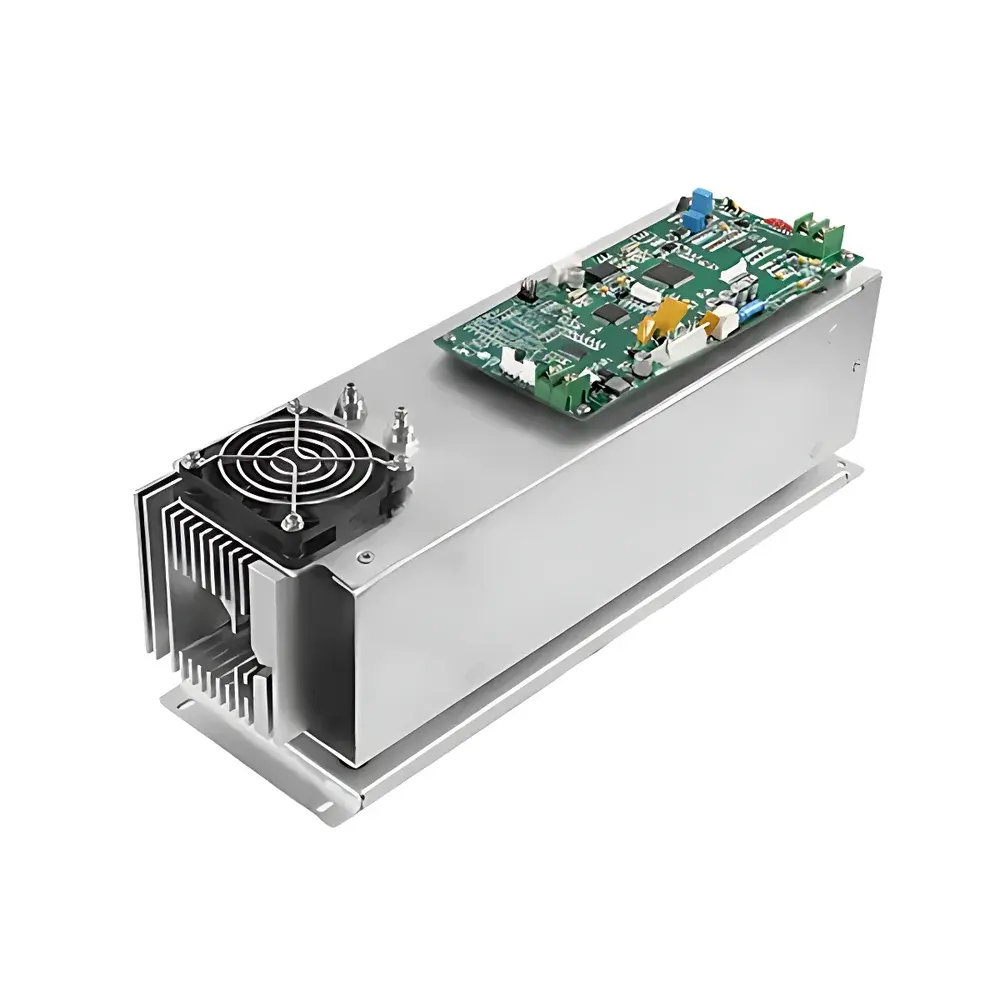
CUBIC INSTRUMENTS Gasboard-2108 Infrared Exhaust Gas Sensor Module
| Brand | CUBIC INSTRUMENTS |
|---|---|
| Origin | Hubei, China |
| Model | Gasboard-2108 |
| Measurement Principle | Dual-beam NDIR (CO, CO₂, HC) + Micro-flow NDIR (NO) |
| Gas Range | HC (0–2000 ppm), CO (0.00–5.00 %), CO₂ (0.0–16.00 %), NO (0–4000 ppm) |
| Accuracy | HC/NO ±4 ppm or ±3% / ±25 ppm or ±4% |
| Resolution | HC/NO 1 ppm |
| Repeatability | ±1% FS |
| Stability | <±2% FS/24h |
| Response Time (T90) | HC/CO/CO₂ ≤3.5 s |
| Output Interface | Modbus RTU (customizable protocol) |
| Operating Temp. | Auto-heated, temperature & pressure compensated |
| Compliance | GB 18285–2018 |
Overview
The CUBIC INSTRUMENTS Gasboard-2108 is a high-integrity infrared exhaust gas sensor module engineered for precision measurement of carbon monoxide (CO), carbon dioxide (CO₂), hydrocarbons (HC), and nitrogen oxide (NO) in automotive exhaust and ambient air monitoring applications. It integrates two complementary non-dispersive infrared (NDIR) technologies: dual-beam NDIR for CO, CO₂, and HC; and patented micro-flow NDIR—protected under PCT/CN2018100767—for selective NO detection. The dual-beam architecture employs matched optical paths with active reference compensation to eliminate drift from source intensity fluctuation, aging, or dust accumulation. The micro-flow NDIR subsystem utilizes a half-cell gas chamber design—comprising a measurement cell and a sealed reference cell—to generate differential thermal signals proportional to NO concentration, delivering high specificity in multi-gas environments. All measurements are continuously corrected for temperature and pressure variations via integrated sensors and real-time algorithmic compensation, ensuring metrological consistency across operational conditions.
Key Features
- Dual-technology NDIR platform: Dual-beam for CO/CO₂/HC; micro-flow for NO—enabling simultaneous, cross-interference-resistant quantification of four key exhaust species
- Patented half-cell micro-flow gas chamber (PCT/CN2018100767) optimized for low-volume, high-sensitivity NO detection without chemical scrubbers or electrochemical consumables
- Integrated auto-heating system maintaining stable operating temperature (typically 45–55 °C), minimizing condensation and thermal hysteresis effects
- On-board temperature and barometric pressure sensors with embedded correction algorithms compliant with ISO 16183 and ASTM D6522 calculation frameworks
- Modular mechanical and electrical interface—standard 28-pin D-sub connector, compact 120 mm × 85 mm × 42 mm footprint—designed for OEM integration into analyzers, roadside emission testers, and continuous emissions monitoring systems (CEMS)
- Robust optical path sealing and anti-fouling lens coating suitable for high-humidity, particulate-laden exhaust streams
Sample Compatibility & Compliance
The Gasboard-2108 is validated for use with raw and diluted exhaust gases from gasoline, diesel, and hybrid powertrains. Its optical design accommodates sample dew points up to 10 °C and particulate loading ≤100 mg/m³ without filtration-induced bias. The module meets the metrological requirements of China’s mandatory standard GB 18285–2018 for motor vehicle emission testing, including linearity, zero drift, span drift, and interference rejection thresholds for common exhaust interferents (e.g., H₂O vapor, SO₂, CH₄). While not certified to EU R101 or U.S. EPA 40 CFR Part 1065 by default, its performance envelope aligns with the sensitivity and repeatability benchmarks required for Type I and II test cycles when integrated into fully validated analyzer platforms. Calibration traceability follows ISO/IEC 17025 principles using NIST-traceable gas standards.
Software & Data Management
Data output is delivered via RS-485 serial interface using Modbus RTU protocol (function codes 03h/04h for holding/input registers), supporting configurable baud rates (9600–115200 bps) and slave ID assignment. Standard register mapping includes real-time concentration values (in native units), diagnostic flags (e.g., heater status, signal saturation, optical fault), temperature/pressure readings, and internal calibration coefficients. Optional firmware enables ASCII-mode output or custom protocol adaptation—including support for CAN bus gateway translation—facilitating integration into embedded control systems compliant with AUTOSAR or IEC 61131-3 architectures. No proprietary software is required; configuration and diagnostics can be performed using industry-standard Modbus masters or Python-based scripts with minimal driver dependencies. Audit-ready data logging (timestamped, checksummed) satisfies GLP-aligned QA/QC workflows when paired with host systems implementing 21 CFR Part 11-compliant electronic signatures and audit trails.
Applications
- OEM integration into portable and benchtop exhaust gas analyzers for I/M (Inspection and Maintenance) programs and workshop diagnostics
- Core sensing engine in continuous on-road emissions monitoring systems (OREMS) and remote sensing devices (RSDs)
- Multi-gas input module for environmental air quality stations targeting urban traffic-related NOₓ and VOC precursors
- Research-grade component in engine development test beds requiring synchronized, low-latency gas concentration feedback
- Modular upgrade path for legacy opacity- or electrochemical-based emission testers seeking NDIR-grade stability and selectivity
FAQ
What calibration gases are required for initial setup and periodic verification?
Primary calibration requires certified gas mixtures traceable to NIST or equivalent national standards: 500 ppm CO in N₂, 10% CO₂ in N₂, 1000 ppm propane (as HC equivalent) in air, and 1000 ppm NO in N₂. Zero gas must be CO₂-free, dry synthetic air.
Can the Gasboard-2108 operate without external pressure compensation?
No. Accurate quantification of CO, CO₂, and NO requires real-time absolute pressure input. The module includes an onboard barometric sensor, but for installations above 500 m elevation or in pressurized ducts, external pressure transducer input (via analog voltage or Modbus register) is recommended for optimal accuracy.
Is the micro-flow NO channel susceptible to cross-sensitivity from NO₂?
The micro-flow NDIR design exhibits <0.5% signal response to NO₂ at 100 ppm—well below the ±4% relative error tolerance per GB 18285–2018. For applications where NO₂ exceeds 50 ppm, catalytic reduction pre-treatment is advised.
What is the expected service life under continuous operation?
With proper sample conditioning (particulate filtration, moisture removal upstream), the optical components maintain specification for ≥24 months of continuous duty. The IR source lifetime exceeds 5 years at rated operating temperature.
Related Products







