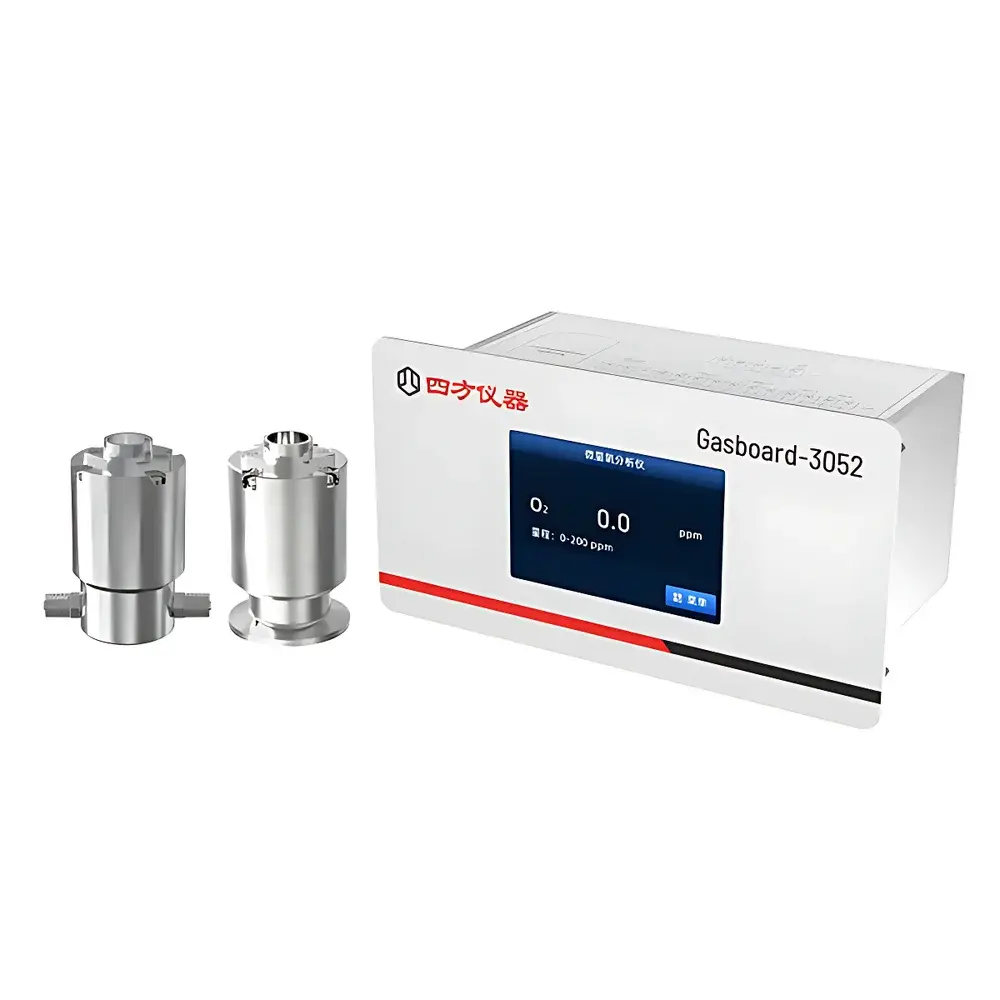
CUBIC INSTRUMENTS Gasboard-3052 Zirconia-Based Trace Oxygen Analyzer
| Brand | CUBIC INSTRUMENTS |
|---|---|
| Origin | Hubei, China |
| Model | Gasboard-3052 |
| Measurement Range | 0–10 ppm / 0–100 ppm / 0–1000 ppm (auto-ranging) |
| Resolution | 0.1 ppm |
| Accuracy | ≤ ±2% FS |
| Response Time (T90) | ≤ 10 s |
| Operating Temperature | 0–50 °C |
| Relative Humidity | 0–95% RH |
| Analog Outputs | 4–20 mA, 0–1 V / 0–5 V / 0–10 V DC |
| Alarm Outputs | 2 configurable O₂ alarms + 1 fault alarm |
| Communication Interfaces | RS-232, RS-485 |
| Power Supply | 12 V DC or 20 V AC, 50 Hz |
| Dimensions (Analyzer) | 178 × 107 × 95 mm (L×W×H) |
| Sensor Dimensions | Ø38.1 × 71.5 mm (D×L) |
Overview
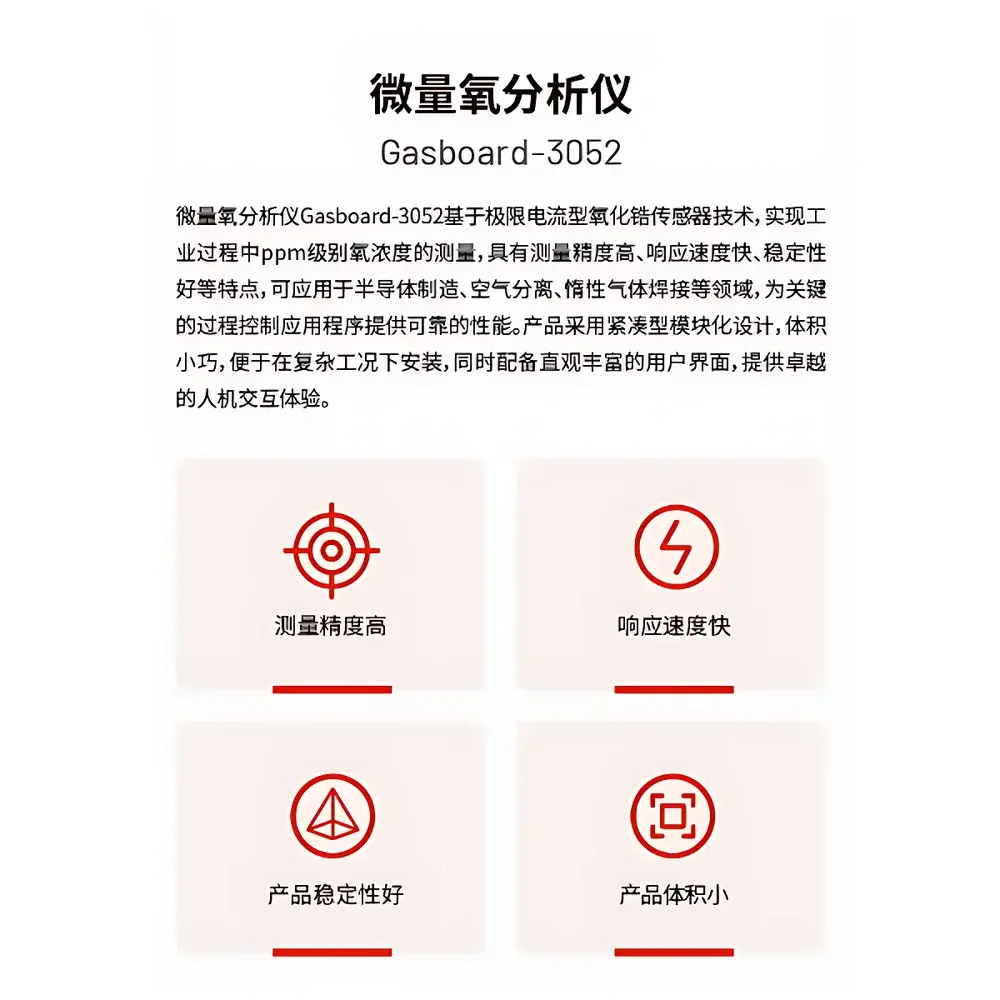
The CUBIC INSTRUMENTS Gasboard-3052 is a high-stability, in-situ trace oxygen analyzer engineered for continuous monitoring of oxygen concentrations at parts-per-trillion (ppt) to parts-per-million (ppm) levels in industrial process streams. It employs a limit-current-type zirconia electrochemical sensor — a solid-state, high-temperature ceramic cell operating at ~650 °C — where oxygen partial pressure drives an ion-conductive current across a stabilized zirconium dioxide (ZrO₂) electrolyte. This principle ensures inherent selectivity for molecular oxygen without interference from CO₂, CO, H₂, N₂, or hydrocarbons under typical process conditions. Unlike paramagnetic or tunable diode laser (TDLAS) alternatives, the zirconia-based architecture delivers long-term baseline stability and minimal drift, eliminating the need for frequent zero/span calibration in controlled environments. The Gasboard-3052 is designed for integration into critical gas purity control loops — particularly where oxygen contamination must be maintained below 10 ppm in ultra-high-purity (UHP) nitrogen, argon, or hydrogen used in semiconductor diffusion furnaces, cryogenic air separation units, and inert shielding gas systems for laser welding or additive manufacturing.
Key Features
- Zirconia sensor with integrated heater and temperature stabilization circuitry, ensuring consistent operating temperature (±2 °C) for reproducible electrochemical response
- Auto-ranging measurement capability across three selectable spans: 0–10 ppm, 0–100 ppm, and 0–1000 ppm — dynamically optimized based on real-time signal amplitude
- High-resolution analog output (0.1 ppm) with full-scale accuracy ≤ ±2% FS, traceable to NIST-calibrated reference gases
- Fast T90 response time ≤ 10 seconds — suitable for rapid process transients in purge validation and leak detection workflows
- Compact modular form factor (178 × 107 × 95 mm) with IP65-rated front panel; sensor probe designed for direct insertion into 1/2″ NPT or flanged process lines
- Configurable dual O₂ alarm outputs (relay contacts) plus independent fault alarm for sensor degradation, power loss, or signal timeout
- Low cross-sensitivity to common background gases (e.g., <0.5% signal deviation in presence of 5% CO₂ or 10% H₂), validated per ASTM D6299 practice for electrochemical gas sensors
Sample Compatibility & Compliance
The Gasboard-3052 is compatible with dry, non-corrosive gas matrices including N₂, Ar, He, H₂, and synthetic air. For applications involving moisture or condensable vapors, optional heated sample line conditioning and particulate filtration (0.1 µm) are recommended upstream of the sensor inlet. The analyzer meets CE marking requirements for electromagnetic compatibility (EN 61326-1) and low-voltage directive (2014/35/EU). Its analog and digital outputs support integration into DCS/PLC architectures compliant with ISA-84 (IEC 61511) functional safety frameworks when deployed in SIL 1-rated monitoring loops. While not intrinsically safe, it may be installed in Zone 2 classified areas when housed in appropriate enclosures per IEC 60079-14.
Software & Data Management
Local configuration and diagnostics are performed via a backlit 4.3-inch TFT LCD with intuitive menu navigation and multilingual UI (English, German, Japanese). All setpoints, alarm thresholds, damping filters, and analog scaling parameters are stored in non-volatile memory with write-protection. RS-485 Modbus RTU protocol enables bidirectional communication for remote readout, firmware updates, and event logging. Data timestamps are synchronized to internal RTC (real-time clock) with ±1 min/month drift. Audit trails — including calibration history, alarm events, and configuration changes — are retained for ≥30 days and exportable via RS-232 to CSV-compatible terminals. The device supports GLP-compliant operation through password-protected access levels (Operator, Engineer, Administrator) and configurable user-defined tags for multi-point installation tracking.
Applications
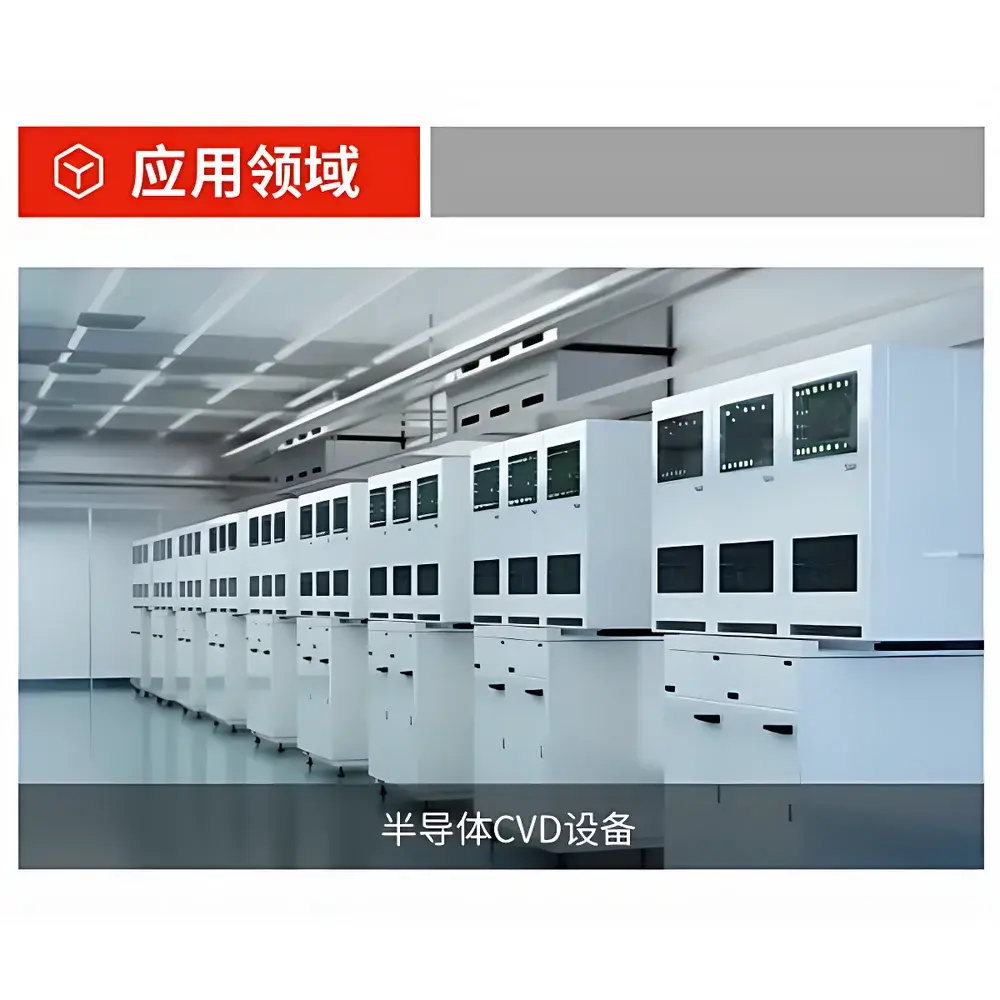
- Semiconductor fabrication: Monitoring O₂ impurity in UHP N₂ purge gas for CVD/PVD chamber blanketing and furnace annealing
- Air separation plants: Real-time verification of oxygen breakthrough in high-purity argon/nitrogen product streams
- Hydrogen fuel infrastructure: Leak detection and purity assurance in PEM electrolyzer off-gas and refueling station supply lines
- Inert atmosphere welding: Control of oxygen residuals in TIG/MIG shielding gas mixtures to prevent weld oxidation
- Pharmaceutical lyophilization: Validation of vacuum chamber inerting prior to primary drying cycles
- Research laboratories: Quantification of dissolved oxygen in recirculating gas streams for catalytic reaction studies
FAQ
What measurement principle does the Gasboard-3052 use?
It utilizes a high-temperature limit-current zirconia electrochemical cell, where oxygen ions migrate through a stabilized ZrO₂ electrolyte under applied bias, generating a current linearly proportional to oxygen partial pressure.
Can the analyzer operate in humid or corrosive gas streams?
No — the sensor requires dry, non-acidic, non-sulfur-containing gas. Moisture above dew point causes temporary signal suppression; H₂S or Cl₂ leads to irreversible electrode poisoning. Sample conditioning is mandatory for such applications.
Is the device certified for hazardous area installation?
Not inherently. It requires external explosion-proof housing or pressurized purging per ATEX/IECEx guidelines for use in classified zones.
How often does the sensor require recalibration?
Under stable operating conditions with clean gas, calibration interval is typically 6–12 months. Field verification using certified zero gas (e.g., 99.999% N₂) and span gas (e.g., 10 ppm O₂ in N₂) is recommended quarterly.
Does the analyzer support FDA 21 CFR Part 11 compliance?
While it provides audit trail functionality and role-based access control, full Part 11 compliance requires integration with a validated LIMS or MES system that manages electronic signatures and record retention policies.