
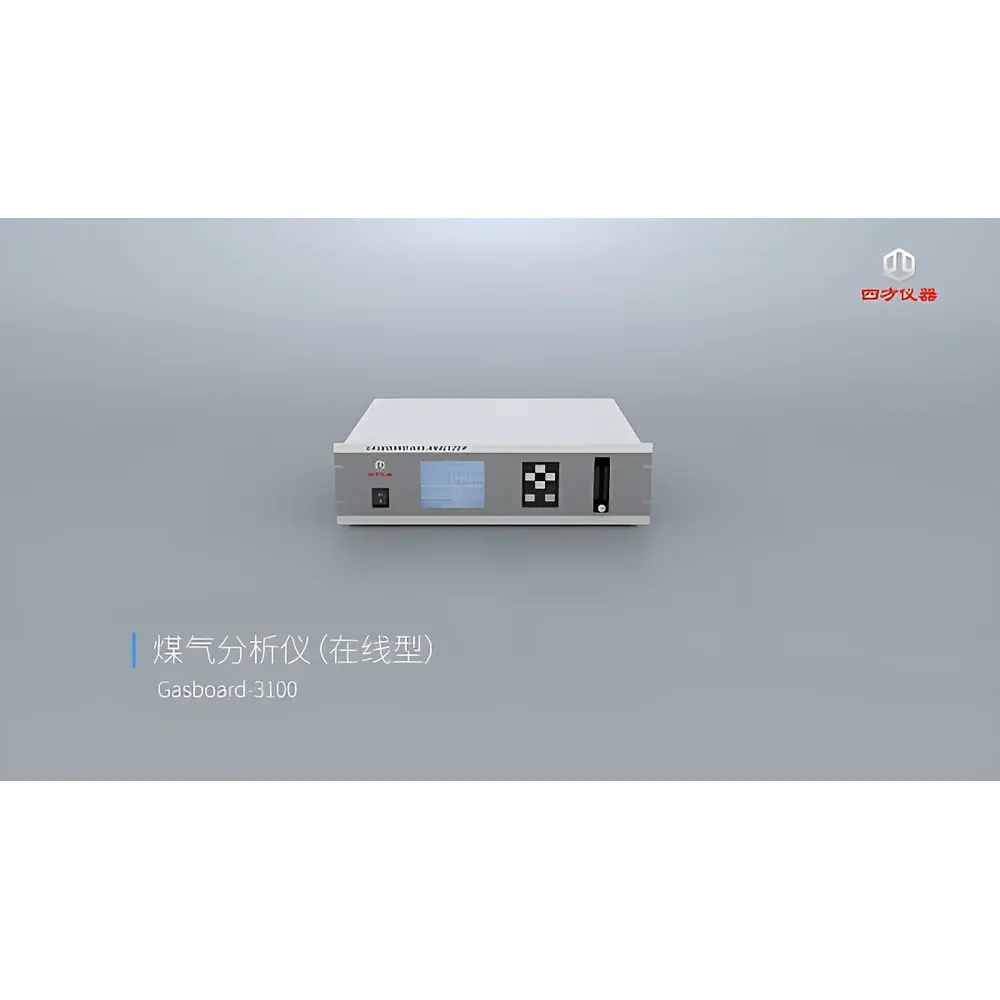
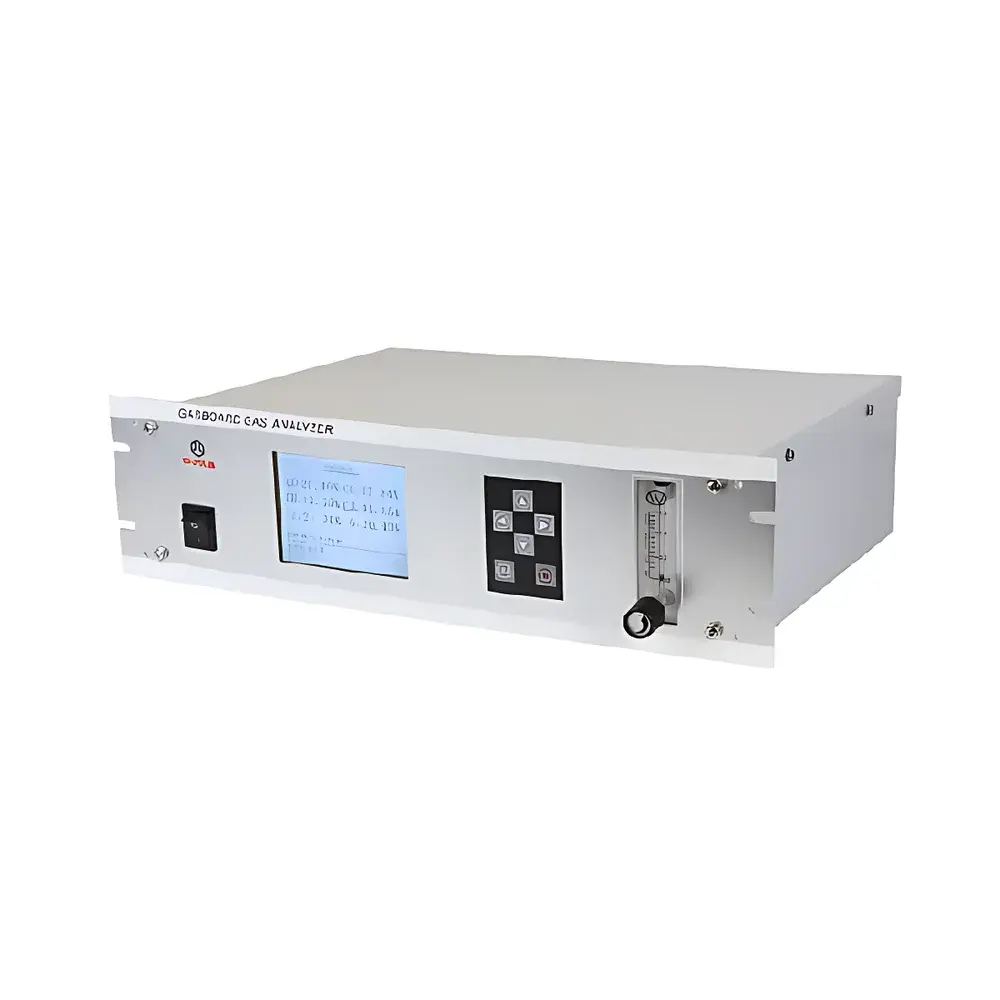
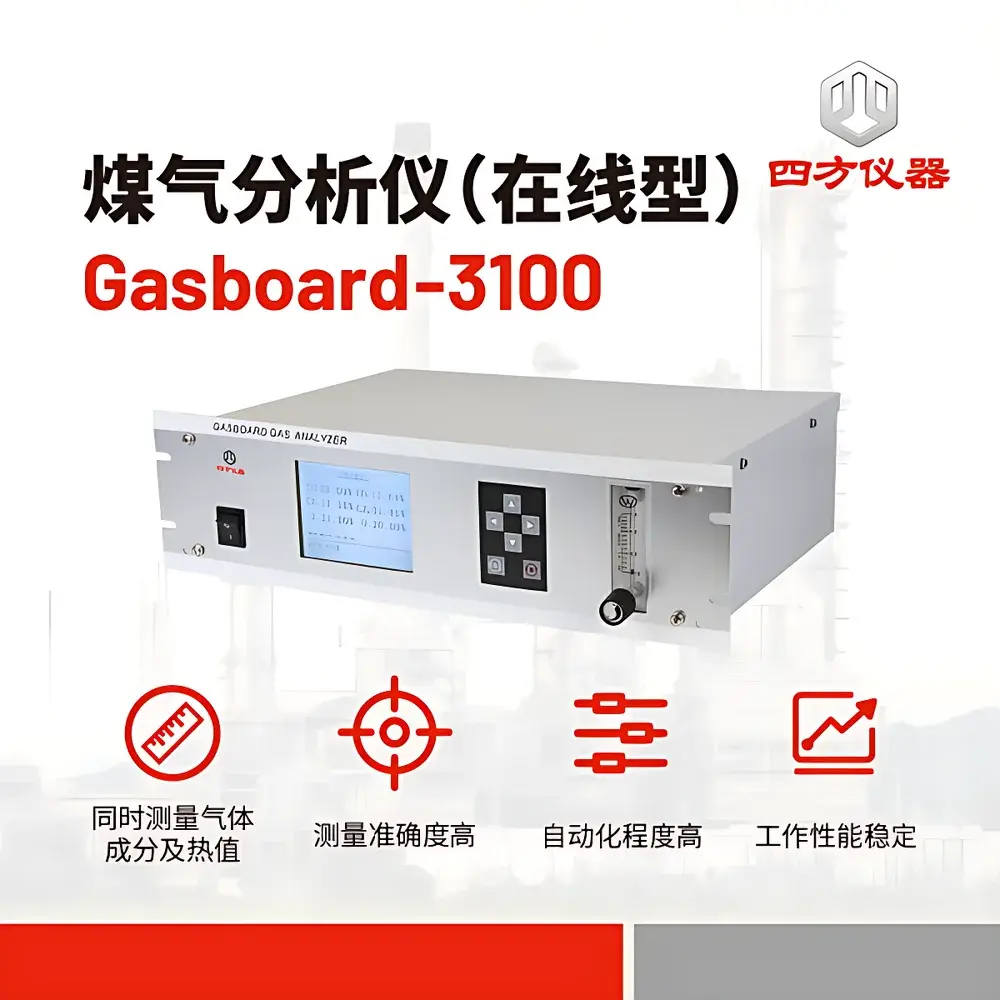
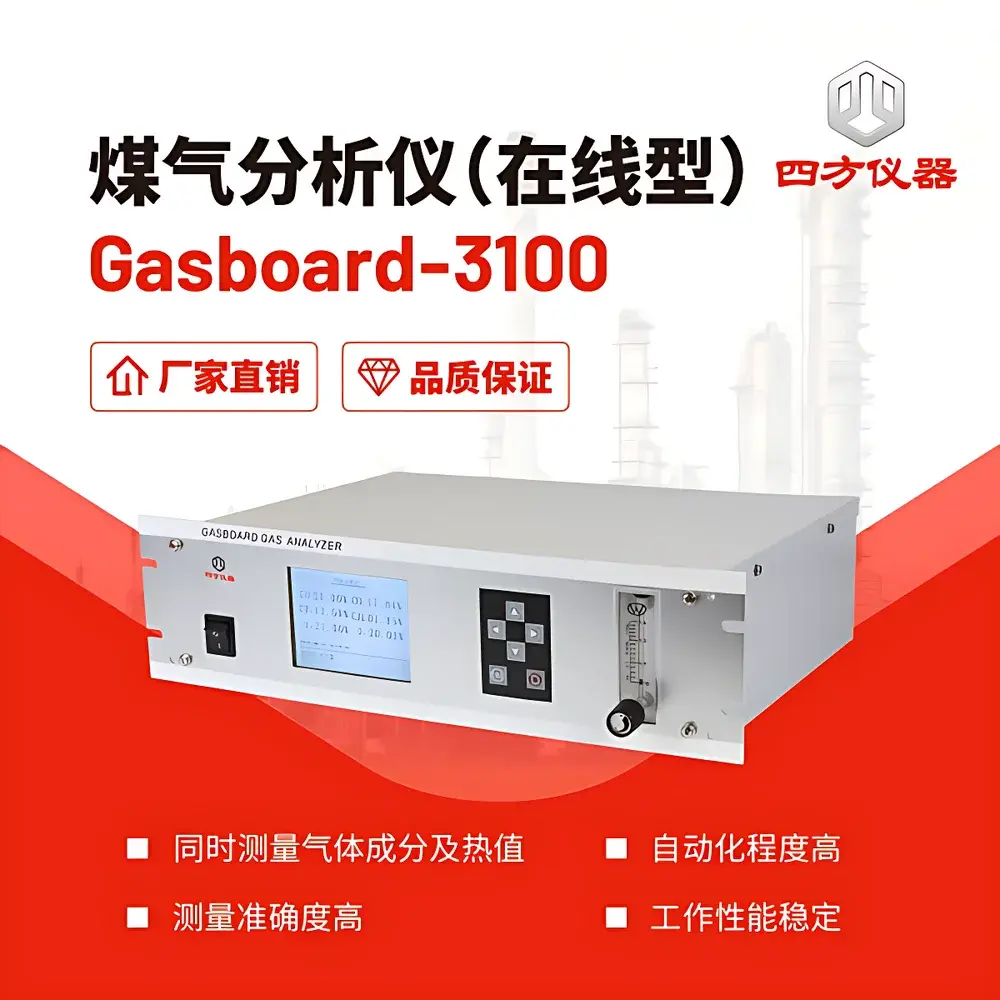
CUBIC INSTRUMENTS Gasboard-3100 Biogas & Industrial Gas Analyzer
| Brand | CUBIC INSTRUMENTS |
|---|---|
| Origin | Hubei, China |
| Model | Gasboard-3100 |
| Measurement Range | CO/CO₂/CH₄/H₂: (0–100)% |
| O₂ | (0–25)% |
| C₂H₂/C₂H₄/CnHm (optional) | (0–10)% |
| Resolution | 0.01% |
| Response Time (T90) | <15 s (NDIR) |
| Principle | NDIR + MEMS-based Thermal Conductivity Detection (TCD) + Long-life Electrochemical O₂ Sensor (or Paramagnetic Option) |
Overview
The CUBIC INSTRUMENTS Gasboard-3100 is a multi-parameter, in-situ biogas and industrial process gas analyzer engineered for continuous, real-time quantification of combustible and inert gas components in complex fuel gas streams. It integrates three complementary detection modalities—non-dispersive infrared (NDIR) spectroscopy for CO, CO₂, CH₄, C₂H₂, C₂H₄, and total non-methane hydrocarbons (CnHm); MEMS-based thermal conductivity detection (TCD) for H₂; and either long-life electrochemical (ECD) or paramagnetic (O₂-PM) sensing for oxygen—enabling simultaneous, interference-free measurement of up to eight gas species and derived higher heating value (HHV). Unlike conventional combustion calorimeters, the Gasboard-3100 calculates calorific value algorithmically using standardized ASTM D1826 and ISO 6976 thermodynamic models, based on measured volumetric concentrations and ideal gas behavior. Its design targets stable operation in demanding environments including coke oven gas, blast furnace gas, biomass-derived syngas, and anaerobic digester biogas—where high moisture, particulate load, and variable flow dynamics are common.
Key Features
- Multi-technology sensor fusion: Independent NDIR channels with optical filters and reference detectors ensure zero cross-sensitivity between CH₄ and CnHm, or CO/CO₂ and H₂—critical for accurate thermal value computation in mixed hydrocarbon streams.
- Thermally stabilized optical bench: All NDIR modules operate within a precisely controlled temperature zone (±0.1 °C), eliminating drift from ambient fluctuations and ensuring long-term baseline stability (>6 months without recalibration under routine conditions).
- Robust sample conditioning architecture: Integrated heated sampling line (180 °C), PTFE-lined stainless-steel gas path, and ceramic particle filter prevent condensation, corrosion, and clogging—compatible with raw biogas containing up to 40 g/m³ water vapor and trace H₂S.
- Auto-zero capability: Built-in miniature air pump enables periodic atmospheric zeroing without external calibration gas, supporting GLP-compliant operation and reducing operational overhead.
- Dual thermal value output: Simultaneous display of gross calorific value in both MJ/m³ (ISO standard) and kcal/m³ (legacy industrial units), with automatic pressure and temperature compensation per ISO 14532.
- Digital and analog I/O: RS-485 Modbus RTU and isolated 4–20 mA outputs support seamless integration into DCS, SCADA, and PLC systems; configurable alarm relays trigger on concentration thresholds or sensor fault conditions.
Sample Compatibility & Compliance
The Gasboard-3100 is validated for direct analysis of untreated or mildly conditioned gas streams from metallurgical coke ovens, municipal wastewater digesters, agricultural biogas plants, and coal gasification reactors. Sample inlet requirements specify dust-free, oil-free, and dew-point-controlled gas (<−10 °C) at 0.7–1.2 L/min and 2–50 kPa absolute pressure. All wetted materials—including sample cell, valves, and tubing—are constructed from 316L stainless steel and PTFE, complying with ISO 8573-1 Class 2 for solid particle contamination and Class 4 for humidity. The analyzer meets CE marking requirements (2014/30/EU EMC Directive and 2014/35/EU LVD), supports FDA 21 CFR Part 11 audit trail configuration (via optional software module), and delivers data traceable to NIST-traceable calibration standards.
Software & Data Management
Embedded firmware includes real-time diagnostics, sensor health monitoring, and event-logged calibration history. Optional PC-based Gasboard Control Suite provides advanced functionality: automated daily zero/span validation reports, trend visualization with user-defined time windows (1 min to 30 days), export to CSV/Excel with ISO-compliant metadata tags (timestamp, instrument ID, operator ID, environmental T/P), and configurable alarm escalation via email/SMS. Data integrity safeguards include write-protected internal memory, cyclic redundancy checksums on all stored records, and password-protected configuration access levels (operator, engineer, administrator).
Applications
- Metallurgical process control: Continuous monitoring of blast furnace top gas, coke oven gas, and converter gas for energy recovery optimization and emission compliance reporting (EU IED Annex IV).
- Biogas plant operations: Real-time feedstock digestion efficiency assessment, upgrading system control (e.g., membrane separation or PSA), and Wobbe index verification prior to grid injection.
- Research & development: Quantitative analysis of pyrolysis syngas composition, catalytic reforming product distribution, and combustion stoichiometry validation in academic combustion laboratories.
- Fuel gas trading: On-site calorific value certification for contractual settlement in industrial natural gas and biomethane supply agreements.
FAQ
What gas species does the Gasboard-3100 measure natively, and which require optional modules?
The base configuration measures CO, CO₂, CH₄, H₂, and O₂. C₂H₂, C₂H₄, and CnHm (total non-methane hydrocarbons) are available as factory-installed NDIR options.
Can the analyzer operate without external zero gas?
Yes—it features an integrated clean-air pump for automatic atmospheric zeroing, eliminating dependency on bottled zero gas for routine drift correction.
Is paramagnetic O₂ detection available as a field-upgradeable option?
Paramagnetic O₂ sensing is offered as an alternative to electrochemical cells at time of order; it is not retrofittable due to mechanical and electronic interface differences.
How is thermal value calculated, and what standards does it follow?
HHV is computed in real time using the measured mole fractions, ideal gas law, and group contribution methods per ISO 6976:2016 and ASTM D3588-98, with full correction for sample temperature, pressure, and water vapor content.
What maintenance intervals are recommended for unattended operation?
Filter replacement every 3 months under typical biogas conditions; full optical path inspection and span check every 6 months; no consumables required for NDIR or TCD sensors.






