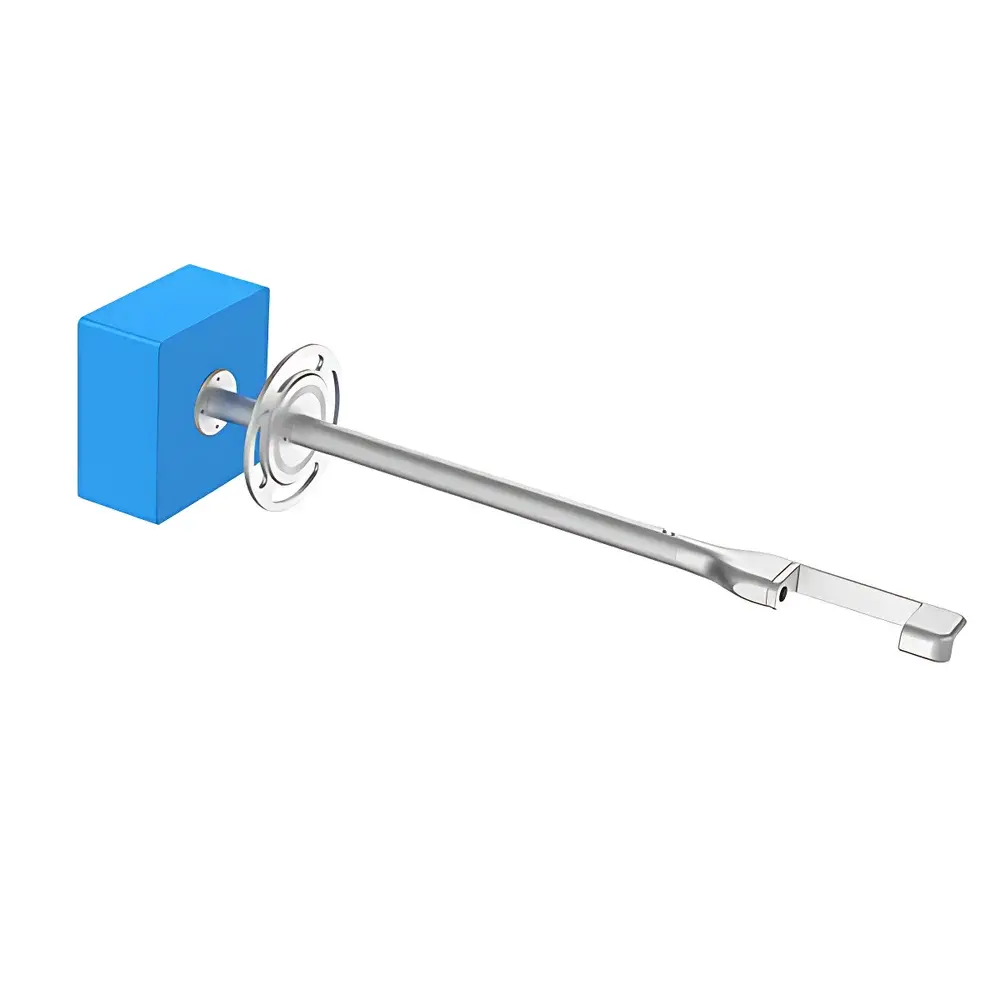
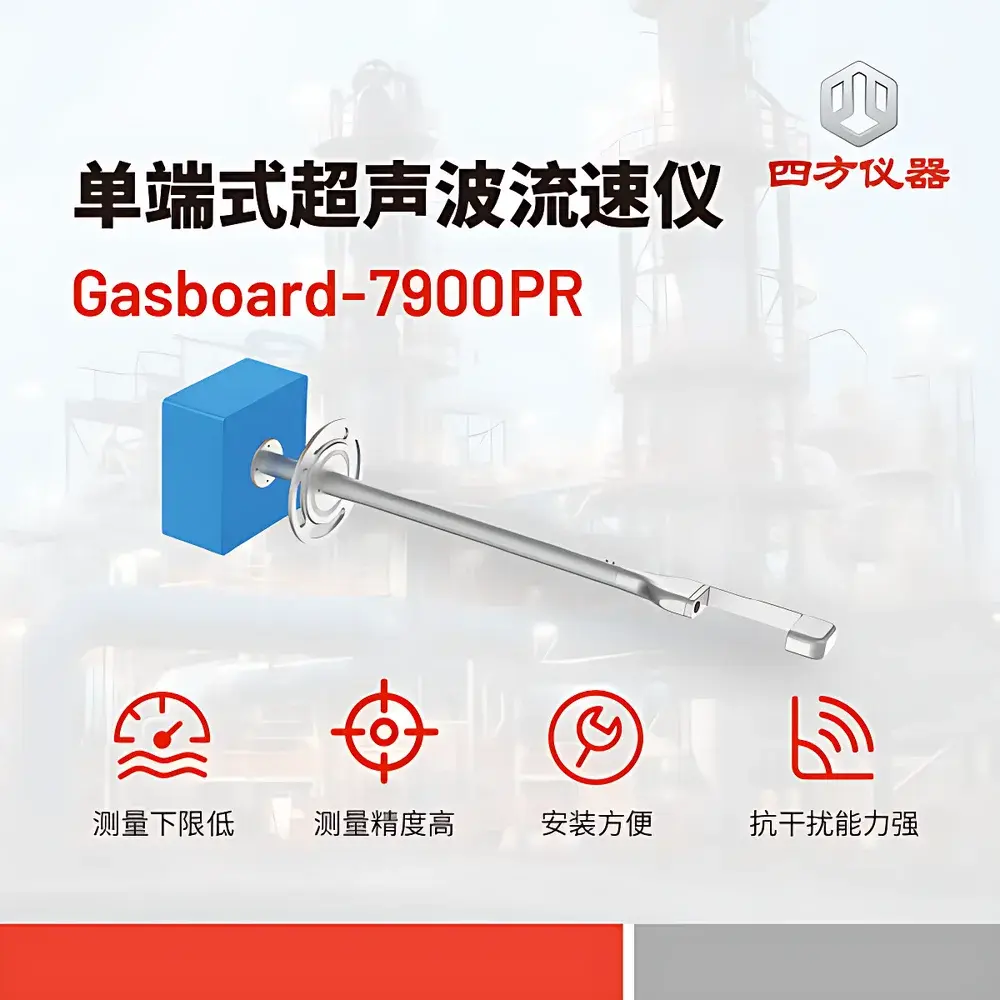
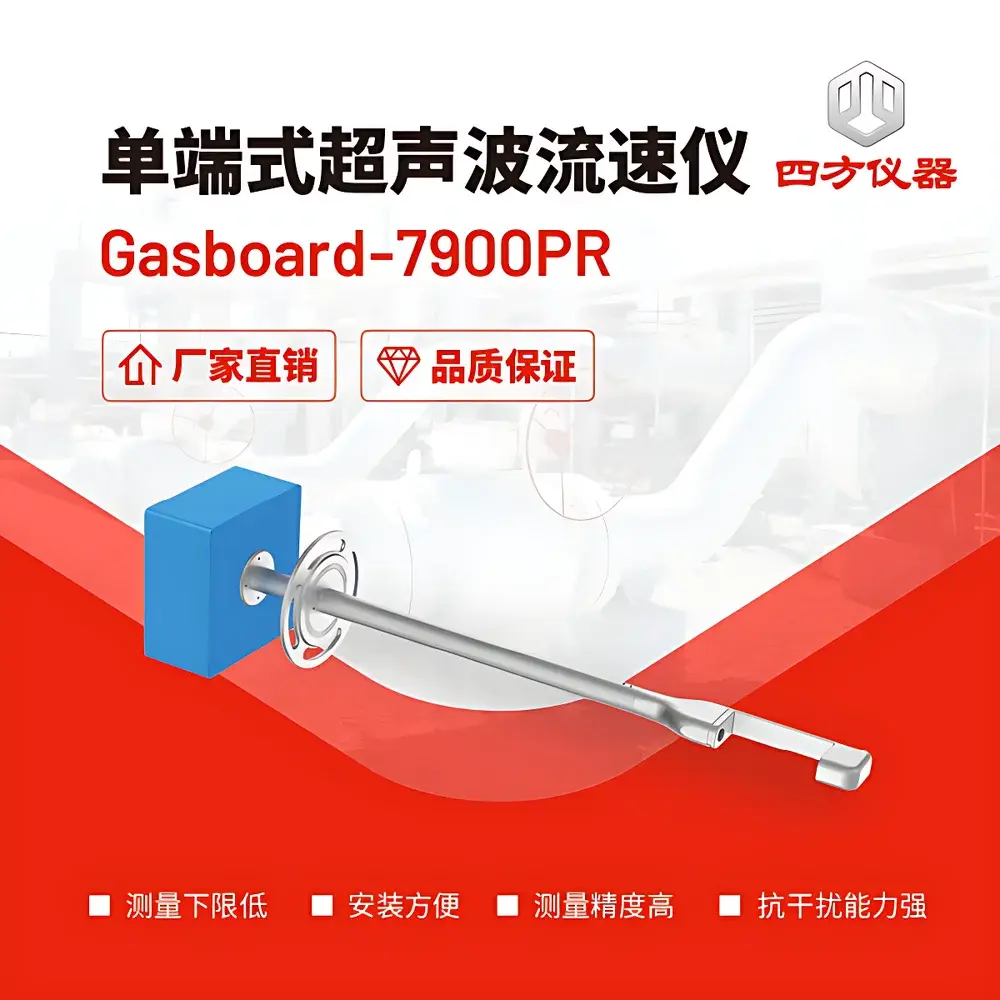
CUBIC INSTRUMENTS Gasboard-7900PR Single-Ended Ultrasonic Flow Velocity Meter
| Brand | CUBIC INSTRUMENTS |
|---|---|
| Origin | Hubei, China |
| Model | Gasboard-7900PR |
| Product Type | Ultrasonic |
| Measurement Principle | Time-of-Flight (TOF) Ultrasonic Transit-Time Difference |
| Accuracy | ≤ ±2% F.S. |
| Velocity Range | 0–40 m/s |
| Minimum Detectable Velocity | 0.1 m/s |
| Pipe Diameter Compatibility | ≥ 0.5 m |
| Flue Gas Temperature Range | −20 to 190 °C |
| Flue Gas Pressure Range | −10 to +10 kPa |
| Host Operating Temperature | −20 to +60 °C |
| Power Supply | AC 220 V ±10%, 50/60 Hz |
| Output Signal | RS-485 |
| Ingress Protection | IP65 |
| Material Contacting Gas | Corrosion-Resistant Alloy (e.g., Hastelloy C-276 or equivalent) |
Overview
The CUBIC INSTRUMENTS Gasboard-7900PR is a single-ended, transit-time ultrasonic flow velocity meter engineered for continuous, non-intrusive measurement of flue gas velocity in industrial and municipal emission monitoring applications. Unlike conventional pitot tubes or thermal anemometers, the Gasboard-7900PR employs a time-of-flight (TOF) ultrasonic principle: a pair of transducers—mounted on the same side of the duct—emit and receive ultrasonic pulses across a defined acoustic path. By precisely measuring the differential propagation time of upstream and downstream ultrasonic signals, the instrument computes the radial line-averaged gas velocity with high reproducibility. This configuration eliminates the need for opposing port drilling, significantly reducing installation complexity and structural compromise in existing ductwork. The design is optimized for harsh flue gas environments characterized by elevated temperature (up to 190 °C), high humidity, particulate loading, and acidic condensates—conditions commonly encountered in coal-fired power plants, waste incinerators, cement kilns, and steel sintering facilities.
Key Features
- Single-ended mounting: Requires only one penetration point per measurement plane, enabling rapid retrofit into legacy stacks without duct modification or dual-port alignment.
- Low-velocity capability: Sensitive detection down to 0.1 m/s ensures reliable performance during low-load boiler operation or post-SCR low-flow conditions.
- Corrosion-resistant wetted materials: All gas-contacting components—including transducer housings and acoustic windows—are fabricated from high-grade corrosion-resistant alloys compatible with H₂SO₄, HCl, and moisture-laden flue streams.
- Self-correlation demodulation algorithm: Mitigates signal degradation from broadband acoustic noise, mechanical vibration, and turbulent eddies—common in large-diameter ducts with complex flow profiles.
- Integrated environmental sensing: Onboard temperature and pressure compensation circuits enable real-time normalization of volumetric velocity to standardized conditions (e.g., 101.325 kPa, 0 °C or 25 °C as required by regulatory reporting).
- Embedded intelligence: Local firmware supports zero-point calibration, span verification, diagnostic self-tests, and configuration parameter storage—all accessible via RS-485 Modbus RTU protocol.
Sample Compatibility & Compliance
The Gasboard-7900PR is validated for use with non-flammable, non-explosive process gases including ambient air, combustion flue gas, and inert carrier streams. It is not rated for use with hydrocarbons, hydrogen, or other Class I, Division 1 hazardous atmospheres. The instrument meets electromagnetic compatibility (EMC) requirements per IEC 61326-1 (industrial environment) and conforms to mechanical robustness standards aligned with IEC 60529 (IP65 enclosure rating). While not certified to EN 15267 or QAL1 under EU MCERTS, its measurement uncertainty (≤ ±2% F.S.) aligns with the performance criteria specified in EPA Method 2 (U.S. Code of Federal Regulations, 40 CFR Part 60, Appendix A-1) and ISO 2186 for velocity profile characterization in emission stacks. Data integrity complies with basic audit-trail requirements for GLP-aligned QA/QC workflows.
Software & Data Management
Data output is delivered via isolated RS-485 serial interface using standard Modbus RTU protocol (slave ID configurable, baud rates up to 115.2 kbps). Each frame includes timestamped velocity (m/s), static temperature (°C), and absolute pressure (kPa) values, along with status flags (e.g., signal-to-noise ratio, transducer health, thermal drift alert). The device supports integration into third-party SCADA systems and Continuous Emission Monitoring Systems (CEMS) without proprietary middleware. Optional firmware updates are distributed via secure USB interface; all configuration changes are logged with date/time stamps to support traceability in regulated environments. No cloud connectivity or remote firmware update functionality is implemented—ensuring data sovereignty and compliance with air-gapped network policies common in critical infrastructure.
Applications
- Real-time velocity input for mass flow calculation in CEMS installations complying with EPA 40 CFR Part 75 or China’s HJ 75–2017 standard.
- Stack velocity profiling during performance testing of electrostatic precipitators (ESPs), fabric filters, and wet scrubbers.
- Low-flow verification in bypass ducts, induced draft fan outlets, and selective catalytic reduction (SCR) inlet sections.
- Commissioning and periodic validation of differential pressure-based flow devices where field calibration access is limited.
- Research-grade flue gas dynamics studies requiring radial line-averaged velocity with minimal flow disturbance.
FAQ
Is the Gasboard-7900PR suitable for explosive atmospheres?
No. It is designed exclusively for non-flammable gases and lacks ATEX, IECEx, or UL hazardous location certification.
Can it measure bidirectional flow?
No. The single-ended TOF architecture measures net unidirectional velocity along the acoustic path; reverse flow is reported as zero or invalid depending on signal confidence thresholds.
What maintenance intervals are recommended?
Transducer face inspection and cleaning every 6–12 months is advised depending on particulate load; no routine recalibration is required if operating within specified temperature/pressure limits.
Does it support analog output (e.g., 4–20 mA)?
No. Output is digital-only via RS-485; external protocol converters may be used if analog integration is required.
How is temperature compensation applied?
An integrated Pt100 RTD sensor mounted adjacent to the transducer assembly provides real-time acoustic velocity correction based on local gas temperature, ensuring accuracy across the full −20 to 190 °C range.