
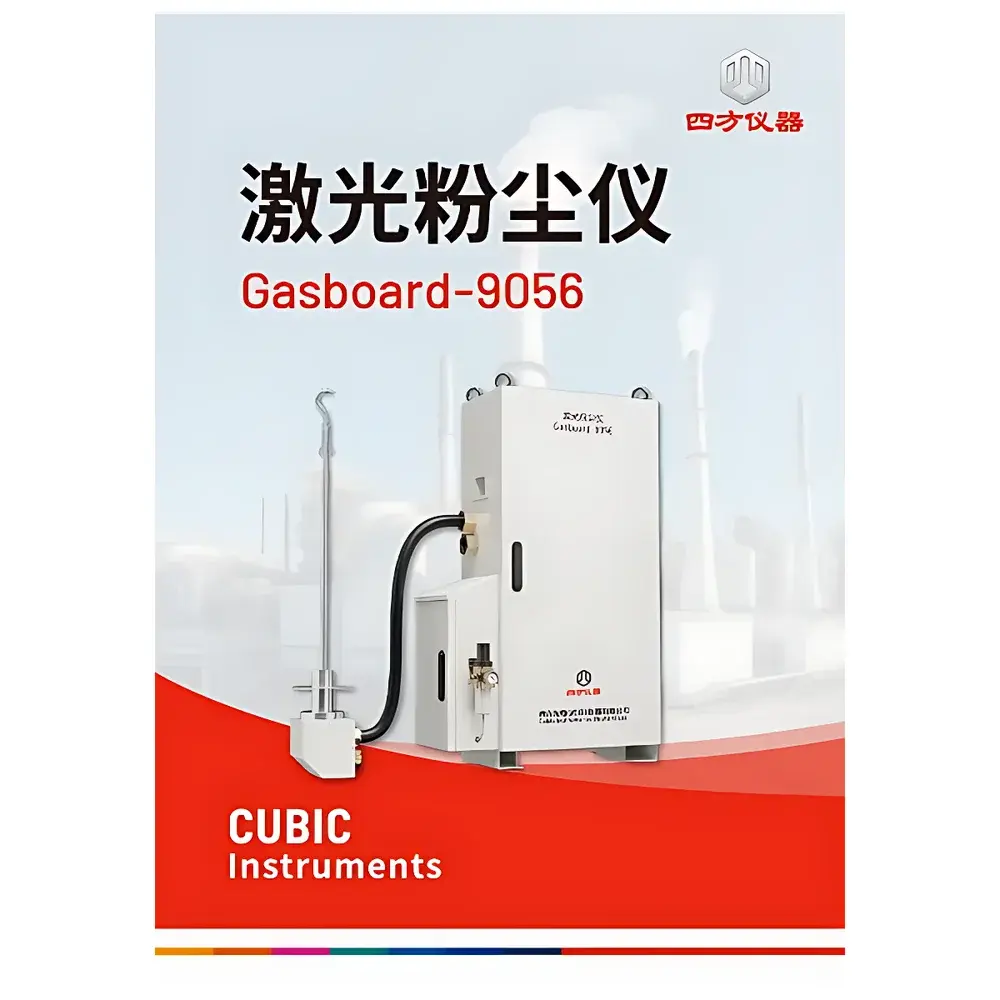
CUBIC INSTRUMENTS Gasboard-9056 Laser-Based Dust Monitor
| Brand | CUBIC INSTRUMENTS |
|---|---|
| Origin | Hubei, China |
| Manufacturer Type | Authorized Distributor |
| Country of Origin | China |
| Model | Gasboard-9056 |
| Measurement Principle | Forward Light Scattering (Laser) |
| Safety Rating | Explosion-Proof (Ex d IIB T4 Gb) |
| Measurement Range | 0–5 mg/m³ |
| Resolution | < 0.1 mg/m³ |
| Accuracy | ±10% of reading |
| Relative Error | ≤ ±20% |
| Sampling Method | Heated Extractive Probe with Hot-Wet Return |
| Isokinetic Sampling Capability | Yes |
| Maximum Sampling Flow Rate | 200 L/min |
| Operating Environment | -20°C to +60°C, RH ≤ 95% non-condensing, IP65 enclosure |
Overview
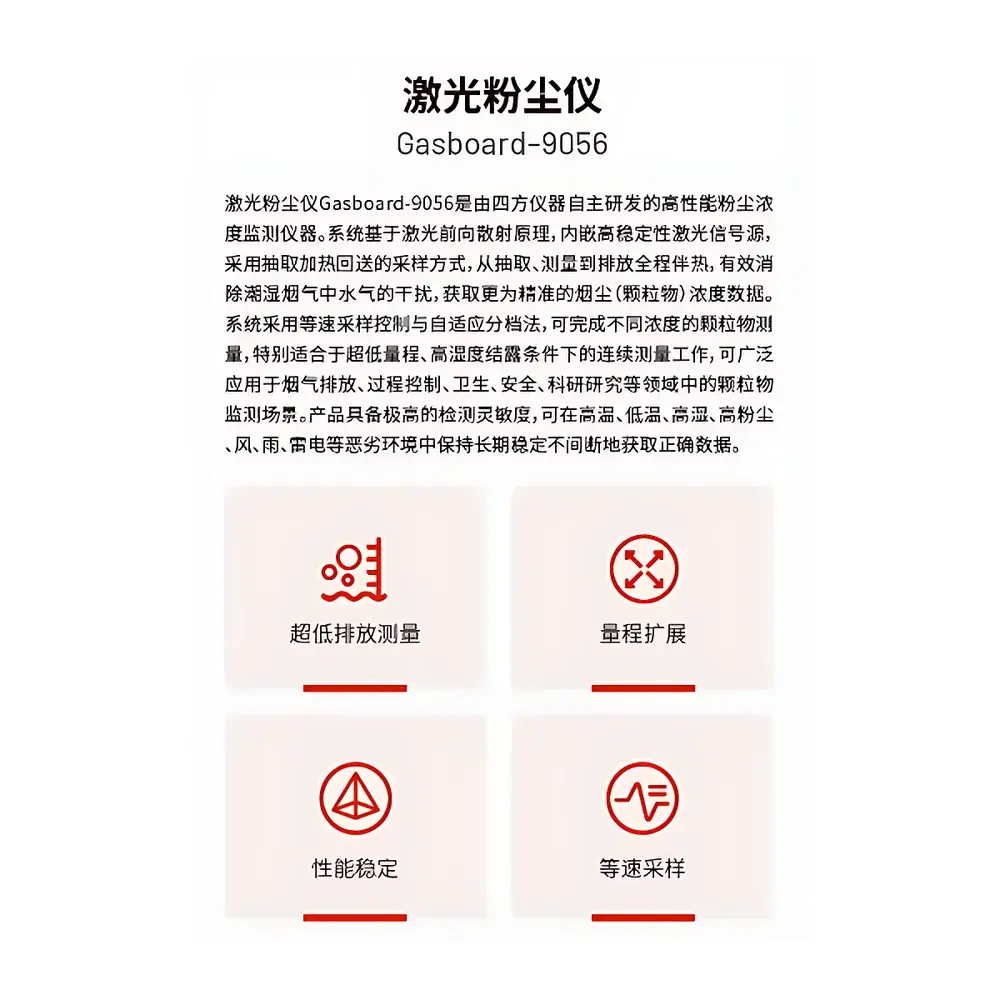
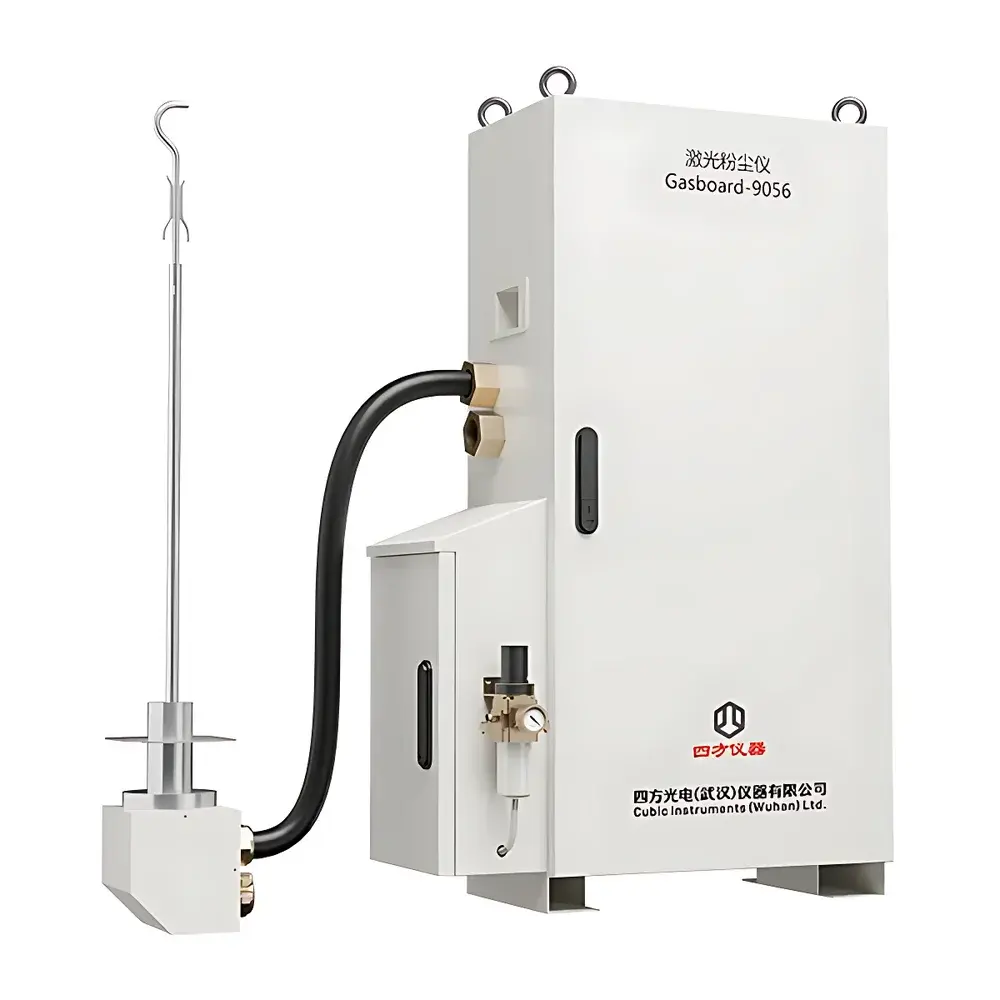
The CUBIC INSTRUMENTS Gasboard-9056 is a laser-based continuous particulate matter (PM) monitor engineered for high-reliability, real-time measurement of low-concentration dust in challenging industrial flue gas streams. It operates on the principle of forward light scattering — where a collimated, temperature-stabilized semiconductor laser beam interacts with suspended particles in a heated sample path, generating scattered light intensity proportional to particle mass concentration. Unlike passive optical methods, this active scattering geometry enables superior signal-to-noise ratio and immunity to background radiation drift. The system integrates a fully heated extractive sampling train — including probe, heated transfer line, and return loop — maintaining all wetted components above dew point (typically ≥180°C) to prevent condensation-induced bias and water droplet interference. This architecture ensures stable, traceable performance under high-humidity, low-temperature, or intermittently condensing conditions commonly encountered in coal-fired power plants, waste incinerators, cement kilns, and chemical process ducts.
Key Features
- Laser-based forward scattering detection with factory-calibrated NIST-traceable reference standards
- Explosion-proof housing certified to Ex d IIB T4 Gb per IEC 60079-1, suitable for Zone 1 hazardous areas
- Heated extractive sampling system with isokinetic flow control (0–200 L/min), supporting external velocity input for dynamic compensation
- Integrated auto-blowback module using clean compressed air (≥0.5 MPa) to clear optical windows and sampling nozzle at user-defined intervals
- Onboard self-diagnostic routines including laser power monitoring, photodetector baseline verification, and heater temperature validation
- Real-time sensor self-cleaning via pulsed thermal cycling and ultrasonic-assisted surface vibration
- Dual-stage particulate pre-conditioning: heated cyclone + sintered metal filter (3 µm cutoff) to remove coarse debris prior to optical cell
- Modular design allowing field replacement of optical unit, sampling probe, and electronics without full system shutdown
Sample Compatibility & Compliance
The Gasboard-9056 is validated for continuous monitoring of PM10 and total suspended particulates (TSP) in flue gases containing up to 20 g/m³ entrained moisture, SO₂ concentrations ≤2,000 ppm, and NOx ≤1,000 ppm. It meets the technical requirements specified in HJ/T 76–2017 for CEMS (Continuous Emission Monitoring Systems) and complies with sampling methodology stipulations in HJ/T 48–1999. While not certified to EN 15267 or MCERTS, its measurement uncertainty profile aligns with the ±15% relative standard deviation threshold defined in ISO 12141 for low-range optical dust monitors. The system supports audit-ready data logging compliant with GLP principles, including timestamped calibration records, maintenance logs, and fault event traces — essential for regulatory reporting under China’s GB 13223–2011 emission limits.
Software & Data Management
Embedded firmware (v3.2+) provides local configuration via 7-inch resistive touchscreen with multi-level password protection. Data output includes analog 4–20 mA (isolated), RS485 Modbus RTU, and optional Ethernet TCP/IP with configurable MQTT/HTTP(S) upload to SCADA or cloud platforms. All measurements are time-stamped with microsecond precision using internal RTC synchronized via NTP or GPS. Audit trails retain >12 months of raw scatter signal data, diagnostic flags, and calibration events — satisfying basic FDA 21 CFR Part 11 requirements for electronic record integrity when paired with external identity management. Remote firmware updates and parameter reconfiguration are supported via secure SSH tunneling.
Applications
- Continuous compliance monitoring of stack emissions from thermal power plants and industrial boilers
- In-process dust concentration feedback control in baghouse bypass lines and electrostatic precipitator outlets
- Occupational health and safety monitoring in mining ventilation shafts and foundry casting zones
- Research-grade particulate characterization in combustion test rigs and pilot-scale carbon capture facilities
- Long-term ambient dust trend analysis in urban-industrial boundary zones with high humidity variability
FAQ
What is the recommended calibration frequency for the Gasboard-9056 in continuous operation?
Calibration verification using NIST-traceable polydisperse aerosol (e.g., Arizona Test Dust) is recommended every 90 days; full two-point calibration (zero and span) should be performed semiannually or after major maintenance.
Can the instrument operate unattended for extended periods in outdoor environments?
Yes — the IP65-rated enclosure, wide operating temperature range (-20°C to +60°C), and integrated desiccant-free heating system enable uninterrupted deployment in exposed stack-mounted or rooftop installations.
Does the system support integration with third-party CEMS platforms?
Yes — Modbus RTU over RS485 and 4–20 mA analog outputs ensure seamless interoperability with industry-standard DCS and PLC systems, including Siemens Desigo, Honeywell Experion, and Yokogawa CENTUM VP.
How does the heated sampling system mitigate errors from water vapor condensation?
By maintaining the entire sample path above the local dew point (typically ≥180°C), the system prevents phase change of moisture, eliminating Mie scattering artifacts from liquid droplets and ensuring mass-based correlation remains valid across varying humidity profiles.







