
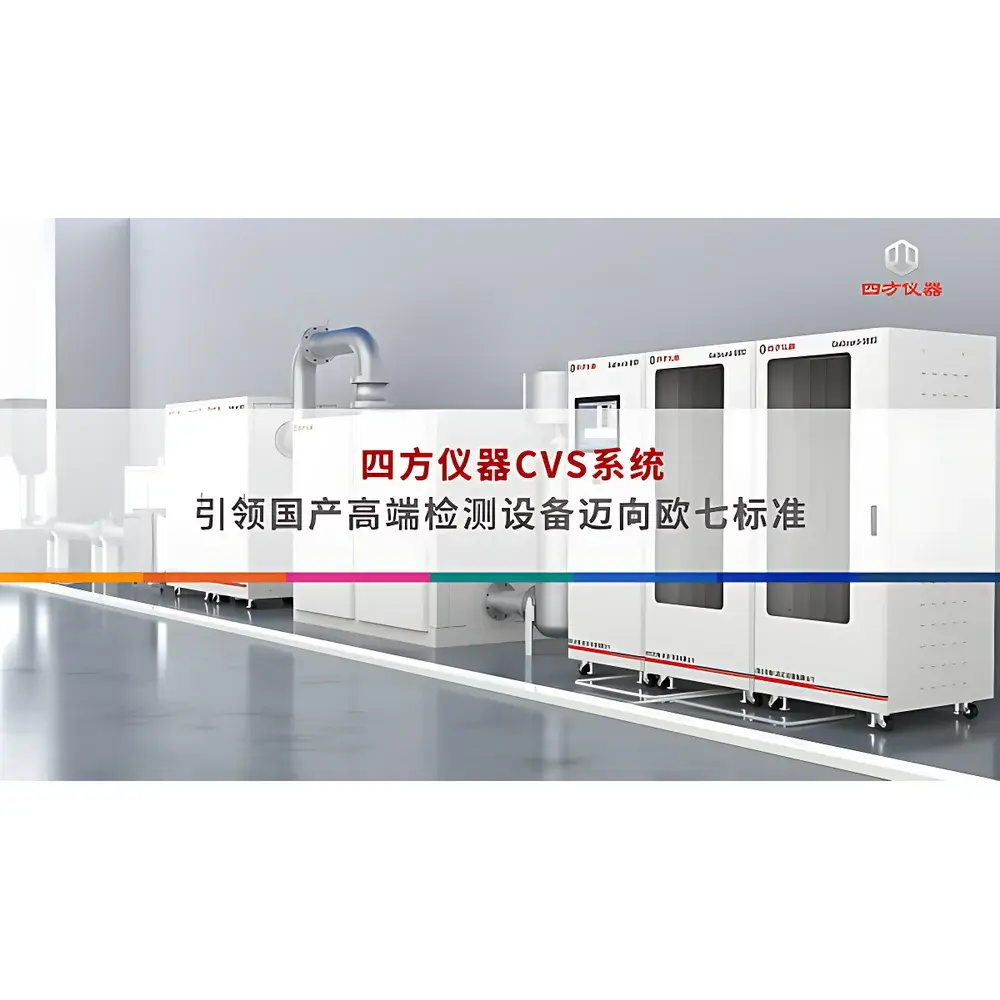
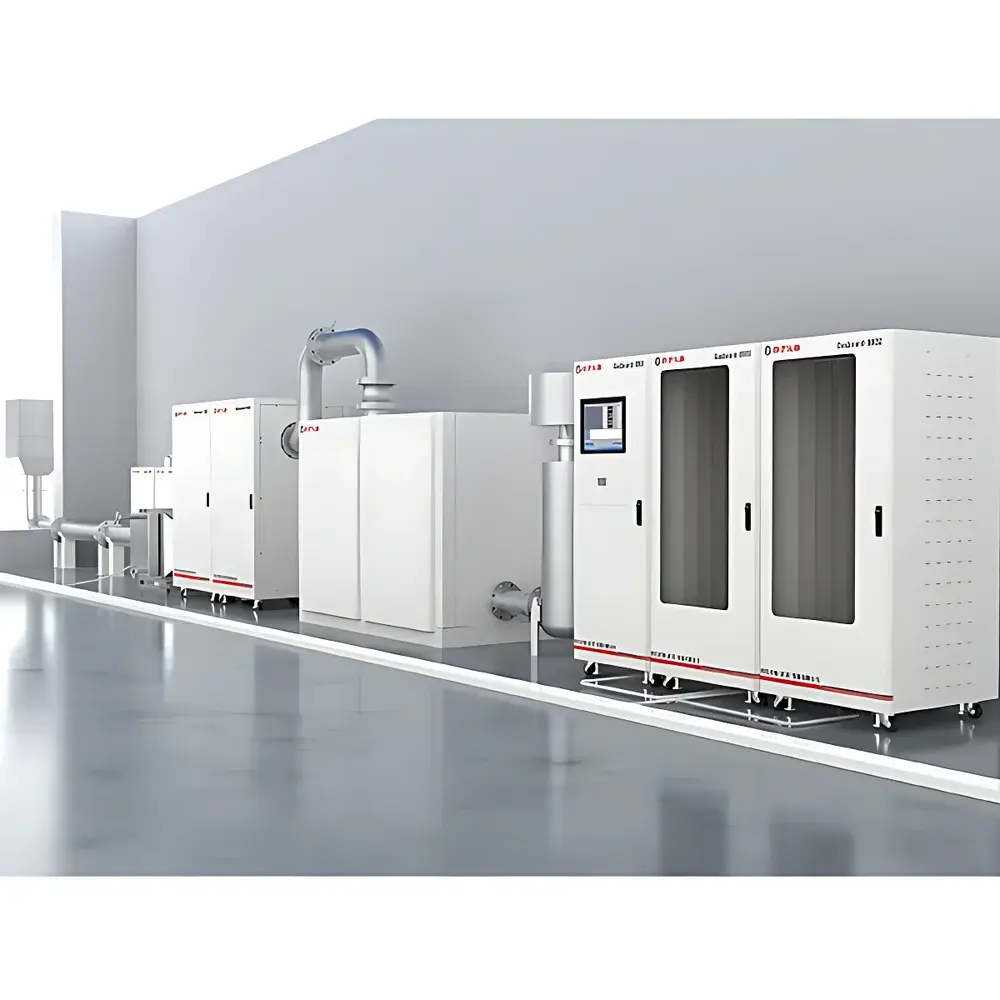
CUBIC INSTRUMENTS Gasboard-9802 Full-Flow Dilution Constant Volume Sampling System (CVS)
| Brand | CUBIC INSTRUMENTS |
|---|---|
| Origin | Hubei, China |
| Manufacturer Type | Authorized Distributor |
| Country of Origin | China |
| Model | Gasboard-9802 |
| Instrument Type | Online System |
| Measurement Principle | Dilution-based gravimetric/volumetric sampling with thermal and flow stabilization |
| Max. Permissible Error | ±2% (propane spike verification) |
| Measured Emission Sources | Laboratory-based exhaust testing of newly manufactured mobile sources (engines & light/heavy-duty vehicles) |
| Dilution Exhaust Flow Ranges | 1–12, 3–24, 9–60, or 30–150 m³/min |
| Diluted Exhaust Temperature Control | 40 ± 5 °C |
| Bag Sampling Flow Rates | 3, 6, or 9 L/min |
| Sample Bag Configuration | 3 dilution air bags + 3 diluted exhaust bags |
| Bag Chamber Temperature Control | 35 ± 5 °C |
| Particulate Sampling Flow | 35–65 L/min |
| Particulate Sampling Channels | 3 diluted exhaust + 1 dilution air |
| Particulate Sampling Box Temperature | 47 ± 5 °C |
| Dilution Air Filtration | Activated carbon + pre-filter + H13 HEPA filter |
| Operating Environment | 5–35 °C ambient temperature, ≤80% RH, 80–102 kPa atmospheric pressure |
Overview
The CUBIC INSTRUMENTS Gasboard-9802 Full-Flow Dilution Constant Volume Sampling (CVS) System is an engineered solution for laboratory-grade regulatory emission testing of internal combustion engines and road vehicles. Designed in strict alignment with international test protocols—including ISO 8178, ISO 16183, SAE J1094, and the upcoming EU Regulation (EU) 2023/2022 governing Euro 7 type-approval requirements—the Gasboard-9802 implements a gravimetrically validated, thermally stabilized full-flow dilution architecture. It operates on the principle of proportionally diluting raw exhaust with conditioned, ultra-clean dilution air to maintain representative sample integrity while preventing condensation, adsorption, and thermodynamic artifacts. The system maintains constant volumetric sampling conditions via precision-calibrated critical-flow venturis (CFVs), enabling accurate integration of gaseous and particulate mass emissions over transient or steady-state test cycles (e.g., WLTC, FTP-75, RDE simulation).
Key Features
- Multi-range CFV configuration supporting four selectable dilution exhaust flow spans (1–12, 3–24, 9–60, and 30–150 m³/min), ensuring adaptability across engine displacement classes—from small-displacement motorcycles to heavy-duty diesel powertrains.
- Integrated high-efficiency thermal management: a dual-stage heat exchanger combined with active temperature-controlled ducting ensures diluted exhaust remains at 40 ± 5 °C throughout the sampling train—minimizing water vapor condensation and preserving volatile organic compound (VOC) and semi-volatile particulate matter (SVPM) stability.
- Dedicated bag chamber with independent PID-controlled heating (35 ± 5 °C), housing six certified Tedlar® or fluorinated ethylene propylene (FEP) sample bags—three for dilution air background correction and three for time-integrated exhaust collection per test phase.
- Particulate sampling subsystem featuring three parallel isokinetic exhaust probes and one dedicated dilution air probe, all routed to a thermostatically regulated sampling box (47 ± 5 °C) compliant with ISO 8549-2 and US EPA Method 5 guidelines for filter-based PM quantification.
- Multi-stage dilution air purification train comprising coarse particulate pre-filtration, activated carbon adsorption (for hydrocarbon and ozone precursor removal), and H13-class HEPA filtration—delivering ≤0.01 mg/m³ total particulate loading and <1 ppb THC background, essential for sub-10 mg/km NOx and PN < 6×10¹¹ #/km certification testing.
Sample Compatibility & Compliance
The Gasboard-9802 supports full compliance with global type-I laboratory emission test procedures for light-duty vehicles (LDV), heavy-duty engines (HDE), non-road mobile machinery (NRMM), and marine propulsion systems. Its hardware architecture and control firmware are designed to meet the metrological traceability requirements of ISO/IEC 17025-accredited laboratories. All flow sensors, temperature transducers, and pressure transmitters are calibrated against NIST-traceable standards, with documented uncertainty budgets available upon request. The system’s ±2% accuracy (verified via propane spike calibration per ISO 16183 Annex D) satisfies the repeatability and reproducibility thresholds defined in UN/ECE Regulation No. 49, GB 18352.6–2016, and EU 2017/1151. Optional integration with GLP/GMP-compliant audit trail logging enables 21 CFR Part 11 readiness for regulatory submissions.
Software & Data Management
The embedded control software provides real-time monitoring of 80+ process variables—including differential pressures across filters, CFV inlet/outlet temperatures, bag fill status, and thermal stability deviations—with configurable alarm thresholds and automated event logging. Data export conforms to ASAM MCD-2 MC and ASAM ODS standards, facilitating seamless import into third-party analysis platforms such as AVL PUMA, Horiba MEXA Suite, or custom MATLAB/Simulink post-processing environments. All calibration records, maintenance logs, and test reports are stored in a tamper-evident SQLite database with SHA-256 hashing; optional network-enabled remote diagnostics support ISO/IEC 27001-aligned cybersecurity practices.
Applications
- Regulatory certification testing for Euro 6d, China 6b, and upcoming Euro 7 vehicle and engine type-approval programs.
- Development and validation of aftertreatment systems (SCR, GPF, DOC) under controlled laboratory conditions.
- Research-grade investigation of nanoparticle formation mechanisms, including nucleation mode particle dynamics during cold-start and low-load operation.
- Verification of onboard diagnostic (OBD) monitor performance using reference CVS-derived mass emission baselines.
- Support for harmonized worldwide light-duty test cycles (WLTC, FTP-75, JC08) and heavy-duty transient cycles (ESC, ELR, WHSC).
FAQ
What emission standards does the Gasboard-9802 support?
It meets the hardware and procedural requirements of ISO 8178, ISO 16183, SAE J1094, UN/ECE R49, GB 18352.6–2016, and EU 2017/1151, with design provisions for Euro 7 implementation.
Can the system be integrated with existing gas analyzers and particle counters?
Yes—it features standardized analog (0–10 V, 4–20 mA) and digital (RS-485, Ethernet TCP/IP) I/O interfaces compatible with major OEM analyzers including Horiba, AVL, and Siemens.
Is the dilution air filtration sufficient for ultra-low emission testing?
The triple-stage filtration (pre-filter + activated carbon + H13 HEPA) achieves hydrocarbon backgrounds <1 ppb and particulate loadings <0.01 mg/m³—validated per ISO 12103-1 A2 test dust challenge and ASTM D2989.
How is system accuracy verified?
Through periodic propane spike tests per ISO 16183 Annex D, with results traceable to NIST SRM 1849a; full calibration certificates include expanded uncertainty (k=2) reporting.
Does the system support remote operation and data archiving?
Yes—integrated web server enables secure remote access; test data archives comply with ISO 15143-3 for long-term storage integrity and retrieval fidelity.







