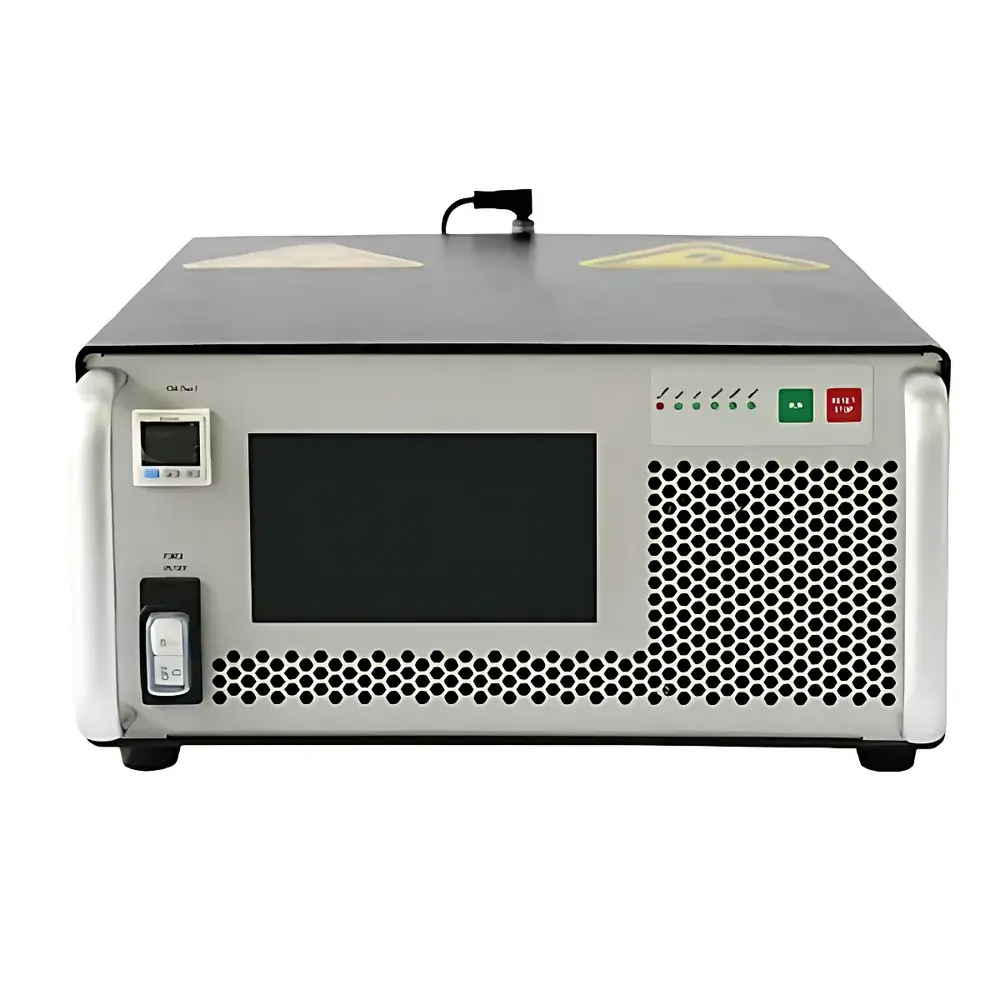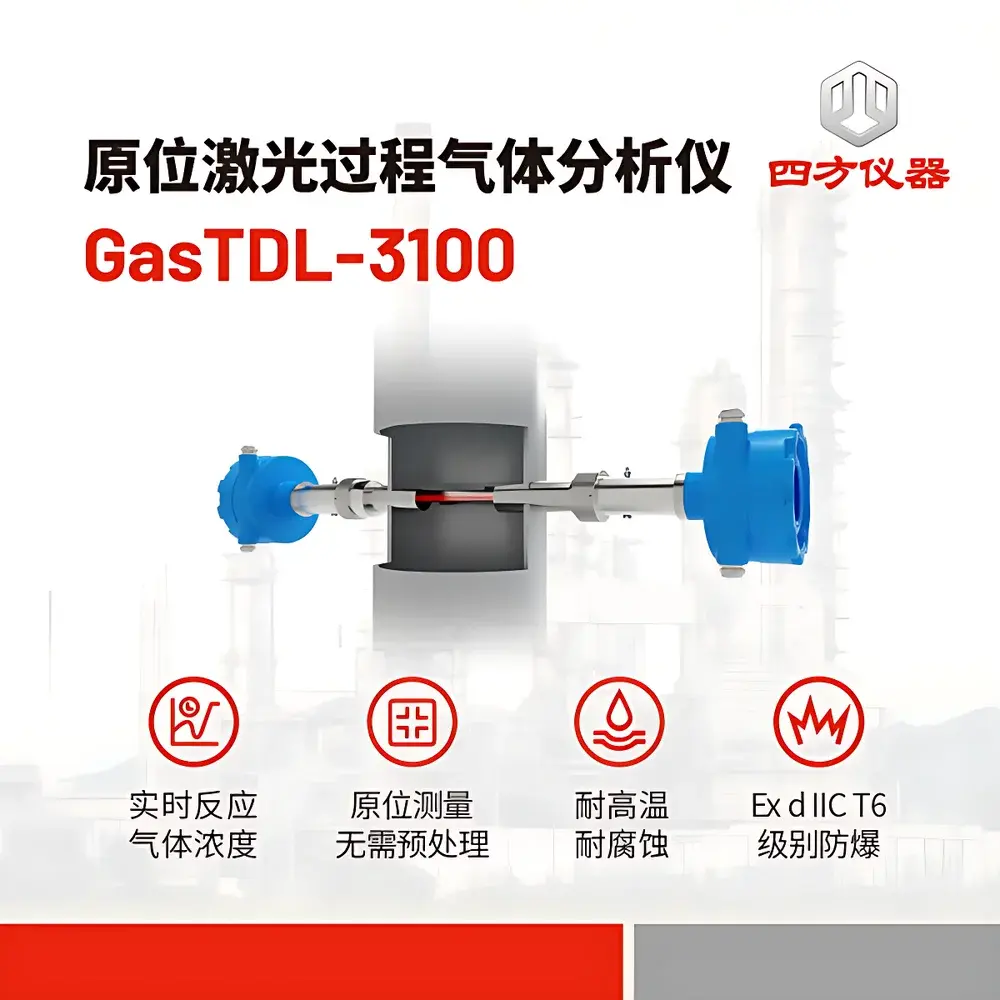
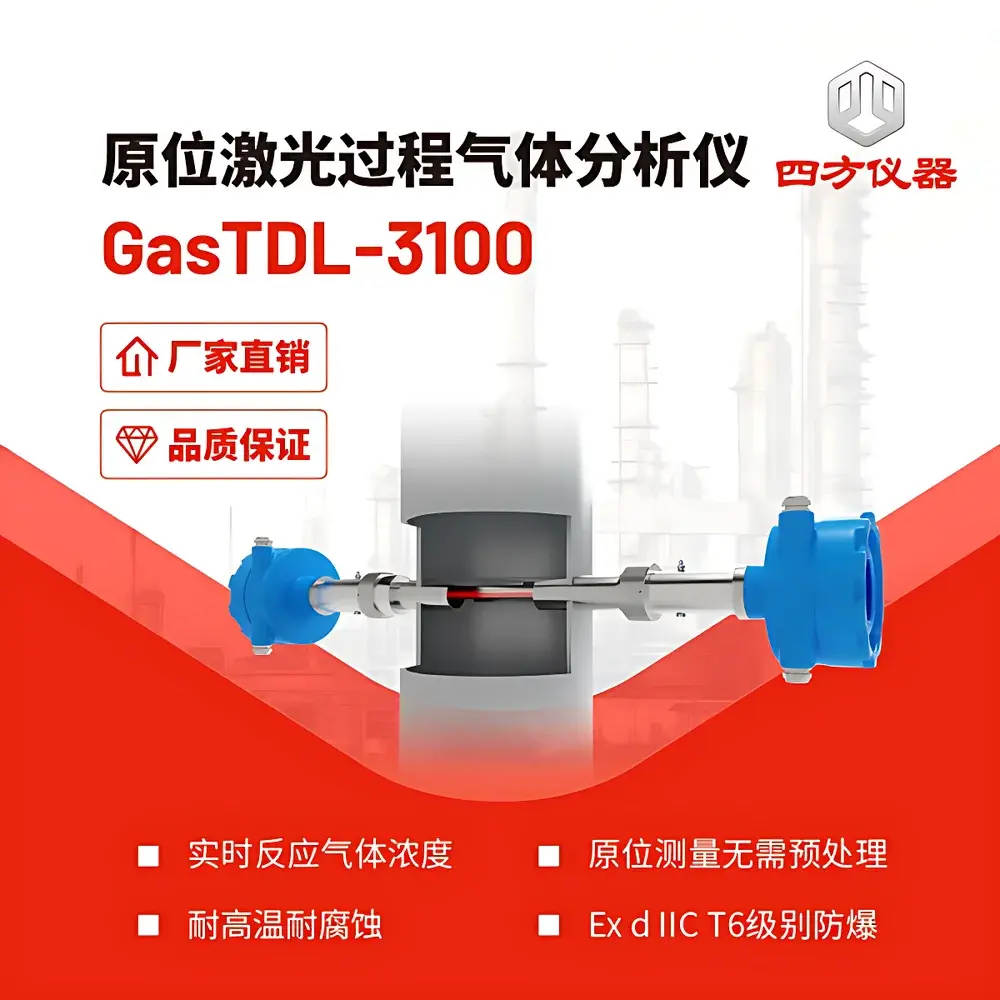
CUBIC INSTRUMENTS GasTDL-3100-O2 Tunable Diode Laser Absorption Spectroscopy (TDLAS) Oxygen Analyzer
| Brand | CUBIC INSTRUMENTS |
|---|---|
| Origin | Hubei, China |
| Model | GasTDL-3100-O2 |
| Sensor Type | Tunable Diode Laser (TDLAS) |
| Measurement Range | O₂: 0–5% vol (customizable up to 100% vol) |
| Accuracy | ≤±1% F.S. |
| Repeatability | ≤±1% F.S. |
| Resolution | 0.01% vol |
| Response Time (T90) | ≤4 s |
| Environmental Operating Temperature | −20 to +60 °C |
| Power Supply | 24 V DC, 24 W |
| Explosion Protection | Exd II CT6 |
| Output Signals | 2 × 4–20 mA, 3 × relay outputs |
| Communication Interface | RS485, RS232 |
| Purge Gas Requirement | Industrial nitrogen, 0.3–0.8 MPa |
Overview
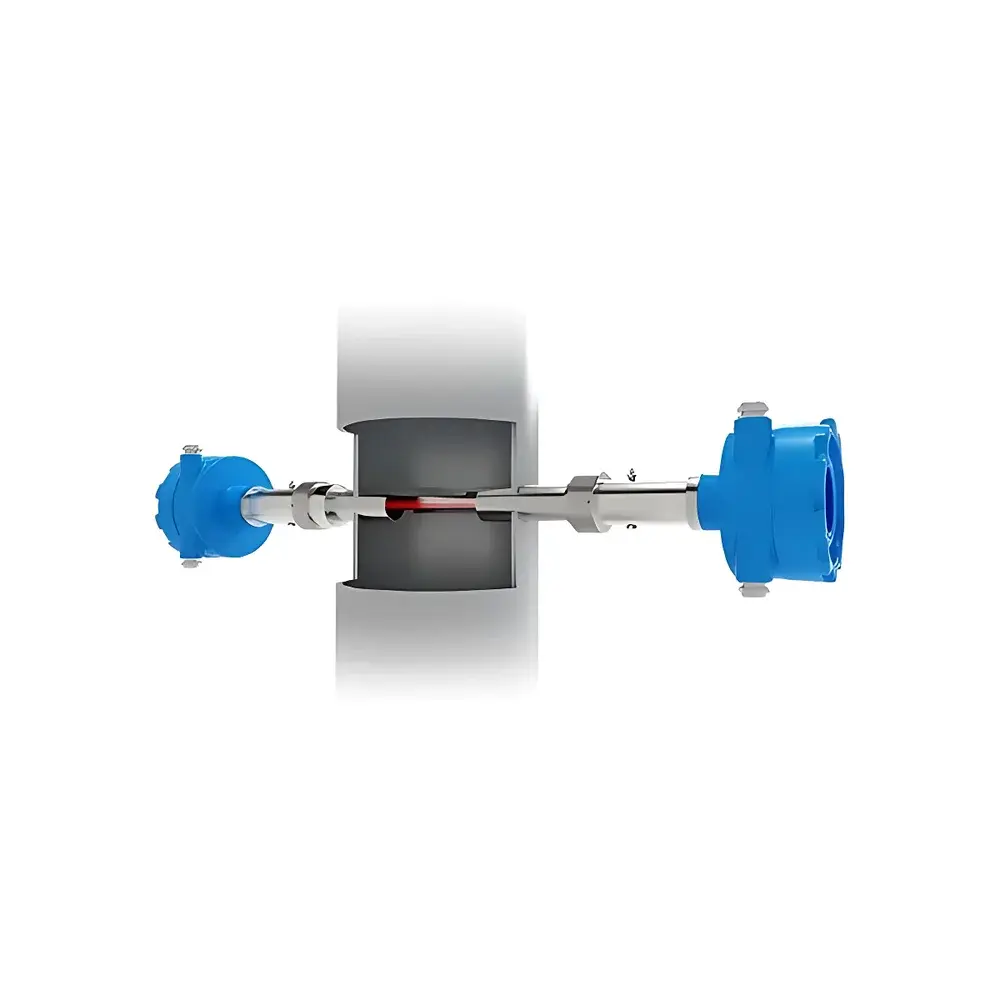
The CUBIC INSTRUMENTS GasTDL-3100-O2 is a high-performance, in-situ oxygen analyzer engineered for continuous, real-time monitoring in demanding industrial process environments. It employs Tunable Diode Laser Absorption Spectroscopy (TDLAS), a mature and scientifically rigorous optical gas sensing technique based on the Beer–Lambert law. By targeting a specific, isolated absorption line of molecular oxygen (O₂) in the near-infrared spectral region, the instrument achieves highly selective detection—free from cross-sensitivity to background gases such as CO₂, H₂O, CO, CH₄, or NOₓ. Unlike extractive sampling systems requiring complex conditioning (e.g., filtration, cooling, drying), the GasTDL-3100-O2 operates via a true in-situ, line-of-sight transmission configuration—mounting directly across ducts or stacks with no sample extraction, thereby eliminating transport delay, condensation artifacts, and calibration drift associated with sampling lines. Its optical path design ensures stable signal integrity under high-temperature, high-dust, high-humidity, and corrosive flue or process gas conditions typical in cement kilns, waste incinerators, syngas reactors, and metallurgical furnaces.
Key Features
- In-situ TDLAS measurement architecture—no sample extraction, no pre-conditioning hardware required
- High selectivity: Immune to interference from common combustion byproducts and process gases due to narrow-linewidth laser targeting of O₂’s unique ro-vibrational transition
- Robust mechanical construction: Hermetically sealed optical head with sapphire windows; no moving parts, no consumables, zero routine maintenance
- Explosion-proof certification: Exd II CT6 rating suitable for Zone 1 hazardous areas per IEC 60079-0/1
- Fast dynamic response: T90 ≤ 4 seconds enables closed-loop process control integration and rapid fault detection
- Stable long-term operation: Optical alignment maintained passively; minimal zero/span drift (<±1% F.S. over 30 days)
- Wide operating envelope: Functional at ambient temperatures from −20 °C to +60 °C and compatible with purge gas pressures of 0.3–0.8 MPa
Sample Compatibility & Compliance
The GasTDL-3100-O2 is validated for direct measurement of oxygen concentration in hot, wet, and particulate-laden process streams—including flue gas from coal-fired boilers, off-gas from catalytic crackers, blast furnace top gas, and anaerobic digester biogas. Its optical path length and laser power are optimized to maintain signal-to-noise ratio (SNR) > 1000:1 even at dust loadings up to 10 g/m³ and water vapor concentrations exceeding 30% vol. The analyzer complies with key international standards for industrial emission monitoring and safety-critical instrumentation: EN 15267-3 (QAL1 certification framework), ISO 14064-1 (GHG quantification), and supports audit-ready data integrity per FDA 21 CFR Part 11 when integrated with compliant SCADA or DCS platforms. It is not intended for ambient air quality monitoring (e.g., EPA Method TO-15) nor for medical-grade O₂ purity verification (USP ), but meets performance criteria aligned with ASTM D6522 and IEC 62282-3 for fuel cell feed gas analysis.
Software & Data Management
The analyzer embeds a real-time Linux-based firmware platform supporting dual communication protocols: Modbus RTU over RS485 (default) and ASCII command set over RS232. Analog outputs (2 × 4–20 mA) are fully scalable and linearized per user-defined range (e.g., 0–5% O₂ → 4–20 mA). Digital relay outputs support configurable alarm thresholds (high/low/failure) with latching or auto-reset behavior. Local configuration and diagnostics are accessible via a web-based HTML5 interface served from the onboard Ethernet port (optional module), enabling remote calibration validation, spectral signature review, and laser current/voltage trending. All operational events—including power cycles, relay actuations, and laser health status—are timestamped and stored in non-volatile memory for ≥12 months. Data export supports CSV format via USB or network transfer, facilitating traceability in GLP/GMP-regulated facilities where electronic record retention is mandated.
Applications
- Combustion optimization in thermal power plants and industrial boilers—enabling precise air/fuel ratio control to minimize NOₓ and maximize efficiency
- Continuous emissions monitoring systems (CEMS) for regulatory O₂ reference measurement in conjunction with SO₂/NOₓ analyzers
- Safety interlock in inerting systems (e.g., nitrogen blanketing of silos, reactors, or solvent recovery units)
- Process gas purity verification in hydrogen production (PEM electrolysis), ammonia synthesis, and semiconductor fabrication atmospheres
- Biogas upgrading control—monitoring O₂ ingress in membrane separation or pressure swing adsorption (PSA) trains
- Metallurgical process supervision—oxygen tracking in basic oxygen furnaces (BOF), electric arc furnaces (EAF), and ladle refining
FAQ
Can the GasTDL-3100-O2 measure multiple gases simultaneously?
No. Each unit is factory-configured for a single target gas (O₂ in this model). Multi-gas capability requires separate analyzers or a custom multi-line TDLAS platform.
Is calibration required after installation?
Zero calibration using certified nitrogen is recommended post-installation; span calibration with certified O₂-in-N₂ gas is advised annually or per site QA/QC protocol. No field adjustment of optical alignment is needed.
What is the maximum allowable particulate loading for reliable operation?
The system maintains valid measurement up to 10 g/m³ total suspended particulates, provided purge gas flow and pressure are maintained within specification to prevent window fouling.
Does the analyzer support HART or Foundation Fieldbus communication?
No. Native communication is limited to RS485 (Modbus RTU) and RS232. HART or FF integration requires an external protocol converter.
Can it be used in vacuum or sub-atmospheric pressure applications?
Not without modification. The standard design assumes positive-pressure process streams. Vacuum or low-pressure duct applications require custom optical path sealing and purge gas management.
Related Products