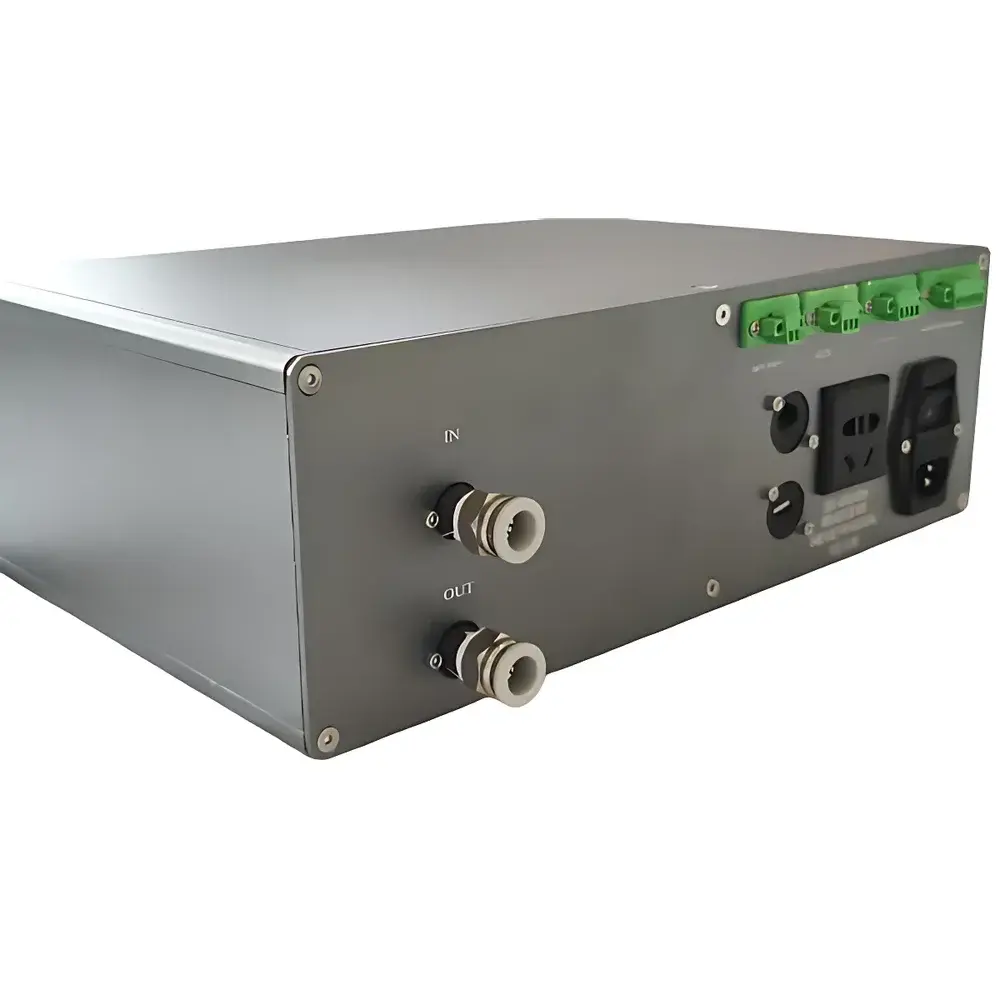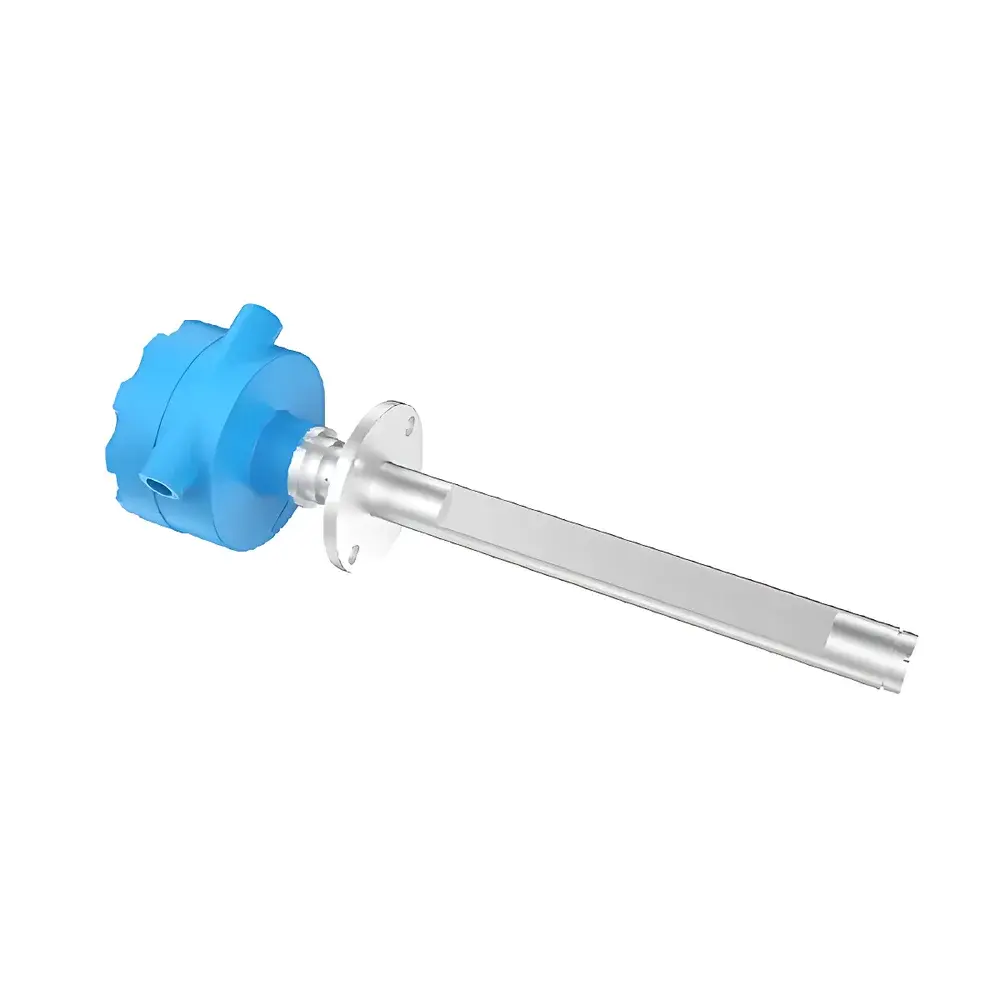
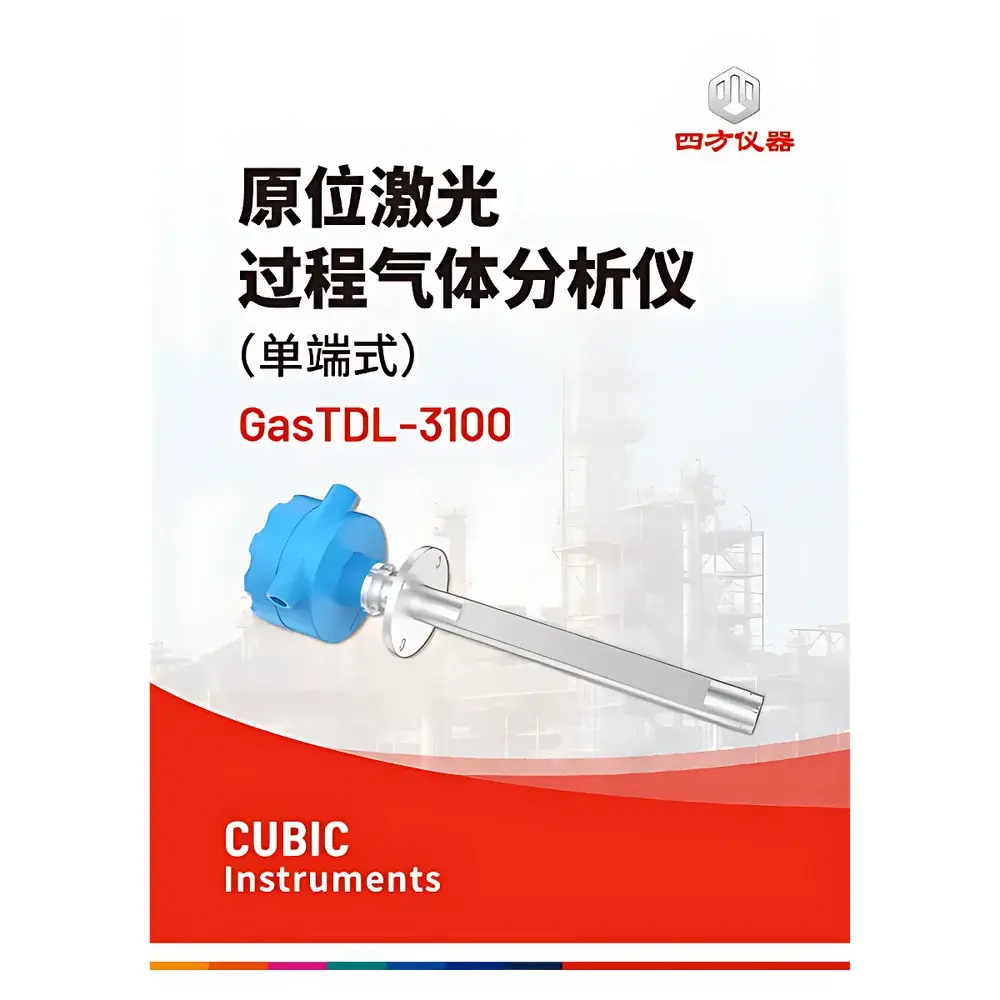
CUBIC INSTRUMENTS GasTDL-3100 In-situ Tunable Diode Laser Absorption Spectroscopy (TDLAS) Process Gas Analyzer (Single-Ended Configuration)
| Brand | CUBIC INSTRUMENTS |
|---|---|
| Origin | Hubei, China |
| Model | GasTDL-3100 (Single-Ended) |
| Measurement Principle | TDLAS |
| Measured Gases | O₂, CO₂, CO, CH₄ (customizable) |
| Range | 0–2 %vol (customizable) |
| Accuracy | ≤ ±1 %FS |
| Repeatability | ≤ ±1 %FS |
| Resolution | 0.01 %vol |
| Response Time (T₉₀) | ≤ 4 s |
| Operating Ambient Temperature | −20 to +60 °C |
| Power Supply | 24 V DC |
| Purge Gas Requirement | Industrial nitrogen, 0.3–0.8 MPa |
| Communication Interface | RS-485 |
| Analog Output | 4–20 mA |
Overview
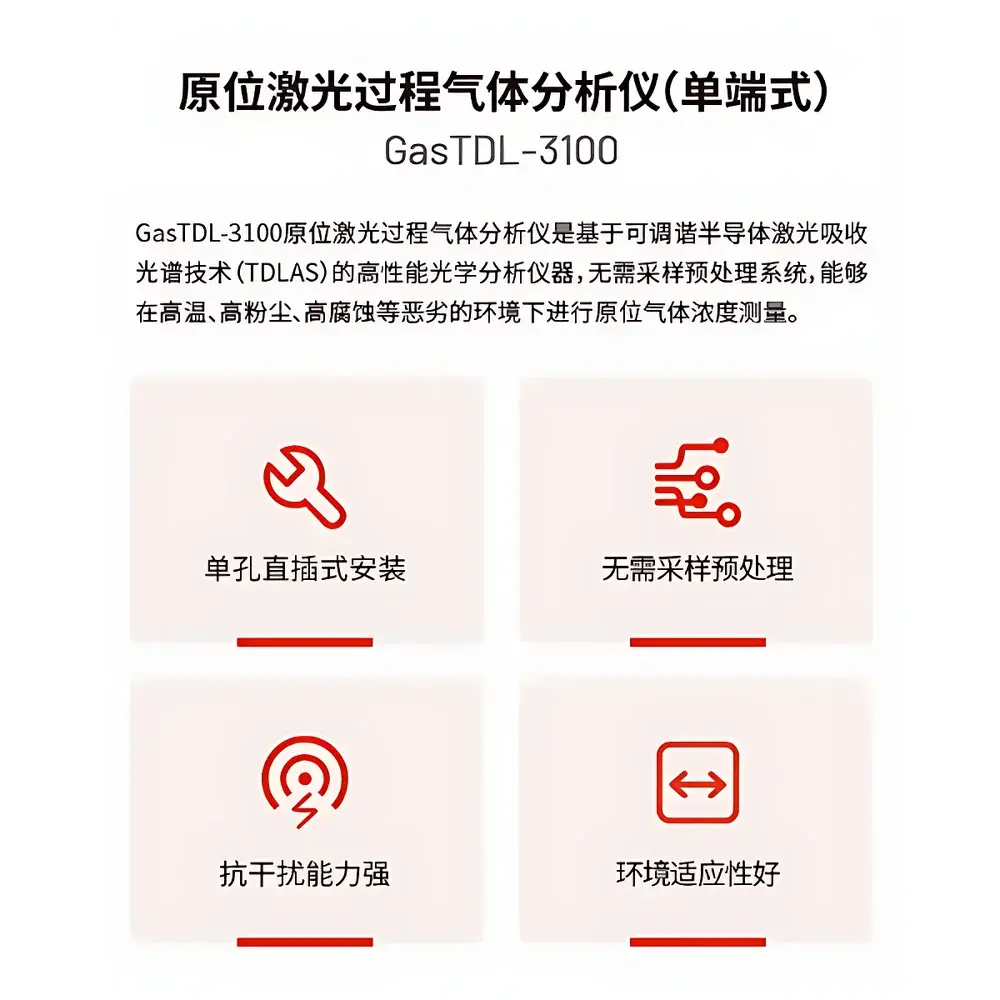
The CUBIC INSTRUMENTS GasTDL-3100 is an in-situ tunable diode laser absorption spectroscopy (TDLAS) process gas analyzer engineered for continuous, real-time concentration measurement of key industrial gases—including O₂, CO₂, CO, and CH₄—directly within process streams. Unlike extractive systems requiring complex sample conditioning, the GasTDL-3100 employs a single-ended, direct-insertion optical configuration that eliminates the need for beam alignment, external reference cells, or gas sampling lines. Its measurement principle relies on wavelength-modulated absorption spectroscopy at near-infrared (NIR) wavelengths, where each target gas exhibits unique, narrow-line absorption features. By precisely tuning the laser across these rovibrational transitions and applying second-harmonic detection, the analyzer achieves high selectivity and immunity to spectral interference from background gases such as N₂, H₂O vapor, or SO₂. This physics-based approach ensures stable calibration traceability and long-term measurement integrity without routine span adjustments—critical for unattended operation in continuous emission monitoring (CEM), combustion control, and syngas quality assurance applications.
Key Features
- True in-situ measurement via single-ended, probe-style insertion—no optical alignment, no retroreflector required
- Integrated reference gas cell for dynamic wavelength locking and real-time spectral drift compensation
- Robust stainless-steel probe housing with high-temperature ceramic optical windows rated for continuous operation up to 200 °C (process-side dependent)
- Hermetically sealed electronics compartment with IP66-rated ingress protection and optional purge gas interface (industrial N₂, 0.3–0.8 MPa)
- Self-diagnostic firmware with laser health monitoring, signal-to-noise ratio tracking, and automatic baseline correction
- Field-configurable gas selection and range scaling via embedded web interface or RS-485 Modbus RTU protocol
Sample Compatibility & Compliance
The GasTDL-3100 is validated for deployment in flue gas ducts, kiln exhausts, reformer outlets, and biogas pipelines characterized by elevated particulate loading (up to 10 g/m³), high relative humidity (>90 % RH), and chemically aggressive constituents (e.g., HCl, NH₃, SOₓ). Its optical path is designed to minimize soot deposition through laminar purge flow dynamics and hydrophobic window coatings. While not certified to IEC 61508 SIL2 or ATEX/IECEx out-of-the-box, the analyzer meets electromagnetic compatibility (EMC) requirements per EN 61326-1 and environmental stress testing per IEC 60068-2 series. For regulated environments, its 4–20 mA output and RS-485 interface support integration into DCS/SCADA architectures compliant with ISA-84 and IEC 62443-3-3 security guidelines. Data logging and audit trail capabilities are configurable to align with GLP/GMP documentation expectations when paired with compatible host software.
Software & Data Management
The GasTDL-3100 embeds a Linux-based real-time operating system running proprietary spectral processing firmware. Local configuration and diagnostics are accessible via a secure HTTPS web interface (TLS 1.2) or terminal emulation over RS-485. All measurement data—including raw absorbance spectra, calculated concentrations, temperature/pressure compensation coefficients, and diagnostic flags—are timestamped with microsecond resolution and streamed via Modbus TCP or ASCII serial protocol. Optional cloud-ready firmware enables MQTT publishing to time-series databases (e.g., InfluxDB, TimescaleDB) with configurable retention policies and TLS-encrypted transport. Audit logs record all parameter changes, firmware updates, and calibration events with user authentication—supporting FDA 21 CFR Part 11 compliance when deployed with role-based access control and electronic signature modules.
Applications
- Combustion optimization in cement clinker kilns, lime calciners, and waste-to-energy boilers
- Real-time CO and O₂ feedback control in iron ore sintering and blast furnace stoves
- In-process monitoring of CH₄ and CO₂ in anaerobic digesters and landfill gas upgrading units
- CO detection in coke oven gas purification and hydrogen production reformers
- Leak detection and purity verification in inert gas blanketing systems (e.g., N₂-purged reactors)
- Regulatory stack emissions reporting per EPA Method 3A, EN 15267, or ISO 14064-1 verification protocols
FAQ
Does the GasTDL-3100 require periodic calibration with certified gas standards?
No—its internal reference gas cell enables continuous spectral lock and zero-point stability. Field verification with span gas is recommended annually or after major maintenance.
Can the analyzer operate in wet, condensing gas streams?
Yes—the probe design incorporates heated optical windows and purge-assisted boundary layer management to prevent dew formation and liquid film interference.
Is pressure compensation applied automatically during measurement?
Yes—integrated absolute pressure and temperature sensors feed real-time corrections into the Beer-Lambert calculation engine, ensuring accuracy across process pressure fluctuations.
What is the maximum allowable particulate concentration for reliable operation?
The standard probe maintains performance up to 10 g/m³ total suspended solids; optional air-knife assist or retractable cleaning mechanisms extend viability to >50 g/m³ in heavy-dust applications.
How is laser wavelength stability maintained over ambient temperature swings?
Through combined active thermal control (TEC-cooled laser mount) and closed-loop referencing against the onboard sealed reference gas cell, achieving <±0.005 cm⁻¹ wavelength drift over −20 to +60 °C ambient range.
Related Products