
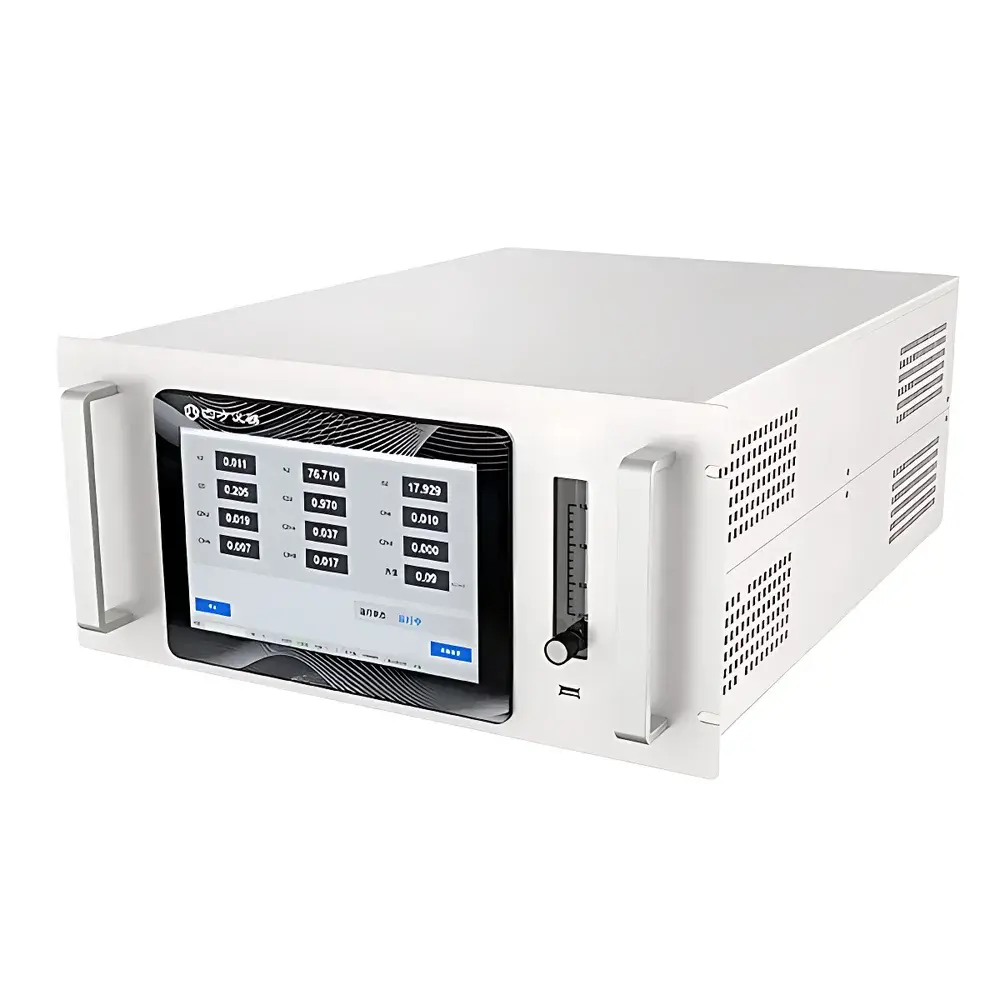
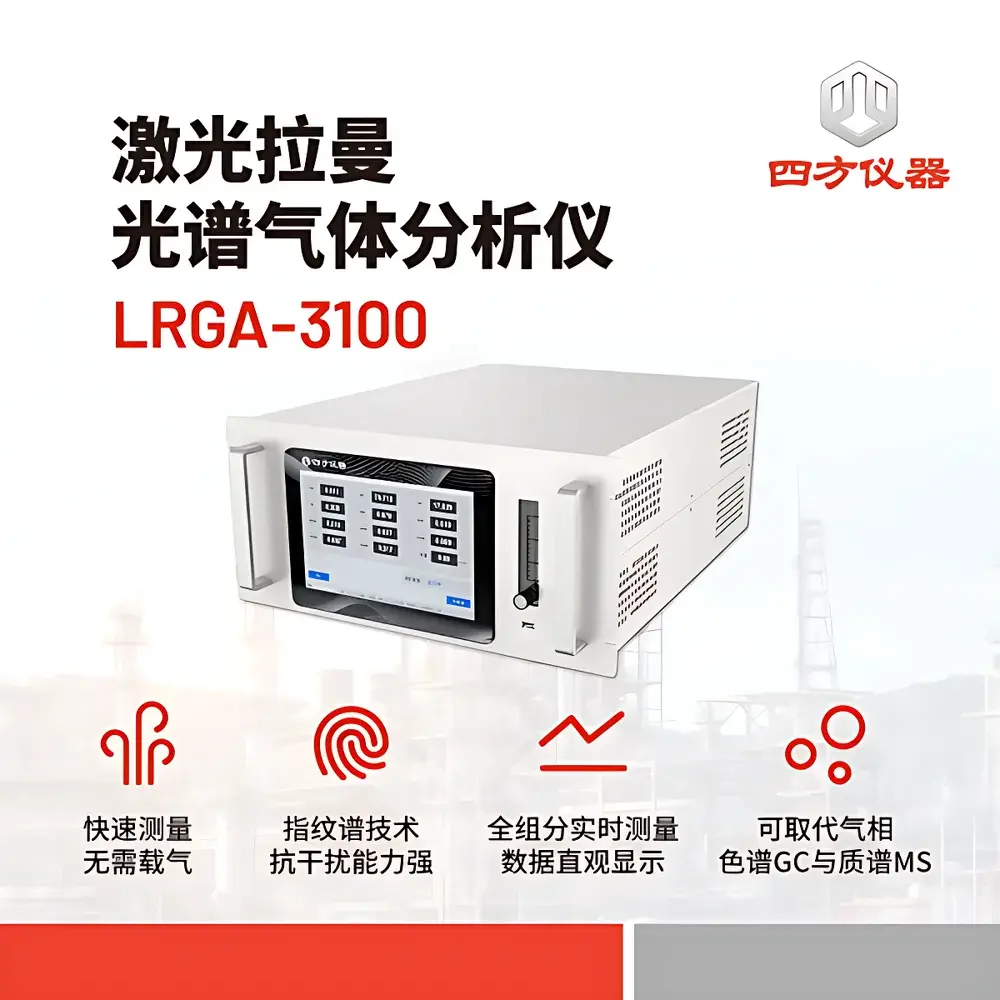
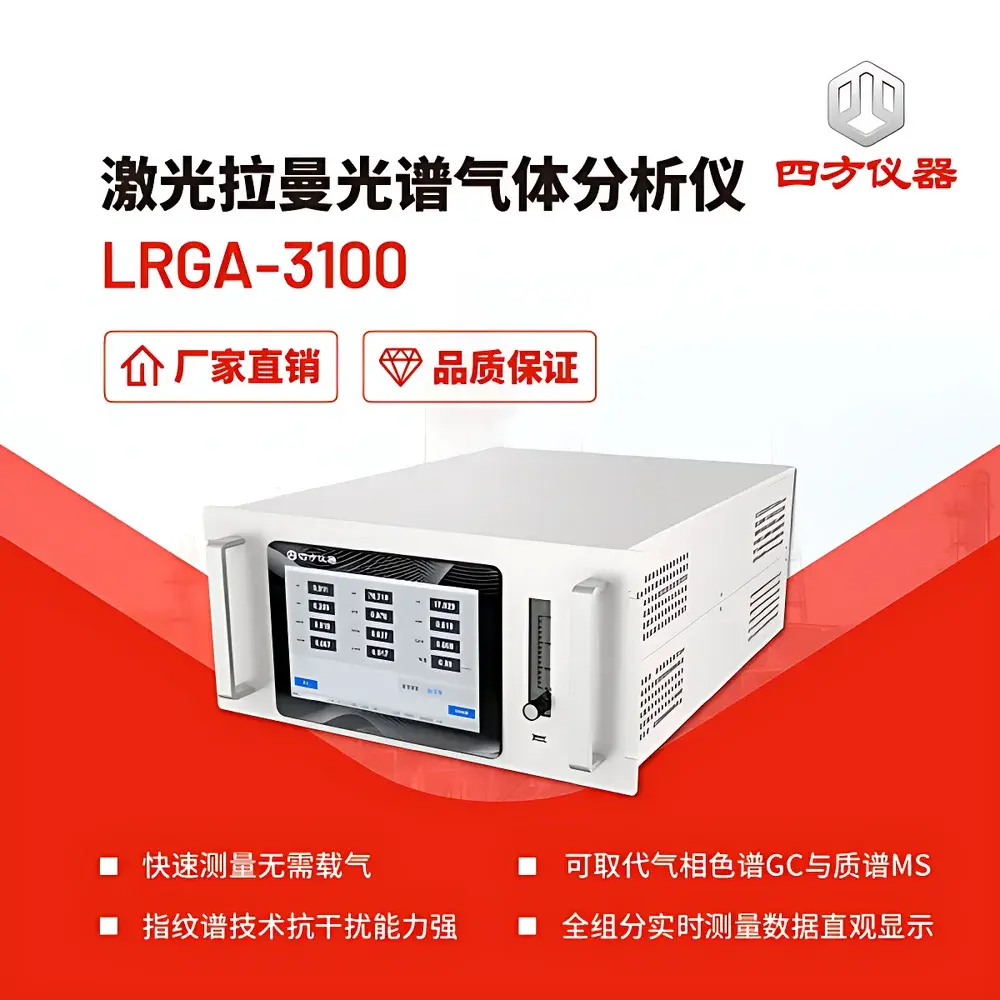
CUBIC INSTRUMENTS LRGA-3100 Laser Raman Gas Analyzer for Biomass Gasification
| Brand | CUBIC INSTRUMENTS |
|---|---|
| Origin | Hubei, China |
| Manufacturer Type | Authorized Distributor |
| Country of Origin | China |
| Model | LRGA-3100 |
| Price Range | USD 140,000 – 280,000 |
| Instrument Type | Grating-Based Raman Spectrometer |
| Spectral Repeatability | ≤1% |
| Measurement Principle | Laser Raman Scattering |
| Response Time | ≤10 s |
| Accuracy | ≤±1% F.S. |
| Detection Range | 0–100% (full-scale, configurable) |
| Operating Temperature | 10–35 °C |
| Power Supply | AC 220 V / 50 Hz, <70 W |
| Interfaces | USB, RS-232, RS-485, Ethernet |
| Dimensions (L×W×H) | 605 × 483 × 220 mm |
Overview
The CUBIC INSTRUMENTS LRGA-3100 Laser Raman Gas Analyzer is a compact, process-integrated spectroscopic instrument engineered for real-time, multi-component quantitative analysis of industrial gas streams—specifically optimized for biomass gasification syngas monitoring. It operates on the fundamental principle of spontaneous Raman scattering: a monochromatic laser beam (typically 532 nm or 785 nm) is focused into a pressurized gas cell, where incident photons interact inelastically with molecular vibrational modes, generating wavelength-shifted Stokes and anti-Stokes signals. These spectral shifts constitute unique molecular “fingerprints”, enabling unambiguous identification and concentration quantification without chemical separation or consumables. Unlike chromatographic or mass spectrometric methods requiring carrier gases, vacuum systems, or thermal desorption, the LRGA-3100 delivers true in-situ measurement with sub-10-second response latency and zero sample preparation. Its optical architecture—derived from the national key R&D project LRGA-6000—features an optimized folded light path, high-throughput transmission grating spectrometer, and thermally stabilized CCD detector, achieving robust signal-to-noise ratio under fluctuating ambient conditions typical of biorefinery and thermochemical conversion plants.
Key Features
- Real-time, continuous multi-gas analysis: Simultaneous quantification of H2, N2, O2, CO, CO2, CH4, C2H2, C2H4, C2H6, C3H6, C3H8, and H2S within a single spectral acquisition cycle
- Full-range concentration measurement: Linear calibration across 0–100% volume fraction per component; no dilution or range-switching required
- Raman fingerprint specificity: Inherent immunity to water vapor interference and minimal cross-sensitivity between overlapping hydrocarbon bands due to high spectral resolution (>8 cm−1 FWHM)
- Zero-consumable operation: Eliminates need for carrier gas, calibration standards, or column maintenance—reducing total cost of ownership by >60% versus GC-based systems
- Industrial-grade interface suite: Native support for Modbus TCP/IP, OPC UA, and analog 4–20 mA outputs for seamless integration into DCS/SCADA environments
- Embedded touchscreen HMI: 10.1-inch capacitive display with intuitive workflow navigation; optional external keyboard/mouse via USB
Sample Compatibility & Compliance
The LRGA-3100 is validated for direct analysis of hot, humid, particulate-laden syngas streams at temperatures up to 150 °C (with optional heated sampling line). Its non-contact optical design eliminates sensor poisoning, catalytic degradation, or membrane fouling common in electrochemical or IR-based analyzers. The system complies with IEC 61000-6-2 (EMC immunity) and IEC 61000-6-4 (EMC emission) standards. Data integrity meets GLP/GMP requirements through audit-trail-enabled software with user role management, electronic signatures, and secure data logging compliant with FDA 21 CFR Part 11 Annex 11 principles. Calibration traceability is maintained to NIST-traceable Raman reference cells for diatomic and hydrocarbon species.
Software & Data Management
The proprietary RamanView™ software provides full spectral acquisition control, multivariate curve-fitting (using constrained non-negative least squares), and real-time concentration mapping. It supports automated baseline correction, cosmic ray rejection, and adaptive peak deconvolution for resolving overlapped bands (e.g., C2H4/C2H6). All raw spectra and processed results are stored in HDF5 format with embedded metadata (timestamp, pressure, temperature, laser power). Export options include CSV, Excel, and XML for LIMS integration. Remote diagnostics and firmware updates are enabled via secure HTTPS API. Batch report generation follows ASTM D7165-19 (standard practice for Raman spectroscopy of gases) formatting conventions.
Applications
- Biomass gasification: Online monitoring of syngas composition (H2/CO ratio, tar precursors, sulfur species) to optimize reactor temperature, equivalence ratio, and downstream cleaning efficiency
- Coal and waste pyrolysis: Quantification of light hydrocarbons and unsaturated species during tire/rubber cracking—critical for product yield modeling and emissions compliance
- Steelmaking off-gas: Real-time tracking of CO/CO2 balance in blast furnace top gas for energy recovery optimization
- Biogas upgrading: Rapid verification of CH4 purity post-membrane or amine scrubbing, eliminating reliance on offline GC validation
- Lab-scale thermochemical reactors: Kinetic studies of gas-phase reaction pathways during catalytic steam reforming or Fischer–Tropsch synthesis
FAQ
Does the LRGA-3100 require periodic recalibration with certified gas standards?
No. The instrument employs internal Raman reference peaks (e.g., silicon band at 520.7 cm−1) for automatic wavelength stabilization and intensity normalization. Field calibration is performed once during commissioning using a single-point span gas; drift correction is software-managed.
Can it operate in explosive atmospheres (ATEX Zone 1)?
The base unit is rated for Class I, Division 2 (non-hazardous area); for Zone 1 deployment, it must be installed with an ATEX-certified purged enclosure (IP65/NEMA 4X) and fiber-optic coupled probe—available as an optional configuration.
How does it handle high dust or condensate loading in raw syngas?
A heated, sapphire-windowed gas cell (120 °C) combined with inline particulate filtration (0.5 µm) and moisture knockout traps ensures optical path integrity. Optional quartz flow cell variants support direct insertion into ducts ≥DN50.
Is spectral library customization supported for proprietary compounds?
Yes. Users may import custom Raman cross-section databases and define new calibration models via Python scripting interface integrated into RamanView™.
What cybersecurity protocols are implemented?
TLS 1.2 encryption for remote access, mandatory password complexity enforcement, session timeout after 15 minutes of inactivity, and firmware signature verification prior to update execution.




