
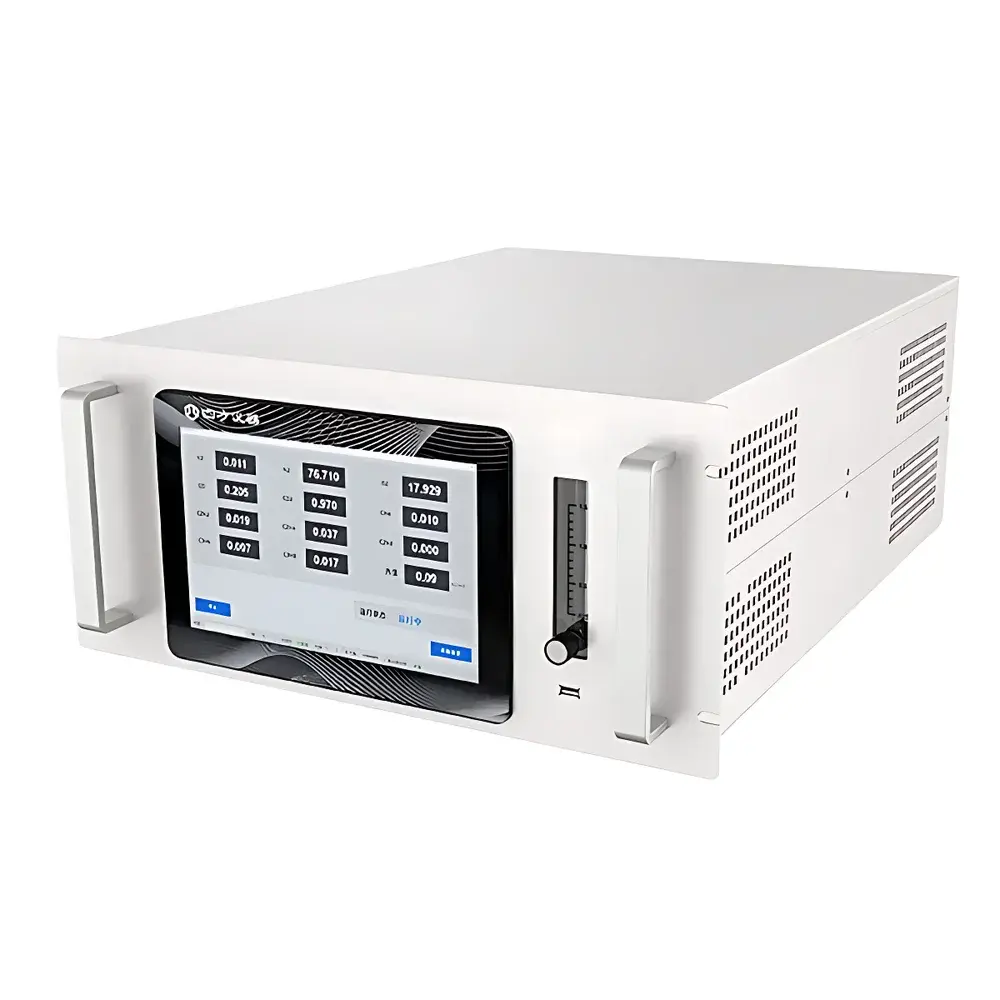
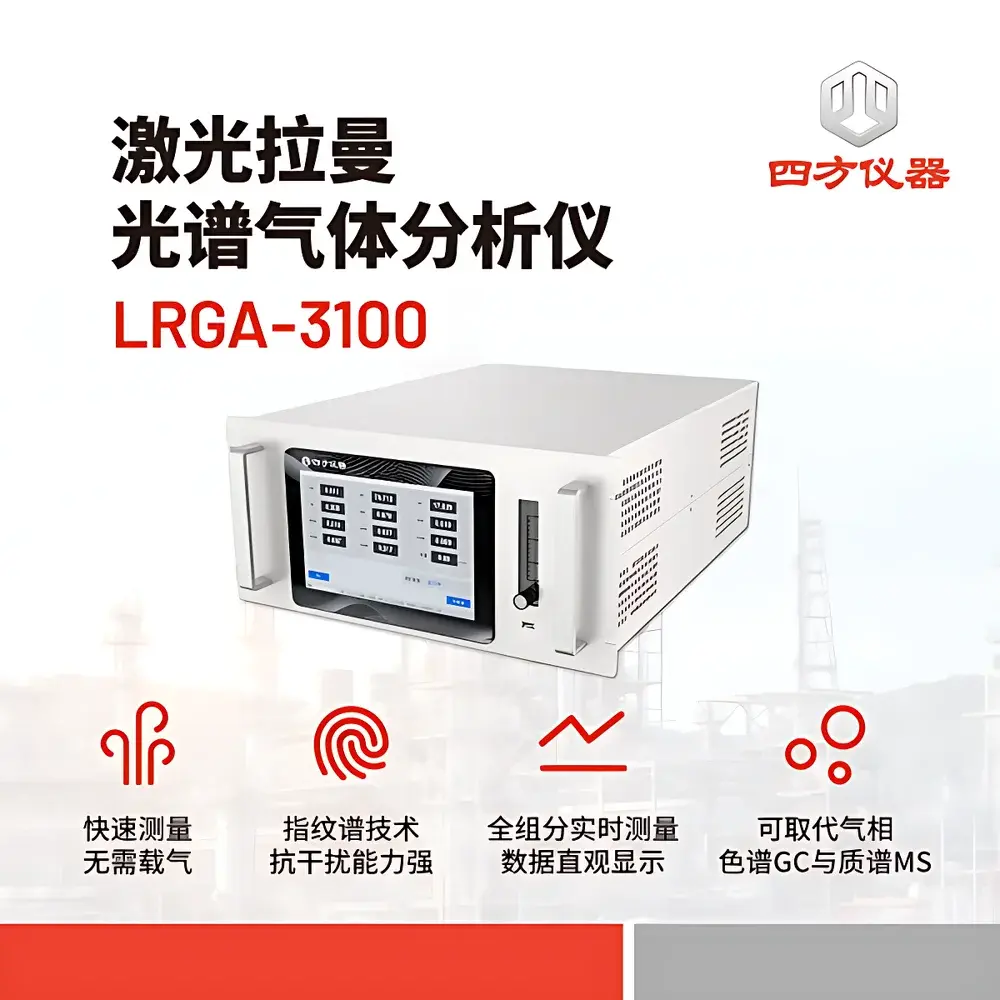
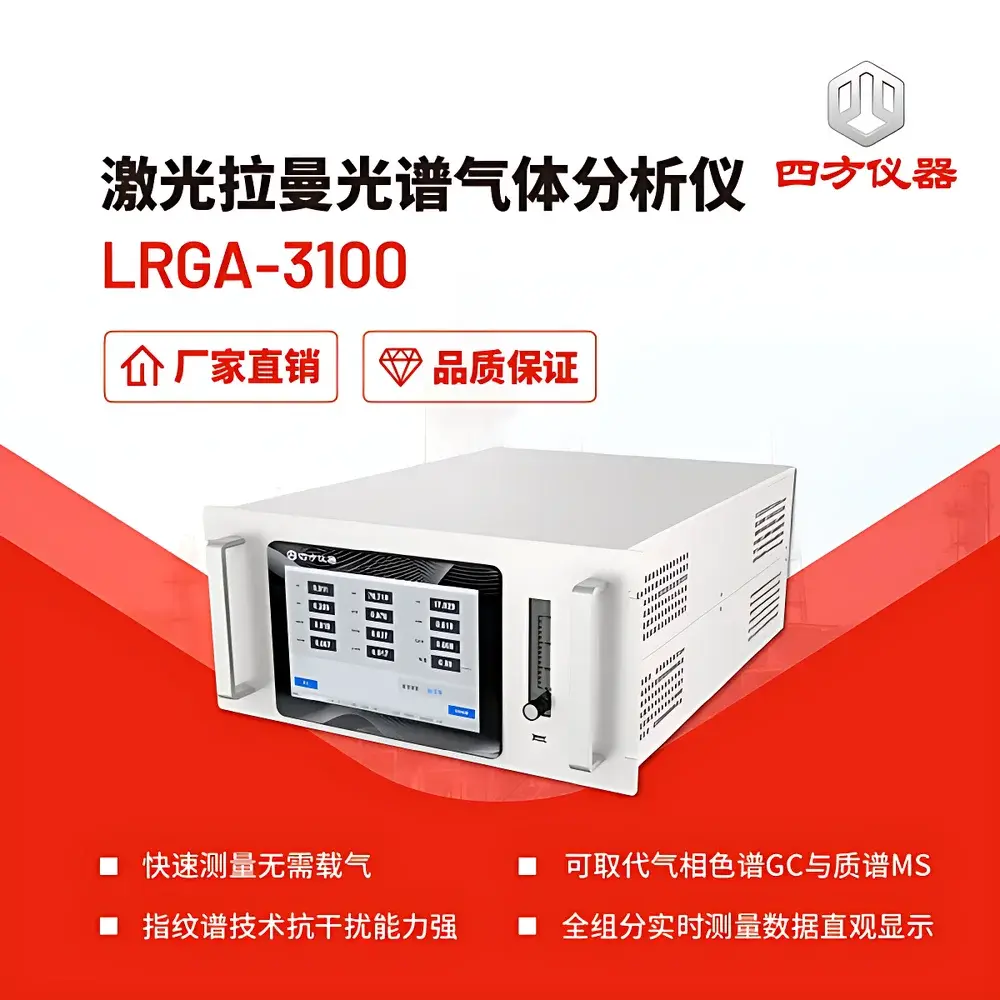
CUBIC INSTRUMENTS LRGA-3100 Laser Raman Gas Analyzer with Integrated Pyrolysis Furnace for Rubber Feedstock
| Brand | CUBIC INSTRUMENTS |
|---|---|
| Origin | Hubei, China |
| Manufacturer Type | Authorized Distributor |
| Country of Origin | China |
| Model | LRGA-3100 |
| Price Range | USD 140,000–280,000 |
| Instrument Type | Grating-Based Raman Spectrometer |
| Spectral Repeatability | ≤1% |
| Measurement Accuracy | ≤±1% F.S. |
| Response Time | ≤10 s |
| Operating Temperature | 10–35 °C |
| Power Supply | AC 220 V / 50 Hz, <70 W |
| Dimensions (L×W×H) | 605 × 483 × 220 mm |
| Communication Interfaces | USB, RS-232, RS-485, Ethernet |
| Gas Measurement Range | 0–100% (full-scale, configurable per application) |
| Detectable Gases | H₂, N₂, O₂, CO, CO₂, CH₄, C₂H₂, C₂H₄, C₂H₆, C₃H₆, C₃H₈, H₂S |
Overview
The CUBIC INSTRUMENTS LRGA-3100 is a compact, integrated Laser Raman Gas Analyzer engineered for real-time, multi-component gas analysis in high-temperature pyrolysis environments—specifically optimized for rubber feedstock vaporization processes. Unlike conventional gas chromatography (GC) or mass spectrometry (MS) systems, the LRGA-3100 leverages spontaneous Raman scattering physics: a monochromatic laser beam (typically 532 nm or 785 nm) interacts with gas-phase molecules in a temperature-stabilized measurement cell, inducing inelastic scattering. The resulting spectral shifts—unique to each molecular vibrational mode—form a quantitative “fingerprint” for simultaneous identification and concentration determination. With no sample pre-treatment, carrier gas, or calibration gas required, the system operates continuously at process pressure and temperature, delivering second-scale response times and full-scale quantification from 0–100% for over 12 target species. Its optical architecture is derived from the nationally funded LRGA-6000 platform, refined for enhanced signal-to-noise ratio, reduced footprint, and robust field deployment in industrial settings including tire pyrolysis, coal gasification, and petrochemical off-gas monitoring.
Key Features
- Real-time, in-situ gas analysis directly mounted on process piping—no sampling probe, conditioning system, or dedicated analyzer shelter required
- Simultaneous quantification of up to 12 gases including H₂, N₂, O₂, CO, CO₂, CH₄, C₂H₂, C₂H₄, C₂H₆, C₃H₆, C₃H₈, and H₂S—each resolved via characteristic Raman shift positions (e.g., 4155 cm⁻¹ for H₂, 2330 cm⁻¹ for CO₂)
- Full-range linear response (0–100% v/v) with ≤±1% full-scale accuracy and ≤1% spectral repeatability under ISO/IEC 17025-aligned operational conditions
- Integrated thermal management for stable performance across ambient temperatures of 10–35 °C; compatible with upstream pyrolysis furnace exhaust streams up to 200 °C (with optional heated transfer line)
- Embedded touchscreen interface with intuitive graphical display of spectra, concentration trends, and alarm thresholds; supports external keyboard and remote PC control via Ethernet or serial protocols
- Optical design eliminates fluorescence interference and water vapor cross-sensitivity—critical for humid, complex hydrocarbon matrices typical in rubber pyrolysis vapors
Sample Compatibility & Compliance
The LRGA-3100 is validated for direct analysis of hot, wet, and particulate-laden gas streams generated in rubber thermal decomposition furnaces, biomass gasifiers, and coke oven byproduct lines. It meets functional requirements specified in SY/T 5788.2–2018 (Chinese petroleum industry standard for gas logging), ASTM D1945 (standard test method for analysis of natural gas by gas chromatography), and aligns with the measurement principles referenced in ISO 8573-1:2010 (compressed air purity classes) for trace contaminant detection. While not certified to IEC 61508 or ATEX for hazardous area installation, the instrument is designed for Zone 2/Class I, Division 2 environments when installed with appropriate barrier configurations. All firmware and data handling comply with GLP-relevant audit trail provisions—including timestamped spectral acquisition logs, user access records, and version-controlled calibration history.
Software & Data Management
The LRGA-3100 runs CUBIC’s proprietary RamanSoft™ v3.2 firmware, supporting automated peak fitting using constrained non-negative least squares (NNLS) algorithms, internal reference normalization (e.g., N₂ as built-in intensity standard), and dynamic baseline correction. Spectral libraries are extensible via user-defined component profiles, enabling rapid adaptation to novel pyrolysis byproducts. Raw spectra (ASCII or HDF5 format), processed concentration time-series (CSV), and diagnostic reports are exportable via USB or network share. Remote monitoring and configuration are enabled through secure HTTP/S API endpoints, compatible with OPC UA and Modbus TCP integration into DCS/SCADA platforms. Audit trails satisfy FDA 21 CFR Part 11 requirements for electronic records and signatures when deployed with role-based authentication and encrypted storage.
Applications
- Rubber pyrolysis process control: Continuous monitoring of H₂, CH₄, C₂–C₃ hydrocarbons, and H₂S during tire-derived fuel production—enabling real-time optimization of cracking temperature and residence time
- Coal and biomass gasification: Quantification of syngas composition (H₂/CO ratio) and tar precursors without catalyst poisoning or column fouling inherent to GC systems
- Petrochemical off-gas analysis: Detection of light olefins (C₂H₄, C₃H₆) and acetylene in FCC unit flue gas—supporting emissions compliance and catalyst health assessment
- Steel mill blast furnace top gas: In-line measurement of CO, CO₂, and N₂ for energy recovery efficiency modeling and safety-critical CO monitoring
- Environmental emission monitoring: Stack testing of volatile organic compounds (VOCs) and sulfur species in accordance with EPA Method 320 and ISO 12039
FAQ
Does the LRGA-3100 require carrier gas or calibration standards during routine operation?
No. The system uses absolute intensity calibration based on fundamental Raman cross-sections and internal reference peaks, eliminating dependence on external calibration gases or consumables.
Can it operate in high-humidity or particulate-laden gas streams?
Yes. The optical path is sealed and purged with dry nitrogen; the measurement cell is heated to prevent condensation, and the Raman signal is inherently insensitive to water vapor absorption bands.
Is spectral library customization supported for proprietary pyrolysis byproducts?
Yes. Users may import custom Raman spectra (in .spc or .jdx format) and assign them to new analytes via the RamanSoft™ library manager.
What maintenance intervals are recommended?
Annual verification of laser power stability and spectrometer wavelength calibration is advised; no routine optical alignment or lamp replacement is required due to solid-state laser and fixed-grating design.
How is data integrity ensured for regulatory reporting?
All measurements include embedded digital signatures, immutable timestamps, and full-chain-of-custody metadata—exportable in formats compliant with ISO/IEC 17025 and EU Annex 11 documentation requirements.





