
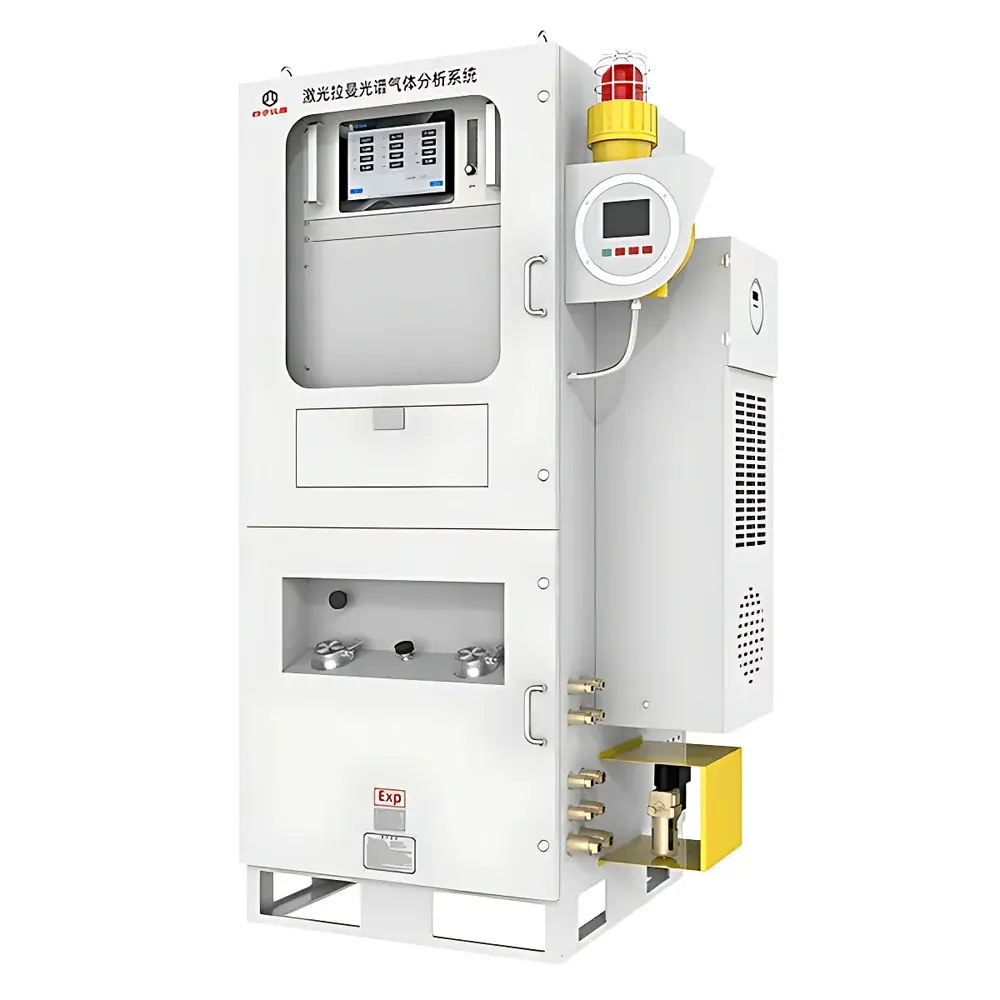
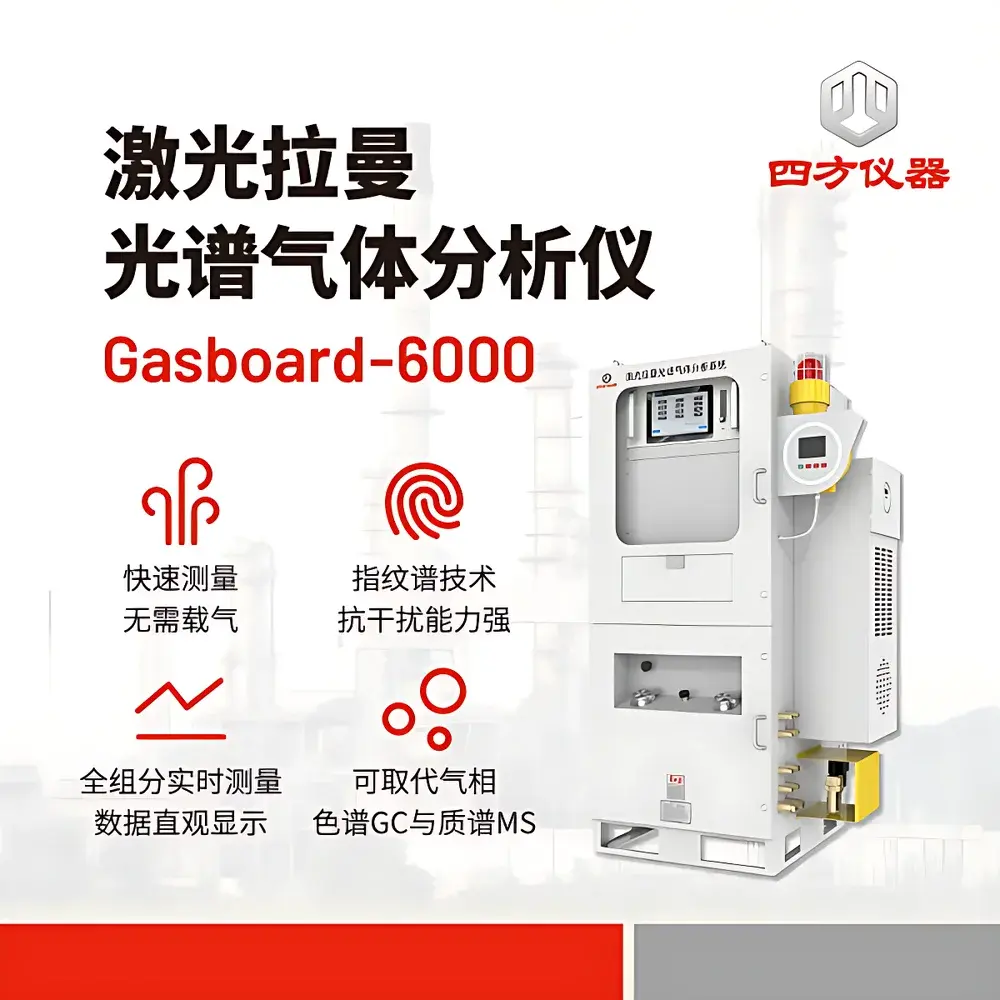
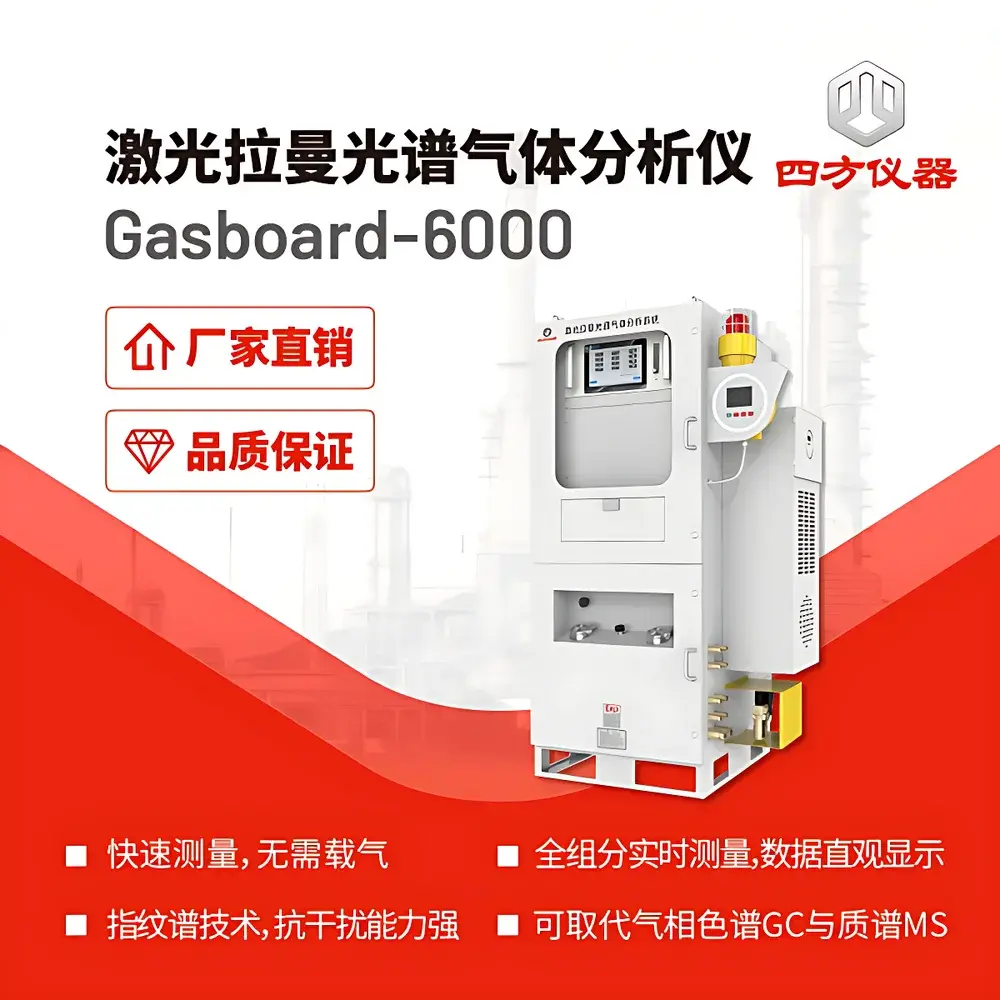
CUBIC INSTRUMENTS LRGA-6000 Laser Raman Gas Analyzer for Iron & Steel Metallurgy
| Brand | CUBIC INSTRUMENTS |
|---|---|
| Origin | Hubei, China |
| Manufacturer Type | Authorized Distributor |
| Country of Origin | China |
| Model | LRGA-6000 |
| Instrument Type | Grating-Based Raman Spectrometer |
| Spectral Range | 400–700 nm |
| Spectral Resolution | 0.01% |
| Spatial Resolution | 1 µm (lateral), 2 µm (axial) |
| Minimum Wavenumber Shift | 10 cm⁻¹ |
| Spectral Repeatability | ≤1% (dependent on configured concentration range) |
| Measurement Range | 0–10% to 0–100% (gas volume %) |
| Linearity Error | ≤±1% FS |
| Response Time | ≤30 s |
| Dimensions | 1000 × 800 × 1780 mm |
Overview
The CUBIC INSTRUMENTS LRGA-6000 is a purpose-engineered laser Raman gas analyzer designed for continuous, real-time compositional analysis in high-temperature, high-dust, and high-humidity industrial environments—particularly iron and steel metallurgical processes such as blast furnace top-gas recycling, coke oven gas purification, basic oxygen furnace (BOF) off-gas monitoring, and sintering plant exhaust streams. It operates on the physical principle of inelastic light scattering: monochromatic laser excitation induces vibrational mode-specific Raman shifts in gas molecules, generating unique spectral fingerprints that are spectrally resolved via a high-efficiency transmission grating optical path and detected by a cooled CCD array. Unlike absorption-based techniques (e.g., NDIR or TDLAS), Raman spectroscopy enables direct, simultaneous quantification of homonuclear diatomic gases—including N₂, O₂, and H₂—which lack infrared dipole moments and are therefore invisible to conventional IR analyzers. The LRGA-6000 delivers multi-component gas analysis without carrier gas, consumables, or chromatographic separation—making it suitable for 24/7 unattended operation under ISO 14644 Class 8 cleanroom-equivalent or harsher plant-floor conditions.
Key Features
- Multi-gas capability: Simultaneous detection and quantification of ≥12 gases including CO, CO₂, CH₄, C₂H₂, C₂H₄, C₂H₆, C₃H₈, H₂, N₂, O₂, H₂S, and H₂O vapor—without cross-interference from inert matrix gases.
- Sub-30-second response time: Full spectral acquisition, baseline correction, peak deconvolution, and concentration calculation completed within ≤30 s after sample introduction—enabling closed-loop process control integration.
- Gas concentration normalization algorithm: Compensates for pressure, temperature, and optical path-length fluctuations using real-time P/T sensors and internal reference bands; eliminates drift during extended operation (>72 h).
- Zero-air auto-calibration cycle: Integrated precision mass flow controller and certified zero-air source enable automated daily or user-triggered recalibration—no manual standard gas cylinders required.
- Robust optical architecture: Sealed, purged spectroscopic chamber with anti-vibration mounting; laser diode (532 nm or 785 nm configurable) coupled via single-mode fiber; all-optical alignment stabilized against thermal drift (±0.02 nm/°C).
- Industrial-grade enclosure: IP65-rated front panel with 10.1″ capacitive touch display; redundant power supply (24 VDC ±10%, 110/220 VAC optional); EMC-compliant per IEC 61326-1 for factory floor deployment.
Sample Compatibility & Compliance
The LRGA-6000 interfaces directly with standard 1/4″ Swagelok or VCR sampling lines and supports heated sample conditioning systems (up to 200 °C) for moisture-sensitive or condensable streams. It complies with EN 15267-3 (QAL1 certification framework for automated measuring systems), meets functional safety requirements per IEC 61508 SIL2 for gas safety monitoring loops, and supports audit-ready data integrity features aligned with FDA 21 CFR Part 11 and EU Annex 11 expectations—including electronic signatures, immutable audit trails, and role-based access control. All firmware and spectral libraries are validated per ASTM E1847 (Standard Practice for Validation of Analytical Methods for Gaseous Mixtures) and traceable to NIST SRM 1967 (Raman shift calibration standard).
Software & Data Management
RamanView™ v4.2 embedded software provides full-spectrum visualization, real-time multivariate curve resolution (MCR), and chemometric modeling (PLS, PCA) for complex overlapping peaks (e.g., C₂H₄/C₂H₆ in coke oven gas). Data export supports CSV, HDF5, and OPC UA (UA 1.04) for integration into DCS/SCADA (e.g., Siemens Desigo, Honeywell Experion, Emerson DeltaV). Historical spectra and concentration logs are stored locally (64 GB SSD) with automatic cloud backup via TLS 1.3-encrypted MQTT to private AWS S3 buckets. Software validation documentation (IQ/OQ/PQ protocols) and raw spectral metadata (wavelength-calibrated intensity arrays, acquisition timestamps, instrument configuration snapshots) are included with each system shipment.
Applications
- Iron & Steel Metallurgy: Blast furnace top-gas composition tracking (CO/CO₂/N₂ ratio optimization), BOF off-gas carbon recovery assessment, sinter plant flue gas desulfurization efficiency monitoring.
- Coke Oven Gas Processing: Real-time H₂/CH₄/N₂ balance verification prior to hydrogenation units; detection of trace acetylene (C₂H₂) to prevent catalyst poisoning.
- Coal Gasification & Syngas Plants: Online monitoring of syngas stoichiometry (H₂/CO ratio) for Fischer–Tropsch feed control; detection of sulfur species (H₂S, COS) upstream of acid gas removal units.
- Environmental Compliance: Continuous emission monitoring (CEMS) of CO, NOₓ precursors (N₂O), and VOCs (C₂–C₃ hydrocarbons) from sintering and pelletizing stacks per EPA Method 27A and EN 15267-3.
- Energy Recovery Systems: Combustible gas calorific value estimation (based on CH₄/C₂H₆/H₂ content) for waste heat boiler load scheduling.
FAQ
Does the LRGA-6000 require carrier gas or consumable columns?
No. It is a carrier-gas-free, column-free optical analyzer relying solely on laser excitation and spectral detection—eliminating recurring consumable costs and associated downtime.
Can it detect N₂ and O₂ reliably in high-CO₂ backgrounds?
Yes. Raman cross-sections for N₂ (2331 cm⁻¹) and O₂ (1556 cm⁻¹) are strong and spectrally isolated from CO₂ (1388 cm⁻¹) and CO (2143 cm⁻¹), enabling robust quantification even at >80% CO₂ matrix concentrations.
What calibration standards are supported?
Certified gas mixtures traceable to NIST or BIPM, plus internal reference bands (e.g., silica Raman peak at 464 cm⁻¹) for wavelength stability verification; no external calibration gas required for routine operation.
Is remote diagnostics and firmware update supported?
Yes. Secure SSH/TLS-enabled remote access allows OEM-level diagnostics, spectral library updates, and parameter reconfiguration without site visit—subject to customer-defined firewall policies.
How is dust and moisture handled in hot, wet process streams?
Via optional heated sample probe (up to 200 °C), Peltier-cooled condensate trap, and optical window purge with dry nitrogen—preventing particulate deposition and water film formation on critical optics.






