
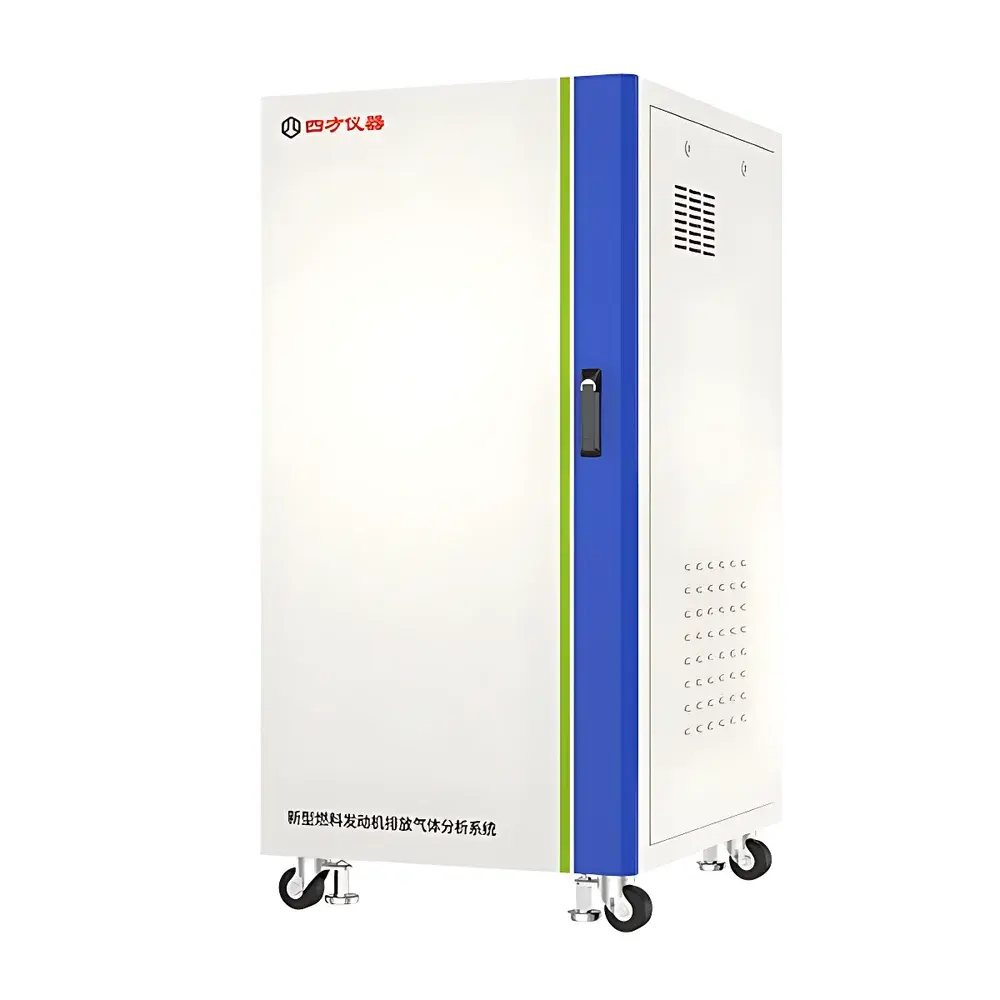
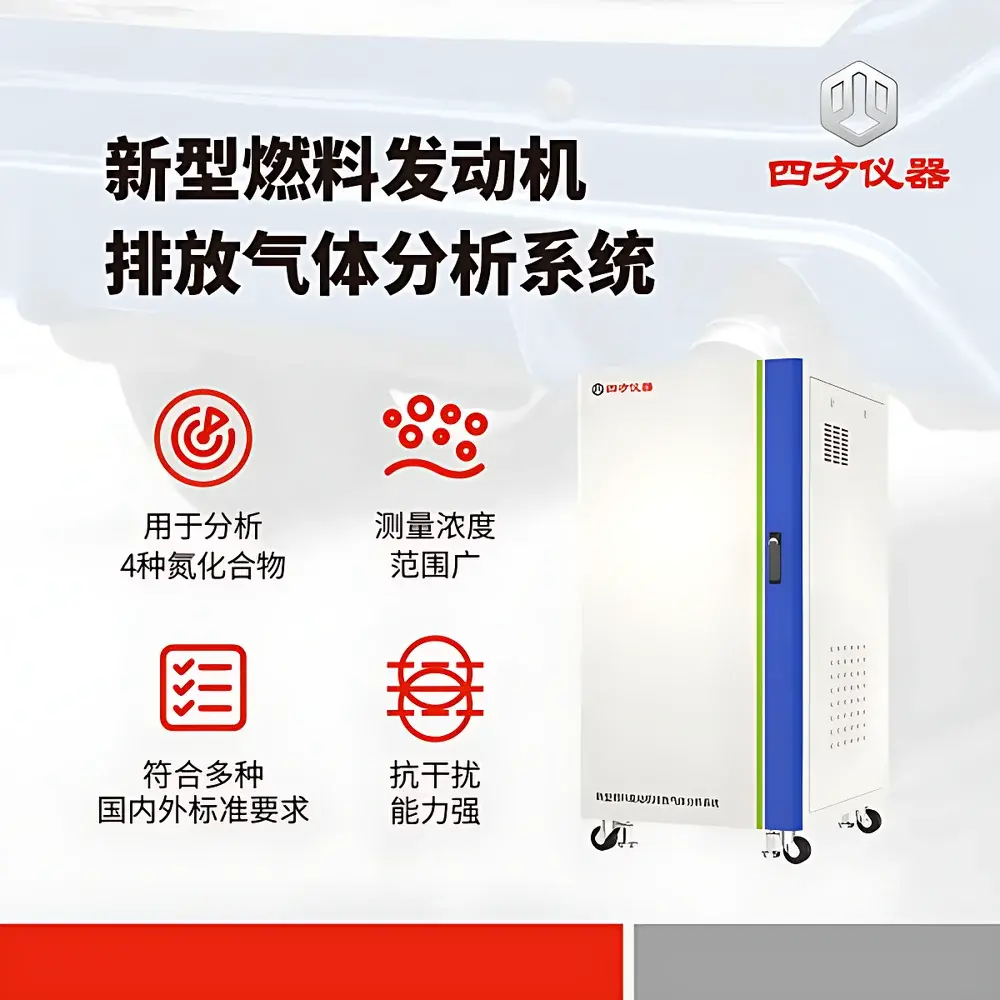
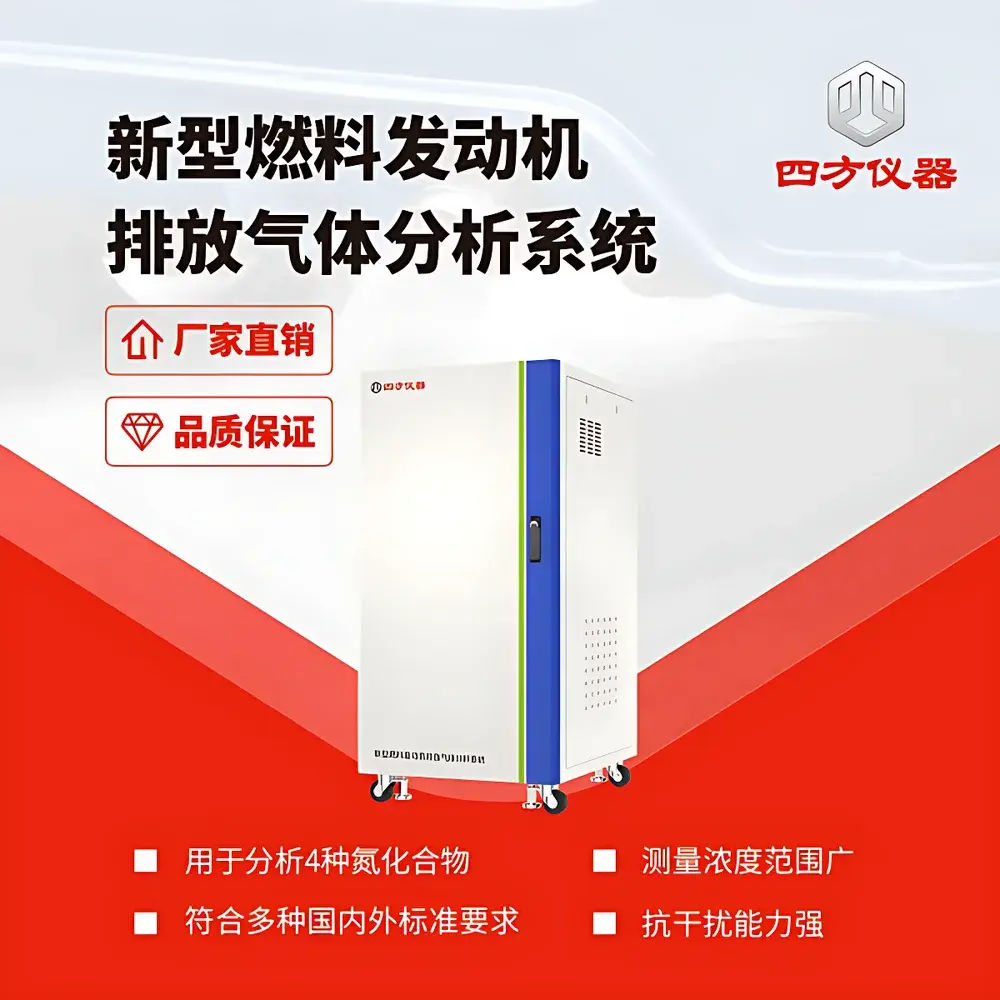
CUBIC INSTRUMENTS NH₃/NO/NO₂/N₂O Multi-Component Emission Analyzer for Advanced Fuel Engines
| Brand | CUBIC INSTRUMENTS |
|---|---|
| Origin | Hubei, China |
| Manufacturer Type | Authorized Distributor |
| Product Origin | Domestic (PRC) |
| Model | CUBIC-EMX-4N |
| Instrument Type | Online Continuous Emission Monitoring System (CEMS) |
| Detection Principle | Integrated TDLAS + UV-DOAS + GFC Infrared Spectroscopy |
| Measured Components | NH₃, NO, NO₂, N₂O |
| Measurement Range (NH₃) | 0–100 ppm (low), 0–5000 ppm (high) |
| Measurement Range (NO) | 0–200 ppm (low), 0–5000 ppm (high) |
| Measurement Range (NO₂) | 0–200 ppm (low), 0–3000 ppm (high) |
| Measurement Range (N₂O) | 0–200 ppm (low), 0–5000 ppm (high) |
| Sample Gas Line Temperature | 113 °C ± 6 °C |
| Sample Flow Rate | 8.0 L/min ± 1.0 L/min |
| Operating Ambient Temperature | 5–40 °C |
| Operating Relative Humidity | ≤80 % RH |
Overview
The CUBIC INSTRUMENTS NH₃/NO/NO₂/N₂O Multi-Component Emission Analyzer for Advanced Fuel Engines is an online continuous emission monitoring system engineered for high-fidelity, real-time quantification of nitrogenous species in exhaust streams from next-generation internal combustion engines. Designed specifically to support R&D and regulatory validation for ammonia-blended fuels, biofuels, compressed natural gas (CNG), and e-fuels, the system integrates three complementary optical spectroscopic techniques—Tunable Diode Laser Absorption Spectroscopy (TDLAS), Ultraviolet Differential Optical Absorption Spectroscopy (UV-DOAS), and Gas Filter Correlation Infrared Spectroscopy (GFC)—to achieve selective, interference-resistant detection across wide dynamic concentration ranges. Unlike single-principle analyzers, this hybrid architecture mitigates cross-sensitivity between overlapping absorption features (e.g., NO₂ and NO at 200–220 nm; NH₃ and H₂O in mid-IR), enabling simultaneous, independent quantification of all four target analytes with minimal calibration drift and no chemical conversion required. The system operates under heated sampling conditions (113 °C ± 6 °C) to prevent condensation and adsorption losses—critical for accurate NH₃ and N₂O measurement—and maintains stable flow delivery (8.0 L/min ± 1.0 L/min) via mass-flow-controlled extraction.
Key Features
- Multi-technique optical detection platform combining TDLAS (for NH₃ and NO), UV-DOAS (for NO₂), and GFC infrared (for N₂O), ensuring spectral specificity and robustness against matrix effects
- Dual-range measurement capability per component: low-range mode optimized for sub-ppm precision during catalyst light-off and aftertreatment efficiency studies; high-range mode supporting full-load engine transient testing up to 5000 ppm
- Heated sample transport line (113 °C ± 6 °C) with integrated thermal management to preserve reactive nitrogen species integrity and eliminate wall losses
- Real-time data output at 1 Hz update rate, compliant with ISO 20000-1 and ASTM D6522 for continuous emission monitoring system (CEMS) performance verification
- Rugged industrial enclosure rated IP54, designed for integration into engine test cells, dynamometer bays, and mobile emissions laboratories
- Automated zero/span validation protocol with dual reference gas inputs (N₂ and certified multi-gas mixtures), traceable to NIST SRMs
Sample Compatibility & Compliance
The analyzer is validated for use with exhaust gases from spark-ignition (SI) and compression-ignition (CI) engines operating on advanced fuel formulations including NH₃-diesel blends, hydrotreated vegetable oil (HVO), Fischer–Tropsch synthetic diesel, and hydrogen-enriched CNG. It meets the analytical requirements specified in EU Regulation (EU) 2019/1242 (Euro 7), China’s GB 17691–2021 Stage VI (Guo Qi), and U.S. EPA 40 CFR Part 1065 Subpart J for N₂O quantification. All measurement algorithms adhere to ISO 14956:2021 (air quality — evaluation of air quality measurement results) and are documented per GLP principles. Full audit trail functionality supports 21 CFR Part 11 compliance when deployed in regulated development environments.
Software & Data Management
The embedded CUBIC-EMX Control Suite provides intuitive configuration, real-time spectral visualization, and automated report generation in PDF and CSV formats. Raw absorbance spectra (TDLAS and UV-DOAS) and processed concentration time-series are stored locally on a redundant SSD array with ≥30 days of continuous logging capacity. Remote access is enabled via secure TLS 1.2 HTTPS interface, supporting OPC UA integration for enterprise-level SCADA and testbed data acquisition systems (e.g., ETAS INCA, AVL PUMA). All calibration events, maintenance logs, and alarm histories are timestamped and digitally signed to satisfy ISO/IEC 17025 documentation requirements.
Applications
- Development and optimization of SCR (selective catalytic reduction) and ASC (ammonia slip catalyst) systems for NH₃ slip control
- Validation of low-N₂O combustion strategies in lean-burn and homogeneous charge compression ignition (HCCI) architectures
- Regulatory certification testing per Euro 7 Annex XXI and Guo Qi Tier 7 cold-start and WLTC cycle protocols
- Aftertreatment durability assessment under accelerated aging conditions with biofuel-derived particulate and sulfur compounds
- Academic and government research on nitrogen speciation dynamics in low-carbon fuel combustion chemistry
FAQ
Does the system require external gas converters or scrubbers for NO₂ or NH₃ measurement?
No. The UV-DOAS channel directly resolves NO₂ at 365 nm without chemiluminescence conversion, and the TDLAS channel targets NH₃ at 1532 nm with inherent selectivity—eliminating need for thermal or chemical conditioning.
Is the analyzer certified for field deployment in mobile test units?
Yes. The system meets MIL-STD-810G for shock/vibration resistance and operates continuously within 5–40 °C ambient range, making it suitable for chassis dynamometer and portable roadside emissions testing applications.
How is measurement uncertainty validated across the full dynamic range?
Uncertainty budgets are calculated per ISO/IEC 17025:2017 Annex A.3 using type-A (repeatability) and type-B (calibration gas purity, linearity deviation, temperature stability) components, with total expanded uncertainty (k=2) reported in the factory certificate for each range.
Can the system be upgraded to monitor additional species such as CO, CO₂, or CH₄?
Hardware expansion is not supported; however, CUBIC offers parallel integration solutions via its EMX-IO gateway, allowing synchronized data fusion with third-party NDIR or FID analyzers while preserving time-aligned timestamps.
Related Products







