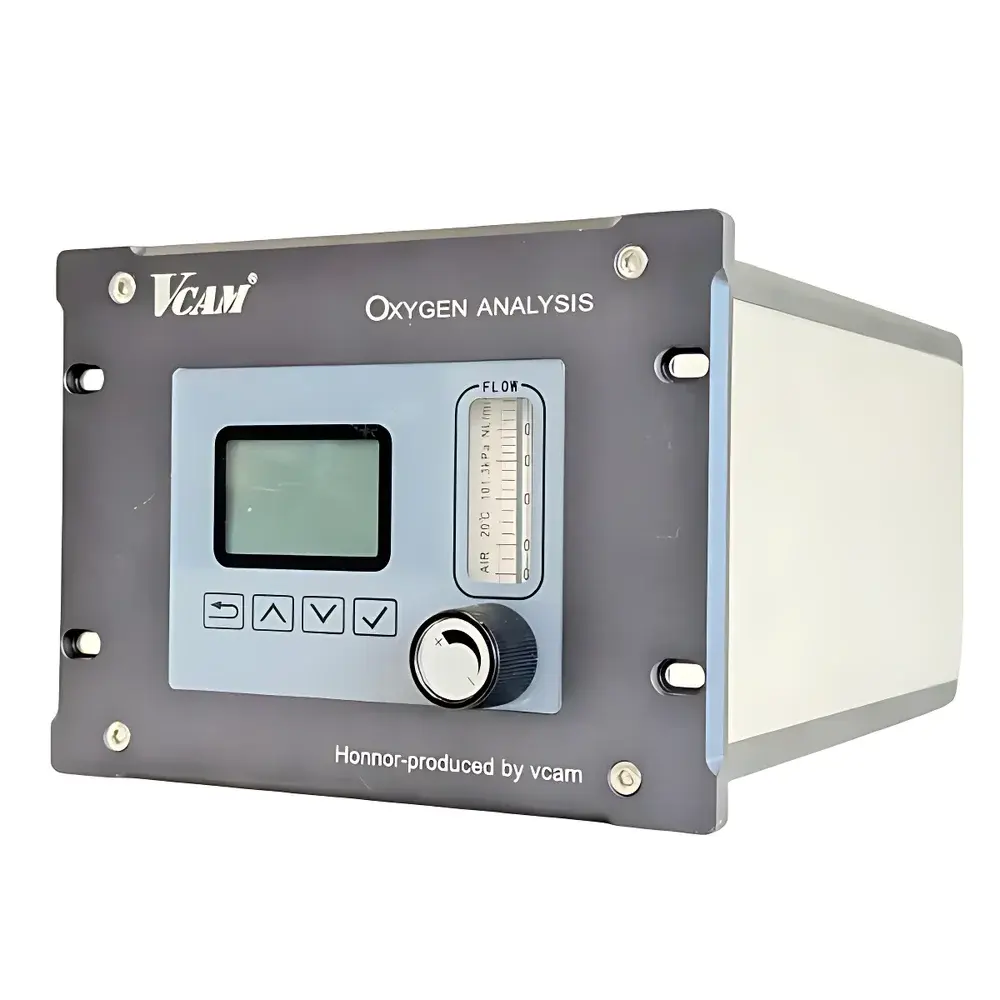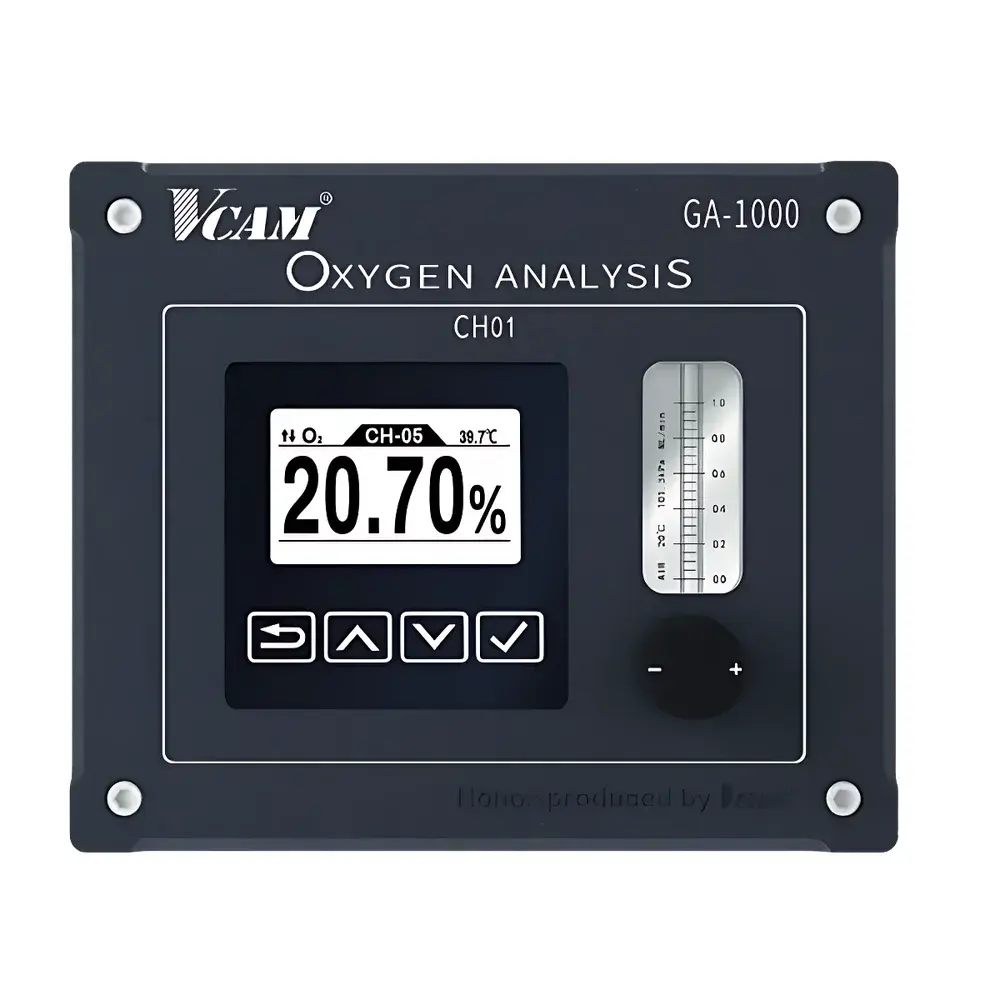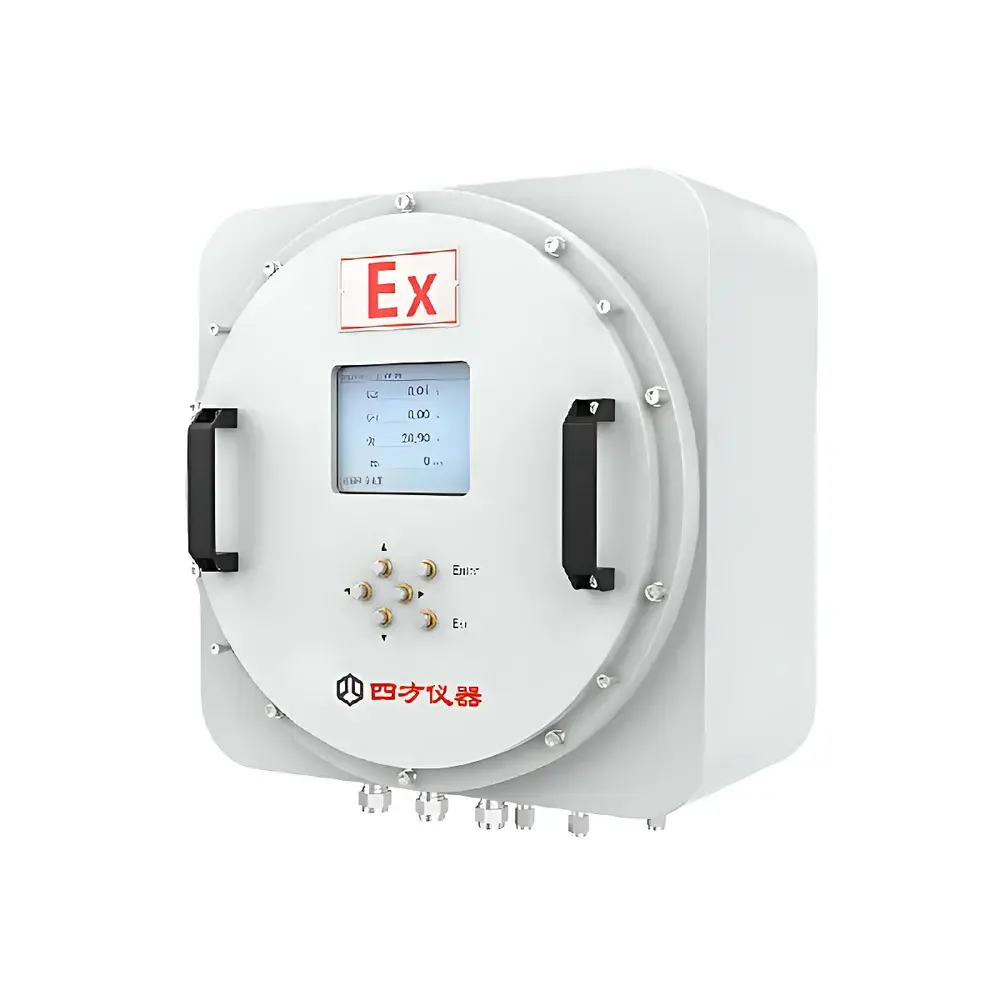
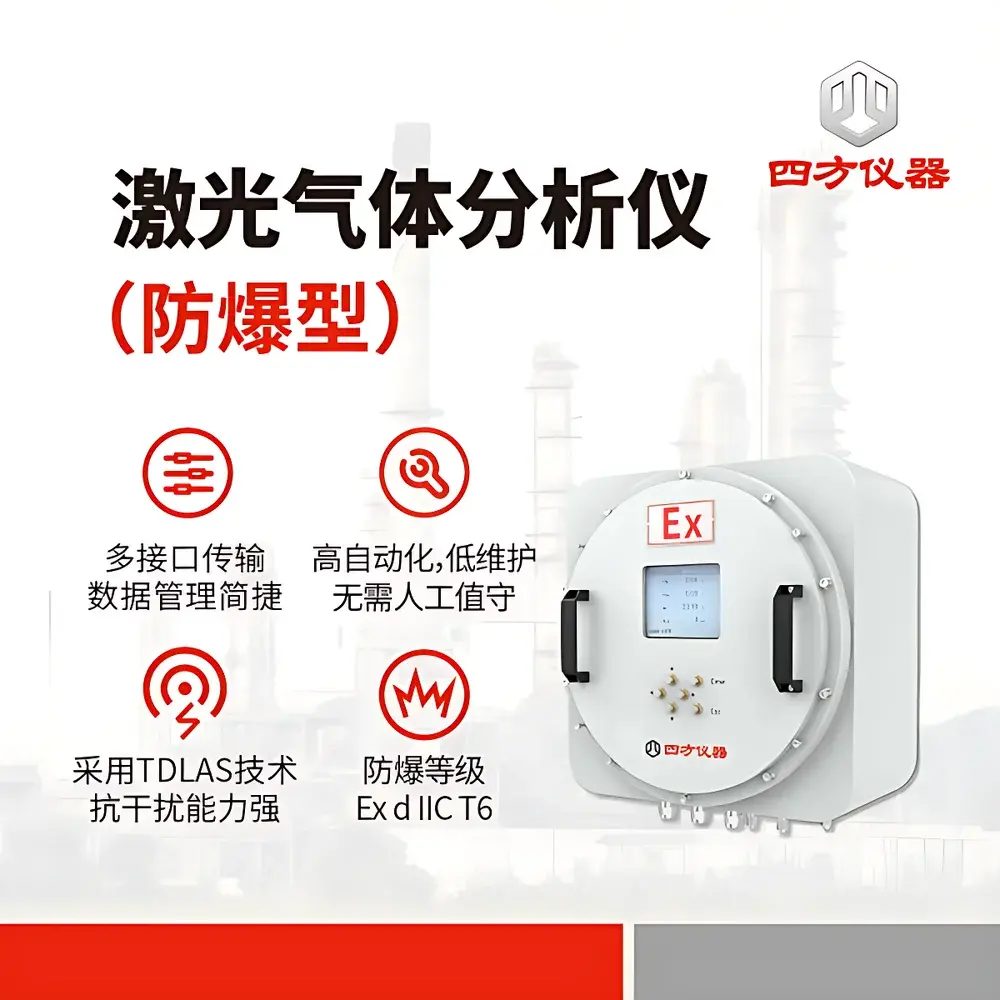
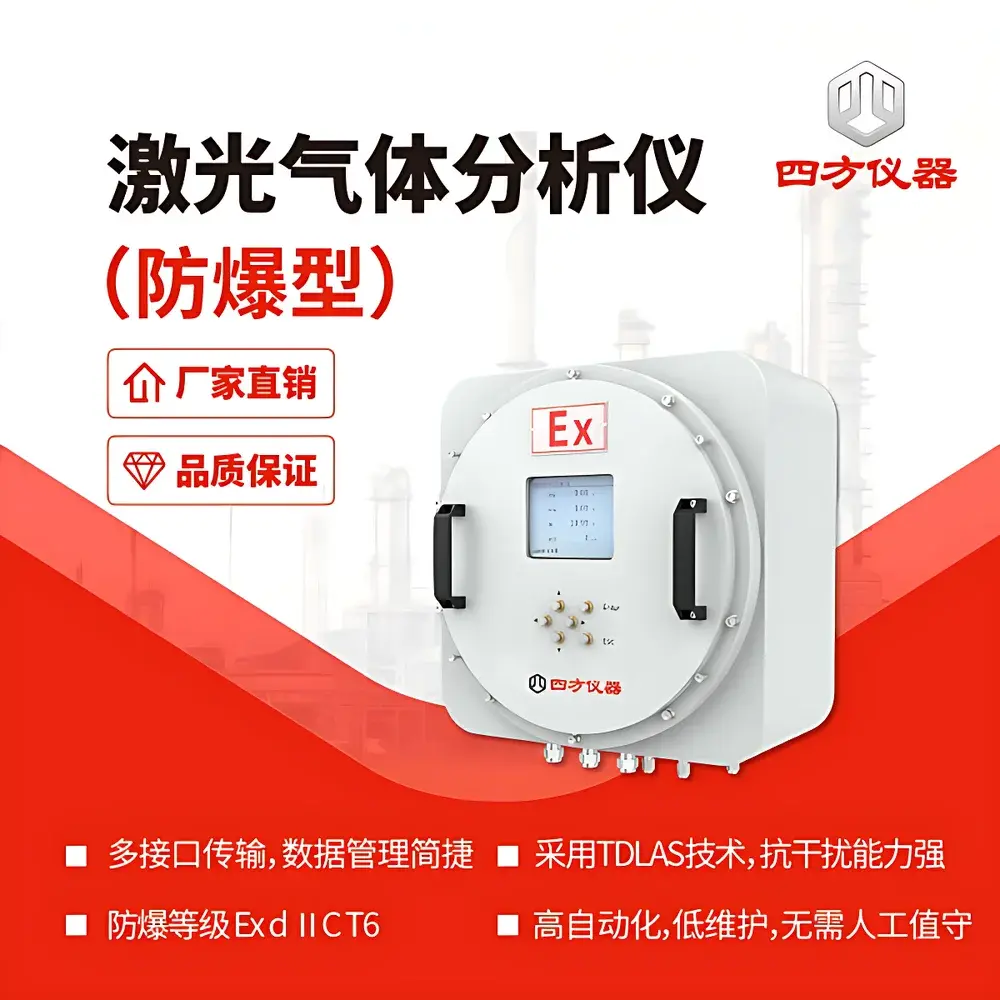
CUBIC INSTRUMENTS TDLAS-Based Explosive-Proof In-Situ Gas Emission Analyzer for Natural Gas Upstream & LNG Processing
| Key | Brand: CUBIC INSTRUMENTS |
|---|---|
| Origin | Hubei, China |
| Manufacturer Type | Authorized Distributor |
| Country of Origin | China |
| Explosion Protection Rating | Ex db IIC T6 Gb / Ex tb IIIC T80°C Db |
| Measurement Principle | Tunable Diode Laser Absorption Spectroscopy (TDLAS) |
| Measured Gases | O₂, CO, CO₂, H₂S, CH₄ |
| Response Time | <40 s (at 2 L/min) |
| Sample Flow Rate | 0.7–1.2 L/min (optimal), up to 2 L/min |
| Output Interfaces | RS-485, RS-232, 4–20 mA |
| Power Supply | AC 220 V, 50 Hz |
| Display | Integrated LCD |
| Built-in Zeroing | Air auto-zero pump |
| Diagnostic Capability | Real-time sensor self-diagnosis |
Overview
The CUBIC INSTRUMENTS TDLAS-Based Explosive-Proof In-Situ Gas Emission Analyzer is an industrial-grade, continuous emission monitoring system engineered for real-time, in-situ quantification of critical gas species—including O₂, CO, CO₂, H₂S, and CH₄—in high-risk process environments across the natural gas value chain. Leveraging Tunable Diode Laser Absorption Spectroscopy (TDLAS), the analyzer delivers selective, interference-resistant detection based on fundamental molecular absorption lines in the near-infrared spectral region. Unlike broadband NDIR or electrochemical sensors, TDLAS enables path-integrated, non-contact measurement with inherent immunity to cross-sensitivity from water vapor, particulates, or background hydrocarbons—making it especially suitable for raw natural gas streams, flare gas, compressor station exhausts, LNG train off-gas, and cryogenic storage vent lines. The optical architecture employs wavelength modulation spectroscopy (WMS) to suppress low-frequency noise and enhance signal-to-noise ratio, ensuring stable baseline performance under thermal drift and mechanical vibration typical in offshore platforms, pipeline compressor stations, and liquefaction terminals.
Key Features
- Explosion-proof certified enclosure meeting both gas (Ex db IIC T6 Gb) and dust (Ex tb IIIC T80°C Db) hazardous area requirements—validated per IEC 60079-0, -1, and -31 for Zone 1/21 deployment.
- Integrated sample conditioning module featuring heated sampling line, particulate filtration, and condensate removal—designed to maintain dew point control and prevent optical window fouling in wet, dusty, or high-hydrocarbon partial pressure environments.
- Multi-gas capability with independent, factory-calibrated spectral channels—each optimized for target analyte absorption strength and linearity over defined concentration ranges (ppm to %vol).
- Real-time embedded diagnostics including laser intensity monitoring, photodetector gain validation, and optical path integrity verification—generating status flags and event logs traceable to timestamped operational records.
- Automated air-based zero calibration via built-in diaphragm pump—eliminating need for external calibration gas cylinders during routine operation while maintaining metrological traceability to NIST-traceable standards.
- Low-maintenance architecture: no consumables, no reagents, and no moving parts in the optical path—supporting unattended operation for ≥12 months between scheduled service intervals.
Sample Compatibility & Compliance
The analyzer is validated for direct installation in process streams with temperatures ranging from −20°C to +60°C and pressures up to 1.6 MPa (gauge), provided sample conditioning maintains dew point below −10°C and particle loading <1 mg/m³. It complies with ISO 14064-3 for GHG monitoring system verification and supports alignment with EPA Method 21 (leak detection), ASTM D6420 (TDLAS validation), and EN 15267-3 for automated measuring systems used in emission monitoring. Its data acquisition firmware includes audit trail functionality compliant with FDA 21 CFR Part 11 requirements when integrated into validated control systems. All calibration gases are traceable to national metrology institutes (e.g., NIM China), and measurement uncertainty budgets are documented per ISO/IEC 17025:2017 Annex A.3.
Software & Data Management
The device operates with embedded Linux-based firmware supporting Modbus RTU (RS-485), ASCII protocol (RS-232), and analog 4–20 mA output for seamless integration into DCS, SCADA, or MES platforms. Local configuration and diagnostics are accessible via front-panel LCD with intuitive menu navigation. Remote access is enabled through optional Ethernet gateway modules supporting OPC UA and MQTT protocols—facilitating secure cloud telemetry for centralized emissions reporting under EU MRV, US EPA e-GGRT, or ISO 50001 energy management frameworks. All measurement data include embedded metadata (timestamp, flow rate, temperature, diagnostic status) and support CSV export for third-party environmental compliance software such as Enviance, Sphera, or Intelex.
Applications
- Natural gas upstream: Wellhead gas composition monitoring, dehydration unit outlet verification, and sour gas H₂S tracking prior to amine treatment.
- Midstream transmission: Compressor station bleed gas analysis, pigging vent stack monitoring, and odorant (THT) residual assessment.
- Storage facilities: LNG tank heel gas composition, boil-off gas (BOG) recycling loop control, and inerting atmosphere verification during maintenance.
- LNG liquefaction plants: Cold box tail gas analysis, refrigerant leak detection (CH₄ in mixed refrigerants), and flare gas calorific value estimation.
- Refining & petrochemical: FCC regenerator flue gas O₂ trim control, sulfur recovery unit (SRU) tail gas H₂S/CO monitoring, and landfill biogas upgrading verification.
FAQ
What gas species can this analyzer measure simultaneously?
It measures O₂, CO, CO₂, H₂S, and CH₄ concurrently using discrete, non-overlapping laser wavelengths—each independently calibrated and compensated for pressure and temperature effects.
Is field calibration required after installation?
No routine field calibration is needed; the built-in air auto-zero function maintains baseline stability. Periodic verification using certified span gases (annually or per site QA/QC protocol) is recommended for regulatory compliance.
Can the analyzer operate in sub-zero ambient conditions?
Yes—the heated sampling line and internal thermal management enable reliable operation down to −20°C ambient, provided sample gas dew point remains controlled via conditioning.
How does TDLAS compare to traditional extractive NDIR systems?
TDLAS offers superior selectivity, faster response (<40 s), lower drift, and immunity to optical contamination—eliminating the need for frequent filter changes or sample pump maintenance typical of extractive systems.
Does the system support integration with existing safety instrumented systems (SIS)?
Yes—4–20 mA outputs can be routed to SIL2-rated input cards, and alarm thresholds are configurable via local interface or Modbus register mapping for interlock logic implementation.