
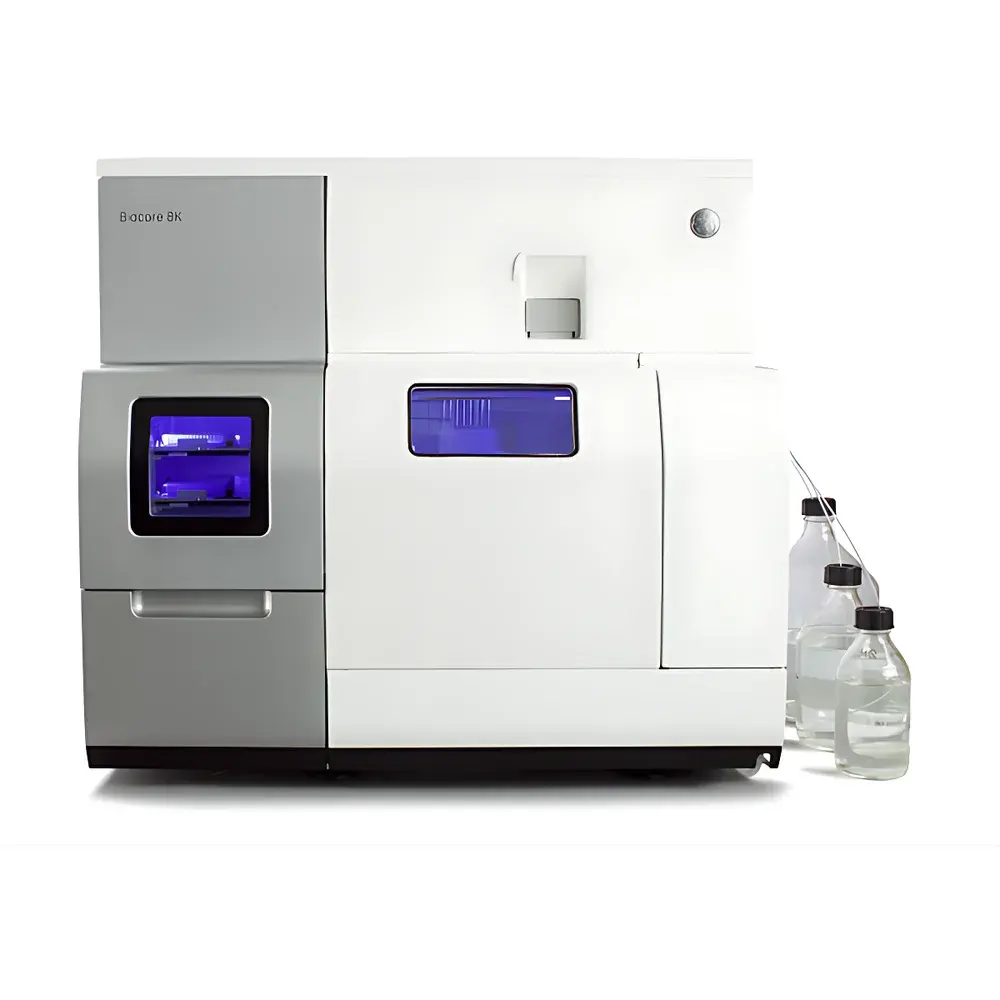
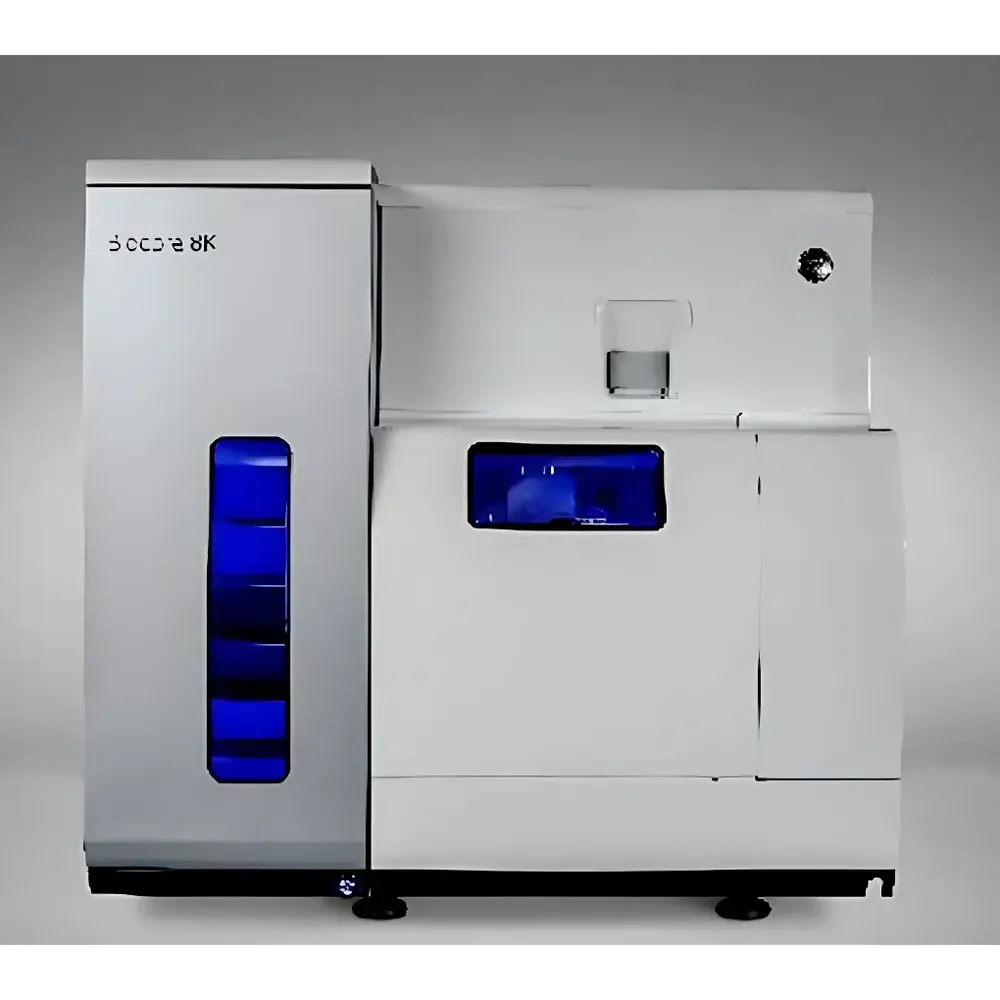
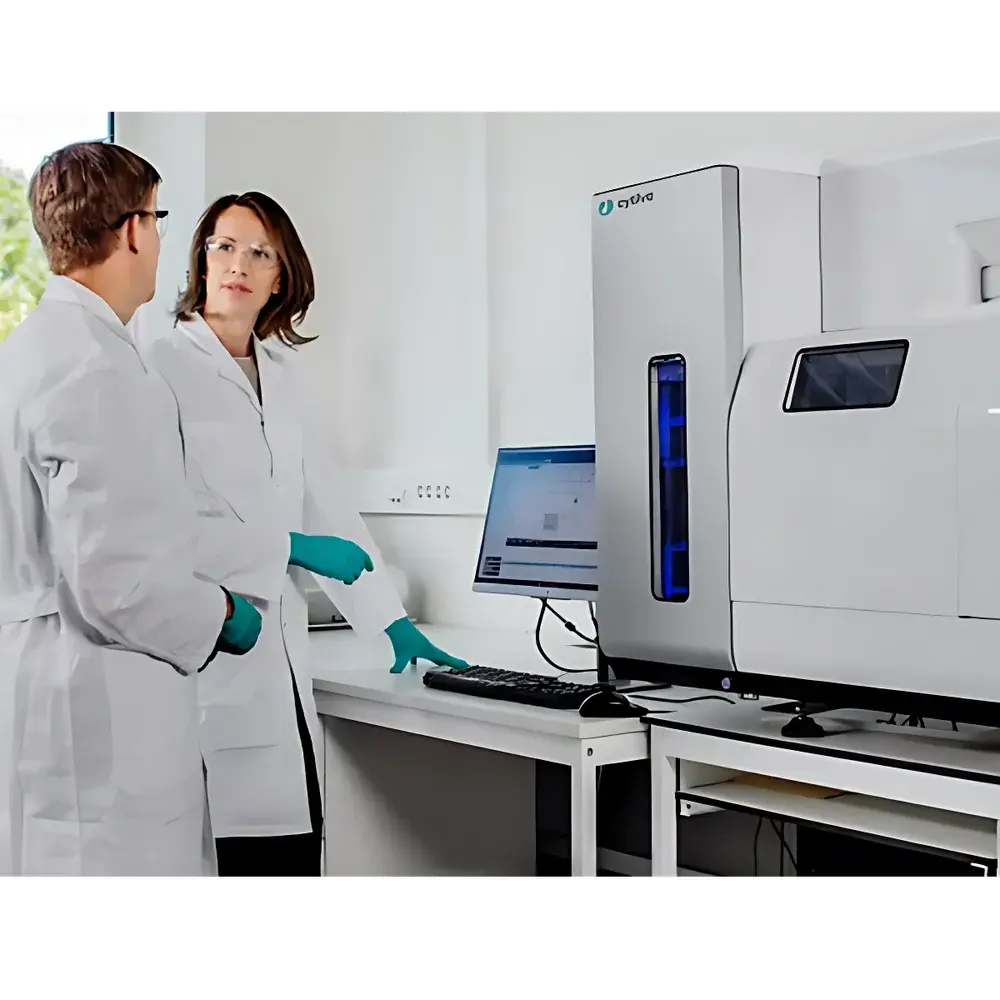
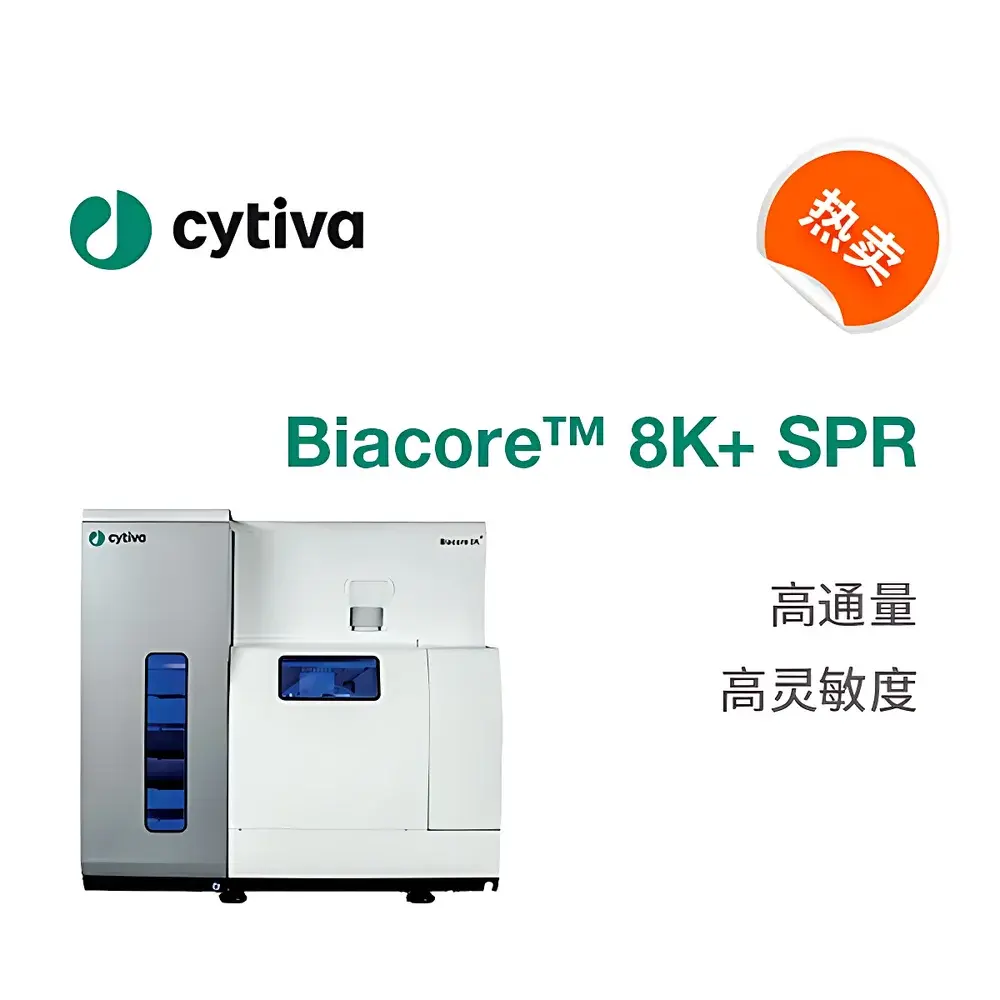
Cytiva Biacore 8K+ Surface Plasmon Resonance System
| Brand | Cytiva |
|---|---|
| Origin | Sweden |
| Manufacturer Type | Authorized Distributor |
| Origin Category | Imported |
| Model | Biacore 8K+ SPR System |
| Instrument Type | Surface Plasmon Resonance (SPR) |
| Channel Configuration | Multi-channel (8 sample needles, 16 simultaneous interaction channels) |
| Detection Range | fM to mM |
| Sample Capacity | Up to 4,608 samples (12 × 384-well plates or 24 × 96-well plates) |
| Analysis Time per Cycle | 2–15 minutes |
| Temperature Control Range | 4°C to 40°C |
Overview
The Cytiva Biacore 8K+ Surface Plasmon Resonance System is a high-throughput, label-free biosensor platform engineered for quantitative molecular interaction analysis in life science research and biopharmaceutical development. Based on the physical principle of surface plasmon resonance—where changes in refractive index at a gold sensor surface are measured in real time as biomolecules bind or dissociate—the system delivers kinetic rate constants (ka, kd), equilibrium dissociation constants (KD), affinity rankings, concentration measurements, and relative potency assessments without labeling requirements. Designed for demanding applications including antibody screening, fragment-based drug discovery, bispecific antibody characterization, and process intermediate QC, the Biacore 8K+ integrates eight independent sample needles with dual-flow cell sensor chips to enable up to 16 parallel interaction analyses per cycle. Its architecture supports continuous unattended operation for up to 72 hours, making it suitable for large-scale screening campaigns and regulatory-compliant workflows.
Key Features
- Eight-needle autosampler enabling true parallel sample handling and rapid cycle times—reducing total assay duration to ~1/8 that of single-needle SPR systems
- Multi-channel detection capability: Simultaneous monitoring of up to 16 ligand-analyte interactions using dual-flow-cell CM5 or Series S sensor chips
- Ultra-broad dynamic detection range spanning femtomolar (fM) to millimolar (mM) concentrations—compatible with small molecules, peptides, antibodies, multimeric proteins, and crude lysates
- Flexible microplate support: Accommodates up to 12 × 384-well or 24 × 96-well plates across six configurable sample racks for maximum walk-away capacity of 4,608 samples
- Precise thermostatic control from 4°C to 40°C with ±0.1°C stability—critical for reproducible kinetics and temperature-dependent binding studies
- Integrated fluidics with low carryover (<0.001%) and high-pressure tolerance (up to 100 bar) for robust performance with viscous or particulate-containing samples
Sample Compatibility & Compliance
The Biacore 8K+ accepts diverse sample formats—including purified proteins, hybridoma supernatants, cell culture harvests, and clarified lysates—without requiring prior purification or labeling. Sensor chip surfaces (e.g., CM5, SA, NTA, C1, and custom immobilization chemistries) support covalent, affinity-based, or capture-coupled ligand immobilization strategies. The system complies with international quality standards relevant to biopharmaceutical development: ISO 13485 design controls, ASTM E2500-13 for instrument qualification, and ICH Q5E/Q5C guidelines for comparability and stability assessment. When configured with GxP-compliant hardware and software modules, it supports GLP and GMP environments per FDA 21 CFR Part 11, EU Annex 11, and PIC/S requirements—including electronic signatures, audit trails, user access control, and change management protocols.
Software & Data Management
Biacore Insight™ Software serves as the unified control and analysis environment, supporting method development, run scheduling, real-time data visualization, and advanced modeling (1:1 Langmuir, bivalent analyte, heterogeneous ligand, mass transport limitation correction). The Concentration & Relative Potency Analysis (CRPA) Extension Pack provides validated tools for absolute concentration determination via calibration-free concentration analysis (CFCA) and parallel line assay (PLA) for biosimilar potency testing. All software modules undergo periodic verification under Cytiva’s Software Lifecycle Management (SLM) framework. Data export conforms to ASTM E1702-19 (standard format for analytical instrument data) and supports integration with LIMS and ELN platforms via secure API endpoints.
Applications
- High-throughput primary screening of monoclonal antibody candidates against multiple antigens
- Comprehensive kinetic profiling of bispecific and multispecific constructs under physiological buffer conditions
- Comparability studies across manufacturing lots, process changes, or formulation variants
- Binding epitope mapping using competition assays with orthogonal antibody panels
- Concentration determination of therapeutic proteins in upstream and downstream process streams
- Stability-indicating assays evaluating aggregation-induced loss of binding function
- Regulatory submission support for BLA/MAA dossiers with full traceability and metadata-rich reporting
FAQ
What types of biomolecules can be analyzed on the Biacore 8K+?
The system supports proteins, peptides, nucleic acids, carbohydrates, small molecules (<500 Da), viruses, liposomes, and extracellular vesicles—provided they interact with an immobilized ligand and induce measurable refractive index shifts.
Is the Biacore 8K+ compliant with 21 CFR Part 11?
Yes, when deployed with the Biacore Insight GxP Extension Pack, the system meets technical and procedural requirements for electronic records and signatures, including role-based access, audit trail review, and electronic signature validation.
How does the 8-needle configuration improve throughput compared to legacy SPR systems?
It enables concurrent loading of eight samples into separate flow paths while maintaining independent regeneration and baseline stabilization—eliminating sequential injection bottlenecks and achieving up to 2,300 analyses per day.
Can crude samples be injected directly without purification?
Yes, the system’s pressure-tolerant fluidics and optional inline filtration modules allow direct injection of clarified cell lysates, hybridoma supernatants, and fermentation broths—subject to particulate load specifications.
What sensor chip types are compatible with the Biacore 8K+?
All Biacore Series S chips (CM5, SA, NTA, C1, HPA, L1, and custom-coated variants) are supported, with automated chip recognition and protocol-adaptive surface regeneration routines.




