
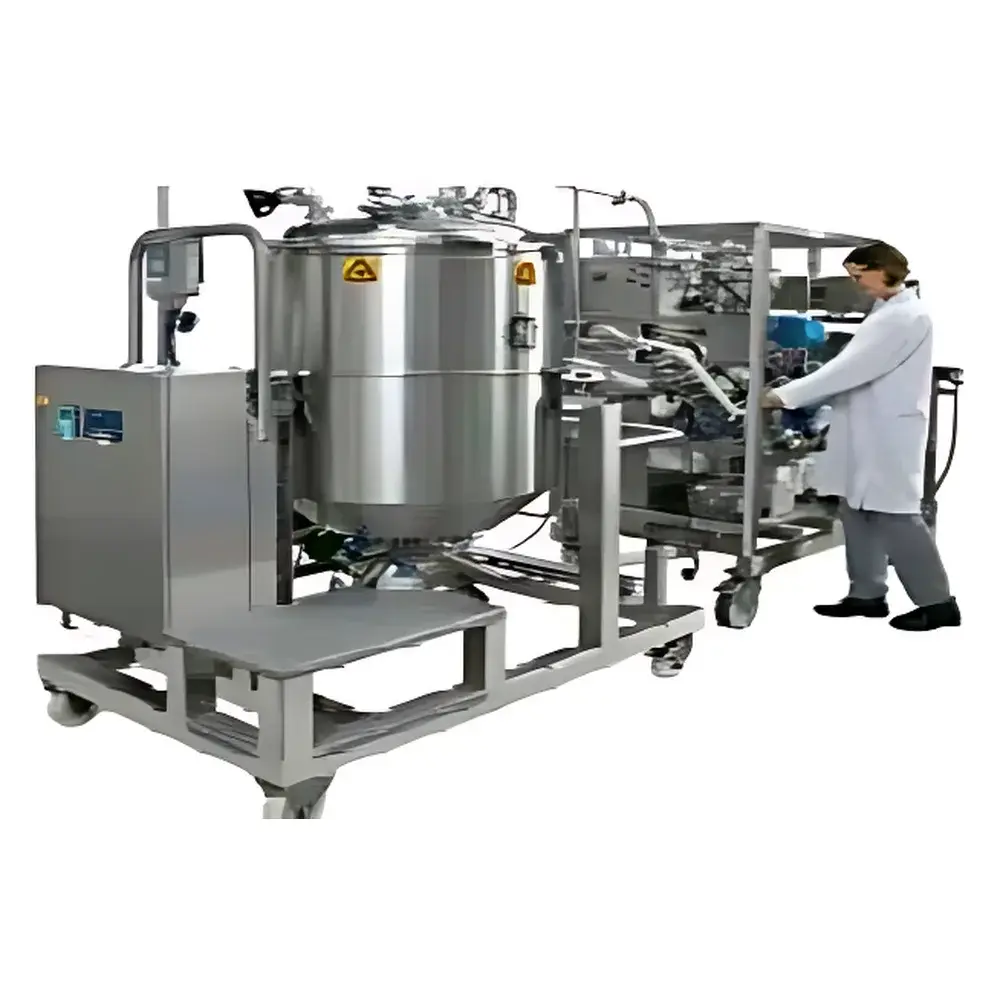
Cytiva UniFlux™ Series Automated Tangential Flow Filtration (TFF) Systems for Pilot and Production-Scale Bioprocessing
| Brand | Cytiva |
|---|---|
| Origin | Sweden |
| Model | UniFlux™ |
| System Variants | UniFlux™ 10, 30, 120, 400 |
| Membrane Area Range | 0.11–52 m² |
| Feed Volume Capacity | 1–10,000+ L |
| Construction Materials | 316L Stainless Steel, USP Class VI Polymers |
| Control Software | UNICORN™ v7.x or later |
| Regulatory Compliance | FDA 21 CFR Part 11, GMP/GLP-Ready, cGMP-Compatible Design |
| Pressure Monitoring | 4 Real-Time Channels |
| Sensor Integration | Temperature, UV Absorbance, pH, Conductivity, Air Flow, Transmembrane Pressure (TMP), Differential Pressure (ΔP), Crossflow & Permeate Flow Rates |
| Pump Types | Sanitary Diaphragm & Rotary Lobe Pumps |
| Integrity Test | Integrated Air Flow-Based Filter Integrity Testing |
| Cleaning | Fully Automated CIP Method Development & Water Flux Validation |
| Data Management | Audit Trail, Electronic Signatures, 10-Tier User Access Control, Logbook Generation |
Overview
The Cytiva UniFlux™ Series represents a purpose-engineered platform of fully automated, sanitary-grade tangential flow filtration (TFF) systems designed for pilot-scale process development, technology transfer, and robust production-scale biomanufacturing. Built upon decades of membrane filtration expertise from Cytiva (formerly GE Healthcare), the UniFlux™ architecture implements core TFF principles—controlled crossflow velocity, precise transmembrane pressure (TMP) regulation, and real-time flux monitoring—to ensure high reproducibility in microfiltration (MF), ultrafiltration (UF), diafiltration (DF), and hollow-fiber refolding applications. Its modular, scalable design enables direct linear scale-up across four standardized configurations (UniFlux™ 10, 30, 120, 400), maintaining identical fluidic geometry, control logic, and operational parameters from lab to manufacturing. This consistency eliminates empirical re-optimization during process transfer and supports regulatory filing with demonstrable comparability data.
Key Features
- Unified hardware architecture across all four system sizes—UniFlux™ 10 (0.11–1.2 m²), 30 (0.5–8 m²), 120 (2–25 m²), and 400 (8–52 m²)—enabling seamless linear scale-up with preserved shear profiles and residence time distribution.
- Sanitary-grade fluid path constructed from electropolished 316L stainless steel and USP Class VI-compliant elastomers; zero-dead-leg design with bottom-drain capability and minimal hold-up volume for efficient product recovery and cleaning validation.
- Integrated sensor suite monitoring TMP, ΔP, feed/crossflow/permeate flow rates, temperature, UV absorbance (280 nm), conductivity, pH, and compressed air flow—each calibrated and traceable per ISO/IEC 17025 protocols.
- Low-shear pumping solutions: dual-sanitary diaphragm pumps for precise feed and permeate control; optional rotary lobe pump for high-viscosity or cell-laden streams—both validated for minimal protein denaturation and viable cell retention.
- Built-in filter integrity test (FIT) functionality using pressure hold or air flow decay methods compliant with ASTM F838-22 and EU Annex 1 requirements for sterile barrier validation.
- UNICORN™ software-driven automation including method-guided workflow creation, endpoint detection (e.g., target concentration factor or diafiltration volume), real-time flux decline calculation, and automatic water flux recovery assessment post-CIP.
Sample Compatibility & Compliance
The UniFlux™ platform accommodates both hollow-fiber modules and flat-sheet cassettes without hardware modification, supporting standard industry formats (e.g., Spectrum Labs, Sartorius, Pall). It is routinely deployed for bacterial cell harvest (0.2–0.45 µm MF), clarification of mammalian cell culture harvests, UF/DF of monoclonal antibodies (mAbs), viral vector purification, plasmid DNA concentration, and refolding of inclusion body proteins via hollow-fiber dialysis. All wetted materials comply with USP and cytotoxicity testing, EC 1935/2004 food contact regulations, and ISO 10993-5 biocompatibility standards. The system’s mechanical and electrical design conforms to IEC 61000-6-2/6-4 EMC directives and meets ATEX Zone 2 classification where applicable.
Software & Data Management
UNICORN™ software serves as the unified control, acquisition, and reporting engine—certified to FDA 21 CFR Part 11 with full audit trail, electronic signature support (21 CFR Part 11 Subpart B), and role-based access control (10-tier user hierarchy). Every parameter change, alarm event, method execution, and manual override is timestamped and cryptographically logged. Batch reports include raw sensor traces, calculated metrics (e.g., % flux decline, total permeate volume, buffer consumption), and comparative overlay plots across runs. Data export adheres to ASTM E2500-13 and ISPE GAMP 5 guidelines, enabling integration into MES/LIMS environments via OPC UA or CSV/XML interfaces. All logbooks are digitally signed and exportable as PDF/A-1a for regulatory submission.
Applications
- Process development of UF/DF steps for therapeutic proteins under Q5A(R2) comparability frameworks.
- Scalable clarification of CHO and HEK293 harvests prior to chromatography, minimizing aggregate formation through controlled shear.
- Continuous diafiltration for viral vector purification (AAV, lentivirus) with integrated conductivity feedback loops.
- Hollow-fiber–based refolding of recombinant enzymes and growth factors, leveraging real-time UV/pH monitoring to optimize folding kinetics.
- Microfiltration-based whole-cell harvesting of E. coli, yeast, or baculovirus-infected insect cells with >95% viability retention.
- CIP cycle development and membrane lifetime qualification per ISO 21501-4 and PDA TR40 methodologies.
FAQ
Does UniFlux™ support integration with existing plant SCADA or MES systems?
Yes—via OPC UA server interface or configurable CSV/JSON export; protocol mapping documentation and validation templates are provided for IQ/OQ execution.
Can UNICORN™ enforce multi-level approval workflows for critical parameter changes?
Yes—through configurable electronic signatures and hierarchical user roles; any modification to PID tuning, setpoints, or alarm thresholds requires dual authorization.
Is the system qualified for use in clinical manufacturing environments?
All UniFlux™ variants ship with FAT/SAT documentation packages aligned with ISPE Baseline Guide Vol. 4 and EU Annex 15; GMP commissioning support is available through Cytiva Professional Services.
How is filter integrity verified between batches?
Automated air flow decay tests are executed pre- and post-run per ASTM F838-22; results are embedded in the batch logbook with pass/fail criteria defined in the master method.
What validation support is included with system delivery?
Cytiva provides URS, FDS, SDS, IQ/OQ protocols (executable), and a complete validation summary report compliant with ICH Q5A, Q5D, and Annex 1 requirements.




