
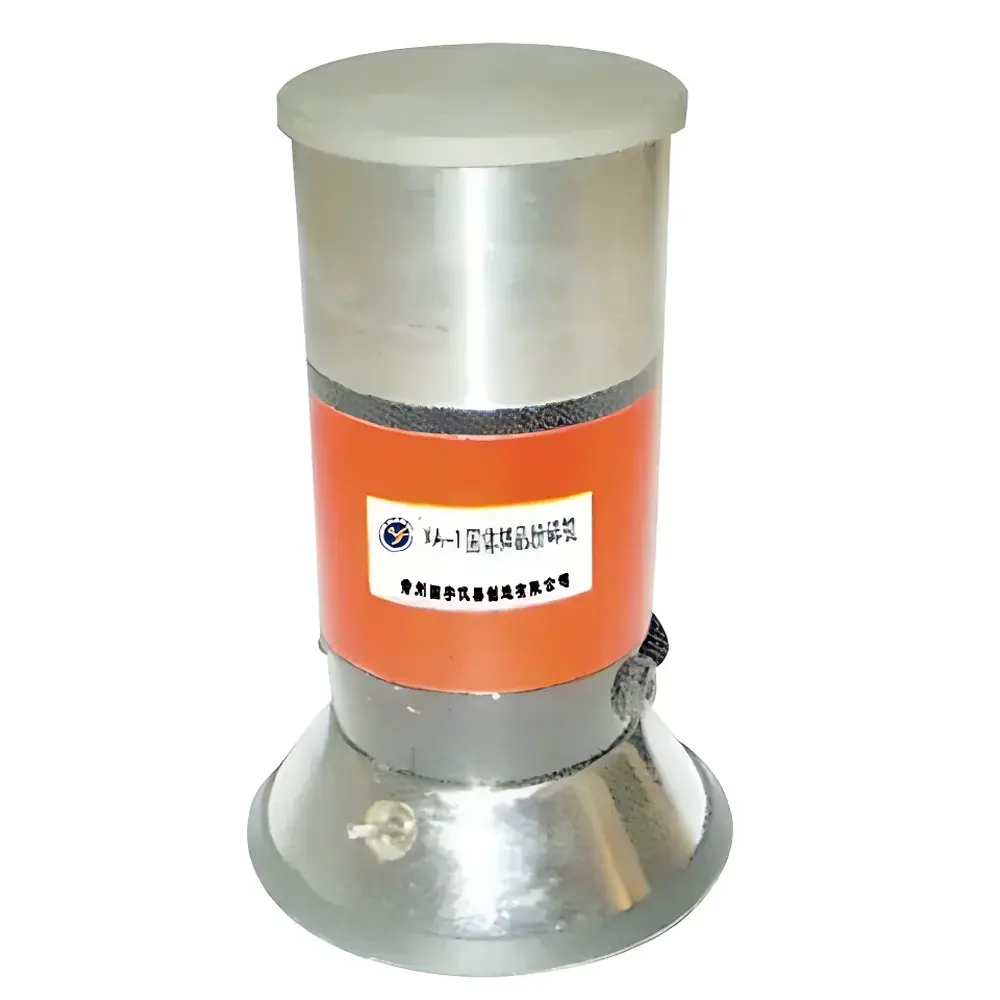
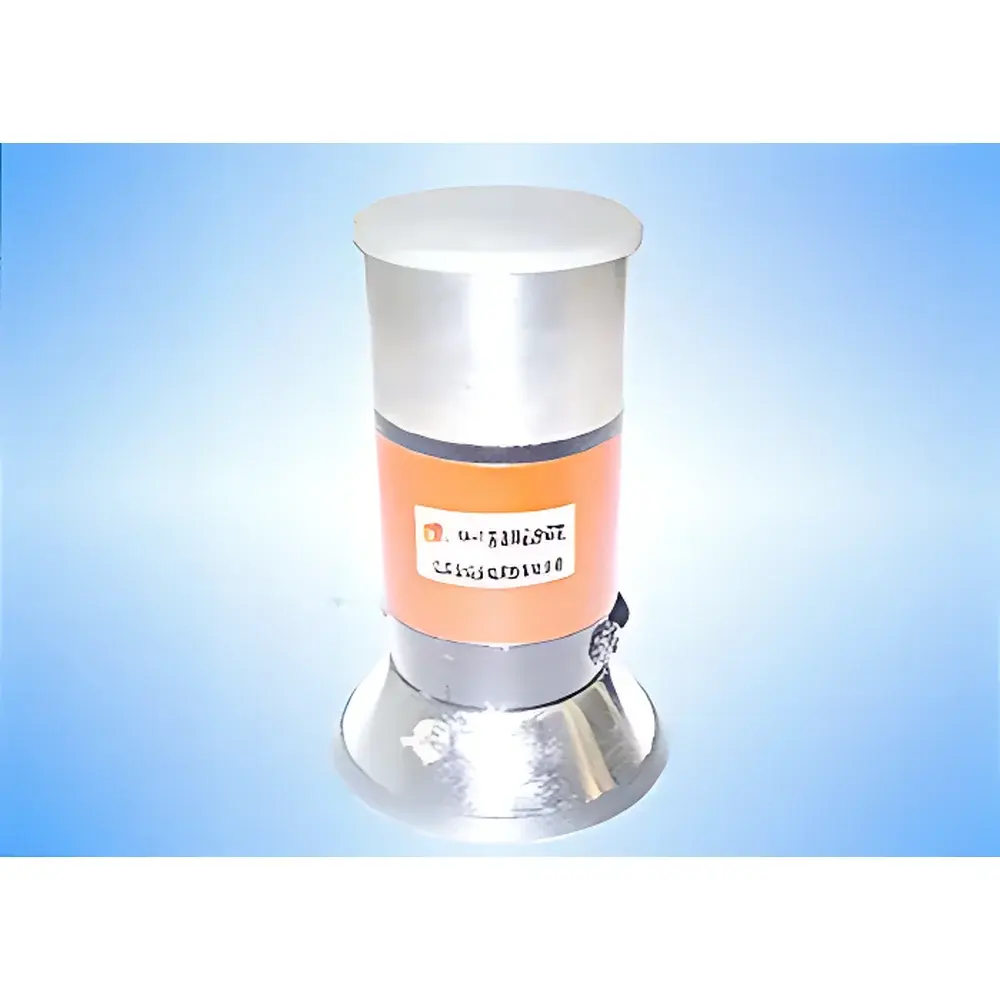
CZGY F-80 High-Speed Universal Crusher
| Brand | CZGY |
|---|---|
| Origin | Jiangsu, China |
| Manufacturer Type | Direct Manufacturer |
| Region of Origin | Domestic (China) |
| Model | F-80 |
| Instrument Type | Crusher |
| Sample Suitability | Hard and Brittle Materials |
| Output Particle Size | 0.01–0.5 mm |
| Maximum Feed Particle Size | <15 mm |
| Batch Processing Capacity | 50 g |
| Input Voltage | AC 220 V |
| Motor Power | 200 W |
| Rotational Speed | 12,000 rpm |
| Continuous Operation Limit | ≤3 minutes |
| Dimensions (L×W) | 200×85 mm |
| Weight | 3 kg |
| Construction Material | Stainless Steel |
| Compliance | Designed for GLP-aligned laboratory sample preparation workflows |
Overview
The CZGY F-80 High-Speed Universal Crusher is a compact, benchtop mechanical comminution device engineered for rapid, reproducible size reduction of dry, hard, and brittle solid samples in analytical and quality control laboratories. It operates on the principle of high-speed rotor impact—where a stainless-steel rotating blade subjects feed material to centrifugal acceleration and repeated collision against the inner chamber wall and stationary teeth—achieving efficient particle fragmentation through shear and impact forces. Unlike cryogenic or planetary ball mills, the F-80 delivers sub-millimeter particle distributions without requiring cooling or extended milling cycles, making it particularly suitable for routine sample homogenization prior to elemental analysis (e.g., AAS, ICP-OES), moisture content determination, or sieve-based granulometric assessment. Its design prioritizes operational simplicity, minimal maintenance, and compliance with foundational laboratory safety and documentation practices.
Key Features
- Stainless-steel grinding chamber and rotor assembly ensure corrosion resistance, non-contaminating operation, and ease of cleaning between sample batches.
- 12,000 rpm motor-driven impeller enables consistent particle size reduction across heterogeneous materials including grains, soil aggregates, pharmaceutical tablets, mineral fragments, and botanical tissues.
- Compact footprint (200 × 85 mm) and lightweight construction (3 kg) allow integration into fume hoods, glove boxes, or shared instrumentation benches without structural reinforcement.
- Thermal management system limits operational duty cycle to ≤3 minutes per batch—preventing motor overheating and preserving sample integrity for heat-sensitive analytes.
- Interlocked safety cover prevents operation unless fully seated, meeting basic IEC 61000-4 electromagnetic compatibility and mechanical hazard mitigation expectations for Class I laboratory equipment.
Sample Compatibility & Compliance
The F-80 accepts feed particles up to 15 mm in maximum dimension and reliably produces output fractions ranging from 10 µm to 500 µm (0.01–0.5 mm), as verified by standardized sieve analysis per ASTM E11 and ISO 3310-1. It is validated for use with hard, low-moisture matrices—including cereal grains (e.g., soybean, sorghum), calcareous soils, siliceous sandstone, fertilizer granules, and dried herbal powders. While not certified to UL/CSA or CE for standalone regulatory submission, its construction and performance align with preparatory steps outlined in USP , ISO/IEC 17025:2017 Clause 7.2.2 (sampling and sample handling), and GLP principles governing raw material homogenization. Users are advised to validate crushing efficiency and cross-contamination control per internal SOPs prior to regulated testing.
Software & Data Management
The F-80 is a manually operated, analog-controlled instrument with no embedded firmware, touchscreen interface, or digital data logging capability. All operational parameters—including batch weight, feed size, run duration, and post-crushing sieve distribution—are recorded externally in laboratory notebooks or LIMS-compatible spreadsheets. This architecture supports audit readiness under FDA 21 CFR Part 11 when paired with controlled documentation practices (e.g., dated, signed, version-controlled SOPs for sample prep). Optional calibration logs—tracking blade wear, motor speed consistency (via tachometer verification), and chamber cleanliness—can be maintained to satisfy internal QA requirements for method robustness.
Applications
- Routine homogenization of agricultural commodities (e.g., rice, wheat, legumes) prior to proximate analysis or mycotoxin screening.
- Preparation of representative subsamples from heterogeneous geological or environmental core materials for XRF or loss-on-ignition assays.
- Reduction of pharmaceutical excipients and tablet fragments to uniform particle size for dissolution testing or content uniformity evaluation.
- Fragmentation of ceramic or metallurgical slag samples for subsequent acid digestion and heavy metal quantification.
- Supporting ISO 11277-compliant soil texture analysis by generating consistent silt/clay fractions from air-dried aggregates.
FAQ
What is the maximum recommended feed size?
Feed particles must not exceed 15 mm in any dimension to avoid jamming or uneven wear.
Can the F-80 process wet or oily samples?
No—it is designed exclusively for dry, free-flowing, low-moisture solids; moisture content above 10% may cause clogging and reduce grinding efficiency.
How often should the stainless-steel blade be replaced?
Blade replacement is determined empirically; users should inspect for visible nicks or reduced particle fineness after every 50–100 batches and replace if output distribution shifts beyond ±15% of baseline sieve retention values.
Is the F-80 compliant with GMP environments?
While not GMP-certified, its stainless-steel construction, cleanable geometry, and deterministic operation support qualification under Annex 15 and WHO TRS 986 for non-sterile sample prep areas.
Does the unit include sieve sets or particle size verification tools?
No—sieve analysis must be performed externally using certified test sieves (e.g., ASTM E11); users are responsible for establishing their own size verification protocol.
Related Products



