
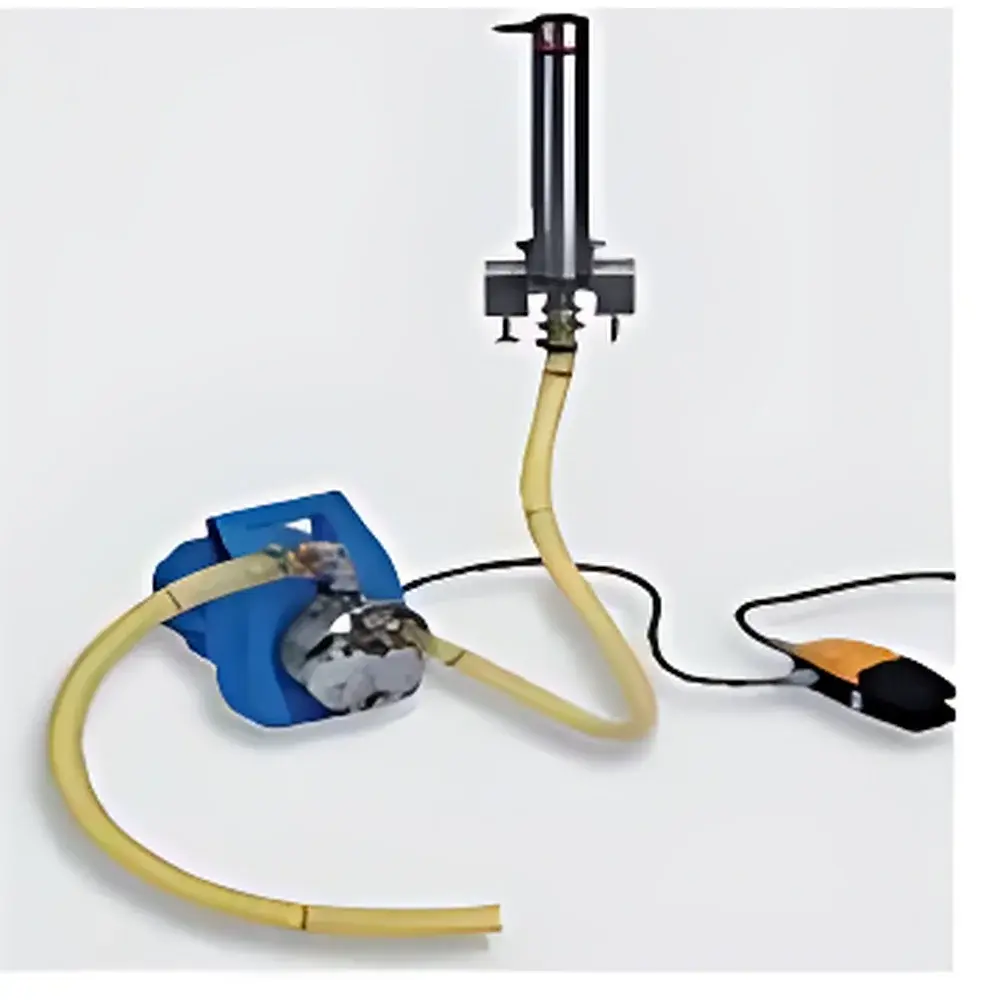
Dairy Impurity Analyzer Model 4561
| Origin | Germany |
|---|---|
| Manufacturer Type | Authorized Distributor |
| Origin Category | Imported |
| Model | 4561 |
| Price | USD 3,500 (FOB Hamburg) |
Overview
The Dairy Impurity Analyzer Model 4561 is a precision-engineered, standardized filtration-based instrument designed for the quantitative assessment of suspended particulate matter in raw and processed bovine milk. It operates on the principle of gravimetric and visual comparative analysis following standardized membrane filtration—aligned with ISO 707:2022 (Milk — Determination of impurities — Filtration method) and IDF Standard 50A:2018 (Determination of insoluble impurities in milk). The system delivers objective, repeatable results by capturing non-soluble residues—including siliceous particles, feed fragments, somatic cell clusters, rust, rubber debris, and environmental contaminants—on a defined pore-size cellulose ester membrane. Its architecture supports high-throughput laboratory environments where regulatory compliance, audit readiness, and batch traceability are mandatory, particularly in EU-registered dairies and facilities supplying to retailers adhering to Global Food Safety Initiative (GFSI)-benchmarked schemes such as BRCGS Dairy or FSSC 22000.
Key Features
- High-throughput capacity: Processes up to 800 samples per 8-hour shift via sequential single-sample filtration under controlled vacuum pressure (–85 kPa ± 2 kPa)
- Standardized sample volume delivery: Integrated volumetric pump ensures precise aspiration of 500 mL ± 1.5 mL per test—fully compliant with ISO 707 Annex A requirements
- Dual-reference optical evaluation: Includes calibrated reference comparison card (0–10 impurity grade scale, traceable to PTB-certified standards) and optional digital imaging module for archival-grade image capture (JPEG/TIFF, 12 MP resolution)
- Modular filtration manifold: Stainless-steel base plate with six independent filtration stations; each equipped with PTFE-coated vacuum seals and quick-release membrane holders compatible with 47 mm diameter, 1.5 µm pore-size cellulose ester filters (ISO 707-specified)
- Robust industrial housing: IP54-rated enclosure with chemical-resistant epoxy-painted steel chassis; designed for ambient lab conditions (10–30 °C, 30–70% RH, non-condensing)
- Calibration traceability: Delivered with factory calibration certificate referencing DIN EN ISO/IEC 17025-accredited metrology procedures
Sample Compatibility & Compliance
The Model 4561 accepts raw whole milk, skimmed milk, standardized milk, and reconstituted powdered milk—provided samples are pre-homogenized and maintained at 4–10 °C prior to analysis to prevent fat agglomeration artifacts. It is not intended for use with ultra-high-temperature (UHT) sterilized products containing thermally induced protein aggregates unless validated per internal SOP. Regulatory alignment includes full compatibility with EU Regulation (EC) No 853/2004 (hygiene rules for food of animal origin), Codex Alimentarius Standard CXS 206-1999 (Milk and Milk Products), and national dairy quality protocols in Germany (LMKV), France (DGAL), and Canada (CFIA Dairy Directive). All filtration consumables meet EU Food Contact Materials Regulation (EC) No 1935/2004 and carry Declaration of Conformity (DoC) documentation.
Software & Data Management
While the base configuration operates as a standalone analytical platform, an optional PC-connected software suite (ImpurityTrack v3.2) provides GLP-compliant data handling. This module supports electronic signature authentication (21 CFR Part 11 compliant), automated report generation (PDF/A-2b), audit trail logging (user actions, timestamps, parameter changes), and CSV export for LIMS integration. All image captures and grade assignments are time-stamped, user-ID tagged, and stored with SHA-256 hash verification to ensure data integrity. Software validation packages—including IQ/OQ documentation and UAT test scripts—are available upon request for GMP-regulated users.
Applications
- Routine quality control in receiving bays of dairy processing plants
- Supplier qualification audits for bulk milk collection centers
- Root cause investigation of elevated sediment levels linked to milking equipment wear or barn hygiene lapses
- Validation of filter integrity and cleaning-in-place (CIP) cycle efficacy
- Supporting HACCP prerequisite programs for physical hazard identification (CCP Step 2 in many dairy HACCP plans)
- Research applications in veterinary science studying mastitis-related particulate load or feed-to-milk transfer of mineral contaminants
FAQ
What filtration membrane specifications are required for ISO 707 compliance?
Cellulose ester membranes with nominal pore size 1.5 µm, diameter 47 mm, and certified low extractables per ISO 707 Annex B. Pre-sterilized, individually wrapped lots are recommended.
Can the instrument be used for goat or sheep milk?
Yes—though method validation per ISO 707 Clause 5 is required due to differences in casein micelle size and fat globule distribution; typical recovery correction factors range from 0.92–0.97.
Is routine maintenance documented in the operator manual?
Yes—the manual includes quarterly vacuum pump oil change schedules, annual pressure transducer calibration checks, and biannual seal integrity verification using the built-in leak-test function.
Does the system support multi-language UI or reporting?
The optional ImpurityTrack software supports English, German, French, Spanish, and Mandarin interfaces; all reports default to English but are fully customizable via template editor.
How is measurement uncertainty determined for this instrument?
Combined standard uncertainty (k=2) is ±0.3 impurity grade units, derived from volumetric delivery error (±0.3%), membrane variability (±0.15 grade), and inter-operator visual grading variance (±0.25 grade) per ISO/IEC Guide 98-3.





