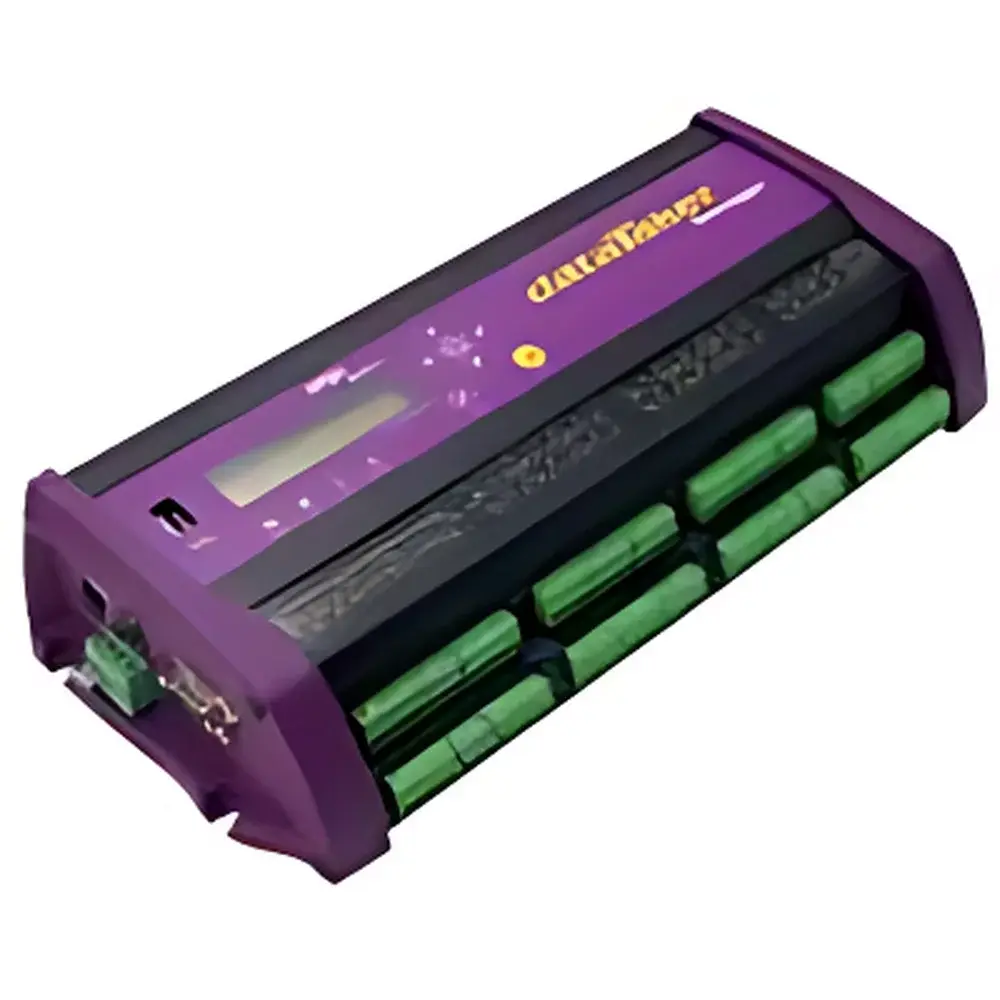
DataTaker DT85 Series 2 Intelligent Data Acquisition Unit
| Origin | Australia |
|---|---|
| Manufacturer Type | Authorized Distributor |
| Origin Category | Imported |
| Model | DT85 Series 2 |
| Pricing | Upon Request |
Overview
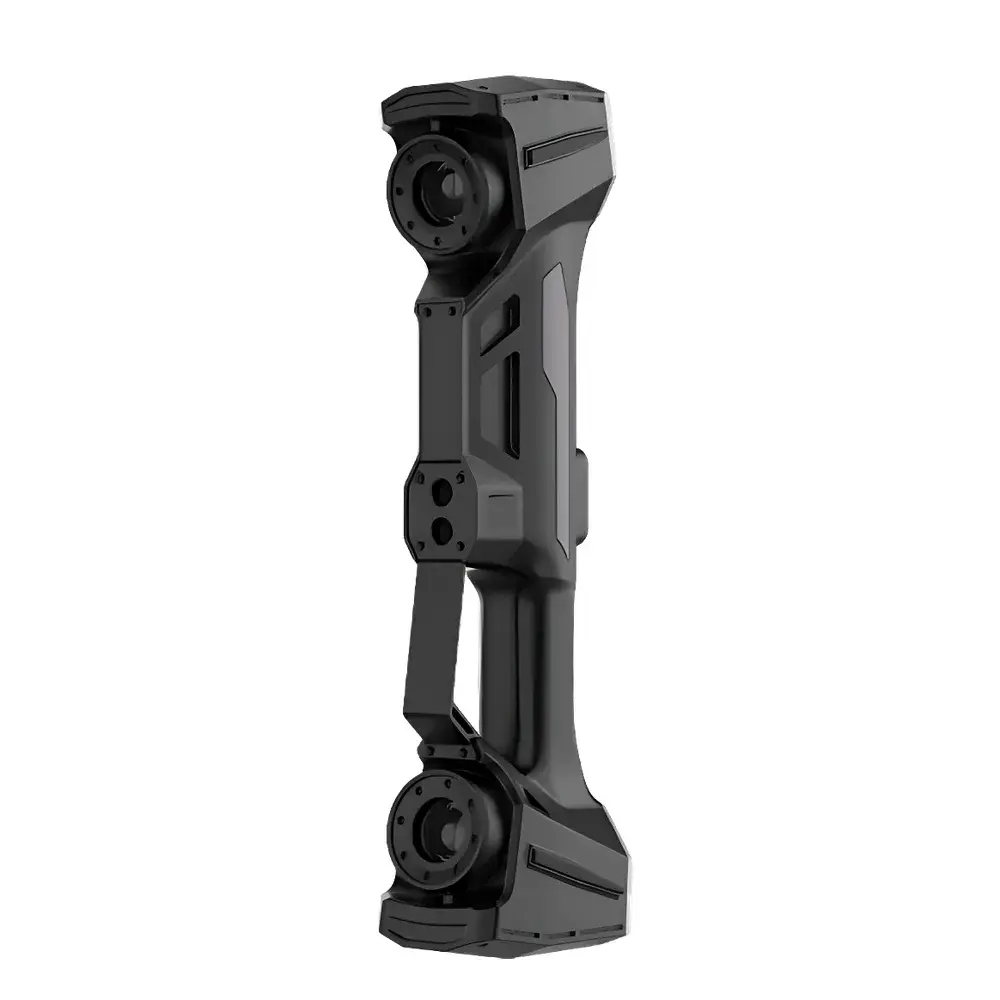
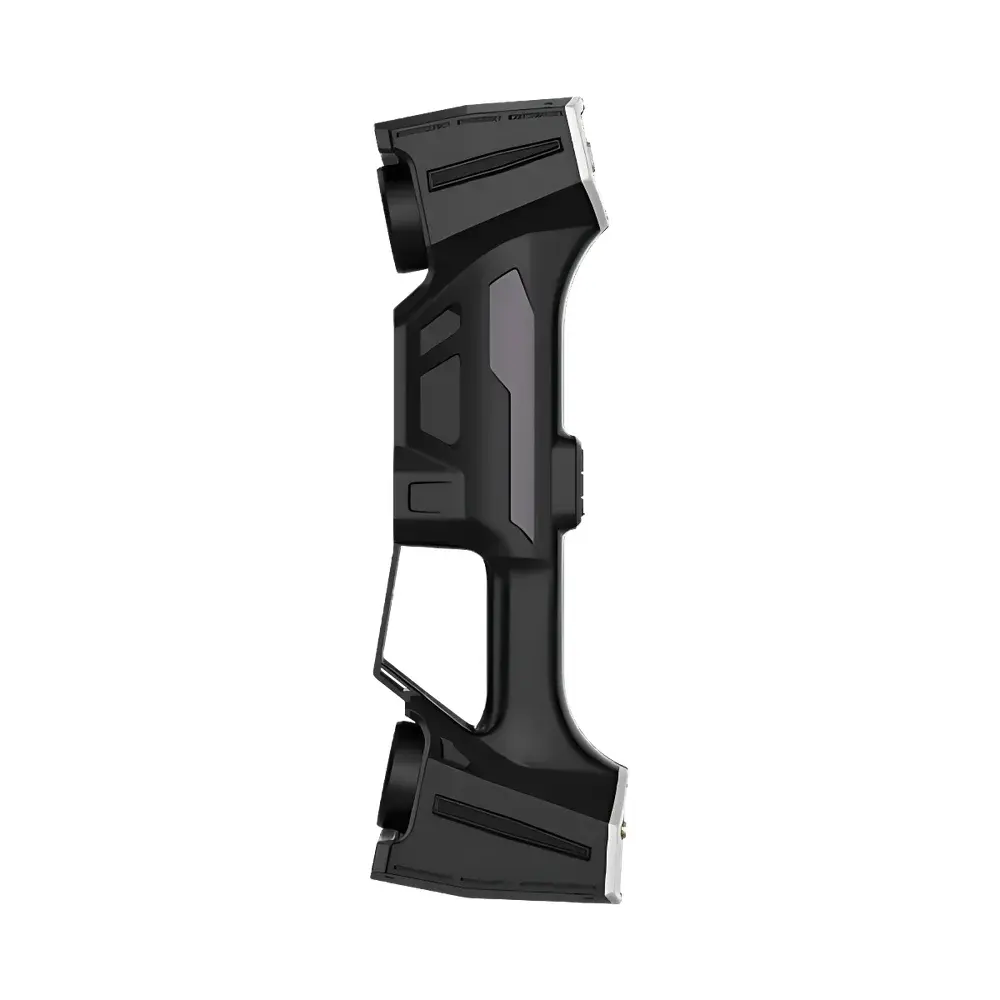
The DataTaker DT85 Series 2 is a rugged, autonomous, low-power intelligent data acquisition unit engineered for long-term, unattended monitoring in demanding environmental, industrial, and scientific applications. Built upon a deterministic real-time operating system, it employs high-precision 18-bit analog-to-digital conversion with dual-channel isolation architecture—enabling simultaneous sampling of up to 32 isolated differential or 48 referenced single-ended analog inputs (±30 V range). Its modular design supports scalable expansion to 800 analog channels via optional expansion modules, while maintaining galvanic isolation between input groups to eliminate ground-loop interference and ensure measurement integrity in electrically noisy settings. The unit operates independently without host dependency, integrating an onboard monochrome LCD display for local status verification, configuration navigation, and real-time data preview—critical for field deployment where remote access is intermittent or unavailable.
Key Features
- Dual-isolated analog input architecture: Configurable as 32 isolated differential or 48 shared single-ended channels (±30 V full-scale)
- 12 programmable digital I/O channels supporting TTL/CMOS logic levels, pulse counting, frequency measurement, quadrature encoder interfacing, and relay control
- Two independent serial sensor ports (RS-232 / RS-422 / RS-485 selectable per port) for direct integration with smart sensors, GPS receivers, PLCs, and CANgate gateways (optional)
- Built-in SDI-12 master interface supporting daisy-chained networks of multiple soil moisture, temperature, or water quality sensors
- Native Modbus RTU/TCP support for seamless integration into SCADA and HMI systems
- Embedded web server with HTTP/HTTPS access—enables browser-based configuration, live data viewing, and database queries without client software
- FTP client functionality for scheduled or event-triggered automated data upload to remote servers or cloud storage endpoints
- USB host port supporting U disk (FAT32) for local data export, firmware updates, and script deployment
- Internal non-volatile memory storing up to 5 million timestamped data points; user-definable memory partitioning across multiple independent logging schedules
- Configurable power management: programmable 12 V sensor excitation outputs, latching relay outputs, and digital output banks for peripheral device control
Sample Compatibility & Compliance
The DT85 Series 2 accommodates a broad spectrum of passive and active transducers—including thermistors, RTDs, thermocouples (with cold-junction compensation), strain gauges (full/half-bridge), 4–20 mA current loops, potentiometers, pressure transducers, load cells, anemometers, pyranometers, and ultrasonic flow meters. It natively supports SDI-12, Modbus, and ASCII-based serial protocols, ensuring interoperability with certified environmental sensors compliant with ISO 17025-accredited calibration practices. While not inherently FDA 21 CFR Part 11-compliant out-of-the-box, its audit-trail-capable logging engine, password-protected configuration, and immutable timestamping align with GLP/GMP data integrity principles when deployed within validated workflows. All firmware and configuration changes are logged with user ID, timestamp, and change summary—facilitating traceability during regulatory audits.
Software & Data Management
Configuration and data retrieval are managed via dEX—the cross-platform desktop application (Windows/macOS/Linux) that provides graphical setup wizards, script-based scheduling, mathematical channel derivation (e.g., linearization, statistical aggregation, alarm logic), and export to CSV, Excel, or SQL-compatible formats. The embedded web interface allows zero-installation access for remote diagnostics and real-time data visualization using standard browsers. FTP push/pull operations support secure authentication (user/password or anonymous), directory path specification, and retry-on-failure logic. Memory management policies include circular overwrite, stop-on-full, and event-driven archival—triggered by thresholds, time intervals, or external digital inputs. All data records include UTC timestamps synchronized via NTP (when Ethernet-connected) or internal RTC with ±2 ppm accuracy.
Applications
The DT85 Series 2 serves as a foundational node in distributed monitoring infrastructures across disciplines requiring high-reliability, mixed-signal data capture. Typical deployments include: continuous meteorological station telemetry (temperature, humidity, wind speed, solar irradiance); agricultural microclimate and soil moisture profiling; wastewater pre-treatment process monitoring (pH, DO, turbidity, flow rate); structural health monitoring of bridges and buildings (strain, tilt, vibration); energy consumption auditing across HVAC, lighting, and industrial machinery circuits; aquaculture pond parameter logging (dissolved oxygen, conductivity, temperature); and geotechnical instrumentation (piezometers, inclinometers, extensometers). Its CANbus extension capability (via CANgate) enables J1939 and OBD-II vehicle diagnostics integration in transportation research and fleet efficiency studies.
FAQ
What communication protocols does the DT85 Series 2 support?
It supports Modbus RTU/TCP, SDI-12, ASCII serial (custom and standard sensor formats), FTP client/server, HTTP/HTTPS, and USB mass-storage mode for U disk interaction.
Can the DT85 operate without continuous network connectivity?
Yes—it functions autonomously with internal memory storage and local power sources (12–30 V DC); network connectivity is optional for remote access or data offload.
Is external programming required to configure logging schedules?
No—dEX software provides a drag-and-drop scheduler and formula editor; all logic can be defined graphically without scripting knowledge.
How is sensor excitation handled for bridge-based measurements?
Programmable 12 V regulated outputs support constant-voltage excitation; bridge completion resistors and lead-wire compensation are configurable per channel in dEX.
Does the unit support time synchronization across a network of DT85 units?
Yes—NTP client mode enables sub-second UTC alignment when connected to an Ethernet network with access to a time server.