
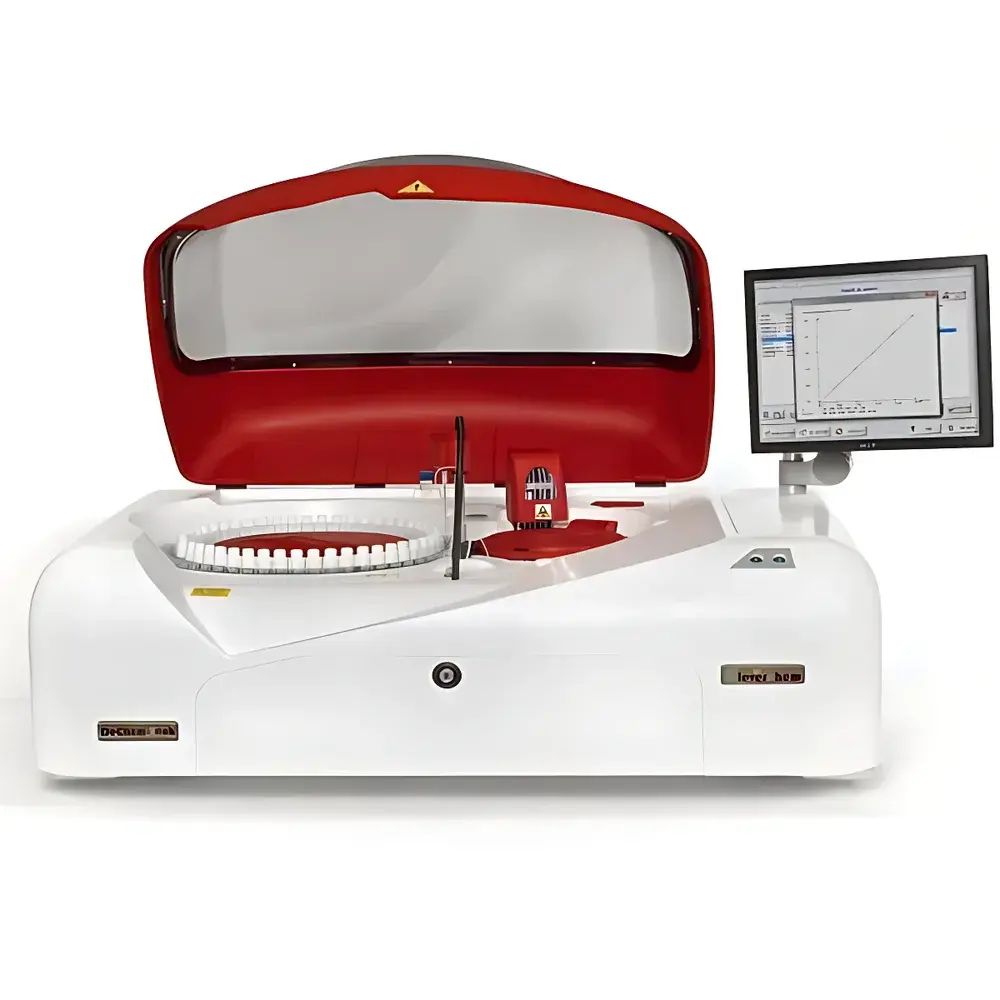
DeChem-Tech CleverChem Petro Automated Wet-Chemistry Analyzer for Petroleum Industry Water Quality
| Brand | DeChem-Tech |
|---|---|
| Origin | Germany |
| Model | CleverChem Petro |
| Instrument Type | Laboratory-Based Automated Wet-Chemistry Analyzer |
| Detection Parameters | Ammonia-N, Total Nitrogen (TN), Total Phosphorus (TP), Nitrate, Nitrite, Orthophosphate, Silicate, Sulfate, Sulfide, Chloride, Total Phenols, Iron, Zinc, Fluoride, Hexavalent Chromium, Alkalinity |
| Sample Throughput | Up to 350 samples/hour |
| Optical Cell | Reusable 64-position quartz cuvette carousel, 1 cm path length |
| Sample Capacity | 119 positions |
| Reagent Positions | 49 (with optional refrigerated storage) |
| Dilution Capability | In-cuvette dilution up to 100× (1 mL dilutor volume) |
| Cleaning System | 8-step ultrasonic cleaning station with optical validation |
| Waste Management | Sealed waste sensing and collection system |
| Software | Dual-language (English/Chinese) PC-based control and data processing software compliant with GLP audit trails |
Overview
The DeChem-Tech CleverChem Petro is a fully automated, discrete wet-chemistry analyzer engineered specifically for high-throughput, regulatory-grade water quality analysis in petroleum refining, petrochemical production, and associated industrial water treatment facilities. It implements standardized colorimetric and spectrophotometric methods—fully replicating manual APHA/AWWA/ASTM-compliant benchtop procedures—by precisely metering microliter volumes of sample and reagents into optically validated quartz cuvettes, initiating controlled chemical reactions, and quantifying analyte concentrations via absorbance measurement at defined wavelengths (typically 340–880 nm). Unlike flow-injection or segmented-flow systems, the CleverChem Petro employs true discrete analysis architecture: each sample is processed individually in its own cuvette, eliminating cross-contamination risk and enabling method flexibility across diverse analyte chemistries—including those requiring multi-step derivatization, timed incubation, or pH-controlled reactions. Its design targets compliance with ISO 15586, ISO 11923, ASTM D1253, ASTM D3867, USP , and EPA Methods 353.2, 365.2, and 365.4—making it suitable for QC/QA labs operating under GLP, GMP, or ISO/IEC 17025 frameworks.
Key Features
- Discrete analysis platform with 64-position reusable quartz cuvettes (1 cm path length), individually optically verified post-cleaning to ensure photometric integrity across extended service life.
- 8-step ultrasonic cleaning station integrated with real-time optical transmittance verification—only cuvettes meeting strict baseline clarity thresholds are released for reuse.
- High-capacity sample handling: 119-position unattended sample rack with programmable priority queuing and barcode support (optional).
- 49-reagent carousel housed in an optional 4–10 °C refrigerated compartment to stabilize temperature-sensitive reagents (e.g., sulfanilamide, NEDD, ascorbic acid) and extend shelf life.
- In-cuvette dilution capability (1 mL precision dilutor, up to 100×) enables automatic over-range correction and full standard curve generation without manual intervention.
- True blank compensation: software-supported independent measurement of both sample blank and reagent blank per run, correcting for matrix interference and chromogenic background.
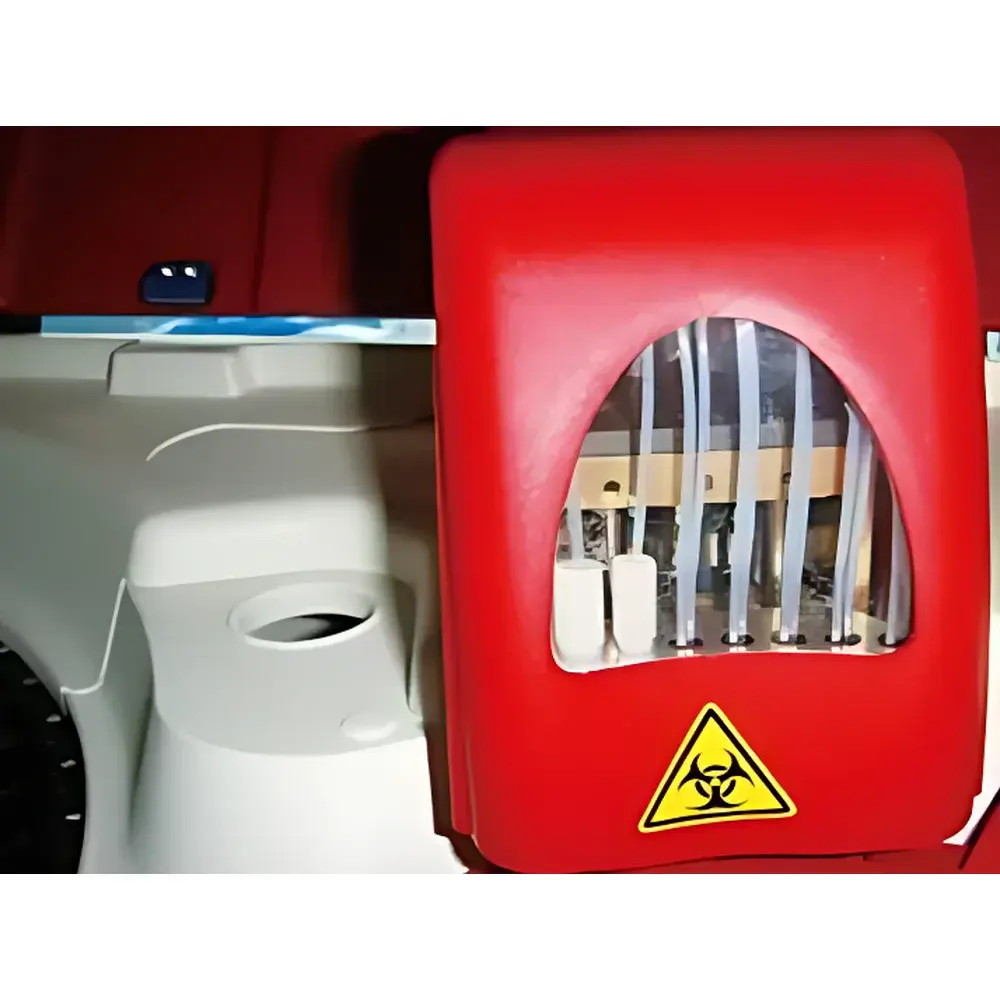
- Sealed, sensor-monitored waste containment system with vapor-tight sealing and overflow detection—minimizing operator exposure to H₂S, Cl₂, Cr(VI), phenolic vapors, and acidic fumes.
Sample Compatibility & Compliance
The CleverChem Petro accepts liquid samples from diverse petroleum industry sources: raw intake water, boiler feedwater, cooling tower blowdown, process condensate, membrane permeate, and primary/secondary wastewater effluents. It accommodates turbid, saline, and organically rich matrices through programmable filtration, acidification, and digestion steps (when paired with optional hot-block or UV digester modules). All core methods align with international regulatory standards: TN and TP per ISO 11905-1 and ISO 11905-2; ammonia-N per ISO 7150-1; nitrate/nitrite per ISO 6777 and ISO 6778; orthophosphate per ISO 6878; sulfide per ISO 10587; and hexavalent chromium per ISO 11085. The system supports 21 CFR Part 11-compliant electronic signatures, audit trail logging, and user role-based access control when configured with validated software packages.
Software & Data Management
Control and data acquisition are managed via CleverChem Control Suite—a Windows-based application supporting dual-language UI (English and Chinese), method library management, and customizable report templates. The software enforces analytical traceability: every measurement is time-stamped, linked to specific cuvette ID, reagent lot, calibration batch, and operator credentials. Raw absorbance data, kinetic reaction curves, and dilution logs are retained in native format for retrospective review. Export options include CSV, PDF, and XML (for LIMS integration via ASTM E1394 or HL7 protocols). Optional IQ/OQ documentation packages and vendor-supervised installation qualification are available to support laboratory accreditation.
Applications
Primary deployment domains include refinery environmental compliance labs, petrochemical plant QC departments, third-party testing laboratories serving API-certified facilities, and municipal WWTPs treating hydrocarbon-impacted influents. Typical use cases encompass daily monitoring of discharge permits (e.g., NPDES, EU IED), corrosion inhibitor efficacy assessment (via phosphate/silicate tracking), sour water stripper performance verification (H₂S, NH₃), cooling water biocide residual control (phenol index), and boiler feedwater purity assurance (Fe, SiO₂, Cl⁻). The platform’s method agility allows rapid reconfiguration for emerging contaminants—such as total organic carbon (TOC) surrogate indices or microplastic-associated surfactants—using validated open-method development protocols.
FAQ
Does the CleverChem Petro require dedicated exhaust ventilation or fume hood installation?
No—the integrated sealed waste system and reagent evaporation traps eliminate the need for external ducted ventilation under normal operation. However, local safety regulations may still require ambient lab air exchange per ANSI Z9.5.
Can existing ASTM or ISO wet-chemistry methods be directly imported into the software?
Yes—method templates support full parameterization of reaction timing, reagent sequence, heating steps, wavelength selection, and calibration curve models. Validation per ICH Q2(R2) is required for regulated use.
What maintenance intervals are recommended for the ultrasonic cleaning station and optical system?
Daily visual inspection of cuvettes and cleaning bath fluid level; monthly ultrasonic transducer performance check; annual photometric calibration using NIST-traceable neutral density filters.
Is remote diagnostics and software update support available?
Yes—DeChem-Tech provides secure remote access (with customer authorization) for troubleshooting, firmware updates, and preventive maintenance scheduling via encrypted TLS 1.3 channels.
How is data integrity ensured during power interruption or unexpected shutdown?
The system features non-volatile memory buffering: all active run states, reagent consumption counters, and cuvette usage logs are preserved. Upon restart, the software resumes from the last validated step without data loss.
Related Products







