
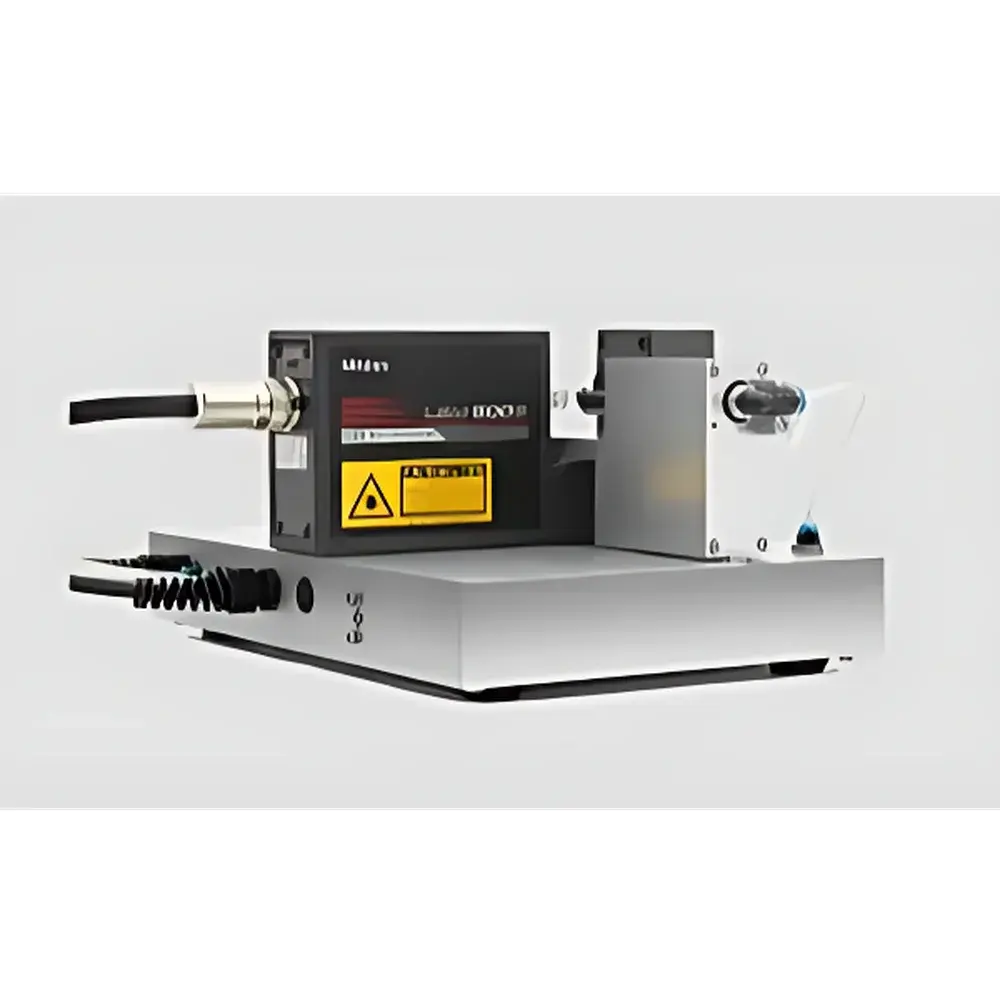
Dia-stron FDAS770 Fiber Cross-Sectional Area Measurement System
| Brand | Dia-stron |
|---|---|
| Origin | United Kingdom |
| Manufacturer Type | Authorized Distributor |
| Origin Category | Imported Instrument |
| Model | FDAS770 |
| Pricing | Available Upon Request |
Overview
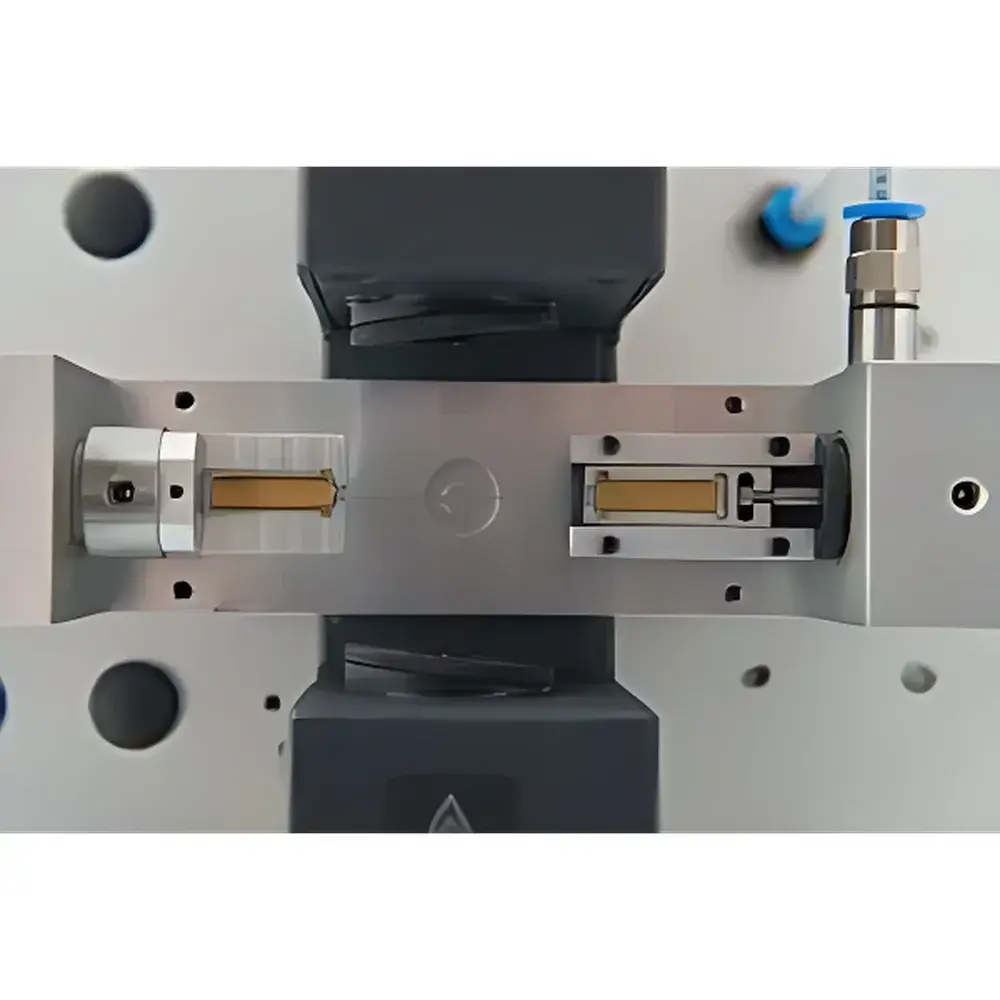
The Dia-stron FDAS770 Fiber Cross-Sectional Area Measurement System is a precision optical metrology platform engineered for rapid, non-destructive quantification of fiber cross-sectional geometry. Unlike indirect estimation methods relying on mass density or tensile assumptions, the FDAS770 implements direct optical sectioning via high-resolution rotational imaging—based on the principle of synchronized sample rotation and axial line-scan acquisition. As the fiber rotates at controlled angular velocity, a calibrated CCD line camera captures sequential radial profiles along its length, enabling pixel-accurate reconstruction of true 2D cross-sections. This approach eliminates reliance on circularity assumptions, making it suitable for natural fibers (e.g., wool, silk), synthetic filaments (e.g., PET, nylon), and engineered microfibers with irregular or elliptical morphologies. The system operates under ambient laboratory conditions and requires no embedding, coating, or vacuum—significantly reducing preparation time versus SEM or microtome-based protocols.
Key Features
- Direct optical cross-sectional measurement without sample sectioning or metallization
- Motorized fiber rotation stage with closed-loop positional feedback (±0.1° repeatability)
- High-sensitivity linear CCD sensor with 12-bit dynamic range and sub-micron spatial resolution
- Compact benchtop footprint (W320 × D280 × H210 mm) and low mass (<8 kg) for flexible integration into QC labs or R&D workstations
- Plug-and-play USB 3.0 interface with real-time image streaming and onboard FPGA-based profile extraction
- Integrated LED illumination with adjustable intensity and spectral stability (520 ± 10 nm) to minimize chromatic aberration and thermal drift
Sample Compatibility & Compliance
The FDAS770 accommodates single fibers ranging from 5 µm to 500 µm in nominal diameter, including staple fibers mounted on conductive stubs and continuous filaments tensioned across custom alignment jigs. It supports both natural and synthetic fibers regardless of refractive index contrast or surface reflectivity—achieving consistent edge detection through adaptive thresholding and morphological filtering. All measurement workflows comply with ISO 13934-1 (tensile properties) and ASTM D3822 (single-fiber tensile testing) prerequisites for geometric characterization. Data integrity is maintained per GLP guidelines: audit trails record operator ID, timestamp, calibration status, and environmental metadata (ambient temperature/humidity logged at acquisition start). Optional 21 CFR Part 11-compliant software module provides electronic signatures, role-based access control, and immutable data archiving.
Software & Data Management
The bundled Dia-stron FDMetrics v4.2 software provides full acquisition, analysis, and reporting functionality. Users define measurement parameters—including scan length (1–20 mm), angular step resolution (0.5°–5°), and number of cross-sections per fiber—and initiate automated batch processing. Output includes mean cross-sectional area (µm²), perimeter (µm), aspect ratio, circularity index, and standard deviation across ≥50 sections. Export formats include CSV (for statistical analysis in Minitab or JMP), TIFF (8/16-bit for archival), and PDF reports with embedded traceable calibration certificates. All raw image stacks are stored with EXIF metadata, supporting retrospective reanalysis without loss of fidelity. Software updates are delivered via secure HTTPS portal with version-controlled changelogs and validation documentation.
Applications
- Quality assurance of spun yarns and filament bundles in textile manufacturing
- Validation of melt-spinning process consistency for polymeric nanofibers
- Morphological correlation studies linking cross-sectional geometry to mechanical performance (e.g., breaking tenacity vs. area distribution)
- Research on bio-based fibers (e.g., cellulose nanocrystals, chitin whiskers) where hydration-induced swelling affects dimensional stability
- Regulatory submission support for medical textiles requiring precise fiber dimension documentation per ISO 10993-1
FAQ
What sample preparation is required prior to measurement?
No sectioning, coating, or drying is needed. Fibers must be clean, dry, and mechanically stable during rotation—typically mounted using conductive carbon tape or low-tack adhesive on a precision rotary chuck.
Can the system measure hollow or multi-lobed fibers?
Yes. The rotational line-scan methodology reconstructs full contour outlines, enabling accurate area calculation for hollow, kidney-shaped, trilobal, or serrated cross-sections common in polyester and acrylic fibers.
Is calibration traceable to national standards?
Yes. Each system ships with a NIST-traceable calibration slide featuring certified line widths (10 µm, 25 µm, 50 µm) and associated uncertainty budgets compliant with ISO/IEC 17025.
How is measurement repeatability verified?
Repeatability is assessed per ISO 5725-2:2019 using within-laboratory reproducibility tests across ≥10 fibers, yielding typical CV values <1.8% for area measurements on homogeneous monofilaments.
Does the system support GMP-regulated environments?
With optional FDMetrics Part 11 Edition, the FDAS770 meets FDA requirements for electronic records and signatures—including audit trail review, password complexity enforcement, and data backup verification logs.




