
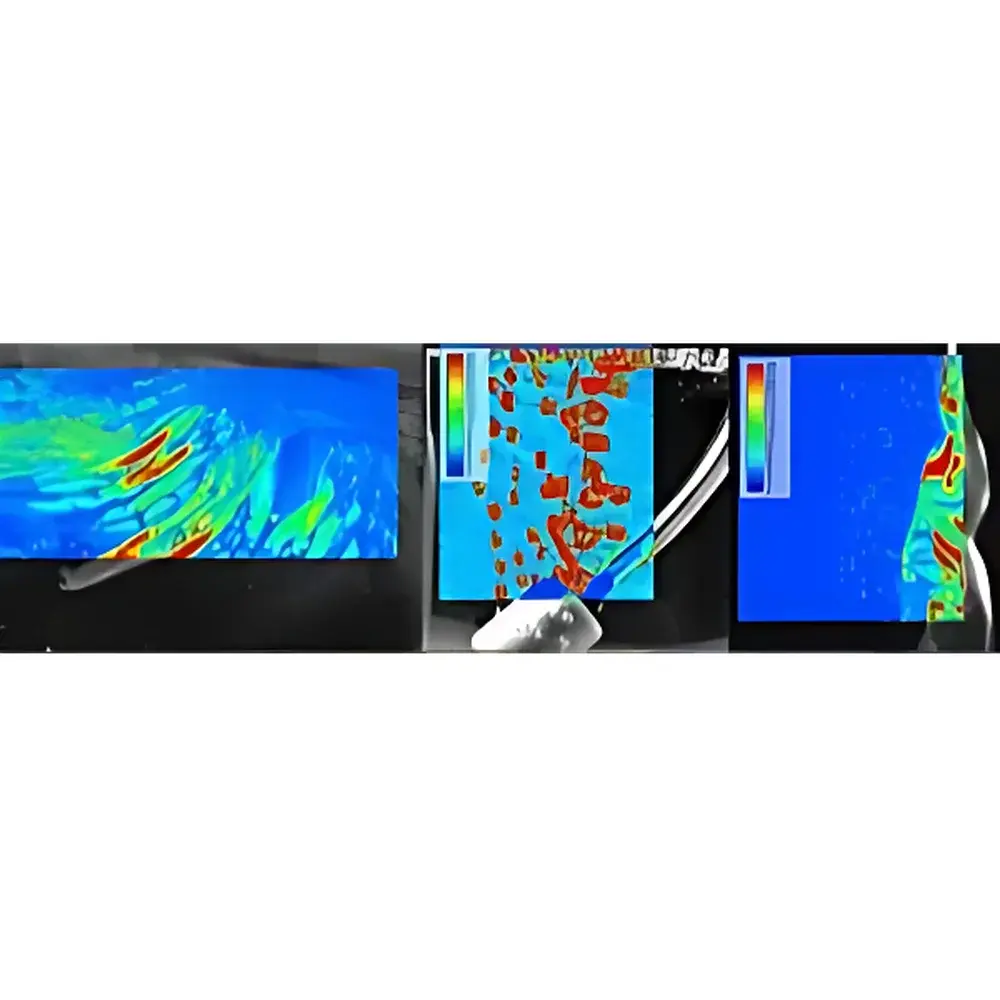
DITECT DIPP-Macro II Image-Based Particle Size and Shape Analysis Software
| Brand | DITECT |
|---|---|
| Origin | Japan |
| Model | DIPP-Macro II |
| Instrument Type | Static Image Analysis System |
| Compliance | ASTM E2457, ISO 13322-1, USP <429> (Image Analysis) |
| Data Output Formats | CSV, TIFF, AVI, PNG, PDF |
| Software Architecture | Windows 64-bit (Windows 10/11), GPU-accelerated processing |
| License Type | Perpetual node-locked or floating license |
| Regulatory Support | Audit trail, user access control, electronic signature readiness (FDA 21 CFR Part 11 compliant configuration available) |
Overview
DITECT DIPP-Macro II is a high-precision static image-based particle analysis software platform engineered for quantitative morphological characterization of particulate systems in research laboratories, quality control environments, and regulatory-compliant manufacturing settings. Unlike dynamic or laser-diffraction-based methods, DIPP-Macro II operates on high-resolution digital still images or frame-extracted sequences from macro-scale optical imaging setups—enabling direct measurement of individual particle geometry without assumptions about spherical equivalence. The software implements ISO 13322-1 principles for image analysis, applying calibrated pixel-to-metric conversion, adaptive thresholding, and topological labeling to extract statistically robust descriptors including equivalent circular diameter, Feret’s maximum and minimum caliper distances, aspect ratio, convexity, solidity, circularity, and perimeter-to-area ratio. Its architecture is optimized for macroscopic samples (typically >100 µm up to several millimeters), such as catalyst pellets, pharmaceutical granules, mineral fragments, food particles, or 3D-printed powder bed residues—where surface texture, edge definition, and non-spherical morphology critically influence functional performance.
Key Features
- Adaptive Threshold Engine: Combines histogram-based Otsu auto-thresholding with interactive grayscale curve visualization; supports dual-threshold banding for multi-phase or semi-transparent particle detection.
- Morphometric Parameter Library: Computes over 25 standardized shape and size metrics per particle—including projected area, bounding rectangle dimensions, convex hull area, Feret diameters at arbitrary angles, and elongation index—fully traceable to ISO/ASTM definitions.
- Batch Processing Pipeline: Enables sequential macro-driven workflows: image import → background correction → threshold optimization → particle segmentation → feature extraction → classification → statistical summarization.
- Real-Time Preview & Iterative Refinement: All parameter adjustments (e.g., noise filter radius, minimum particle area, connectivity criteria) render instant visual feedback on segmented output, eliminating trial-and-error cycles.
- Classification & Filtering Engine: Supports Boolean logic-based subpopulation isolation using combinations of size, shape, intensity, and spatial coordinates—e.g., “circularity > 0.8 AND longest Feret diameter 30% of frame height”.
- Regulatory-Ready Output: Generates timestamped, user-attributed reports with embedded metadata (camera model, lens focal length, magnification, calibration standard ID), supporting GLP/GMP documentation requirements.
Sample Compatibility & Compliance
DIPP-Macro II is designed for static, dry or fixed-wet particulate samples imaged under controlled illumination on flatbed scanners, stereo microscopes, or macro-lens DSLR/mirrorless camera rigs. Compatible sample types include agglomerated powders, milled tablets, crushed ores, polymer beads, ceramic green bodies, and botanical seeds. The software adheres to ASTM E2457 (Standard Practice for Characterizing Particles Using Image Analysis) and ISO 13322-1 (Particle Size Analysis — Image Analysis Methods — Part 1: Static Image Analysis). When deployed with validated hardware calibration (NIST-traceable stage micrometers or certified reference particle grids), it meets data integrity expectations for FDA-regulated environments under 21 CFR Part 11 when configured with optional audit trail, role-based permissions, and electronic signature modules.
Software & Data Management
Data management follows laboratory informatics best practices: raw images are preserved with EXIF and custom metadata tags; processed results export to CSV (with full per-particle records), TIFF stacks (segmented masks), AVI time-series animations (for multi-frame tracking), and publication-ready vector/PDF charts. The built-in database manager supports project-level organization, version-controlled workflow templates, and cross-experiment comparative statistics. All operations log timestamps, operator IDs, and parameter sets—enabling full reproducibility and audit readiness. Integration with LIMS via CSV or REST API endpoints is supported through documented scripting interfaces (Python SDK included).
Applications
- Pharmaceutical solid dosage development: granule sphericity assessment for flowability prediction and compression behavior modeling.
- Materials science R&D: quantifying fracture morphology in brittle ceramics or metal matrix composites post-mechanical testing.
- Food engineering: classifying roasted coffee bean fragmentation patterns to correlate with grind uniformity and extraction yield.
- Geotechnical analysis: characterizing angularity and roundness of sand aggregates per ASTM D4791 for concrete mix design validation.
- Additive manufacturing QA: detecting satellite particles and irregular melt pool splatter in metal powder feedstocks prior to SLM/EBSM processing.
- Environmental monitoring: morphological profiling of microplastic fragments isolated from sediment or wastewater filters.
FAQ
Does DIPP-Macro II support real-time video particle tracking?
No—it is designed exclusively for static image analysis per ISO 13322-1. For time-resolved trajectory analysis, DITECT offers complementary solutions based on high-speed camera integration with motion-correction algorithms.
Can I validate the measurement accuracy of my setup using certified reference materials?
Yes. DIPP-Macro II includes a calibration wizard that guides users through NIST-traceable stage micrometer or certified glass scale alignment, generating a permanent pixel-to-µm conversion factor stored with each project.
Is batch processing compatible with heterogeneous sample sets across multiple magnifications?
Yes—each image file retains independent calibration metadata; the software applies appropriate scaling during batch analysis, enabling mixed-magnification studies without manual reconfiguration.
How does DIPP-Macro II handle overlapping or touching particles?
It provides watershed-based separation heuristics and manual split tools, with transparency into segmentation confidence scores. Users may elect to exclude clustered regions or apply morphological opening/closing pre-filters based on expected particle aspect ratios.
What level of IT infrastructure is required for enterprise deployment?
A Windows Server environment with SQL Server or PostgreSQL backend is supported for centralized project repositories; floating license management integrates with common enterprise authentication systems (LDAP/Active Directory).



