
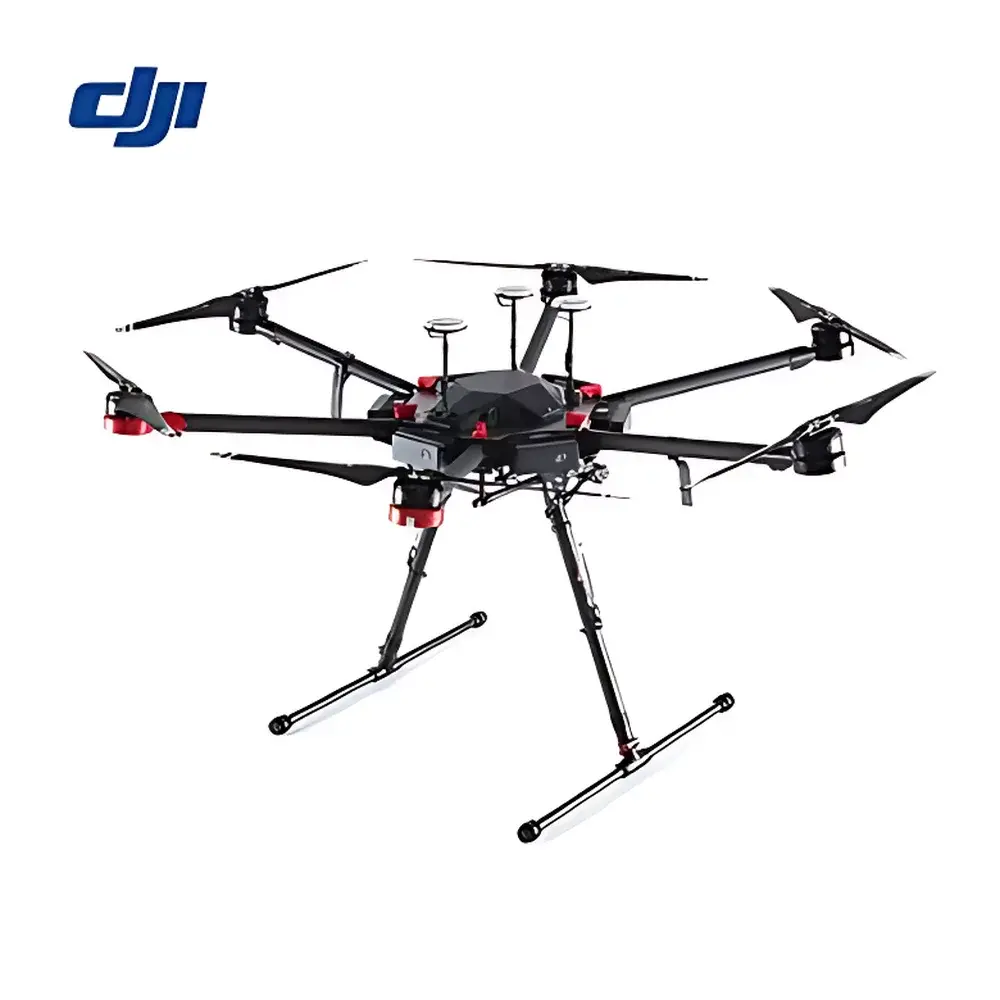
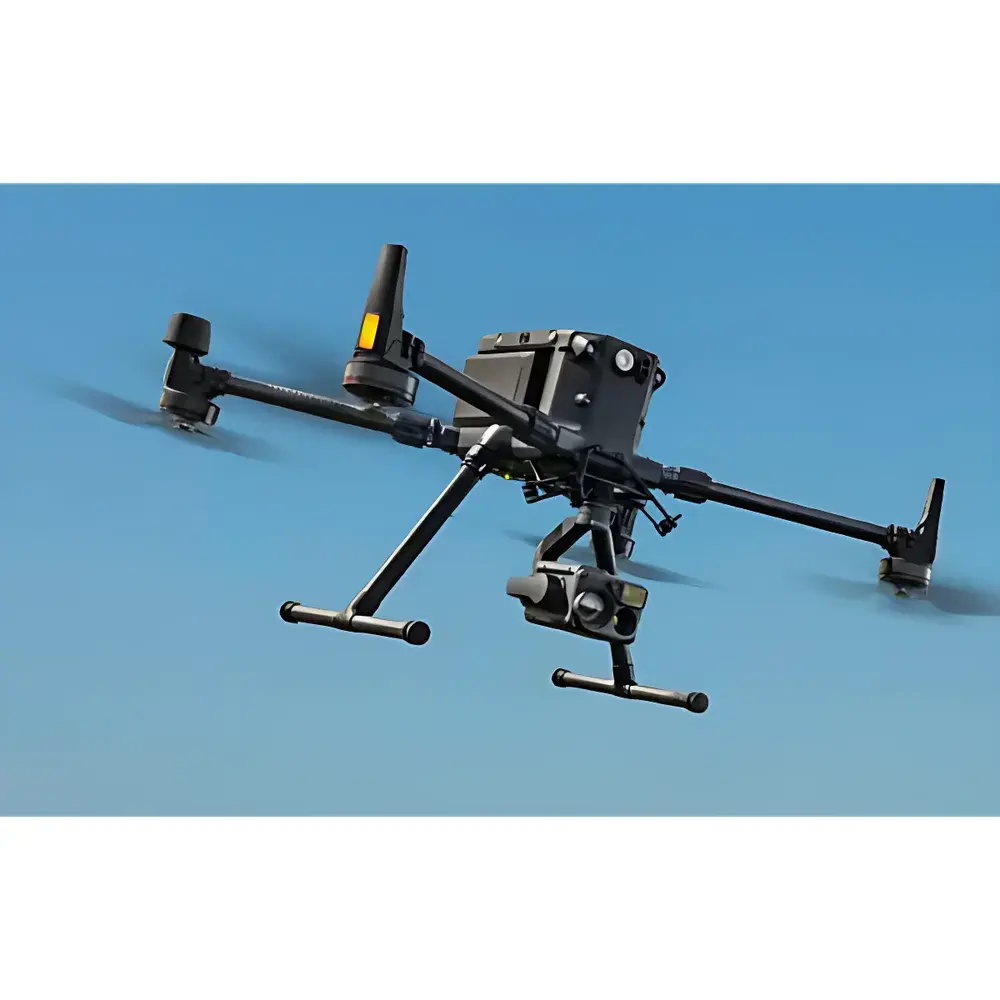
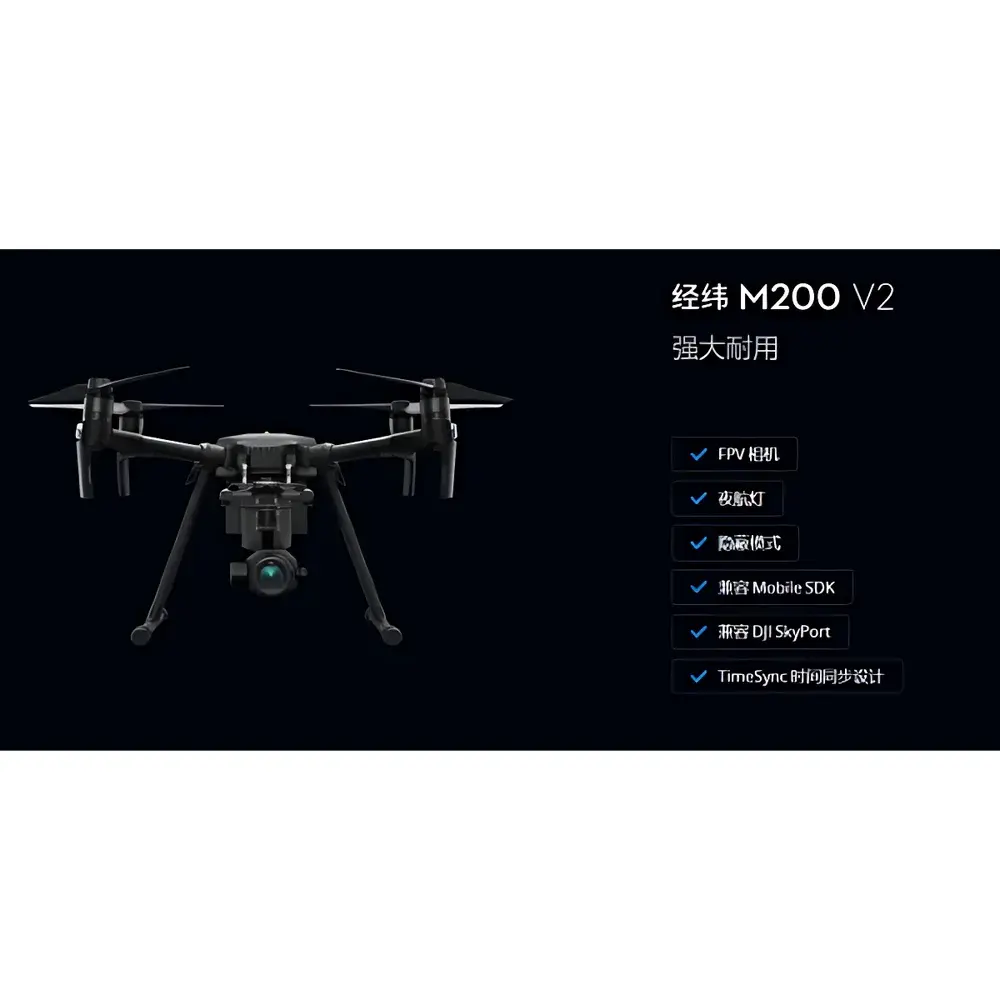
DJI M200/M300/M600 Series Matrice UAV Platforms with Integrated Hyperspectral Imaging Payloads
| Brand | DJI |
|---|---|
| Origin | Shanghai, China |
| Manufacturer Type | Authorized Distributor |
| Regional Classification | Domestic (PRC) |
| Model | Integrated Hyperspectral Camera Payload |
| Pricing | Upon Request |
| Deployment Mode | Airborne |
Overview
The DJI Matrice series—comprising the M200 V2, M210 V2, M300 RTK, and M600 Pro—is a family of industrial-grade unmanned aerial platforms engineered for precision airborne remote sensing and spectral data acquisition. When integrated with certified hyperspectral imaging instruments, these platforms serve as stable, georeferenced airborne laboratories for quantitative spectral analysis in environmental monitoring, precision agriculture, mineral exploration, and industrial inspection. Unlike consumer-grade drones, the Matrice platforms employ redundant flight control systems (e.g., triple-redundant A3 Pro in M600 Pro), real-time kinematic (RTK) positioning, and dual-band Lightbridge 2 or OcuSync Enterprise transmission protocols to ensure sub-decimeter spatial accuracy and robust data integrity during extended missions. The core measurement principle leverages push-broom or snapshot hyperspectral imaging—capturing contiguous spectral bands (typically 200–400 nm to 1000–2500 nm, depending on sensor configuration) across a two-dimensional scene—to generate spectrally resolved data cubes (x, y, λ). This enables pixel-level identification of chemical composition, vegetation health indices (e.g., NDVI, PRI), moisture content, and material-specific absorption features.
Key Features
- Modular payload architecture supporting standardized gimbal interfaces (e.g., DJI SkyPort, D-RTK 2 compatibility) for seamless integration of hyperspectral cameras, including VNIR/SWIR variants with spectral resolution ≤ 5 nm FWHM
- Industrial-grade flight reliability: M300 RTK offers up to 55 minutes endurance, 15 km OcuSync 3.0 transmission range, IP45 ingress protection, and -20°C to 50°C operational temperature range
- High-precision geolocation: Dual-antenna RTK + IMU fusion delivers ≤ 1 cm + 1 ppm horizontal and ≤ 1.5 cm + 1 ppm vertical positional accuracy under open-sky conditions
- Dual-gimbal support (M210 V2 & M300 RTK): Enables synchronized acquisition of hyperspectral data alongside RGB, thermal (FLIR Boson), or LiDAR payloads for multimodal data fusion
- Compliance-ready flight logging: Automatic timestamping, GNSS metadata embedding (NMEA 0183/RTCM 3.x), and encrypted telemetry storage meet baseline requirements for ISO 17025-aligned field data collection workflows
Sample Compatibility & Compliance
The Matrice platforms are not standalone analytical instruments but validated airborne carriers for third-party hyperspectral sensors compliant with aerospace mounting standards (e.g., SAE AS9100-derived mechanical interface specifications). Compatible payloads include OEM-integrated systems meeting MIL-STD-810G shock/vibration profiles and operating within Class II laser safety limits (IEC 60825-1) where applicable. While the drone platform itself is not subject to FDA or ISO/IEC 17025 accreditation, its use in regulated environments (e.g., EPA Method 18a-compliant emissions monitoring or USDA-certified crop stress assessment) requires documented calibration traceability of the attached spectrometer and validated georeferencing procedures per ASTM E2795 (Standard Guide for Hyperspectral Imaging Data Collection and Analysis). All flight operations must adhere to local civil aviation authority regulations (e.g., EASA UAS Regulation 2019/947, FAA Part 107).
Software & Data Management
Payload control and flight planning are managed via DJI Pilot 2 (for M300 RTK) or DJI Assistant 2 (for legacy M600 Pro), both supporting mission scripting with waypoint-triggered spectral capture, automated line-of-sight correction, and real-time telemetry overlay. Raw hyperspectral data streams are recorded in vendor-specific binary formats (e.g., ENVI-compatible .hdr/.bil or CIS-based .hsi), embedded with embedded GPS/IMU metadata. Post-processing workflows integrate with industry-standard tools—including ENVI, Python (scikit-learn, hylite), and MATLAB Hyperspectral Toolbox—for atmospheric correction (QUAC, FLAASH), spectral unmixing (N-FINDR, VCA), and classification (SVM, Random Forest). Audit trails, including flight logs, sensor configuration files, and processing parameters, can be archived in accordance with GLP-compliant data governance frameworks when paired with validated laboratory information management systems (LIMS).
Applications
- Agricultural phenotyping: Quantitative mapping of chlorophyll-a/b, carotenoids, and nitrogen content via narrowband reflectance indices (e.g., MCARI, TCARI) at field scale
- Environmental remediation: Detection of hydrocarbon contamination in soil and surface water through diagnostic C–H and O–H absorption features in SWIR bands
- Forestry inventory: Species discrimination and canopy health assessment using red-edge and shortwave infrared spectral signatures
- Infrastructure corrosion monitoring: Identification of iron oxide phases (hematite, goethite) on steel structures via characteristic absorption near 860 nm and 1900 nm
- Archaeological prospection: Subsurface feature detection through subtle vegetation stress patterns captured in VNIR hyperspectral mosaics
FAQ
Is the Matrice platform itself calibrated as a spectroscopic instrument?
No. The Matrice series provides a stabilized, georeferenced flight platform; spectral calibration (wavelength, radiometric, geometric) must be performed separately on the integrated hyperspectral sensor using NIST-traceable standards.
Can the system comply with FDA 21 CFR Part 11 for GxP applications?
The drone platform does not inherently satisfy Part 11 requirements; however, when deployed with validated software (e.g., DJI Pilot 2 in audit mode), electronic signatures, and secure data export protocols, it may be incorporated into a broader Part 11–compliant workflow under documented risk assessment.
What spectral range and resolution are supported?
Dependent entirely on the selected hyperspectral payload—common configurations include VNIR (400–1000 nm, 2–5 nm resolution) and SWIR (900–2500 nm, 5–10 nm resolution); no native spectral capability resides in the Matrice airframe.
Is real-time spectral analysis possible onboard?
The Matrice platforms lack embedded GPU-accelerated spectral processing; real-time analytics require downlink streaming to ground-based servers running optimized inference models (e.g., TensorFlow Lite on NVIDIA Jetson AGX Orin).






