
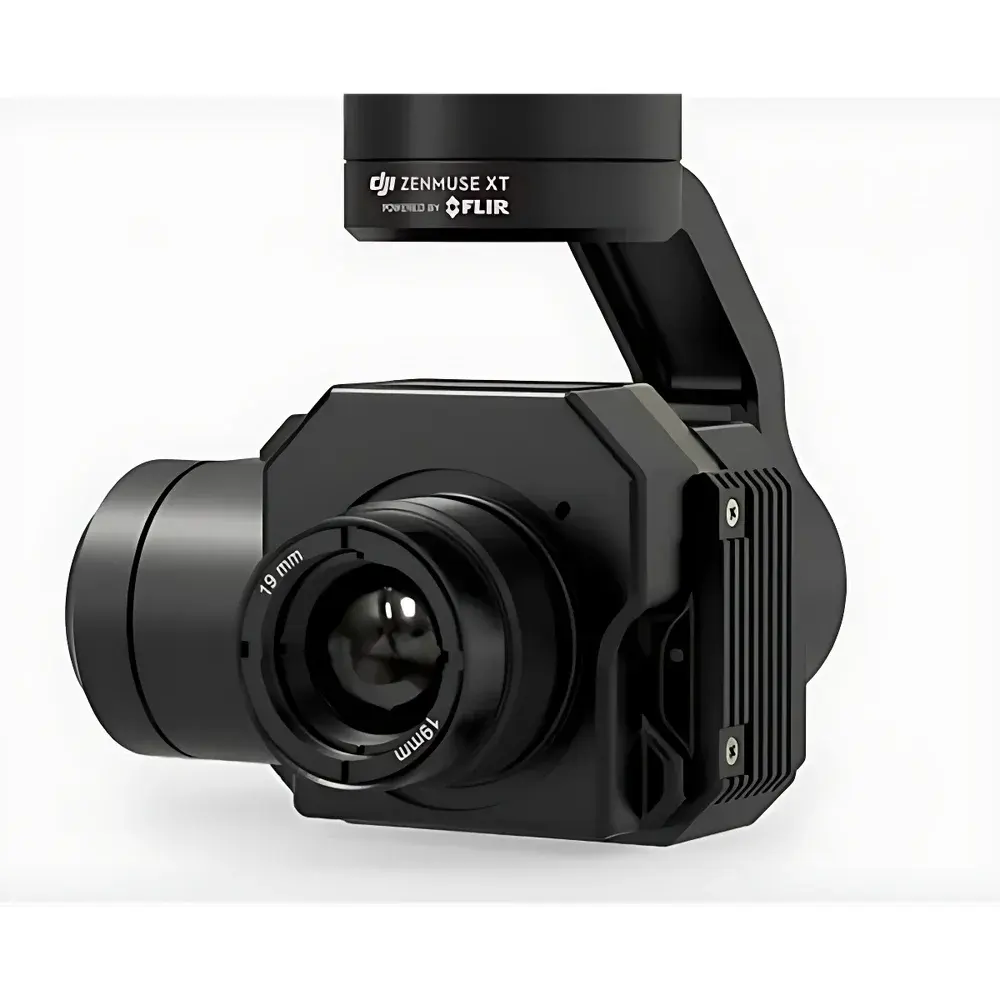
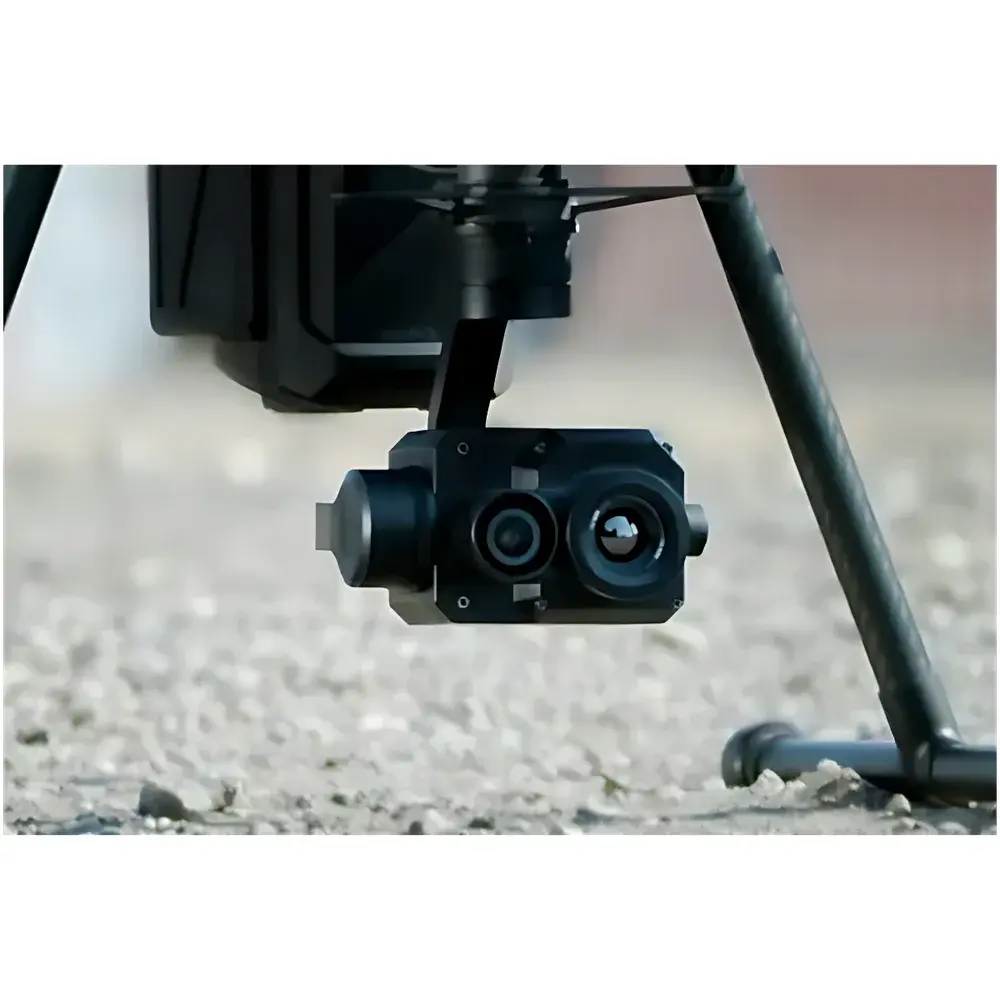
DJI Zenmuse XT2 Dual-Sensor Thermal & Visual Imaging Payload
| Brand | DJI |
|---|---|
| Origin | Shanghai, China |
| Manufacturer Type | Authorized Distributor |
| Regional Category | Domestic (China) |
| Model Series | Remote Sensing / Security / Night Vision Imaging System |
| Pricing | Available Upon Request |
Overview
The DJI Zenmuse XT2 is a dual-sensor imaging payload engineered for industrial unmanned aerial systems (UAS), integrating a high-resolution 4K visible-light camera and a radiometric thermal imager based on uncooled vanadium oxide (VOx) microbolometer technology. Unlike spectroscopic or hyperspectral instruments—whose core function relies on spectral dispersion and narrowband channel acquisition—the XT2 operates on broadband infrared detection (7.5–13.5 µm LWIR band) combined with visible-band photometry. Its primary measurement principle is thermal radiometry: quantifying surface-emitted infrared radiation to derive temperature distribution maps, not spectral absorption/emission signatures. As such, it does not belong to the category of chemical analysis or spectroscopy instruments; rather, it serves as a remote sensing and thermographic inspection tool used in infrastructure monitoring, search-and-rescue, energy auditing, and public safety operations. While often deployed alongside analytical platforms (e.g., for site pre-screening prior to gas chromatography or FTIR sampling), the XT2 itself performs no chemical identification, elemental analysis, or molecular fingerprinting.
Key Features
- Dual-sensor synchronized capture: Simultaneous 4K UHD (3840 × 2160 @ 29.97 fps) visible-light video and radiometric thermal video (640 × 512 or 336 × 256 @ 30/25 Hz)
- Uncooled VOx microbolometer focal plane array with <50 mK NETD sensitivity at f/1.0, enabling detection of subtle thermal anomalies across long distances and low-contrast scenes
- Integrated 3-axis stabilized gimbal with ±120° tilt range and 360° continuous panning, ensuring jitter-free imagery under dynamic flight conditions
- Multi-lens compatibility: Interchangeable thermal lenses (7.5 mm, 9 mm, 13 mm, 19 mm) and fixed 8 mm visible-light lens (FOV 57.12° × 42.44°)
- Onboard intelligent analytics including temperature alarm zones, isotherms, spot metering, and MSX® (Multi-Spectral Dynamic Imaging) for enhanced edge contrast fusion
- Compliance-ready metadata embedding: Radiometric JPEG/TIFF files include embedded calibration parameters, GPS coordinates, altitude, timestamp, and emissivity settings per frame
Sample Compatibility & Compliance
The Zenmuse XT2 does not interface with physical samples in the laboratory sense—it acquires non-contact thermal and visual data from external surfaces at standoff distances ranging from 1 m to >500 m, depending on lens selection and target size. It supports emissivity adjustment (0.01–1.00), reflected apparent temperature compensation, and atmospheric transmission correction for quantitative thermography. While not certified to ISO/IEC 17025 or ASTM E1934 for metrological traceability, its thermal output conforms to FLIR’s factory calibration protocol traceable to NIST standards. The system complies with FCC Part 15 and CE RED directives for electromagnetic compatibility and radio emissions. Export configurations adhere to U.S. EAR §742.15 restrictions, limiting thermal frame rates to <9 Hz for international shipments outside approved jurisdictions.
Software & Data Management
Data acquisition and post-processing are supported via DJI Pilot (mobile app) and DJI Thermal Analysis Tool (desktop software). The latter enables pixel-level temperature measurement, profile extraction, area statistics (min/max/avg), and report generation in PDF/CSV formats. All radiometric files retain EXIF and XMP metadata compliant with Adobe DNG specification, facilitating integration into GIS platforms (e.g., ArcGIS, QGIS) and enterprise asset management systems. For regulated environments, optional audit trail logging and user access controls align with basic GLP documentation requirements; however, full 21 CFR Part 11 compliance—including electronic signatures and immutable audit logs—is not natively implemented and requires third-party middleware integration.
Applications
- Energy Infrastructure Inspection: Detection of overheating connections, insulation defects, and PV panel hotspots in solar farms and substations
- Public Safety & SAR: Nighttime personnel detection, fire hotspot localization through smoke, and structural integrity assessment of collapsed buildings
- Building Diagnostics: Identification of thermal bridging, moisture intrusion, and HVAC duct leakage without physical contact
- Industrial Process Monitoring: Real-time observation of furnace linings, conveyor belt bearing temperatures, and tank level verification
- Environmental Surveying: Wildlife census during nocturnal hours, landfill methane seepage mapping (indirectly via surface temperature anomalies)
FAQ
Is the Zenmuse XT2 classified as a spectroscopy instrument?
No. It is a broadband thermal imaging payload—not a spectrometer, hyperspectral imager, or chemical analyzer. It measures integrated infrared radiance, not spectral reflectance or absorption features.
Does it support real-time radiometric data streaming?
Yes, via MAVLink telemetry over OcuSync 2.0; calibrated temperature values for selected regions of interest (ROIs) can be transmitted at up to 10 Hz to ground control stations.
Can thermal images be exported with absolute temperature metadata for third-party analysis?
Yes. Radiometric TIFF and R-JPEG formats embed full calibration coefficients, allowing external tools (e.g., MATLAB, Python OpenCV + thermal libraries) to reconstruct accurate temperature matrices.
What storage media are qualified for sustained 4K + thermal recording?
UHS-I Speed Class 3 (U3) or higher microSD cards up to 128 GB capacity are validated; Sandisk Extreme series (16–128 GB) is recommended for stable dual-stream write performance.
Is firmware update capability available offline for field-deployed units?
Yes. Firmware packages can be downloaded via DJI Assistant 2 (Enterprise Edition) and installed via microSD card without internet connectivity on the aircraft.




