
DLAB TB-H240-V1 Precision Heating Bath Circulator
| Brand | DLAB |
|---|---|
| Model | TB-H240-V1 |
| Type | Heating Bath Circulator |
| Temperature Range | 25–240°C |
| Temperature Resolution | 0.1°C |
| Temperature Stability | ±0.5°C (at setpoint) |
| Over-Temperature Cutoff | 280°C |
| Input Power | 360 W |
| Heat Output | 350 W |
| Voltage/Frequency | 100–120 V or 200–240 V, 50/60 Hz |
| Bath Chamber Dimensions | Ø150 × 100 mm |
| External PT1000 Sensor Port | Yes |
| IP Rating | IP21 |
| Net Weight | 2.2 kg |
| Overall Dimensions (L×W×H) | 310 × 220 × 135 mm |
| Operating Environment | 5–40°C, ≤80% RH |
Overview
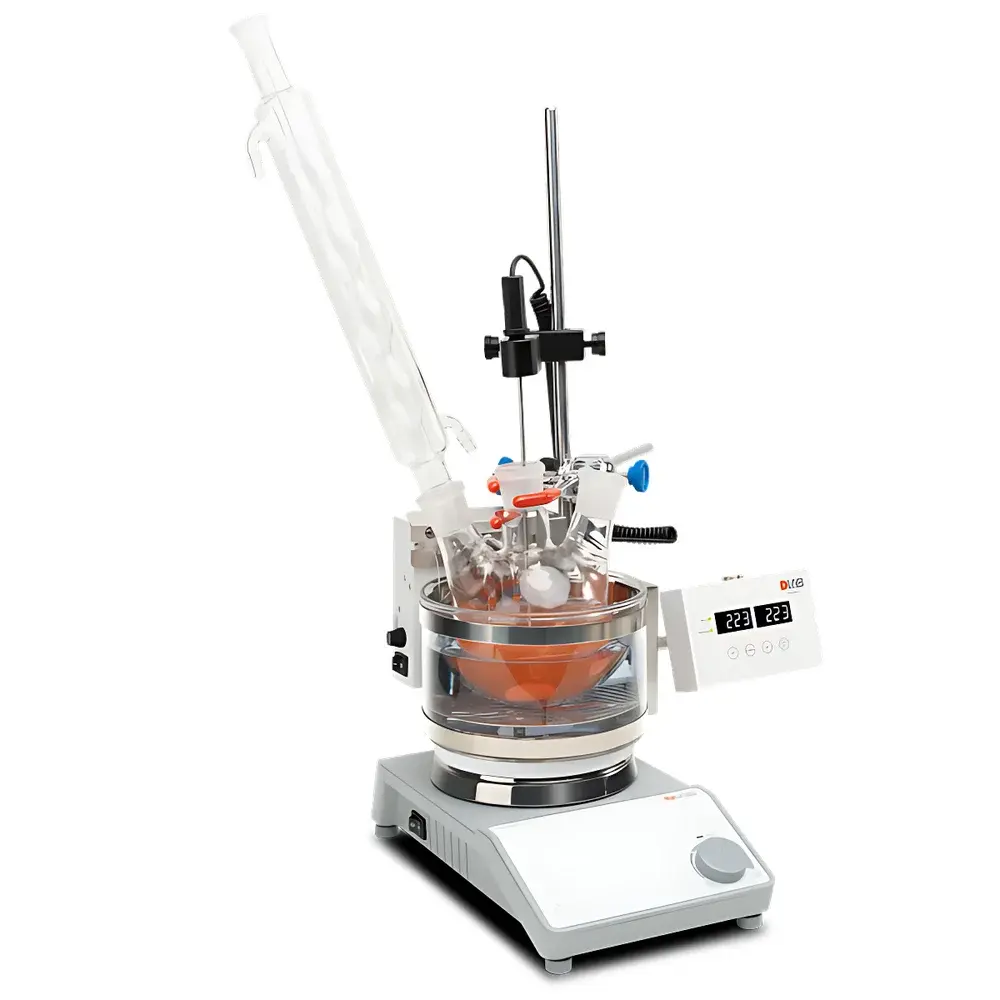
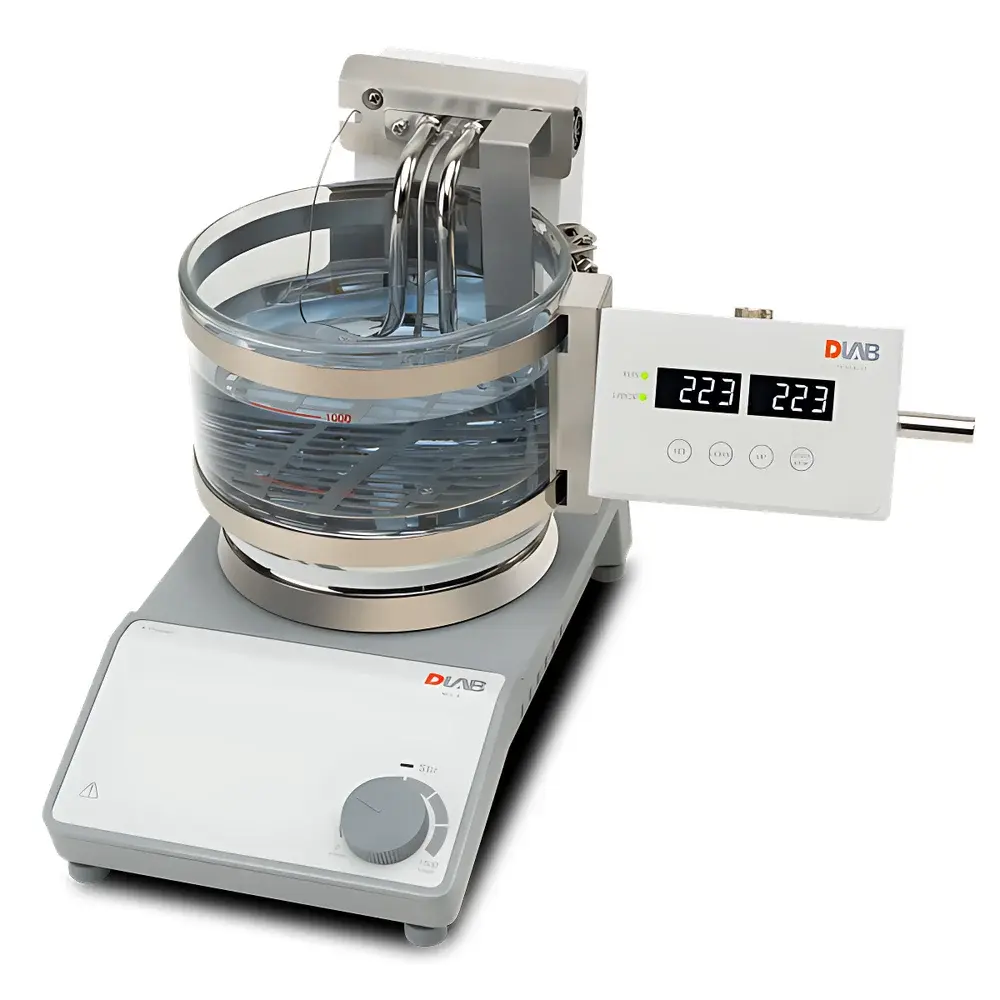
The DLAB TB-H240-V1 Precision Heating Bath Circulator is an engineered thermal management system designed for laboratory applications requiring stable, controllable heating of liquids in open or semi-enclosed vessels. Unlike passive water baths, the TB-H240-V1 employs active thermal regulation via a high-efficiency resistive heating element coupled with a fast-response Pt1000 external temperature sensor and adaptive PID control algorithm. Its operational range spans from 25°C to 240°C—enabling use with water, silicone oil, glycerol, and other heat-transfer fluids—making it suitable for synthesis, extraction, dissolution, and accelerated stability testing where precise thermal input is critical. The unit features a transparent borosilicate glass bath chamber (Ø150 × 100 mm), facilitating real-time visual monitoring of sample behavior without compromising thermal integrity.
Key Features
- High-fidelity PID temperature control with 0.1°C resolution and ±0.5°C stability at setpoint, validated under steady-state conditions using traceable external reference thermometry.
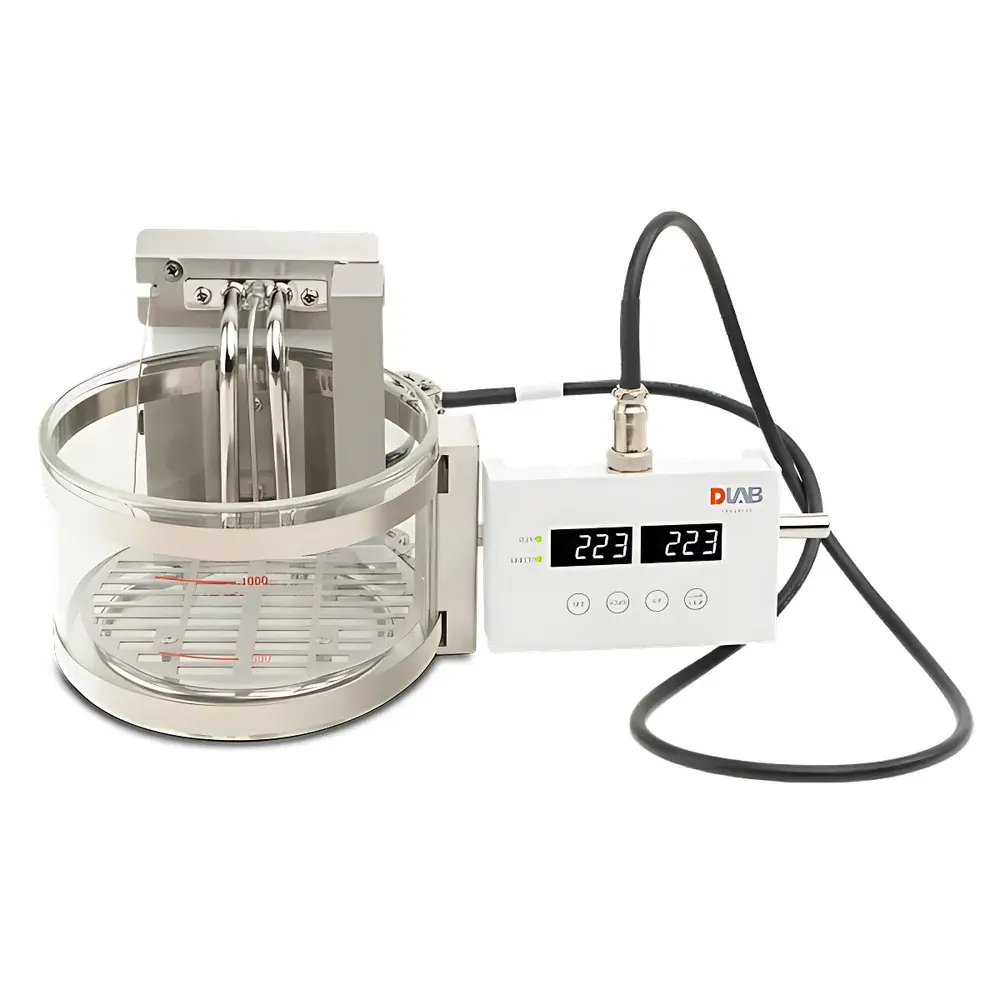
- Detachable controller module connected via 1-meter shielded cable—enables safe remote operation outside fume hoods, glove boxes, or confined workspaces while maintaining full parameter access and alarm visibility.
- Integrated safety architecture including dual-stage overtemperature protection (electronic cutoff at 280°C), overcurrent interruption, ground-fault detection, and automatic shutdown upon sensor failure or open-circuit condition.
- Modular design with removable stainless-steel support frame and adjustable protective guard ring—prevents direct contact between vessels and heating elements and minimizes risk of container tipping or spillage.
- Onboard temperature self-calibration routine and factory reset function—supports traceable verification per internal quality protocols and facilitates compliance with GLP documentation requirements.
- IP21-rated enclosure ensures protection against vertically falling solids and limited ingress of moisture—suitable for general laboratory environments but not for wet or splash-prone areas.
Sample Compatibility & Compliance
The TB-H240-V1 accommodates standard laboratory glassware including beakers (up to 500 mL), Erlenmeyer flasks, reaction vials, and immersion probes. Its open-bath configuration supports both static heating and optional magnetic stirring (via externally mounted stirrer, sold separately). The unit complies with IEC 61010-1:2010 for electrical safety in laboratory equipment and meets CE marking requirements for EMC (EN 61326-1) and low-voltage directives. While not certified for Class I Div 1 hazardous locations, its grounding integrity and thermal fail-safes align with OSHA 1910.1200 and ANSI Z215.1 guidelines for safe thermal device deployment in academic, pharmaceutical, and industrial R&D settings.
Software & Data Management
The TB-H240-V1 operates as a standalone analog-digital hybrid instrument with no embedded firmware-based data logging. All operational parameters—including setpoint, actual bath temperature, status flags, and fault codes—are displayed on a high-contrast LED interface. For integration into regulated environments (e.g., FDA 21 CFR Part 11-compliant workflows), users may connect the optional external PT1000 probe to third-party data acquisition systems (e.g., LabVIEW, DeltaTau, or custom SCADA platforms) via standard 4–20 mA or 0–10 V analog outputs (available through accessory interface module). Audit trails, user authentication, and electronic signatures must be implemented at the supervisory system level, as the device itself does not store historical temperature records or support role-based access control.
Applications
This heating bath circulator serves core functions across analytical, synthetic, and process-development laboratories. Typical use cases include: controlled-temperature solubility studies per USP and EP 2.9.40; enzymatic reaction incubation in biochemistry; polymer melt conditioning prior to rheological characterization; pesticide residue extraction per AOAC 2007.01; catalyst activation in fine chemical synthesis; and thermal aging of excipients in pharmaceutical formulation development. Its extended upper limit (240°C) also supports high-boiling-point solvent evaporation, resin curing pre-tests, and viscosity benchmarking of thermally sensitive oils per ASTM D445.
FAQ
Can the TB-H240-V1 be used with flammable solvents such as acetone or ether?
No. This unit is not explosion-proof and lacks vapor-tight sealing or spark-free components. It is intended only for non-flammable heat-transfer media (e.g., water, silicone oil, glycerol) and must be operated in well-ventilated, non-hazardous environments.
Is external stirring supported, and what is the maximum recommended load?
Yes—magnetic stirring can be added via compatible external stirrers (e.g., DLAB MS-H-Pro+). Maximum recommended vessel mass is 1.5 kg when using the included support frame; heavier loads require mechanical stabilization.
Does the unit support RS232 or USB communication?
Not natively. Communication capability requires optional analog output interface (part #TB-IO-ANALOG), which provides isolated 4–20 mA and 0–10 V signals for connection to PLCs or DAQ systems.
What calibration standards are recommended for routine verification?
A NIST-traceable dry-block calibrator (e.g., Fluke 9143) or liquid-in-glass thermometer calibrated to ISO/IEC 17025-accredited lab is advised for annual verification. Internal self-calibration adjusts offset only—not linearity or sensor drift.
Can the bath operate continuously at 240°C?
Yes, provided ambient temperature remains ≤35°C and ventilation clearance ≥5 cm on all sides. Continuous operation above 200°C requires periodic inspection of glass chamber integrity and seal degradation.



