
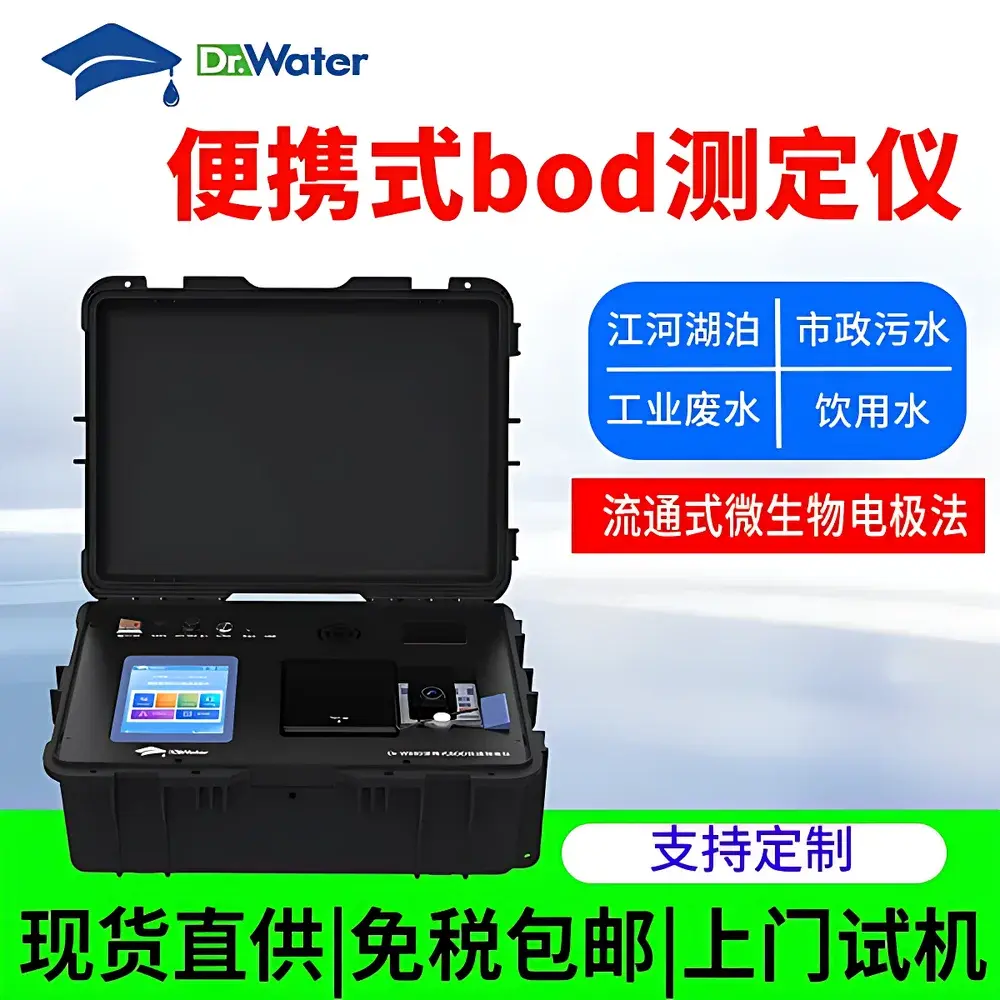
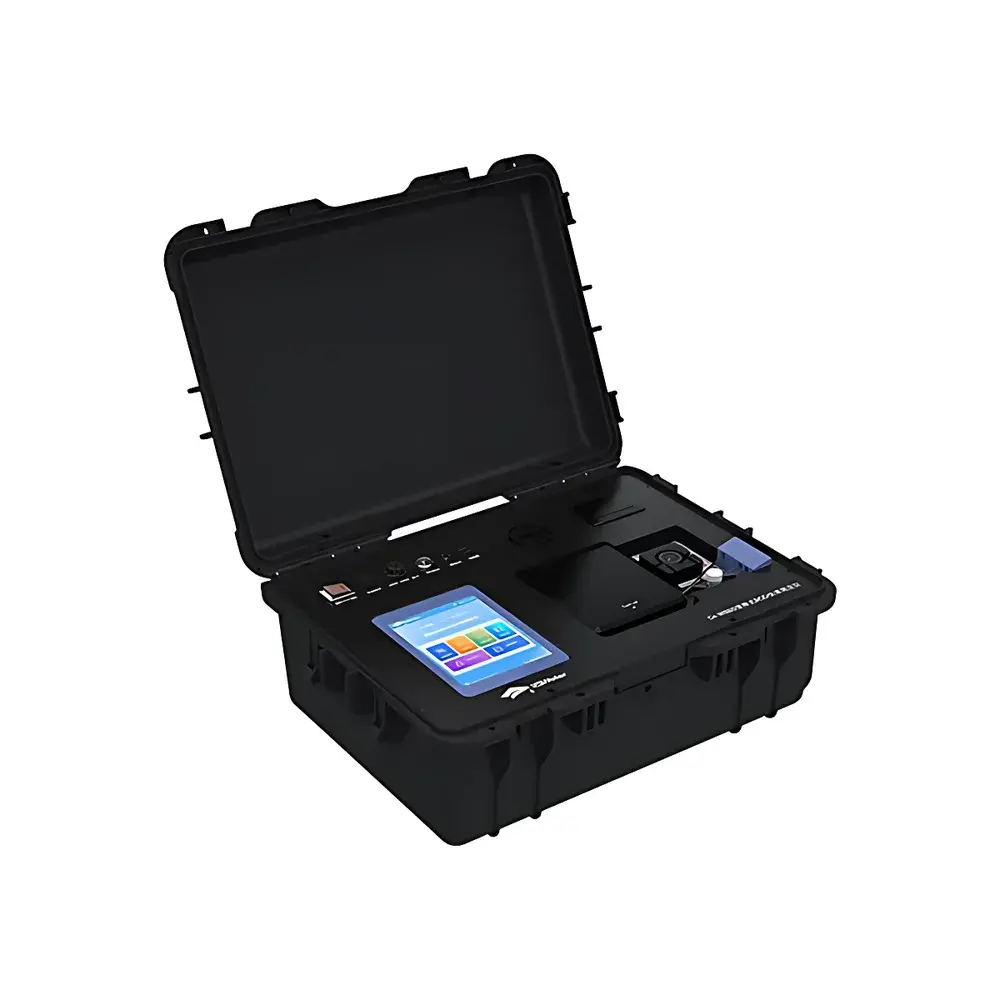
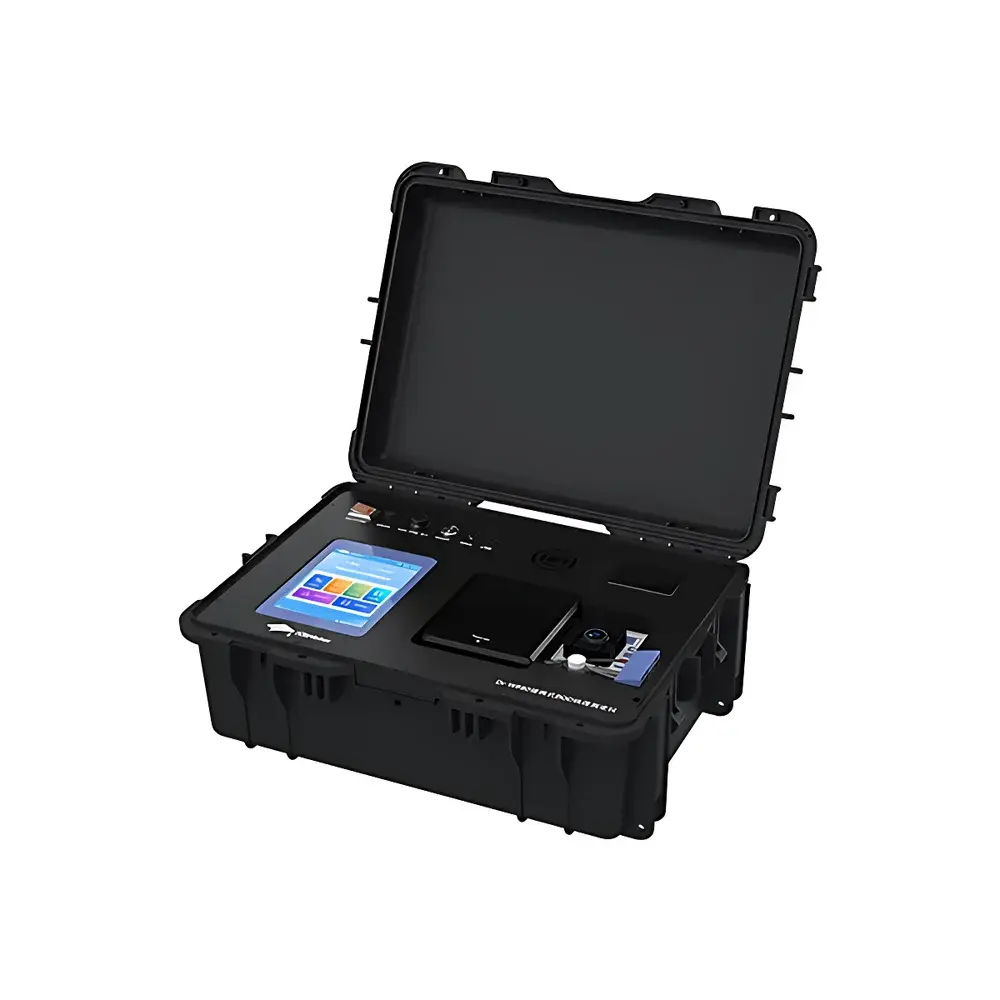
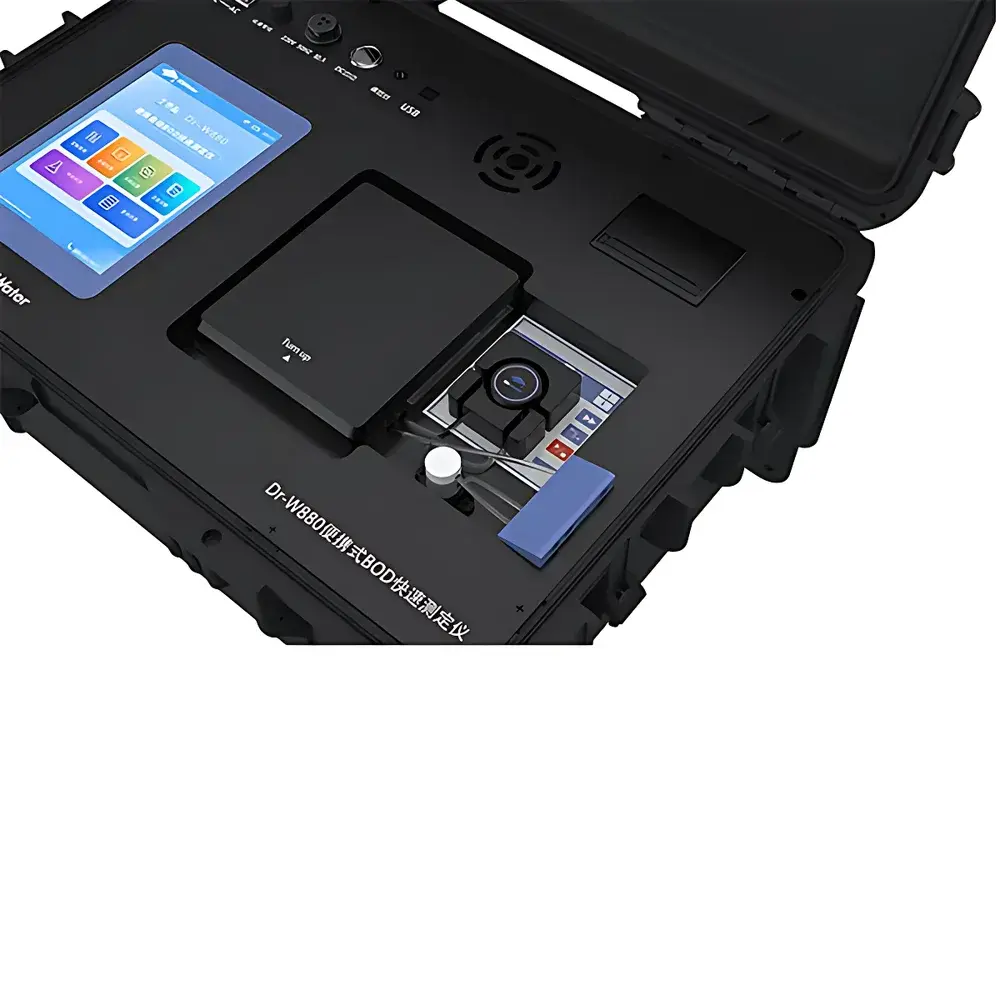
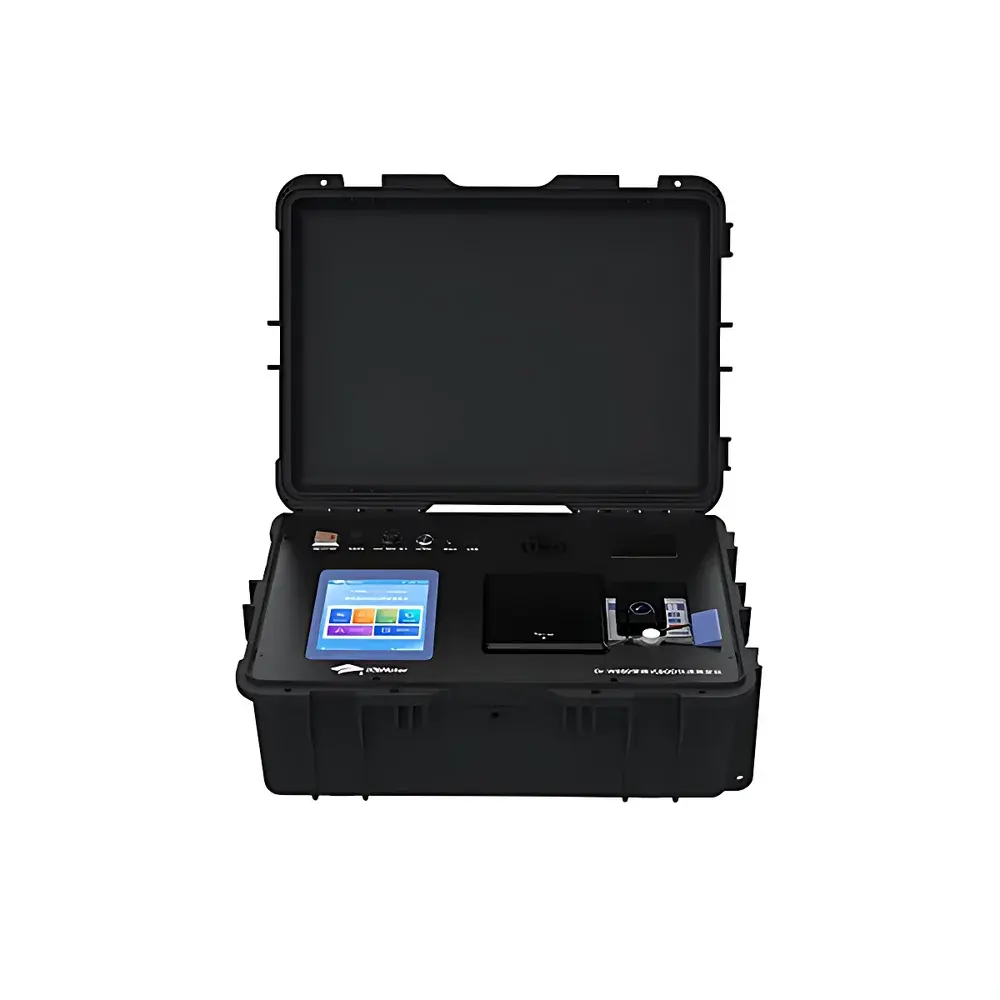
Dr-W880 Portable BOD Analyzer by Doctor Water
| Brand | Doctor Water |
|---|---|
| Origin | Hunan, China |
| Model | Dr-W880 |
| Instrument Type | Portable BOD Analyzer |
| Measurement Principle | Microbial Electrode Method |
| Measurement Range | 2–4000 mg/L |
| Detection Limit | 2 mg/L |
| Accuracy | ≤ ±5% |
| Single-Sample Measurement Time | 7.8 min |
| Incubation Temperature Range | 1.5–40 °C |
| Display | 8-inch capacitive touchscreen (1024 × 768 IPS) |
| Operating System | Android-based embedded OS |
| Data Storage Capacity | 80 million records |
| Power Supply | Built-in 30,000 mAh Li-ion battery + AC adapter |
| Connectivity | USB, Wi-Fi, Bluetooth, 4G LTE |
| Compliance | HJ/T 86–2002, Standard Methods for the Examination of Water and Wastewater (4th Ed.) |
Overview
The Dr-W880 Portable BOD Analyzer by Doctor Water is an engineered solution for rapid, field-deployable biochemical oxygen demand (BOD) measurement in aqueous environmental matrices. It operates on the microbial electrode method—a standardized electrochemical technique in which immobilized microorganisms consume dissolved oxygen proportional to the biodegradable organic load in the sample. Oxygen depletion is detected in real time by a Clark-type amperometric sensor integrated into a flow-through cell, enabling quantitative BOD estimation without traditional 5-day incubation. Designed for regulatory alignment and operational robustness, the Dr-W880 implements a pulse-controlled thermostatic system to maintain precise temperature stability (±0.3 °C) across its full 1.5–40 °C operating range—critical for reproducible microbial activity under variable ambient conditions. Its compact, ruggedized chassis meets IP65 ingress protection requirements for outdoor deployment, while the sealed fluidic architecture prevents cross-contamination between sequential analyses.
Key Features
- Flow-through microbial electrode sensor with automatic sample/standard/cleaning liquid switching—eliminates manual valve operation and reduces operator error.
- Integrated pulse-driven thermal regulation system ensures stable incubation temperature control within ±0.3 °C, supporting compliance with HJ/T 86–2002 and Standard Methods 5210B.
- 8-inch industrial-grade capacitive touchscreen (1024 × 768 IPS) with glove-compatible responsiveness and sunlight-readable luminance (≥500 cd/m²).
- Android-based embedded OS with customizable UI language support (default Chinese; optional English firmware variant available upon configuration).
- Onboard thermal printer with auto-labeling capability for audit-ready hardcopy reports including timestamp, sample ID, calibration status, and QC flags.
- Dual-power architecture: 30,000 mAh rechargeable Li-ion battery enables ≥12 hours of continuous operation at 25 °C; AC adapter included for lab-based use.
- Multi-protocol data transmission stack: USB 2.0 host/device mode, IEEE 802.11n Wi-Fi, Bluetooth 5.0 (SPP/LE), and LTE Cat-1 4G module with SIM slot for remote telemetry.
Sample Compatibility & Compliance
The Dr-W880 is validated for direct analysis of raw and treated water matrices without pre-filtration or dilution in the 2–4000 mg/L BOD range. It supports unfiltered surface water (rivers, lakes, reservoirs), municipal wastewater effluents, industrial discharges, and potable water sources—provided turbidity remains below 100 NTU and suspended solids content does not exceed 150 mg/L to avoid sensor fouling. The instrument conforms to HJ/T 86–2002 “Determination of Biochemical Oxygen Demand Using Microbial Sensor Method” and aligns with Section 5210B of *Standard Methods for the Examination of Water and Wastewater* (21st Edition). While not FDA 21 CFR Part 11–certified out-of-the-box, its audit trail functionality—including user login logs, parameter change history, and electronic signature prompts—can be configured to meet GLP/GMP documentation requirements when deployed in regulated QA/QC environments.
Software & Data Management
Firmware v3.2+ includes embedded data management tools compliant with ISO/IEC 17025:2017 Clause 7.5.2 (control of records). All measurements are timestamped, geotagged (via GPS module), and stored locally with SHA-256 checksum integrity verification. Data export options include CSV (UTF-8 encoded), PDF report generation (with embedded QR code linking to cloud archive), and direct API push to third-party LIMS or national environmental monitoring platforms via HTTPS RESTful endpoints. Cloud synchronization occurs over TLS 1.2–encrypted channels to the Doctor Water Environmental Data Hub—offering role-based access control, versioned dataset retention, and automated backup to AWS S3 storage. Local database capacity supports up to 80 million records with indexed search by date, location, operator ID, or custom sample tag.
Applications
- Rapid screening of BOD at wastewater treatment plant influent/effluent points for process optimization and regulatory reporting.
- Field assessment of eutrophication risk in freshwater ecosystems during environmental impact assessments (EIAs).
- Emergency response monitoring following accidental spills or combined sewer overflows (CSOs), where same-day decision-making is critical.
- Verification of BOD removal efficiency in decentralized treatment systems (e.g., constructed wetlands, MBR units) under varying hydraulic loading conditions.
- Educational use in university environmental engineering laboratories for hands-on demonstration of microbial kinetics and sensor-based analytical principles.
FAQ
What regulatory standards does the Dr-W880 comply with?
The analyzer is designed and validated per HJ/T 86–2002 and Standard Methods 5210B. It supports traceable calibration against certified BOD reference standards (e.g., glutamic acid–glucose mixture) and generates reports suitable for submission to provincial environmental monitoring centers in China.
Can the Dr-W880 operate without cellular connectivity?
Yes—the device functions fully offline. All measurements, calibrations, and QC checks are executed locally. Data sync to cloud or LIMS occurs only upon reconnection; no measurement capability is degraded in disconnected mode.
Is routine maintenance required for the microbial electrode sensor?
The immobilized biofilm requires replacement every 90 days under continuous use or after 500 analyses—whichever occurs first. Electrode cleaning is automated; no manual polishing or chemical regeneration is needed.
Does the instrument support multi-user authentication?
Yes. Role-based access control (RBAC) is implemented with three tiers: Operator, Supervisor, and Administrator. Password policies enforce minimum length, complexity, and expiration intervals per ISO/IEC 27001 guidelines.
How is temperature calibration verified?
A built-in NIST-traceable PT1000 RTD sensor provides continuous thermal feedback. Factory calibration is documented in the Certificate of Conformance; users may perform field verification using a certified dry-block calibrator (±0.1 °C accuracy).
Related Products







