
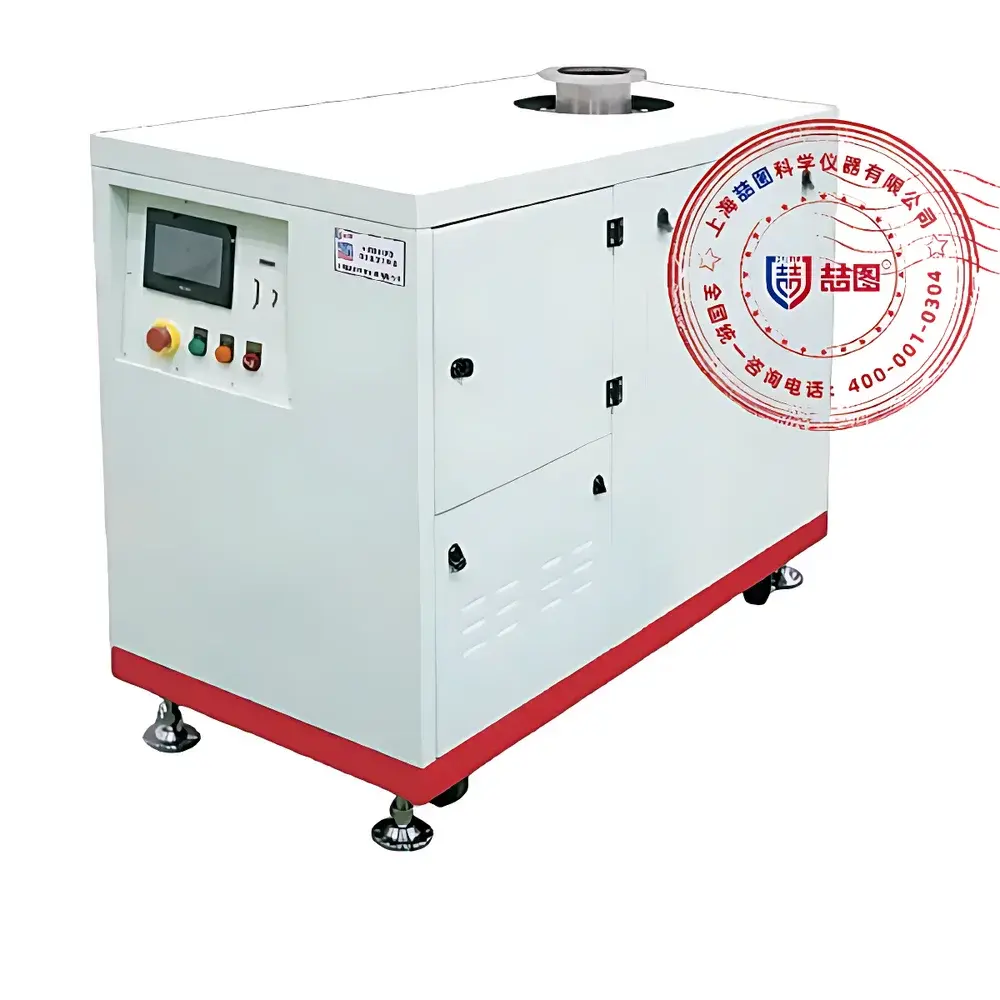
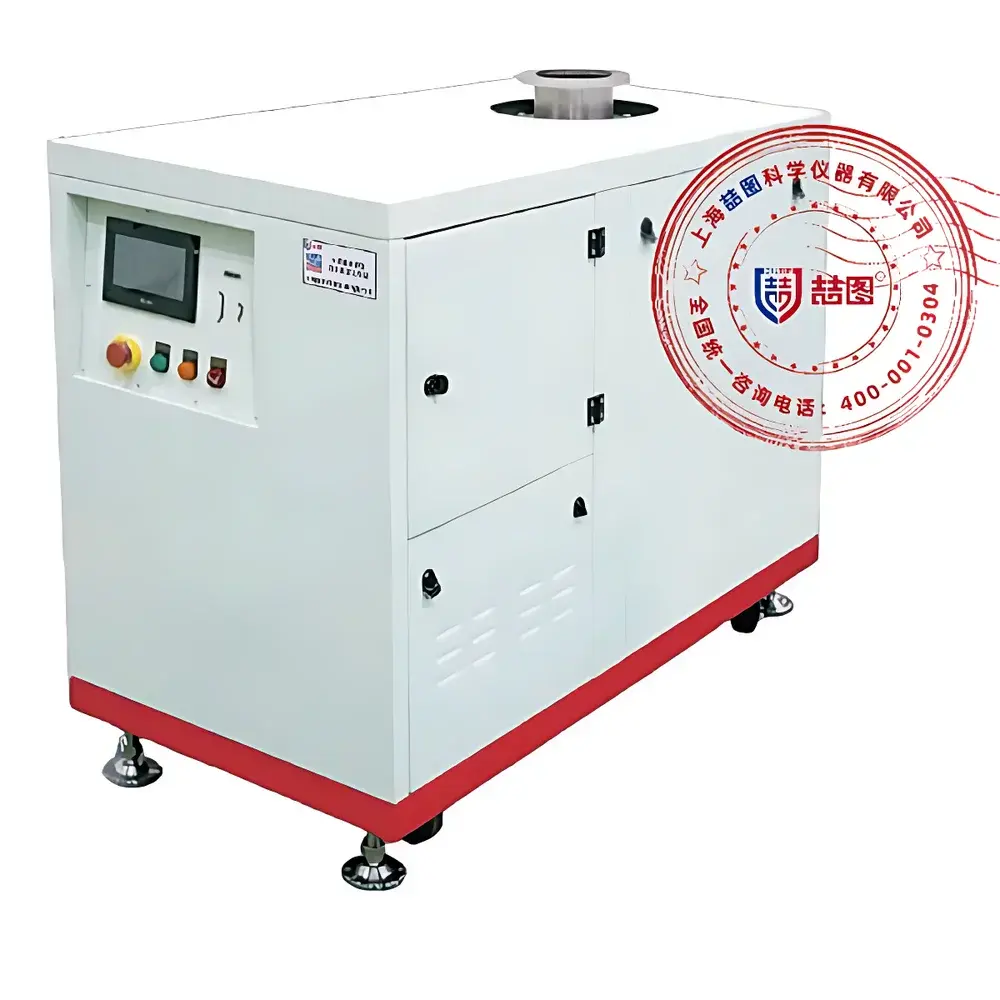
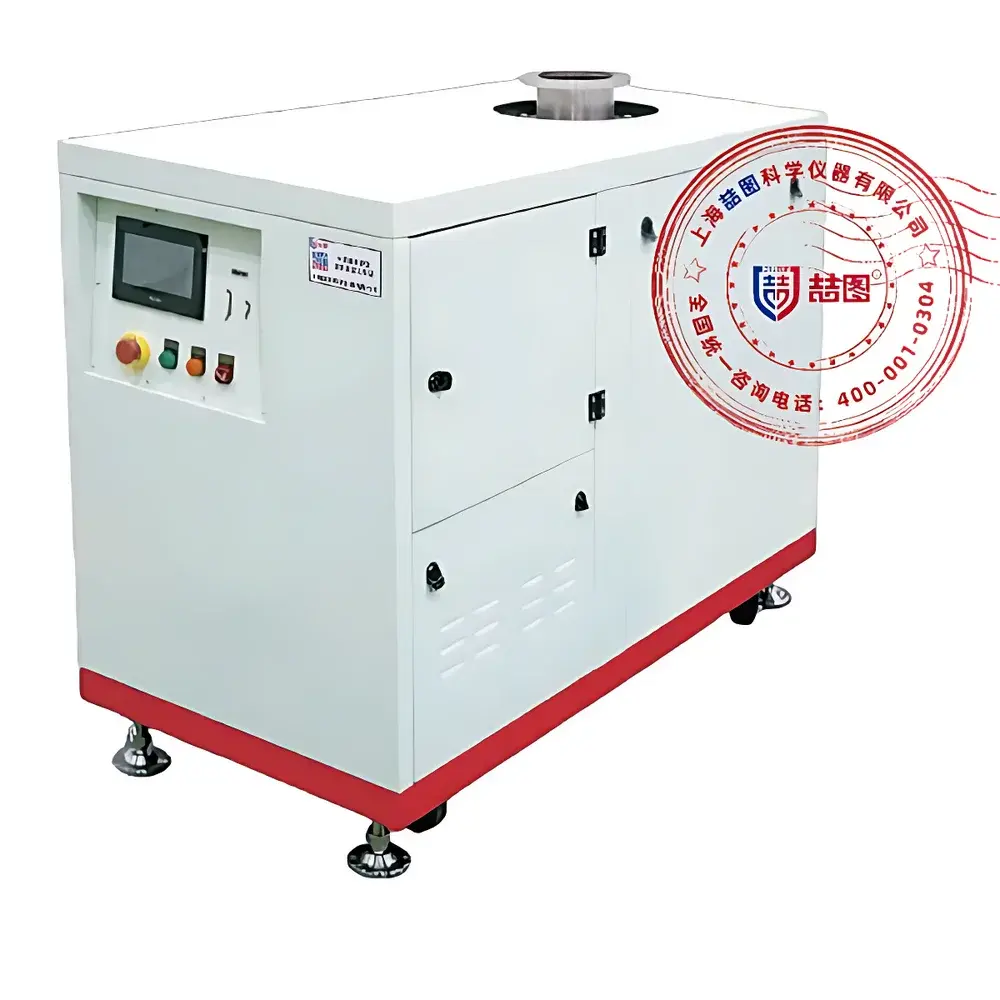
DRETOP DS-6 Dry Screw Vacuum Pump (Constant Pitch & Diameter)
| Brand | DRETOP |
|---|---|
| Origin | Shanghai, China |
| Manufacturer Type | Direct Manufacturer |
| Pump Type | Oil-Free Dry Screw Vacuum Pump |
| Pumping Speed | 10 m³/h (2.78 L/s) |
| Ultimate Pressure | 50 Pa |
| Motor Power | 750 W |
| Weight | 48 kg |
| Cooling Method | Air-Cooled |
| Inlet/Outlet Port | KF25 |
Overview
The DRETOP DS-6 Dry Screw Vacuum Pump (Constant Pitch & Diameter) is an oil-free positive displacement vacuum pump engineered for reliable, contamination-free operation in demanding laboratory and pilot-scale industrial applications. It operates on the principle of intermeshing, synchronous screw rotors rotating without physical contact—eliminating the need for lubricating oil in the compression chamber. This design ensures a clean, hydrocarbon-free vacuum environment essential for processes sensitive to oil backstreaming or particulate generation. The DS-6 delivers stable performance across a wide operating pressure range—from atmospheric pressure down to 50 Pa—making it suitable as a primary vacuum source for moderate-vacuum applications such as vacuum drying, thermal annealing, solvent recovery, and low-pressure chemical synthesis. Its constant-pitch, constant-diameter rotor geometry provides predictable volumetric efficiency and mechanical robustness under continuous duty, particularly where process gases contain trace condensables or non-abrasive particulates.
Key Features
- Oil-free dry compression: No internal lubrication required; eliminates risk of oil vapor contamination and simplifies maintenance protocols.
- Air-cooled thermal management: Integrated finned housing enables passive heat dissipation—no external water supply or coolant loop needed—reducing infrastructure complexity and operational overhead.
- Corrosion-resistant construction: Standard aluminum alloy housing with optional electropolished stainless steel or nickel-phosphorus coated rotors for enhanced durability in mildly aggressive gas environments (e.g., HCl, NH₃, organic vapors).
- Low vibration & noise signature: Precision-balanced rotors and rigid base-mounting minimize mechanical transmission; typical sound pressure level ≤62 dB(A) at 1 m distance—compatible with shared lab spaces and ISO Class 5–7 cleanrooms.
- Direct-drive induction motor: 750 W, 50/60 Hz, IP54-rated; optimized for energy efficiency and long service life under variable load conditions.
- KF25 quick-connect ports: Standardized ISO-KF flange interfaces simplify integration with common vacuum tubing, gauges, and process chambers.
Sample Compatibility & Compliance
The DS-6 is compatible with non-explosive, non-oxygen-rich, and non-radioactive process gases—including air, nitrogen, argon, CO₂, and low-concentration solvent vapors (e.g., acetone, ethanol). It tolerates trace amounts of condensable vapors (<5% by volume) and sub-micron particulates (<10 mg/m³), provided upstream filtration (e.g., sintered metal or cyclonic pre-filter) is implemented per application-specific risk assessment. While not rated for Class I Div 1 hazardous locations, the pump complies with CE marking requirements (2014/30/EU EMC Directive, 2014/35/EU LVD Directive) and meets RoHS 2011/65/EU material restrictions. For regulated environments (e.g., pharmaceutical R&D labs), its oil-free architecture supports adherence to USP Analytical Instrument Qualification guidelines and facilitates alignment with GLP documentation workflows.
Software & Data Management
The DS-6 operates as a standalone unit without embedded digital controls. However, it is fully compatible with third-party vacuum system controllers via analog 0–10 VDC or 4–20 mA signal inputs for remote start/stop and status monitoring (e.g., motor current, temperature alerts). When integrated into larger vacuum systems, it supports data logging through standard SCADA platforms (Modbus RTU/TCP) when paired with optional external pressure transducers and programmable logic controllers (PLCs). All operational parameters—including runtime hours, thermal cycling history, and fault codes—are accessible via DRETOP’s technical service portal for predictive maintenance planning. No proprietary software or cloud dependency is required; audit trails comply with FDA 21 CFR Part 11 principles when deployed with validated electronic record systems.
Applications
- Lab-scale vacuum drying ovens and freeze dryers requiring clean, repeatable vacuum profiles.
- Materials science research: vacuum degassing of polymer precursors, sintering support, and thin-film deposition pre-pumping.
- Chemical process development: solvent removal from reaction mixtures, distillation under reduced pressure, and catalyst activation.
- Quality control laboratories: sample preparation for SEM/EDS analysis, moisture content determination (ASTM D445), and packaging integrity testing.
- Pilot plant operations: vacuum-assisted crystallization, vacuum impregnation of composites, and battery electrode drying (Li-ion R&D).
FAQ
What is the recommended maintenance interval for the DS-6?
Routine inspection every 2,000 operating hours includes checking inlet filter integrity, verifying cooling airflow, and inspecting drive belt tension (if applicable). Full rotor clearance verification and bearing replacement are advised at 12,000 hours or per DRETOP’s OEM service bulletin—no scheduled oil changes required.
Can the DS-6 be used with reactive or corrosive gases?
Yes—with optional corrosion-resistant surface treatments (e.g., DLC or Ni-P coating) and appropriate upstream gas conditioning (scrubbers, chill traps). Consult DRETOP’s Application Engineering team with full gas composition, concentration, and dew point data prior to deployment.
Is the DS-6 suitable as a backing pump for turbomolecular or diffusion pumps?
No. With an ultimate pressure of 50 Pa, the DS-6 is not designed to achieve the foreline pressures (<1 Pa) required for efficient turbomolecular pump operation. It is intended for primary vacuum applications only.
Does the pump require a dedicated electrical circuit?
A dedicated 16 A, 230 V AC single-phase circuit with proper grounding is recommended to ensure stable voltage delivery and avoid interference with sensitive instrumentation sharing the same power bus.



