
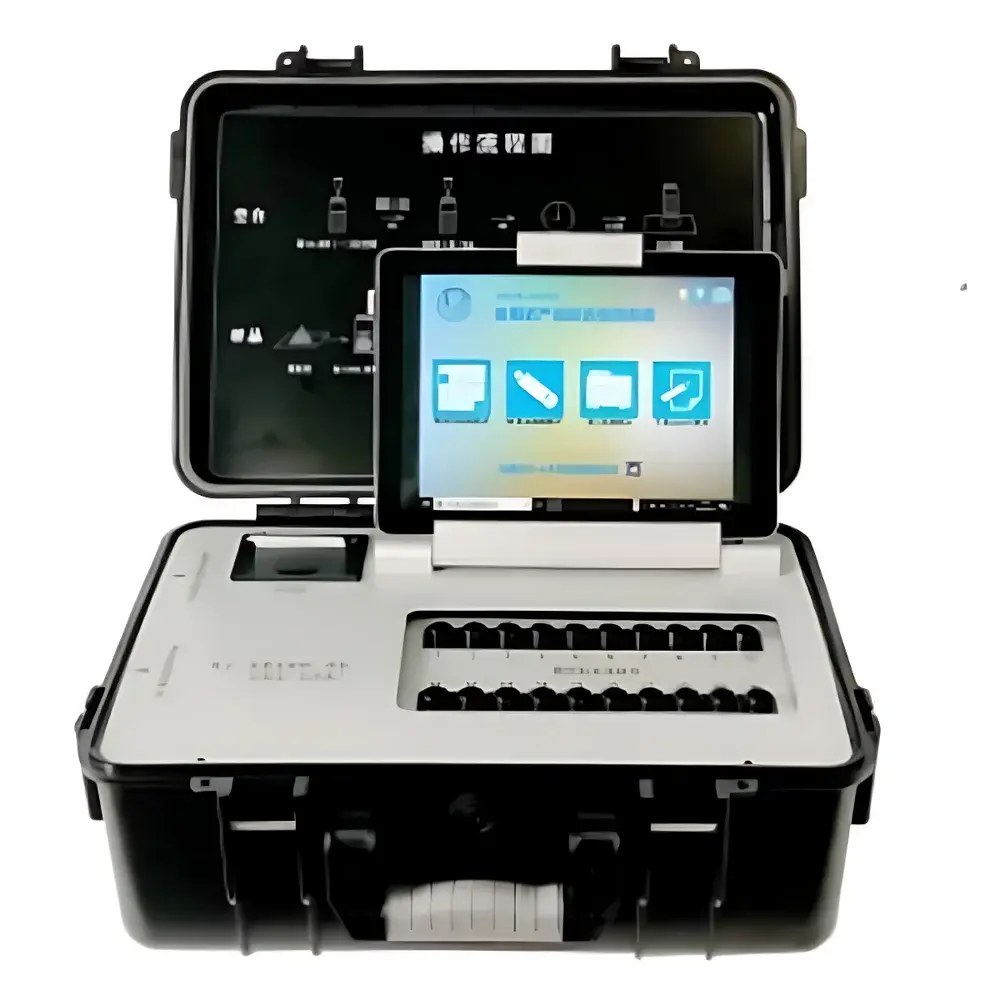
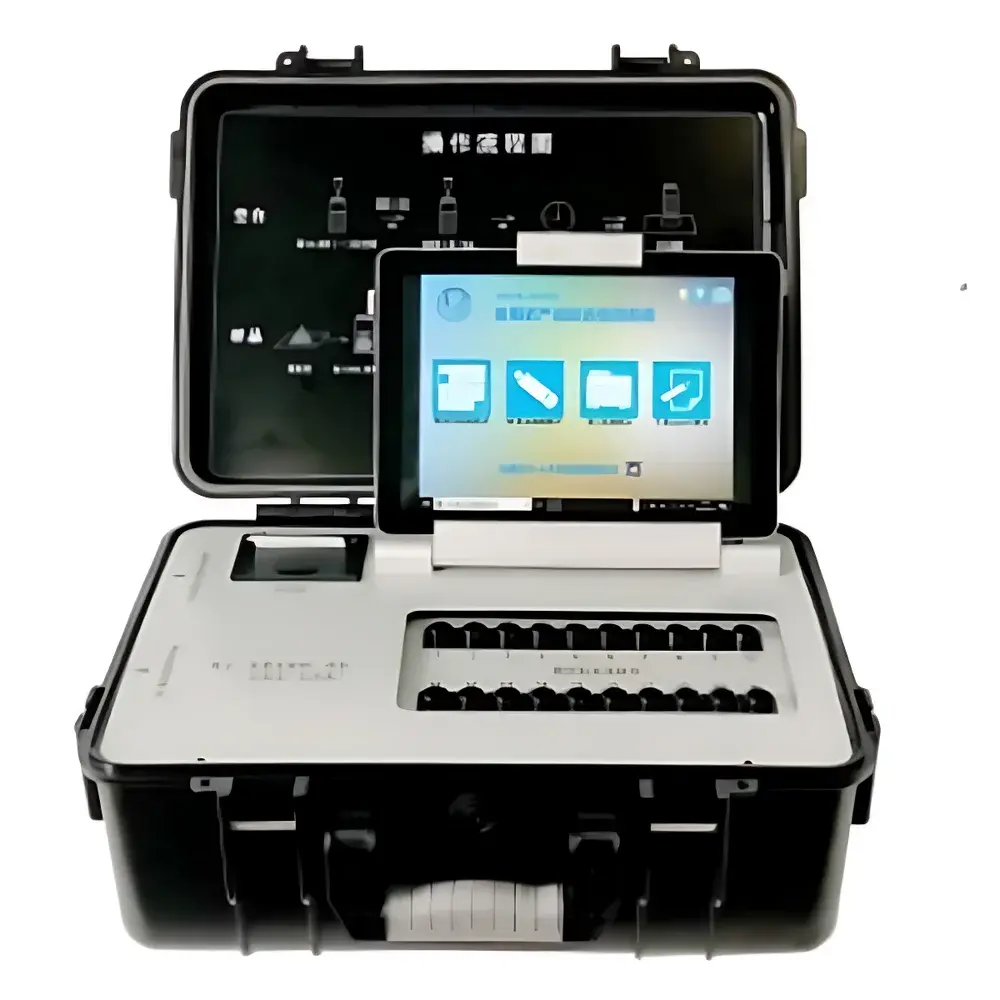
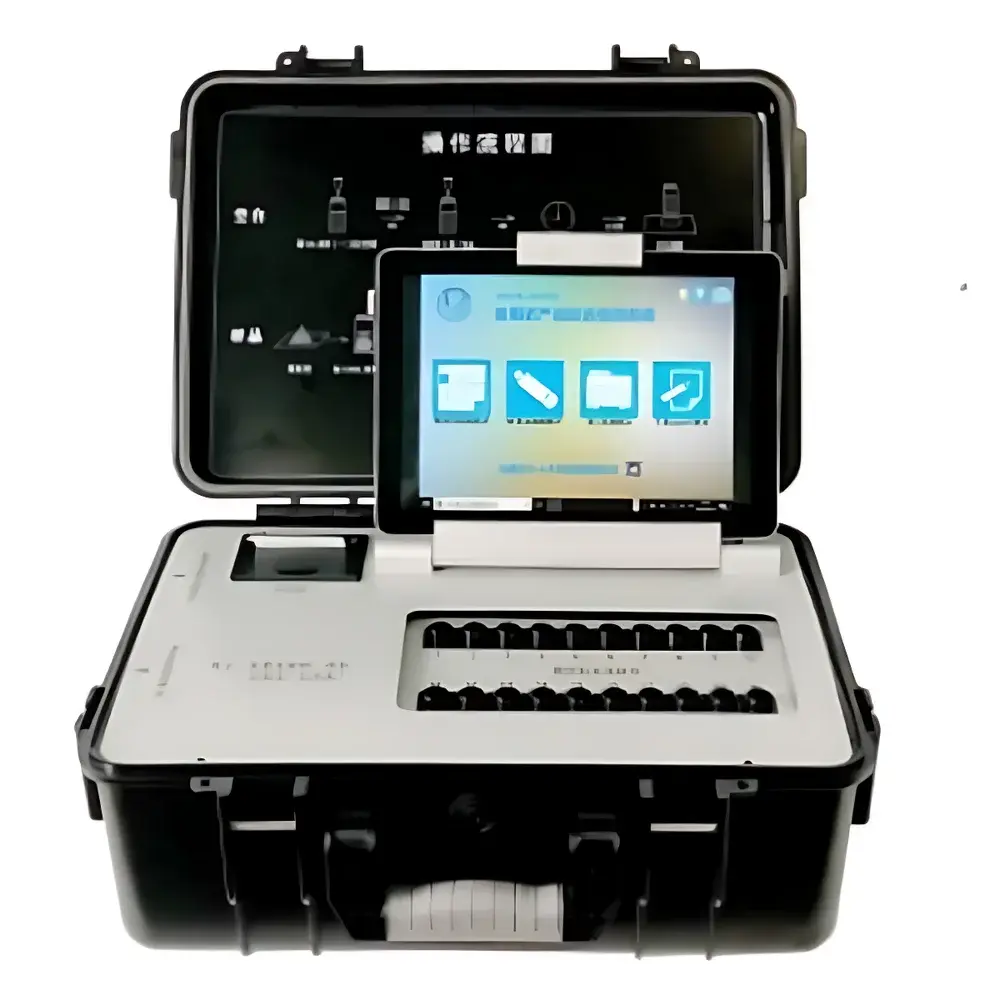
DreTop DTPN-1020 Pesticide Residue Rapid Analyzer
| Brand | DreTop |
|---|---|
| Origin | Shanghai, China |
| Model | DTPN-1020 |
| Detection Method | Enzyme Inhibition Rate Method (Spectrophotometric) |
| Measurement Range | 0–100% inhibition rate |
| Number of Sample Positions | 20 |
| Active Detection Channels | 3 |
| Measurement Accuracy | ±5% |
| Limit of Detection (LOD) | 0.01–3.0 mg/kg |
| Optical Source | High-Brightness LED |
| Wavelength | 405 ± 10 nm |
| Photometric Stability | ±0.005 A/20 min |
| Operating Temperature | 5–40 °C |
| Operating Humidity | ≤85% RH |
| Power Supply | 220 V ± 22 V, 50 Hz ± 1 Hz |
| Dimensions | 430 × 330 × 170 mm |
| Compliance | Designed to support GB/T 5009.199–2003, NY/T 448–2001, and related Chinese national standards for pesticide residue screening |
Overview
The DreTop DTPN-1020 Pesticide Residue Rapid Analyzer is a field-deployable, spectrophotometric instrument engineered for high-throughput preliminary screening of organophosphorus and carbamate pesticide residues in fresh agricultural commodities—including fruits, vegetables, tea, and edible fungi. It operates on the principle of acetylcholinesterase (AChE) enzyme inhibition: active pesticide residues suppress AChE activity, leading to reduced hydrolysis of chromogenic substrates (e.g., indoxyl acetate), resulting in measurable absorbance changes at 405 nm. The instrument quantifies inhibition rates (%) relative to blank controls, enabling rapid pass/fail assessment against regulatory threshold values. Its compact benchtop-and-portable hybrid architecture—featuring an integrated lithium-ion battery, ruggedized hand-carried case, and ambient-temperature operational envelope—makes it suitable for mobile food safety inspection units, farm-gate testing stations, wholesale market laboratories, and municipal regulatory checkpoints.
Key Features
- Tri-channel simultaneous detection with 20-position sample tray for efficient batch processing—enabling up to 6 independent assays per cycle without manual reconfiguration.
- Optical system calibrated with high-stability 405 nm LED source and precision photodiode detector; photometric drift controlled within ±0.005 A over 20 minutes for assay repeatability.
- Onboard thermal printer compliant with China’s “Edible Agricultural Product Quality Certificate” (No. 109/2020, Ministry of Agriculture and Rural Affairs), supporting direct generation of traceable, QR-code-enabled compliance documentation.
- Embedded Linux-based firmware with intuitive touchscreen interface; preloaded with national reference thresholds per GB/T 5009.199–2003 (organophosphates/carbamates), NY/T 448–2001 (field sampling protocols), and provincial surveillance guidelines.
- Secure data management via USB export (CSV/Excel-compatible), encrypted local storage (≥10,000 test records), and optional cloud synchronization through authenticated remote monitoring gateways.
- Firmware and method database updates delivered via USB flash drive—no internet dependency required—ensuring uninterrupted operation in low-connectivity rural or border inspection environments.
Sample Compatibility & Compliance
The DTPN-1020 accepts homogenized aqueous extracts prepared from raw produce using standardized extraction buffers (e.g., phosphate-buffered saline, pH 7.0–7.4). Validated matrices include leafy greens (spinach, lettuce), solanaceous crops (tomato, pepper), pome/stone fruits (apple, peach), and root vegetables (carrot, potato). While not intended for quantitative confirmatory analysis, the system delivers qualitative and semi-quantitative results aligned with China’s Food Safety National Standard GB 2763–2021 maximum residue limits (MRLs) for screening-level enforcement. All assay protocols adhere to Good Laboratory Practice (GLP)-aligned documentation requirements, including timestamped audit trails, operator ID logging, and calibration verification records—facilitating internal QA review and third-party accreditation readiness.
Software & Data Management
The embedded software provides full lifecycle assay control: sample registration (customizable fields for lot ID, origin, collector ID), real-time absorbance curve visualization, auto-calculated inhibition rate (%), and immediate PASS/FAIL classification against user-selectable thresholds. Data exports retain metadata (date/time, instrument ID, operator tag, environmental conditions) in ISO/IEC 17025-compliant formats. For regulatory integration, the system supports HL7 v2.5 message mapping for interoperability with provincial food safety information platforms (e.g., Jiangsu Food Traceability System, Zhejiang “Sunshine Food” Portal). Audit logs are immutable and time-stamped to meet GLP documentation integrity requirements.
Applications
- Routine surveillance in agricultural cooperatives and farmer markets for early detection of unauthorized pesticide use.
- Pre-harvest field testing to guide safe harvest intervals and reduce post-harvest rejection risk.
- Import inspection at port-of-entry quarantine labs conducting rapid triage prior to GC-MS or LC-MS/MS confirmation.
- Training and capacity building for grassroots food safety officers under China’s “Four Strictest” regulatory framework.
- Research applications in extension services evaluating pesticide degradation kinetics under varied storage and washing conditions.
FAQ
What regulatory standards does the DTPN-1020 support for reporting?
It aligns with GB/T 5009.199–2003 for methodology validation and supports certificate generation per MOA Notice No. 109/2020.
Can the instrument be used for non-pesticide analytes such as veterinary drug residues or mycotoxins?
No—the optical and enzymatic architecture is specifically optimized for cholinesterase-inhibiting compounds; separate dedicated platforms are required for β-lactams, aflatoxins, or clenbuterol.
Is the system compatible with LIMS or national food safety monitoring networks?
Yes—via configurable API endpoints and HL7-compliant data export; integration requires site-specific gateway configuration by authorized DreTop technical partners.
How often must the optical system be recalibrated?
Factory calibration is stable for ≥12 months under normal use; users perform daily blank verification using supplied control solution before initiating assays.
Does the device meet electromagnetic compatibility (EMC) requirements for laboratory deployment?
It complies with GB/T 18268.1–2010 (IEC 61326-1:2012), including electrostatic discharge (ESD) immunity (±8 kV contact), radiated RF immunity (10 V/m, 80 MHz–2.7 GHz), and conducted disturbance limits.




