
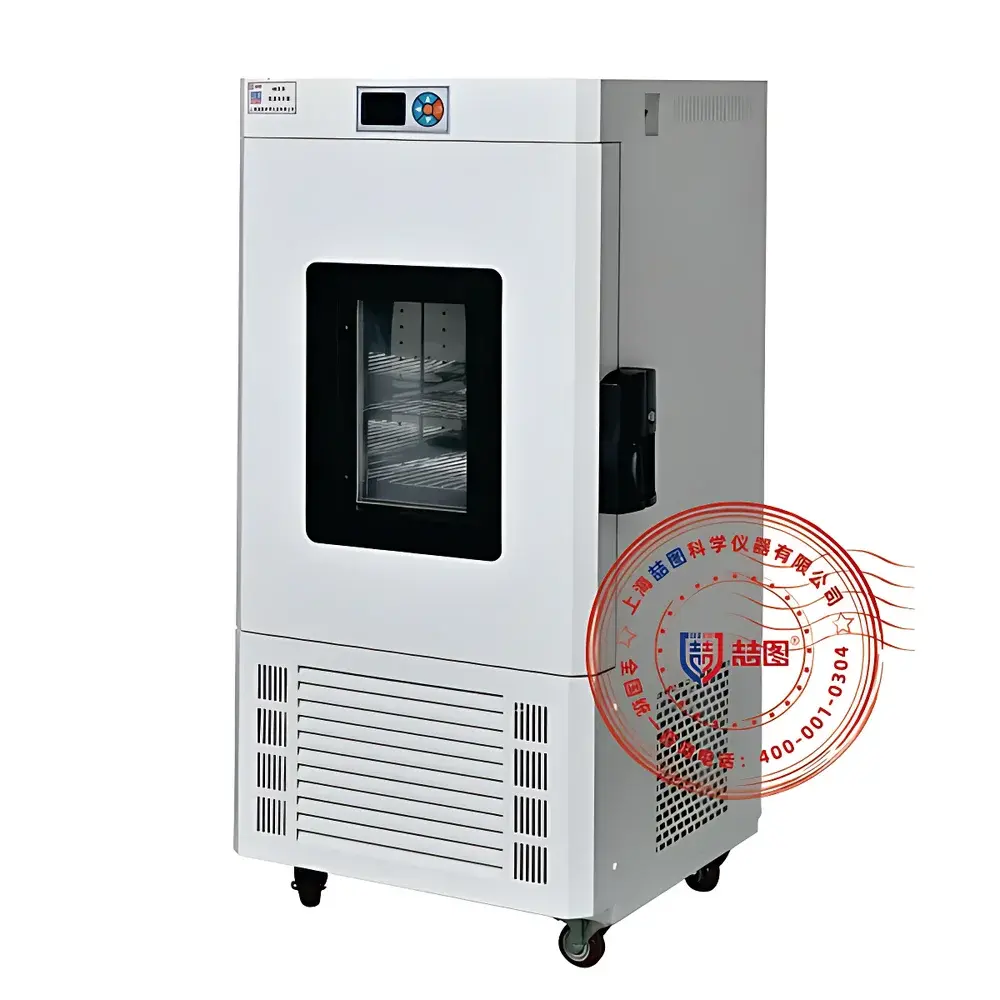
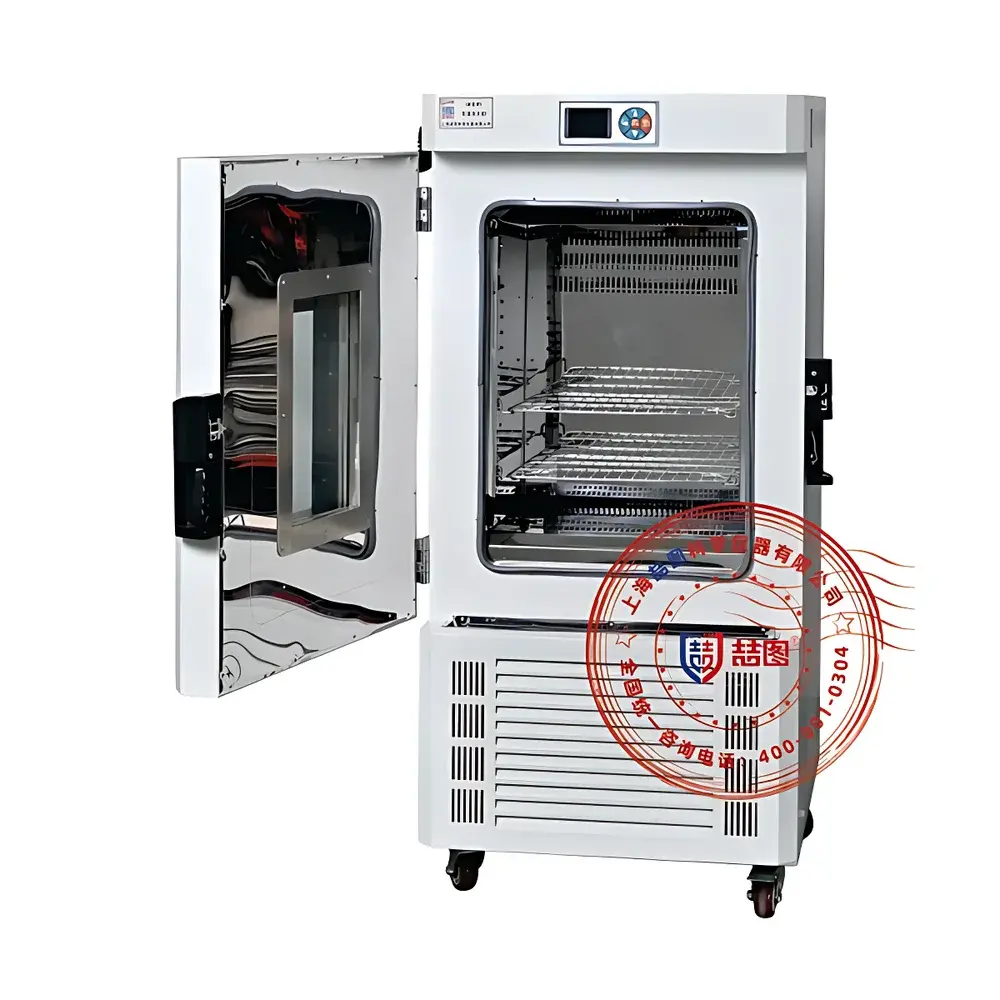
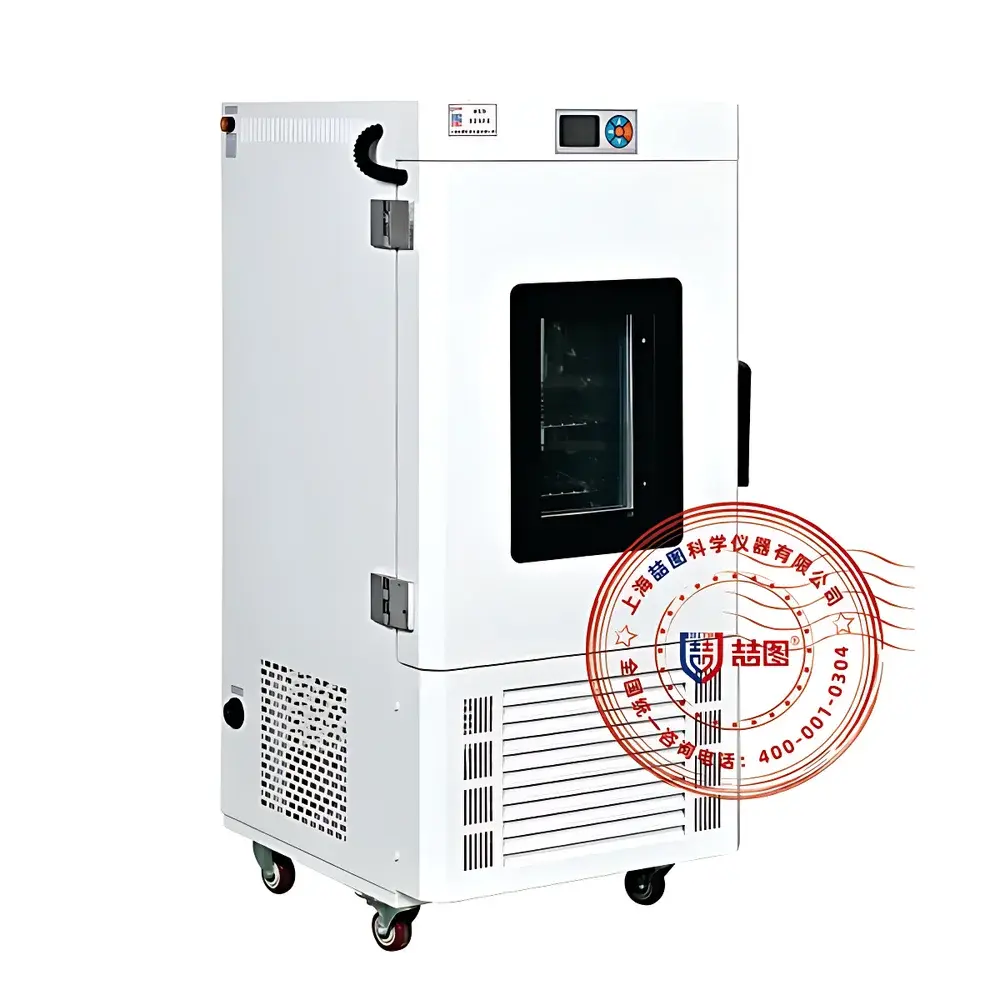
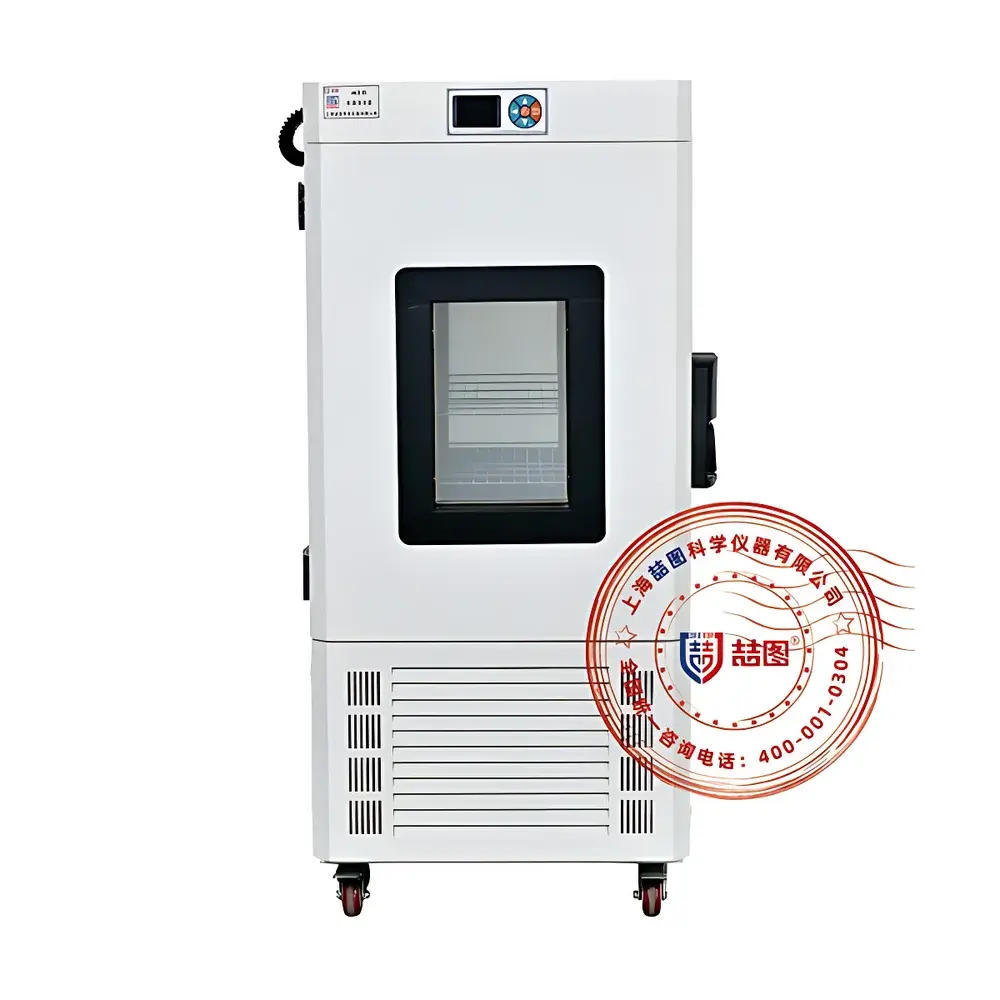
DRETOP DW-150CL Low Temperature Incubator
| Brand | DRETOP |
|---|---|
| Origin | Shanghai, China |
| Manufacturer Type | Direct Manufacturer |
| Country of Origin | China |
| Model | DW-150CL |
| Cooling Method | Compressor-based refrigeration |
| Heating Method | Air-jacket heating |
| Temperature Range | −10 °C to +65 °C |
| Temperature Resolution | 0.1 °C |
| Temperature Uniformity | ±0.5 °C (chamber-wide, per ISO 15378 & ASTM E2924-22 test conditions) |
| Chamber Volume | 150 L |
| External Dimensions (W×D×H) | 770 × 825 × 1745 mm |
| Power Supply | AC 220 V, 50 Hz |
| Input Power | 2500 W |
| Standard Features | Embedded observation window with anti-fog heating, 25 mm external access port, adjustable stainless steel shelves, microprocessor-based P.I.D. temperature controller, key-lock door, castor wheels with locking mechanism |
Overview
The DRETOP DW-150CL Low Temperature Incubator is an engineered environmental chamber designed for precise, stable thermal control across a broad operational range of −10 °C to +65 °C. Unlike standard ambient or high-temperature incubators, the DW-150CL integrates dual-mode thermal regulation—compressor-driven refrigeration coupled with air-jacket resistive heating—to achieve rapid temperature transitions and sustained stability under variable load conditions. Its architecture adheres to fundamental principles of convective heat transfer optimization: a forward-optimized airflow system utilizing axial贯流 (cross-flow) fans ensures laminar circulation throughout the 150 L stainless-steel chamber, minimizing thermal stratification and supporting reproducible incubation outcomes. The unit is purpose-built for applications requiring strict adherence to temperature-sensitive protocols—including microbial culture maintenance at sub-ambient conditions, long-term storage of thermolabile reagents, stability testing of pharmaceutical intermediates per ICH Q1A(R3), and low-temperature material conditioning in electronics R&D labs.
Key Features
- Microprocessor-controlled P.I.D. temperature regulation with 0.1 °C resolution and ±0.5 °C uniformity across the full working volume (validated per ISO 15378 Annex B and ASTM E2924-22 chamber mapping procedures)
- Air-jacket heating system with independent compressor-based cooling—enabling simultaneous heating/cooling capability and eliminating overshoot during setpoint transitions
- Stainless-steel interior chamber with fully removable, height-adjustable shelves; seamless welds and radius-corner construction eliminate microbial harborage zones and support validated cleaning cycles
- Embedded double-pane observation window with integrated resistive heating—prevents condensation and maintains optical clarity during low-temperature operation
- 25 mm diameter external access port (stainless-steel capped when unused) for integration with external sensors, power feeds, or data loggers without compromising chamber integrity
- Four-point leveling castors with independent locking mechanism—ensures positional stability on uneven laboratory floors while permitting controlled relocation
- Key-locked door assembly compliant with GLP laboratory access control requirements; prevents unauthorized entry and preserves experimental integrity
Sample Compatibility & Compliance
The DW-150CL accommodates standard microbiological vessels (e.g., Petri dishes, flasks, multi-well plates), glass vials, polymer storage containers, and PCB substrates up to 580 mm (W) × 500 mm (D) × 850 mm (H). Its internal geometry supports stacking configurations without obstructing airflow pathways. The unit conforms to electromagnetic compatibility standards IEC 61326-1 and safety specifications IEC 61010-1. It is suitable for use in ISO Class 5–8 cleanrooms when operated with HEPA-filtered air supply (optional accessory). Temperature validation reports are compatible with FDA 21 CFR Part 11-compliant electronic records when paired with optional RS485 interface and audit-trail-enabled software.
Software & Data Management
While the base model features a standalone LCD interface with real-time display of setpoint, actual temperature, elapsed time, and alarm status, optional connectivity modules enable advanced data governance. The RS485 serial interface supports Modbus RTU protocol for integration into centralized building management systems (BMS) or LIMS platforms. When equipped with the optional smart program controller, users can define up to 30 segmented temperature profiles with ramp/soak logic, automatic event logging (timestamped to ±1 s), and password-protected parameter modification—fully traceable for GMP/GLP audits. All configuration changes generate immutable audit trails meeting ALCOA+ principles.
Applications
- Low-temperature microbial cultivation (e.g., psychrophilic bacteria, fungal spore germination studies)
- Stability testing of biologics, vaccines, and excipients per ICH Q5C and USP
- Environmental stress screening of semiconductor components and polymer composites
- Controlled degradation studies of packaging materials under cold-humidity cycling
- Long-term storage of cell lines, primary tissues, and enzyme preparations at non-freezing sub-zero conditions
- Calibration verification of low-range thermometers and RTDs using NIST-traceable reference probes
FAQ
What is the recommended calibration frequency for the DW-150CL?
Annual calibration against NIST-traceable standards is advised; internal sensor verification should be performed before each critical experiment using a calibrated reference thermometer.
Can the DW-150CL operate continuously at −10 °C?
Yes—the compressor system includes adaptive duty-cycle control and phase-delay startup logic to ensure uninterrupted operation at minimum setpoint for ≥10,000 hours MTBF.
Is the unit suitable for use in a Class 100 cleanroom?
With optional HEPA-integrated air intake and electrostatic-dissipative interior finish (DRETOP Option Code: CL-HEPA-SS), it meets ISO 14644-1 Class 5 requirements.
Does the observation window affect thermal performance?
No—the heated double-glazed window contributes <0.8% to total heat load and has been thermally modeled per ASHRAE RP-1407 to confirm negligible impact on chamber uniformity.
What documentation is provided for IQ/OQ validation?
Factory-issued Installation Qualification (IQ) checklist, Operational Qualification (OQ) test protocol with pass/fail criteria, and as-built drawings are included with shipment. Custom URS-aligned protocols available upon request.
Related Products




