
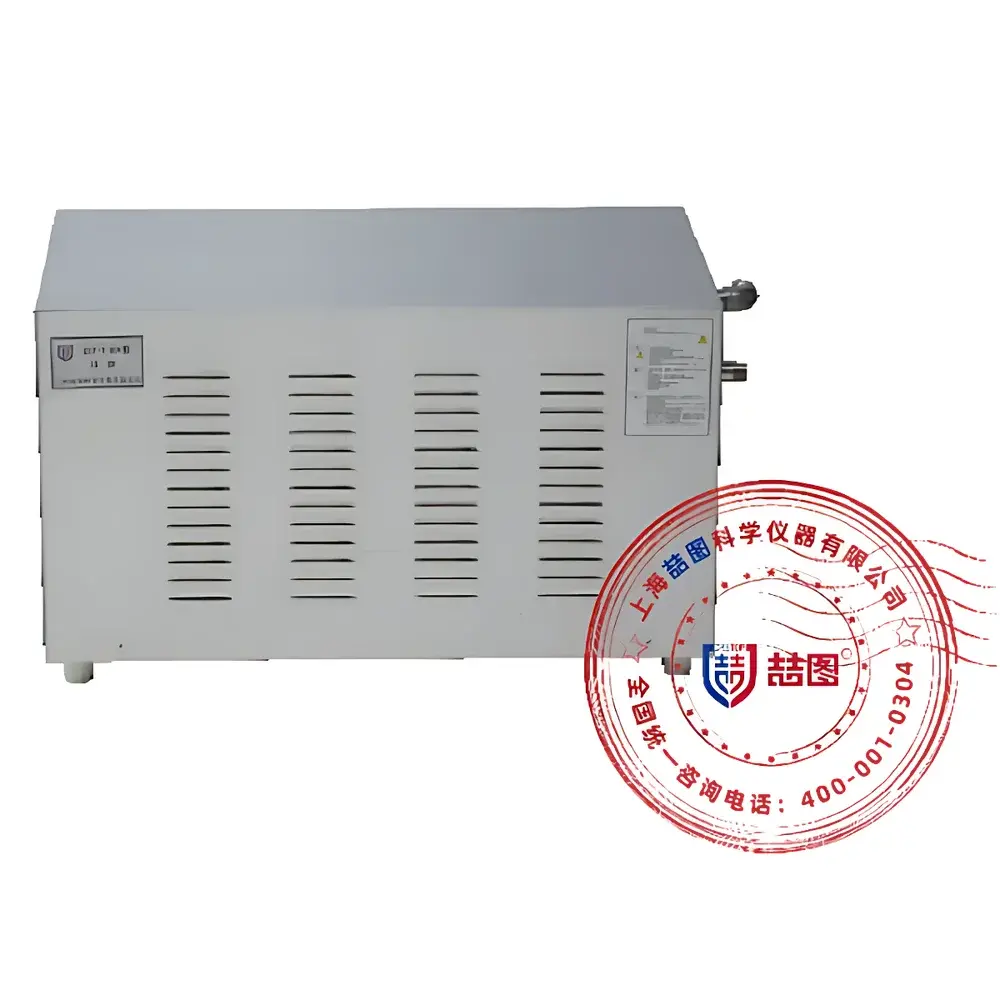
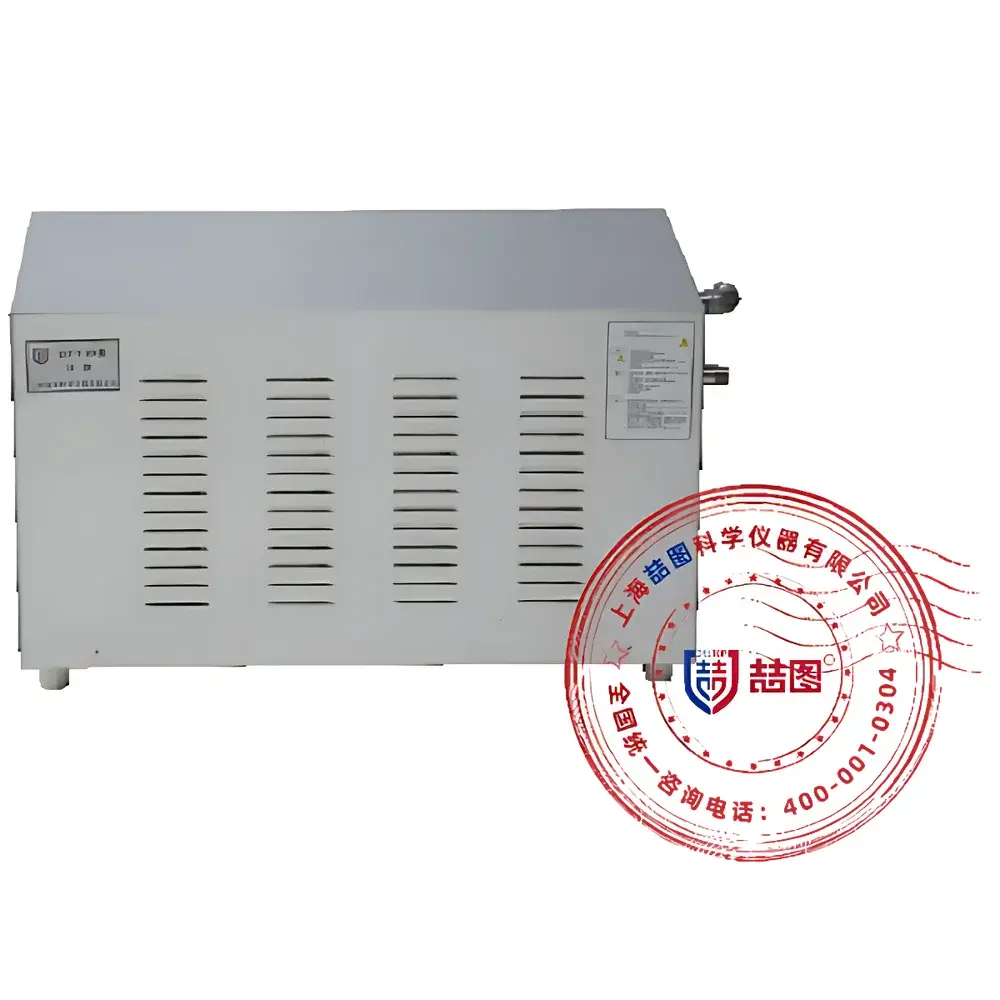
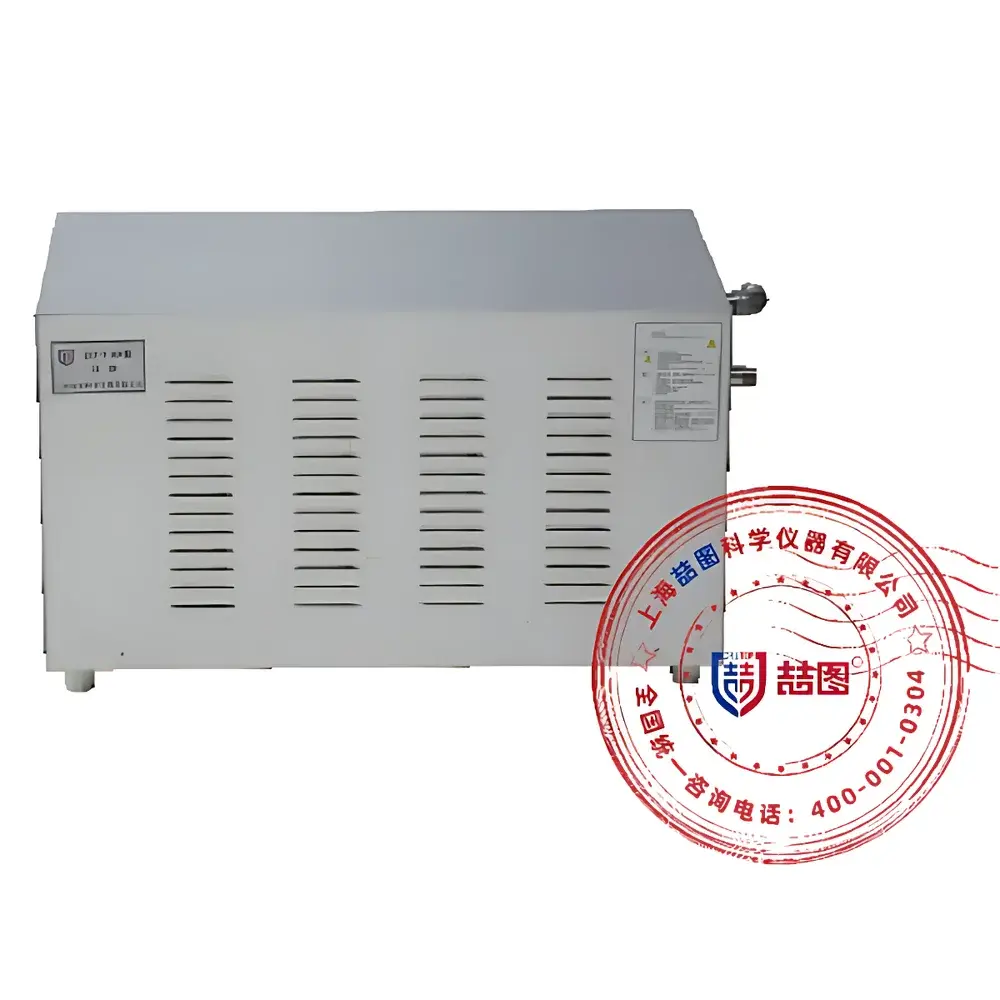
DRETOP EW20-7 Cryogenic Cold Trap
| Brand | DRETOP |
|---|---|
| Origin | Shanghai, China |
| Manufacturer Type | Direct Manufacturer |
| Model | EW20-7 |
| Cooling Capacity | -20°C (no-load) |
| Refrigeration Method | Compressor-based |
| Collection Flask Volume | 7.8 L |
| Collection Flask Dimensions | Ø200 × 250 mm |
| Inlet Fitting | Bayonet-type (Bulb) |
| Outlet Fitting | KF25 |
| Cold Trap Chamber Material | 304 Stainless Steel (optional 316L or corrosion-resistant coating) |
| Defrost Temperature | 80°C |
| Power Supply | 220 V, 50 Hz |
| Recommended Ambient Conditions | 5–25°C, ≤50% RH |
Overview
The DRETOP EW20-7 Cryogenic Cold Trap is a purpose-engineered condensation trap designed for integration between vacuum chambers—such as freeze dryers, rotary evaporators, vacuum ovens, and CVD/PVD systems—and primary vacuum pumps. It operates on the principle of cryogenic condensation: vapors generated during vacuum processes are directed through a thermally stabilized stainless-steel cold trap chamber, where they undergo phase transition from gas to liquid or solid upon contact with sub-zero surfaces. This physical separation prevents condensable volatiles—including water vapor, alcohols, ketones, esters, and corrosive byproducts—from reaching the vacuum pump’s oil reservoir or mechanical components. By intercepting these species upstream, the EW20-7 maintains pump integrity, extends service intervals, improves ultimate system vacuum (<10⁻² mbar achievable), and supports reproducible process outcomes in regulated and research-grade environments.
Key Features
- Rapid Thermal Response: Equipped with a high-efficiency hermetic compressor and optimized heat exchanger geometry, the EW20-7 achieves stable -20°C operating temperature within ≤15 minutes under no-load conditions—enabling prompt initiation of vacuum processes and improved solvent recovery yield during rotary evaporation or lyophilization.
- Digital Temperature Monitoring: Integrated LCD controller provides real-time display of cold trap chamber surface temperature with ±0.5°C accuracy, allowing precise synchronization of vacuum pump activation relative to condensation onset—critical for preventing water vapor breakthrough during freeze-drying ramp phases.
- Corrosion-Resistant Construction: The inner cold trap chamber is fabricated from electropolished 304 stainless steel, offering compatibility with aqueous, alcoholic, and mildly acidic/alkaline vapor streams. Optional upgrades include 316L stainless steel or fluoropolymer-coated internal surfaces for enhanced resistance to HCl, HF, or acetic acid vapors encountered in semiconductor etching or chemical synthesis.
- Space-Optimized Footprint: With external dimensions of 650 × 555 × 620 mm (W × D × H), the unit fits seamlessly beneath standard fume hoods, on laboratory benches, or adjacent to benchtop freeze dryers—eliminating need for dedicated floor space while maintaining full accessibility to drain valve and inlet/outlet ports.
- Service-Oriented Design: A bottom-mounted drain valve enables complete evacuation of condensed liquids without disassembly. The chamber employs direct-wall cooling (not immersion coils), minimizing residual film adhesion and simplifying cleaning between solvent batches—essential for GLP-compliant multi-analyte workflows.
Sample Compatibility & Compliance
The EW20-7 is validated for continuous duty with vapors from common laboratory solvents including ethanol, methanol, acetone, ethyl acetate, and isopropanol (boiling points 56–78°C). It also demonstrates reliable capture of water vapor down to 10% RH residual pressure and exhibits measurable condensation efficiency for low-volatility organics such as chloroform (bp 61°C) and dichloromethane (bp 40°C) under controlled flow rates (<5 L/min at 10⁻¹ mbar). While not rated for explosive atmospheres (ATEX), its construction meets CE electromagnetic compatibility (EMC) Directive 2014/30/EU and Low Voltage Directive 2014/35/EU. For GMP-regulated applications, the unit supports audit-ready operation when paired with validated temperature logging software (see Software section) and conforms to ISO 27427:2012 guidelines for vacuum system protection in pharmaceutical drying.
Software & Data Management
The built-in microcontroller records chamber temperature at 1-second intervals and stores up to 72 hours of time-stamped data internally. An optional RS-485 interface (Modbus RTU protocol) enables connection to centralized lab monitoring systems (e.g., LabVantage, DeltaV) for automated log export, alarm triggering (e.g., >−15°C deviation), and electronic signature-enabled record retention per FDA 21 CFR Part 11 requirements. When used with DRETOP’s optional TraceLog™ software (v3.2+), users generate PDF reports compliant with ISO/IEC 17025 analytical quality assurance frameworks—including calibration traceability, uncertainty budgets, and revision-controlled metadata.
Applications
- Pharmaceutical Freeze-Drying: Prevents water vapor backstreaming into oil-sealed rotary vane pumps during primary drying—reducing oil degradation frequency by ≥60% versus unprotected configurations.
- Organic Synthesis & Purification: Captures volatile reagents (e.g., thionyl chloride, trimethylamine) and reaction byproducts during reduced-pressure distillation, enabling solvent reuse and minimizing VOC emissions.
- Materials Science Deposition: Mitigates hydrocarbon contamination in electron-beam evaporation and sputtering systems by trapping outgassed plasticizers and pump oil vapors prior to chamber entry.
- Environmental Analysis: Serves as a pre-concentrator for thermal desorption-GC/MS systems, cryogenically focusing airborne VOCs (e.g., benzene, toluene, xylenes) onto chilled traps prior to rapid thermal release.
- Biotechnology Sample Prep: Supports low-temperature concentration of protein solutions or viral lysates under vacuum, minimizing thermal denaturation while preserving enzymatic activity.
FAQ
What is the maximum recommended vapor load for continuous operation?
For sustained performance at −20°C, the EW20-7 is rated for ≤3 g/min total condensable mass flow (water-equivalent), assuming inlet vapor temperature ≤30°C and system pressure <1 mbar.
Can the cold trap be used with aggressive halogenated solvents?
Yes—when specified with 316L stainless steel chamber and fluoropolymer-coated baffles, it withstands prolonged exposure to chlorinated solvents (e.g., chloroform, carbon tetrachloride) and anhydrous HCl gas streams.
Is automatic defrost functionality included?
The unit features manual-initiated hot-gas defrost at 80°C; fully automated cyclic defrost requires optional firmware upgrade (EW20-7-DF-AUTO).
Does the drain valve support quantitative liquid recovery?
The PTFE-lined ball valve provides leak-tight shut-off and allows gravity-fed transfer into calibrated vessels—validated for ≥98.7% volumetric recovery of 7.8 L condensate across three consecutive cycles.
How often should the refrigerant charge be verified?
Under normal lab use (≤8 hrs/day), compressor performance and cooling capacity should be verified annually using calibrated infrared thermography and manifold gauge set per ASHRAE Guideline 3-2021.



