
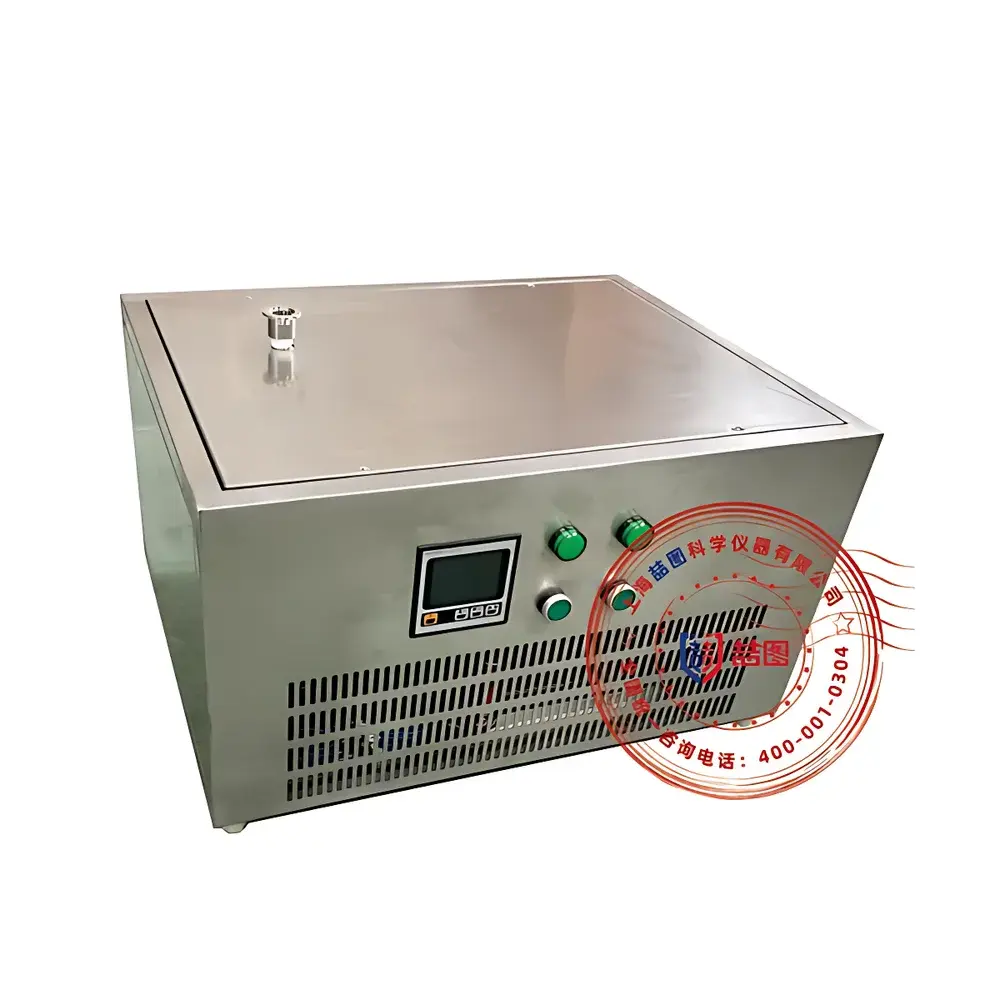
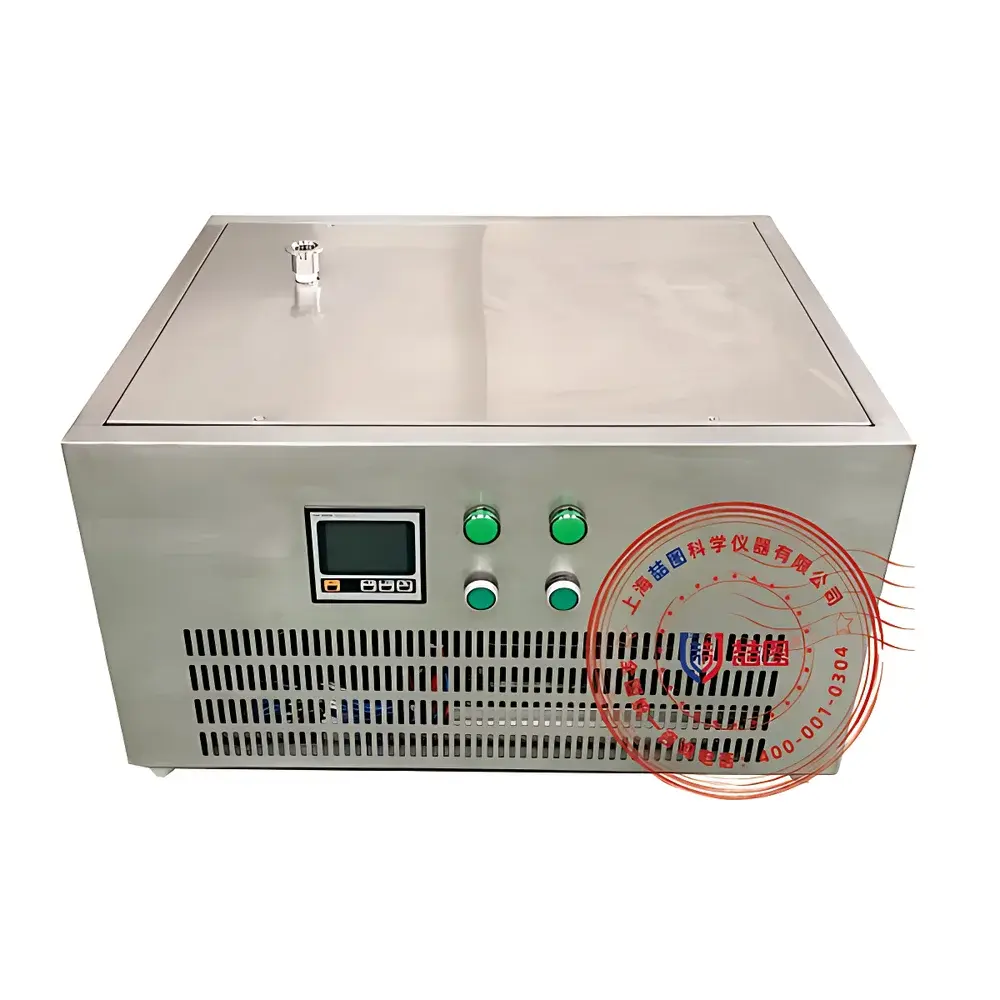
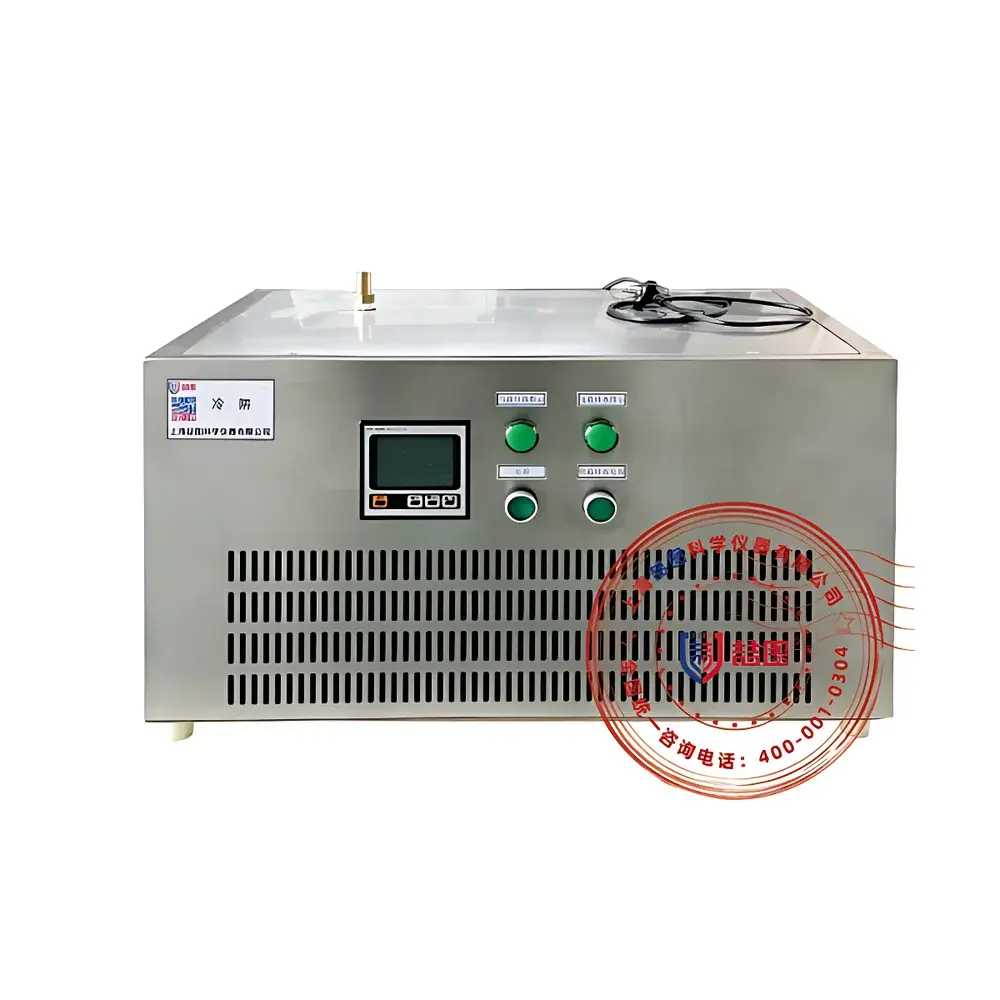
DRETOP EW40-7.8 Cryogenic Cold Trap
| Brand | DRETOP |
|---|---|
| Origin | Shanghai, China |
| Model | EW40-7.8 |
| Cooling Capacity | −40 °C (no-load) |
| Condensate Capacity | 7.8 L |
| Chamber Material | 304 Stainless Steel |
| Inlet Fitting | Bayonet (Bung-type) |
| Outlet Fitting | KF25 |
| Power Supply | 220 V, 50 Hz |
| Defrost Temperature | 80 °C |
| Dimensions (W×D×H) | 650×555×620 mm |
| Display | LCD Digital Temperature Indicator |
| Integrated Drain Valve | Yes |
| Secondary Filtration | Yes |
Overview
The DRETOP EW40-7.8 Cryogenic Cold Trap is a precision-engineered vacuum protection device designed for integration between vacuum chambers (e.g., freeze dryers, rotary evaporators, vacuum ovens) and primary vacuum pumps. It operates on the principle of cryocondensation: by maintaining a low-temperature surface (−40 °C no-load), it thermodynamically condenses vapors—primarily water, but also volatile organic compounds (VOCs), acids, and other condensable species—before they reach the vacuum pump. This prevents oil contamination in oil-sealed rotary vane pumps, avoids vapor-induced backstreaming, mitigates corrosion in dry scroll or diaphragm pumps, and significantly improves ultimate system vacuum (<10−2 mbar achievable in optimized configurations). Unlike passive traps relying on liquid nitrogen, the EW40-7.8 employs a sealed, high-efficiency compressor-based refrigeration system, ensuring stable, repeatable, and operator-safe operation without cryogen handling or refilling.
Key Features
- Stable −40 °C Operating Temperature: Achieved via dual-stage compression refrigeration with PID-controlled thermal management—enabling reliable capture of solvents with boiling points up to ~120 °C (e.g., ethanol, acetone, methanol, ethyl acetate, acetic acid).
- 304 Stainless Steel Condensation Chamber: Electropolished interior surface ensures chemical compatibility with aqueous, alcoholic, and mildly acidic vapors; optional 316L stainless steel or PTFE-coated variants available for aggressive halogenated or corrosive gas applications (e.g., HCl, HF in plasma etch exhaust).
- Integrated LCD Temperature Monitor: Real-time display of cold finger surface temperature with ±0.5 °C accuracy—critical for process validation and synchronization with vacuum ramp protocols.
- Modular Footprint & Installation Flexibility: Compact form factor (650 × 555 × 620 mm) supports benchtop, floor-standing, or fume hood installation; inlet/outlet orientation accommodates vertical or horizontal vacuum line routing.
- Engineered Drainage & Maintenance Workflow: Front-access drain valve with PTFE-sealed ball mechanism enables rapid, drip-free condensate removal; smooth-walled chamber geometry minimizes residue retention and simplifies cleaning per GLP-compliant SOPs.
- Dual-Stage Filtration Architecture: Primary cryocondensation surface supplemented by a secondary particulate/mist filter (stainless mesh + sintered metal) upstream of the outlet—reducing aerosol carryover into downstream vacuum lines.
Sample Compatibility & Compliance
The EW40-7.8 is validated for continuous-duty operation with condensable vapors generated across academic, pharmaceutical, and industrial vacuum processes. It complies with IEC 61000-6-3 (EMC emissions) and IEC 61000-6-2 (immunity). Its construction adheres to ISO 9001 manufacturing standards, and material certifications (EN 10204 3.1) are available upon request. For regulated environments, the unit supports audit-ready documentation: temperature logging (via optional RS485/Modbus interface), maintenance records (filter replacement, defrost cycles), and calibration traceability to NIST-traceable references. While not intrinsically rated for Class I Div 1 hazardous locations, its spark-free compressor design and grounded chassis meet general laboratory safety requirements per UL 61010-1 and GB 4793.1.
Software & Data Management
Standard configuration includes local analog temperature monitoring only. Optional digital upgrade kits provide Modbus RTU (RS485) output for integration into LabVIEW, SCADA, or LIMS platforms. Temperature data can be logged at user-defined intervals (1–60 s) and synchronized with vacuum gauge readings for full process correlation. The system supports alarm thresholds (e.g., >−35 °C sustained for >5 min triggers visual/audible alert), aiding in preventive maintenance scheduling. All firmware updates are delivered via secure USB interface; no cloud connectivity or remote access is implemented—ensuring data sovereignty and alignment with FDA 21 CFR Part 11 Annex 11 principles for standalone instrumentation.
Applications
- Pharmaceutical Freeze Drying: Captures sublimed water vapor from lyophilization chambers, preventing oil degradation in backing pumps and reducing cycle time variability caused by pump performance drift.
- Organic Solvent Recovery (Rotary Evaporation): Condenses >95% of ethanol, acetone, or THF vapors—reducing solvent consumption, lowering VOC emissions, and eliminating need for secondary scrubbers in small-scale synthesis labs.
- Thin-Film Deposition (PVD/CVD): Traps unreacted precursors (e.g., TiCl4, Al(CH3)3) and reaction byproducts, extending turbo-molecular pump lifetime and minimizing chamber recontamination between runs.
- Environmental VOC Preconcentration: Coupled with thermal desorption units, enables trapping of ppb-level benzene, toluene, or formaldehyde from air samples prior to GC-MS analysis—improving detection limits and chromatographic resolution.
- Plasma Processing Exhaust Treatment: Condenses corrosive effluents (e.g., Cl2, SiF4) generated during semiconductor etching, protecting downstream dry pumps and reducing hazardous waste disposal volume.
FAQ
What is the maximum recommended vapor load for continuous operation?
For sustained −40 °C performance, the EW40-7.8 is rated for ≤150 g/h total condensable mass flow under typical lab conditions (25 °C ambient, 50% RH). Higher loads require intermittent duty cycling or larger-capacity models (e.g., EW40-20).
Can this cold trap be used with oil-free vacuum pumps?
Yes. It is especially beneficial for scroll, diaphragm, and turbomolecular pumps, which lack internal oil reservoirs and are highly sensitive to condensable ingress—preventing stiction, bearing wear, and pressure instability.
Is defrosting automated or manual?
Defrost is semi-automated: pressing the dedicated front-panel button initiates heating to 80 °C for 15 minutes, after which the system returns to standby. No disassembly or external tools are required.
Does the unit include vacuum hose fittings and clamps?
Standard delivery includes one bayonet inlet adapter and one KF25 flange with copper gasket and clamp. Additional adapters (KF16, ISO-KF40, NPT) are available as accessories.
How often should the secondary filter be replaced?
Under normal use with non-corrosive solvents, inspect every 200 operational hours; replace if discoloration or visible particulate loading occurs. In halogenated or acidic vapor service, replace every 50 hours or after each batch.



