
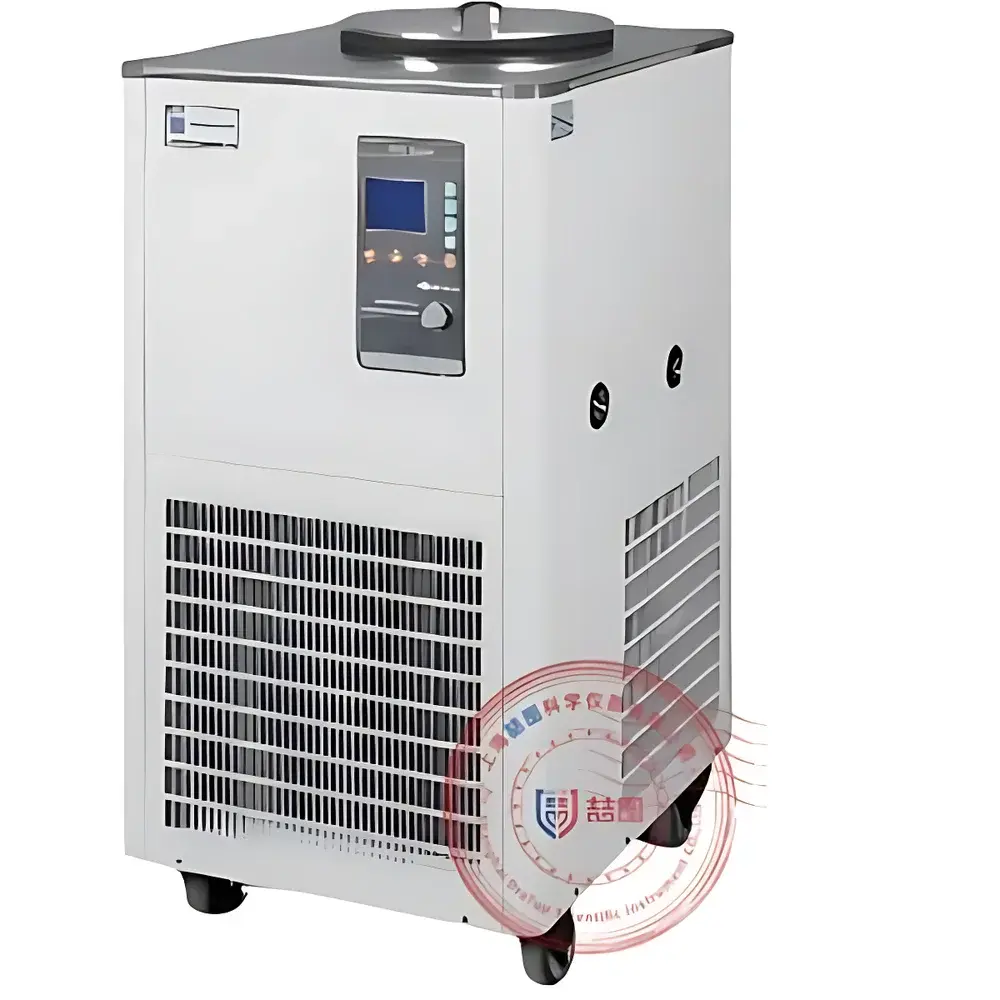
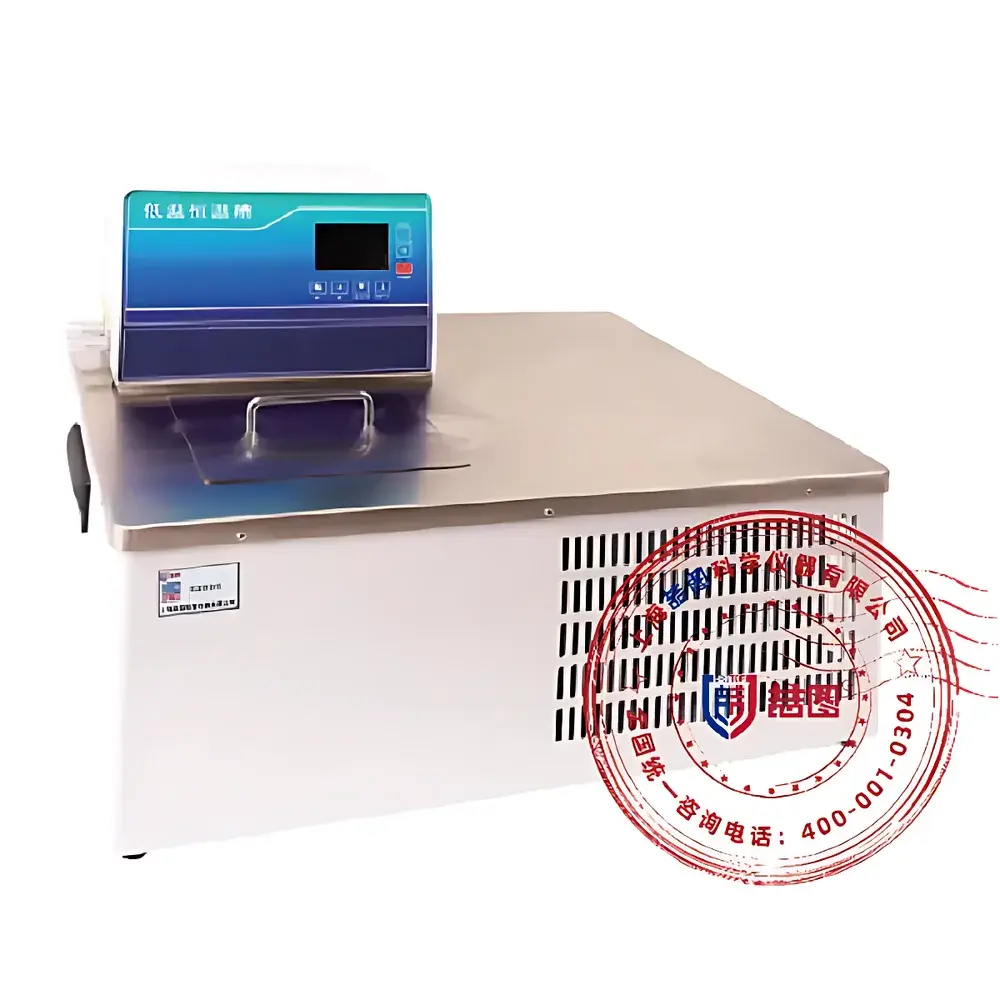
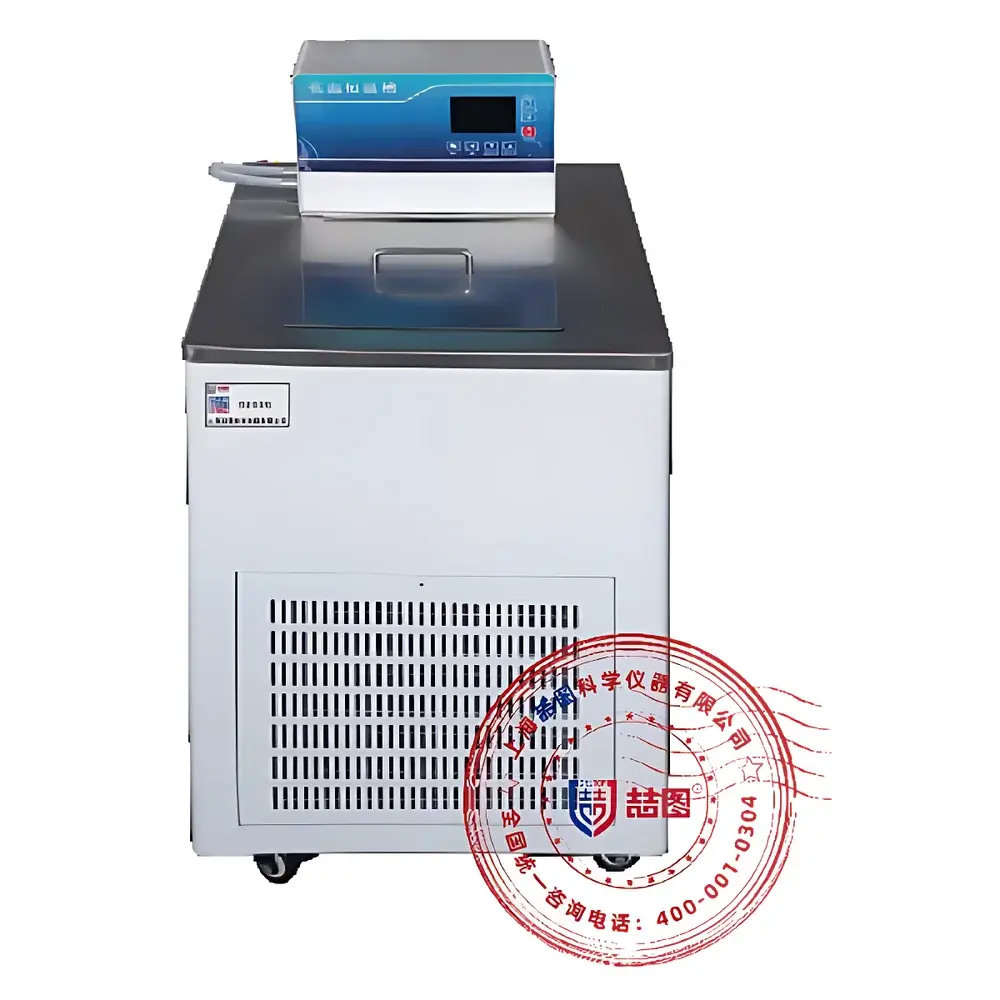
DRETOP FRC-20-60 Low-Temperature Constant-Temperature Bath
| Brand | DRETOP |
|---|---|
| Origin | Shanghai, China |
| Manufacturer Type | Direct Manufacturer |
| Instrument Type | Circulating Constant-Temperature Bath |
| Circulation Mode | Internal & External Circulation |
| Temperature Control | Refrigeration & Heating Dual-Mode |
| Bath Volume | 20 L |
| Temperature Range | −60 °C to +100 °C |
| Temperature Stability | ±0.1 °C |
| Temperature Resolution | 0.1 °C |
| Power Supply | 220 V AC, 50 Hz |
| Pump Flow Rate | 20 L/min |
| Maximum Head | 6 m |
| Refrigeration Capacity at −60 °C | 4120 W |
| Heating Power | Consult Technical Support |
Overview
The DRETOP FRC-20-60 Low-Temperature Constant-Temperature Bath is an engineered circulating thermal management system designed for precise temperature control in laboratory-scale chemical synthesis, material characterization, and analytical instrumentation cooling applications. It operates on a closed-loop refrigeration-heating principle, integrating a high-efficiency hermetic compressor, PID-controlled heating elements, and a dual-stage cascade refrigeration architecture capable of achieving stable operation down to −60 °C. Unlike basic water baths, the FRC-20-60 delivers active temperature uniformity through forced convection—enabled by a built-in magnetic stirrer and an external circulation pump—ensuring minimal thermal gradients (<0.1 °C spatial deviation) across the entire 20 L working volume. Its design supports both immersion-based thermal conditioning (e.g., reaction vessels, sensor calibration blocks) and external heat exchange via inlet/outlet ports compatible with standard 1/2″ NPT or G1/2 fittings. The unit complies with IEC 61010-1:2010 safety standards for laboratory electrical equipment and meets electromagnetic compatibility requirements per EN 61326-1.
Key Features
- Wide operational temperature range from −60 °C to +100 °C, enabled by environmentally compliant R-404A/R-23 dual-refrigerant cascade system
- Integrated magnetic stirring mechanism with variable speed control (0–1200 rpm), ensuring homogeneous thermal distribution within the bath medium
- Dual-mode circulation: internal recirculation for bath uniformity; external loop (20 L/min, 6 m head) for remote temperature control of reactors, spectrometers, or power supplies
- Precision temperature regulation using Pt100 Class A sensor and 0.1 °C resolution digital PID controller with auto-tuning capability
- Stainless steel 304 bath tank with insulated lid and overflow protection; corrosion-resistant fluid path compatible with aqueous glycol, ethanol, and low-viscosity silicone oils
- Modular mounting rail and standardized Ø285 mm opening accommodate overhead stirrers, pH electrodes, thermocouples, and reflux condensers without adapter kits
Sample Compatibility & Compliance
The FRC-20-60 accommodates a broad spectrum of experimental configurations: glass jacketed reactors (1–5 L), electrophoresis tanks, cryo-microscopy light sources, vacuum pump cold traps, and medical thermal therapy devices. Its fluid compatibility extends to 15% glycerol/water (up to 100 °C), ≥99.8% anhydrous ethanol (−60 °C to 78 °C), and 30–50% ethylene glycol/water mixtures (−110 °C to 80 °C), all validated per ASTM D1121 and ISO 2592 flash point safety protocols. For regulated environments, the unit supports audit-ready operation: temperature setpoints, real-time bath readings, and alarm logs are timestamped and exportable via RS485 interface, aligning with GLP documentation requirements and FDA 21 CFR Part 11 data integrity principles when paired with compliant software.
Software & Data Management
While the front-panel interface provides standalone operation, optional RS485 communication enables integration with LabVIEW™, MATLAB®, or custom SCADA systems. The native Modbus RTU protocol allows remote setpoint adjustment, real-time temperature streaming (1 Hz update rate), and event-triggered data capture (e.g., deviation >0.2 °C for >30 s). All logged parameters—including compressor duty cycle, pump status, and sensor resistance values—are stored in non-volatile memory for post-experiment forensic analysis. Optional PC software provides trend visualization, CSV export, and configurable alarm notifications (email/SNMP), supporting ISO/IEC 17025-compliant calibration record generation.
Applications
- Controlled-temperature catalysis studies in jacketed glass reactors under inert atmosphere
- Cooling of electron microscope power supplies and X-ray source housings to suppress thermal drift
- Thermal stabilization of viscometers, polarimeters, and UV-Vis spectrophotometer cuvette holders
- Low-temperature electrochemical cell testing (e.g., Li-ion battery electrolyte conductivity vs. T)
- Calibration of platinum resistance thermometers (PRTs) and thermistor probes per ISO/IEC 17025 Clause 6.5
- Active cooling of industrial laser diodes, RF amplifiers, and high-power LED arrays during reliability testing
FAQ
What coolant fluids are recommended for operation at −60 °C?
Ethanol (≥99.8%) or 40% ethylene glycol/water mixture is validated for continuous use at −60 °C; avoid methanol due to vapor pressure and toxicity concerns.
Can the unit maintain temperature stability during external load fluctuations?
Yes—the adaptive PID algorithm dynamically adjusts refrigeration output and heater duty cycle in response to thermal load changes, sustaining ±0.1 °C stability even with 500 W step-load variations.
Is external pump circulation mandatory for all applications?
No—internal magnetic stirring suffices for static bath applications; external circulation is required only when transferring thermal energy to remote devices or large-volume reactors.
Does the system support validation documentation for GxP labs?
Yes—factory-installed temperature mapping reports, IQ/OQ templates, and traceable calibration certificates (NIST-traceable Pt100) are available upon request.
What maintenance intervals are recommended for long-term reliability?
Compressor oil and refrigerant levels should be verified annually; condenser coil cleaning every 6 months in dusty environments; stir bar and seal inspection every 2000 operating hours.



