
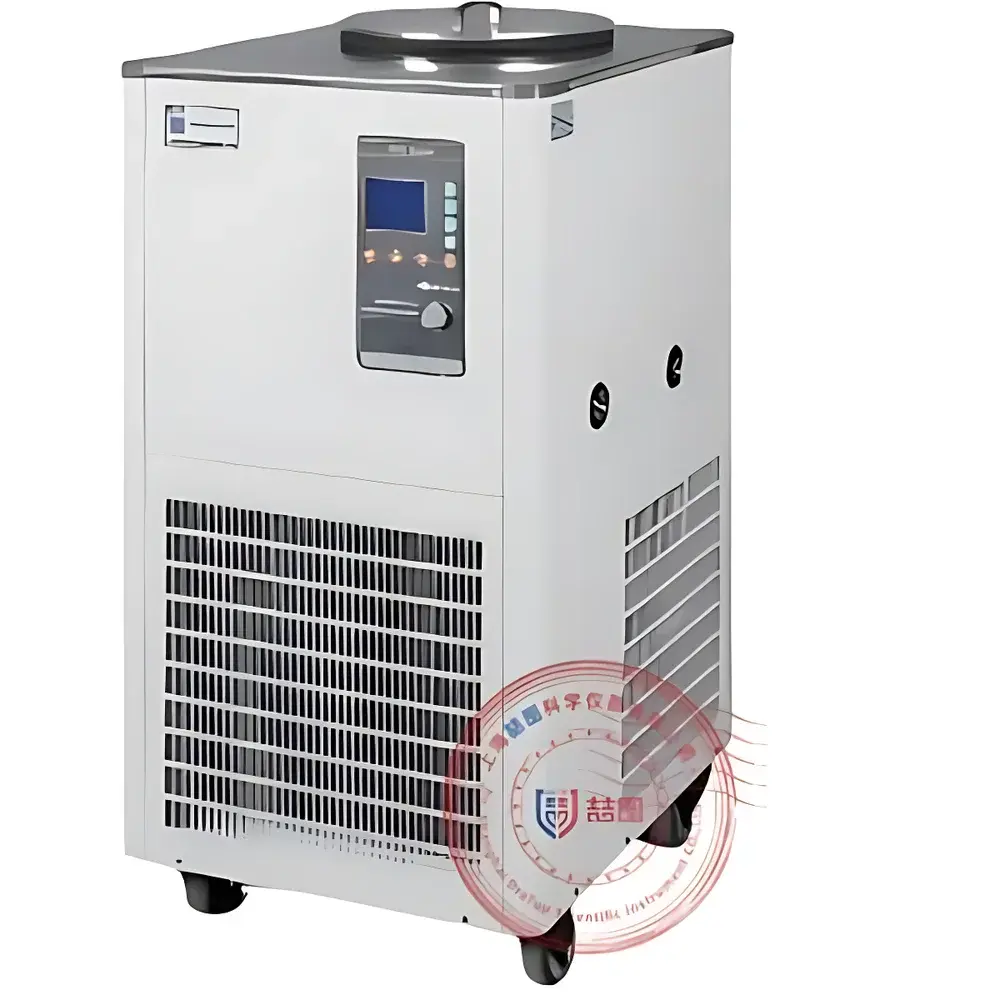
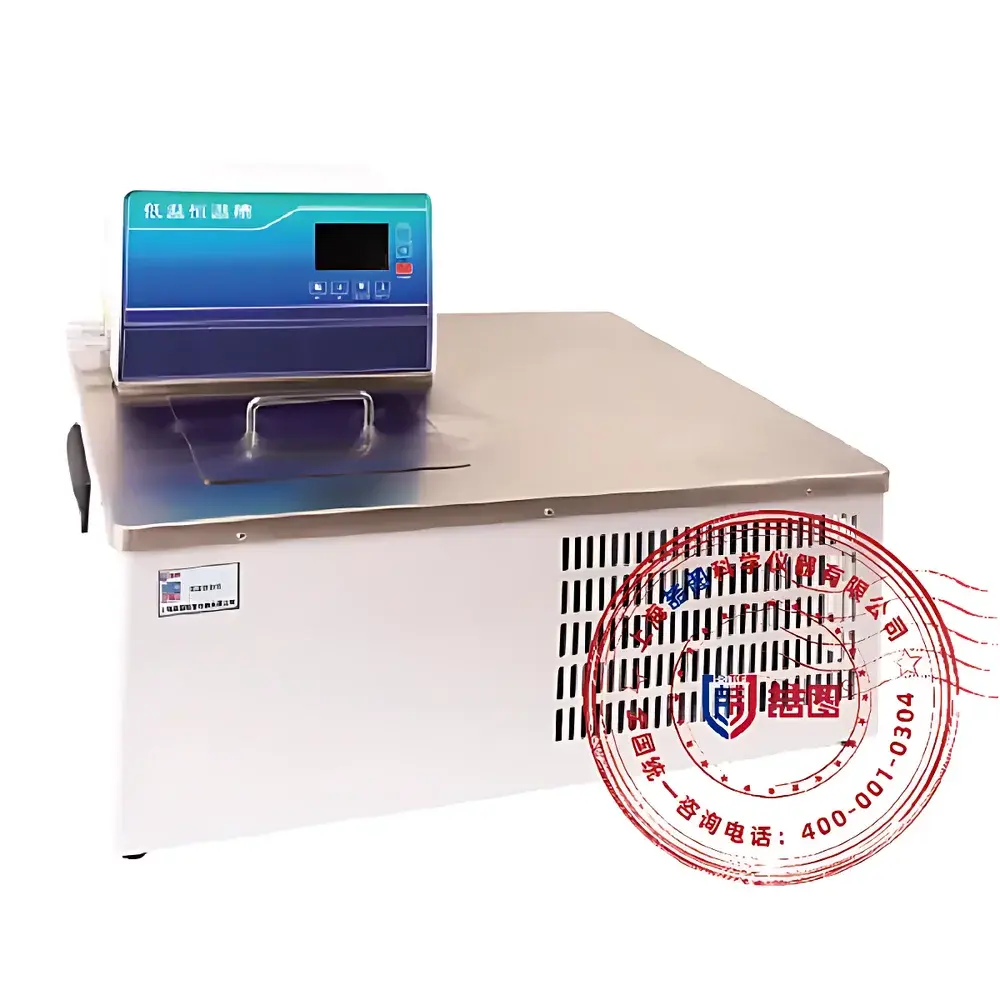
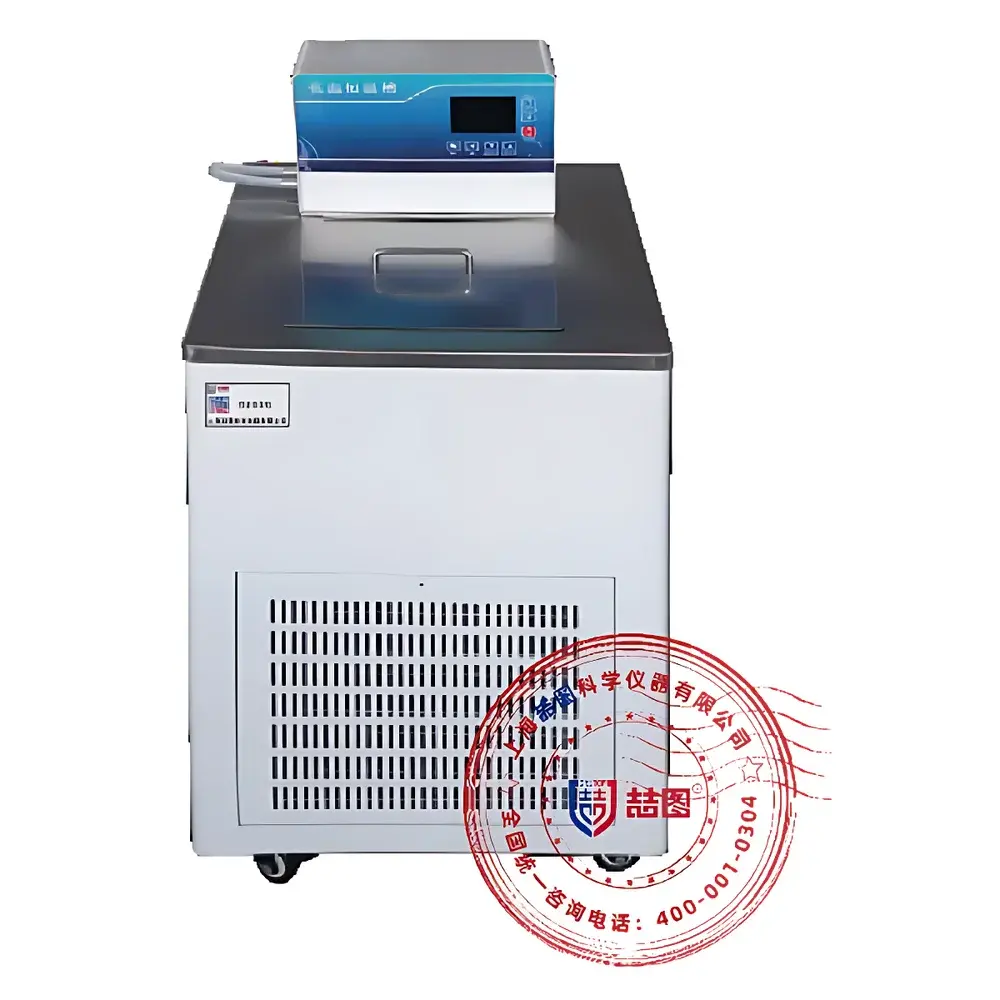
DRETOP FRC-40-40 Low-Temperature Constant-Temperature Bath
| Brand | DRETOP |
|---|---|
| Origin | Shanghai, China |
| Manufacturer Type | Direct Manufacturer |
| Product Category | Domestic |
| Model | FRC-40-40 |
| Instrument Type | Constant-Temperature Bath |
| Circulation Mode | Internal & External Circulation |
| Temperature Control | Refrigeration & Heating |
| Bath Volume | 40 L |
| Temperature Range | −40 °C to 100 °C |
| Temperature Stability | ±0.1 °C |
| Temperature Resolution | 0.1 °C |
| Power Supply | 380 V AC, 50 Hz |
| Pump Flow Rate | 45 L/min |
| Maximum Head | 6–8 m |
| Opening Diameter | Ø360 mm |
Overview
The DRETOP FRC-40-40 Low-Temperature Constant-Temperature Bath is a precision-engineered thermal management system designed for laboratory-scale reaction control, sample conditioning, and equipment cooling applications requiring stable, wide-range temperature regulation. Operating on a closed-loop refrigeration-heating cycle with integrated circulation pump, the unit maintains thermal equilibrium through forced convection of heat-transfer fluid—enabling precise, uniform temperature distribution across external vessels or internal bath media. Its dual-mode thermoregulation architecture combines high-efficiency compressors with PID-controlled electric heating elements, delivering consistent thermal output across its full operational span from −40 °C to +100 °C. The system is engineered for continuous duty in research laboratories, QC environments, and pilot-scale synthesis workflows where reproducible thermal conditions are critical to experimental integrity.
Key Features
- 40-liter stainless steel bath chamber with corrosion-resistant interior and insulated lid for minimized thermal loss
- Integrated magnetic stirrer base enabling uniform mixing of bath medium; stirring speed continuously adjustable via front-panel interface
- High-accuracy Pt100 temperature sensor paired with industrial-grade PID controller for ±0.1 °C stability and 0.1 °C resolution
- Dual-circulation capability: internal recirculation for bath homogeneity; external porting (with quick-connect fittings) for connection to reactors, condensers, or analytical instruments
- Robust mechanical design includes reinforced structural frame, vibration-dampened compressor mount, and over-temperature/low-flow safety interlocks
- Standard mounting rod assembly (Ø12 mm, height-adjustable) compatible with overhead stirrers, pH electrodes, temperature probes, and burettes
- Optional secondary motorized stirrer kit available for synchronized agitation of both bath medium and reaction vessel contents
Sample Compatibility & Compliance
The FRC-40-40 accommodates a broad spectrum of heat-transfer media—including deionized water (5–80 °C), 15% glycerol/water mixture (80–100 °C), and ethylene glycol/water or anhydrous ethanol solutions (−40 to 5 °C)—ensuring compatibility with cryogenic, ambient, and elevated-temperature protocols. All wetted components comply with ISO 8502-3 for metallic corrosion resistance and meet CE marking requirements for electromagnetic compatibility (EMC Directive 2014/30/EU) and low-voltage safety (LVD Directive 2014/35/EU). The unit supports GLP-compliant operation when used with validated calibration procedures and audit-trail-capable external data loggers. While not inherently 21 CFR Part 11 compliant, its analog/digital I/O ports allow integration with validated SCADA or LIMS platforms supporting electronic record integrity.
Software & Data Management
The FRC-40-40 operates via an intuitive local HMI with real-time display of setpoint, actual bath temperature, stirring speed, and system status indicators. RS485 Modbus RTU interface enables bidirectional communication with lab automation systems for remote parameter setting, temperature logging, and alarm notification. Optional USB data logger (sold separately) records timestamped temperature and flow data at user-defined intervals (1 s to 60 min), exporting CSV files compatible with Excel, MATLAB, and LabVIEW. Firmware supports firmware-upgradable PID tuning profiles optimized for specific media viscosities and thermal loads, facilitating method transfer across instrument fleets.
Applications
- Temperature control of glass-jacketed reactors (e.g., 1–5 L single- or double-neck flasks) during exothermic/endothermic syntheses
- Cooling of electrophoresis power supplies, viscometers, cryo-microtomes, and medical therapeutic devices (e.g., hypothermia blankets)
- Thermal stabilization of electron microscope components including filament power supplies, LED illumination modules, and detector housings
- Process cooling of industrial equipment such as etching station motors, vacuum pump casings (diffusion, ion, molecular), and RF generators
- Material testing under controlled thermal stress per ASTM D696 (Coefficient of Linear Thermal Expansion) and ISO 11359 (Dynamic Mechanical Analysis prep)
- Biological sample preservation during enzymatic assays, cell culture incubation pre-conditioning, and chromatographic column equilibration
FAQ
What types of heat-transfer fluids are recommended for operation at −40 °C?
Ethanol or ethylene glycol/water mixtures (typically 30–50% v/v glycol) are suitable; avoid aqueous solutions below 0 °C without antifreeze additives.
Is external circulation pressure sufficient to drive fluid through a 2-meter vertical riser?
Yes—the pump delivers up to 8 m head, accommodating typical reactor jacket loops with standard PTFE or silicone tubing (ID ≥ 8 mm).
Can the unit maintain temperature stability during rapid external heat load changes?
With its 4510 W refrigeration capacity and 1320 W heating output, the FRC-40-40 achieves recovery times < 5 minutes after ±10 °C step-load perturbations under nominal bath fill conditions.
Does the magnetic stirrer operate independently of temperature control?
Yes—stirring speed is adjustable regardless of active heating or cooling mode, and remains functional across the full −40 to 100 °C range.
What calibration documentation is provided with shipment?
Each unit ships with factory calibration certificate traceable to NIM (National Institute of Metrology, China), verifying temperature accuracy at three points (−40 °C, 25 °C, 100 °C) using certified reference thermometers.



