
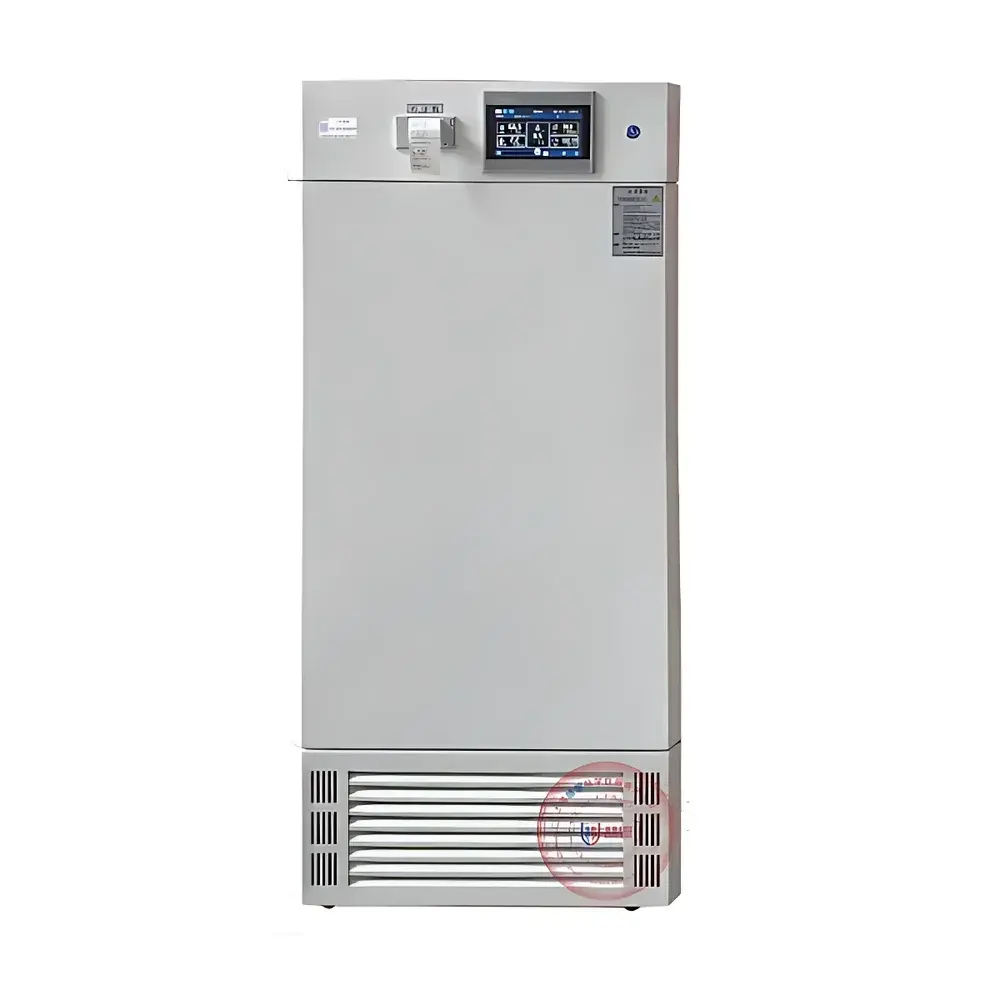
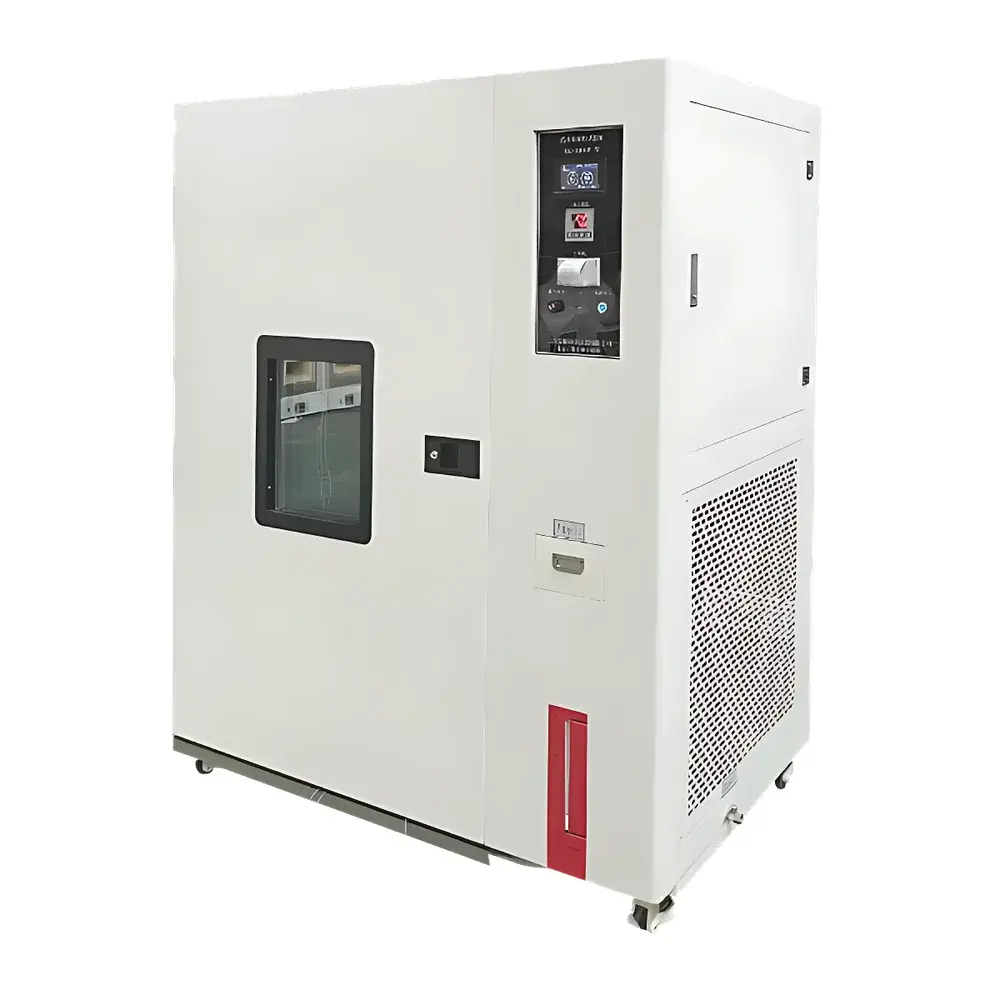
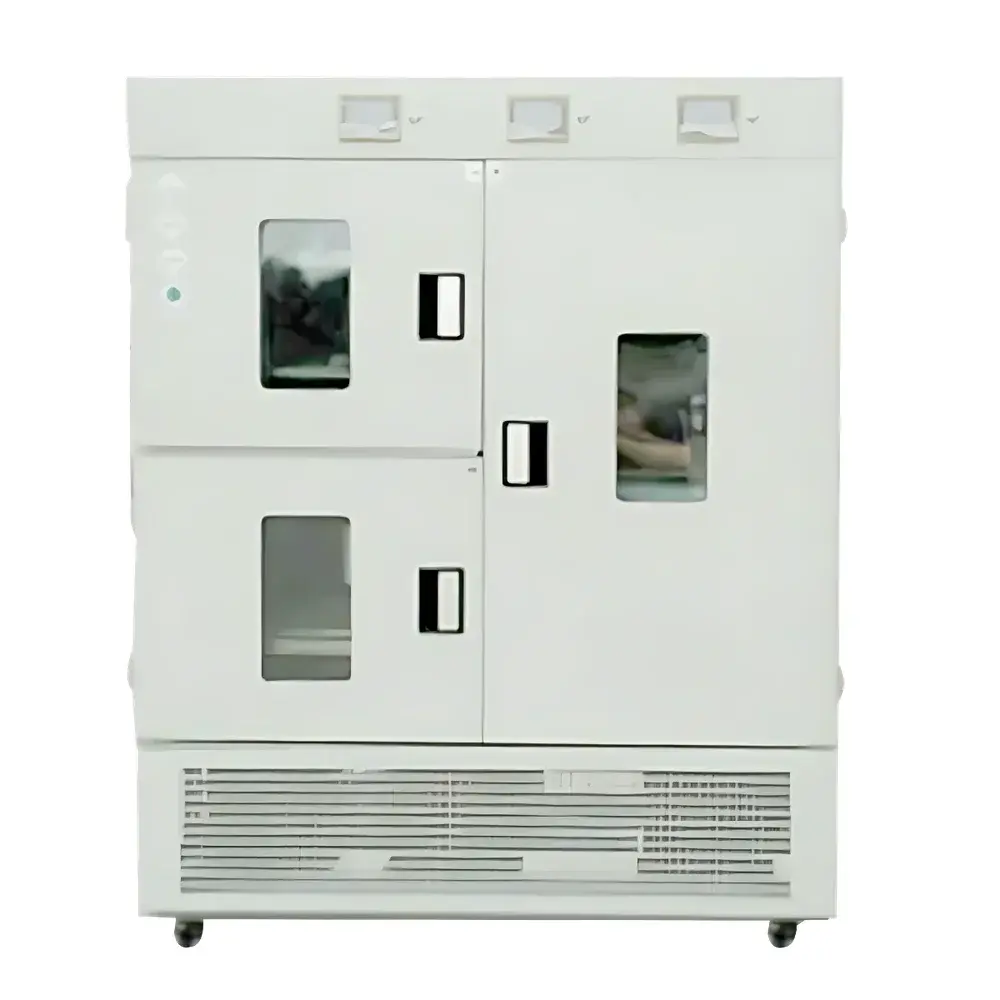
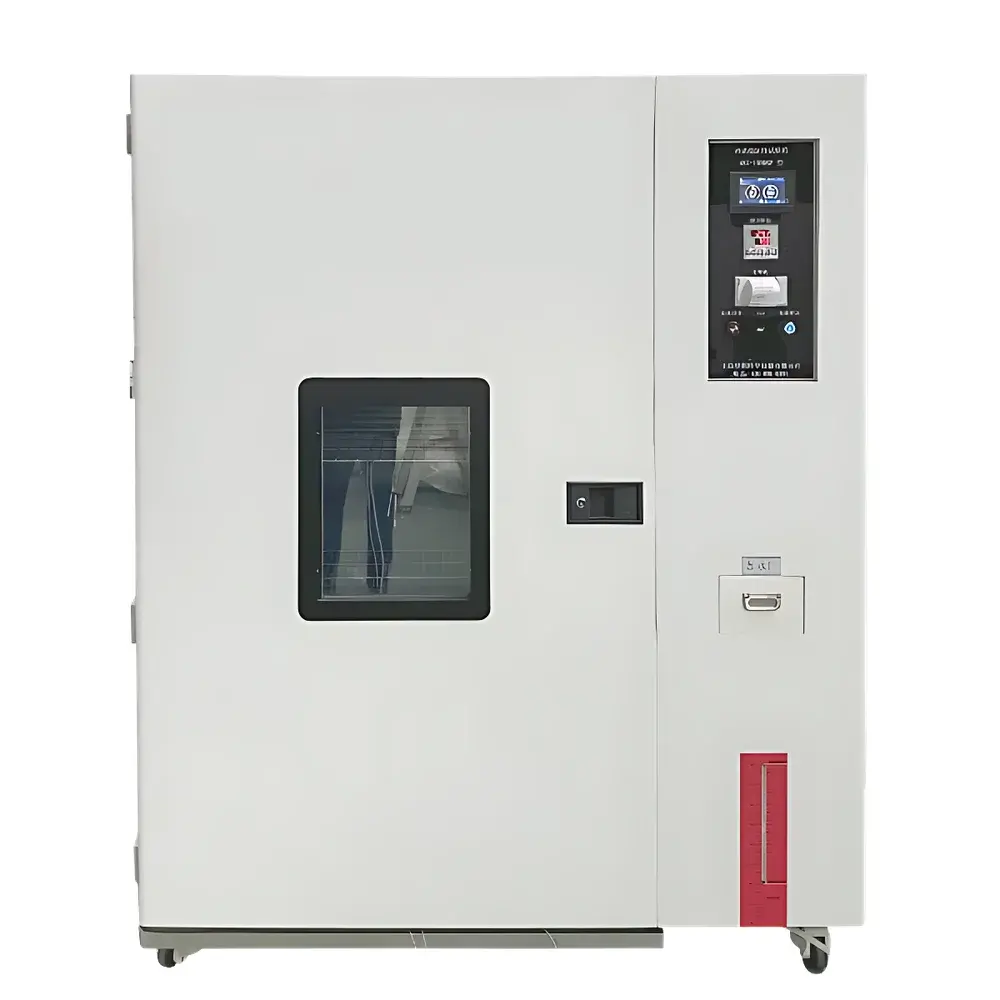
DRETOP GMC-250 Pharmaceutical Stability Testing Chamber
| Brand | DRETOP |
|---|---|
| Origin | Shanghai, China |
| Model | GMC-250 |
| Capacity | 250 L |
| Illuminance Range | 10–10,000 lx |
| Illuminance Accuracy | ±50 lx |
| UV Irradiance | 80–100 µW/cm² |
| Temperature Control Range | +5°C to +65°C |
| Humidity Control Range | 20–95% RH |
| Temperature Uniformity | ±0.5°C (at 25°C) |
| Humidity Uniformity | ±3% RH (at 60% RH) |
| Programmable Steps | 100 segments per program × 999 programs |
| Display | 7-inch color touchscreen (Chinese/English) |
| Compliance | ICH Q1, USP <1150>, EP 2.2.41, GB/T 10586–2006, GMP Annex 15 (3Q), FDA 21 CFR Part 11 (audit trail enabled) |
| Cooling System | Dual hermetic eco-friendly compressors (redundant operation) |
| Data Logging | Internal storage + USB export (CSV/Excel), timestamped, electronic signature capable |
| Communication | RS485 (Modbus RTU), optional 4G/WiFi cloud platform |
Overview
The DRETOP GMC-250 Pharmaceutical Stability Testing Chamber is an engineered environmental simulation system designed for compliance-driven stability assessment of active pharmaceutical ingredients (APIs), finished dosage forms, and biologics under regulated climatic conditions. It operates on the fundamental principle of controlled acceleration—applying defined combinations of temperature, relative humidity, and photometric stress to provoke and quantify degradation kinetics in accordance with ICH Q1 series guidelines (Q1A–Q1E). The chamber supports long-term storage studies (e.g., 25°C ± 2°C / 60% RH ± 5% RH for 12 months), accelerated testing (40°C ± 2°C / 75% RH ± 5% RH for 6 months), intermediate condition evaluation, and photostability protocols per ICH Q5C and Q1B—including both visible light (4500 ± 500 lx) and near-UV exposure. Its dual-compressor architecture, independent humidity control loop, and multi-spectral LED illumination system enable simultaneous, orthogonal stress application while maintaining metrological traceability and operational continuity over extended test durations.
Key Features
- 7-inch capacitive color touchscreen interface with bilingual (English/Chinese) GUI, real-time graphical display of temperature/humidity/lighting profiles, and intuitive program navigation.
- Three-tier user access control (Operator / Administrator / Engineer) with role-based permissions, password protection, and full audit trail logging compliant with FDA 21 CFR Part 11 and EU Annex 11 requirements.
- PID auto-tuning algorithm with slope control, cycle repetition, and unattended autonomous execution—supporting up to 999 stored programs (100 segments each), each configurable with time, setpoint, ramp rate, hold duration, and lighting intensity.
- Dual hermetic refrigeration system with intelligent load-balancing logic: compressors alternate operation to minimize thermal fatigue, reduce condensate accumulation, and ensure uninterrupted runtime—even during single-unit maintenance or failure.
- Independent humidity regulation via dedicated PID-controlled humidifier/dehumidifier module, decoupled from thermal management to improve energy efficiency and long-term stability.
- Triple-layer vertically mounted LED light array with independent white-light (10–10,000 lx, ±50 lx accuracy) and UV-A (80–100 µW/cm²) channel control—calibrated per ICH Q1B irradiance mapping standards.
- GMP-ready data integrity framework: internal non-volatile memory (≥100,000 records), USB export to CSV/Excel with timestamps, electronic signatures, and event-tagged alarm logs (over-temperature, door open, sensor fault, etc.).
Sample Compatibility & Compliance
The GMC-250 accommodates a broad range of sample formats including vials, blister packs, syringes, ampoules, and stability-indicating reference standards—supported by adjustable 304 stainless steel shelves (load capacity ≤30 kg per shelf) and IP54-rated sealing integrity. Its chamber geometry ensures uniform air distribution (±0.5°C temperature deviation, ±3% RH deviation at nominal setpoints) validated per ISO 14644-1 Class 8 cleanroom airflow principles. All materials contacting the test environment—inner liner, gaskets, and shelf surfaces—meet USP Class VI biocompatibility and GMP cleaning validation criteria. The system conforms to ICH Q5C photostability testing requirements, GB/T 10586–2006 environmental test equipment specifications, and supports IQ/OQ/PQ execution using the included GMP 3Q Validation Kit. CNAS-accredited calibration certificates (traceable to NIM) are available for temperature (0°C, 60°C, 121°C) and humidity (15°C/40% RH, 20°C/60% RH, etc.) across operational ranges.
Software & Data Management
Embedded firmware implements ALCOA+ data governance principles: Attributable (user ID + timestamp), Legible (plain-text export), Contemporaneous (real-time logging), Original (uneditable raw records), Accurate (sensor-level resolution), Complete (full parameter capture), Consistent (chronological sequence), Enduring (non-volatile flash + USB backup), and Available (searchable archive). The system generates PDF-formatted deviation reports, trend analysis charts, and audit-ready documentation—including batch-specific stability summaries and out-of-specification (OOS) event logs. Optional RS485 Modbus RTU integration enables seamless synchronization with LIMS, MES, or SCADA platforms. Remote cloud connectivity (via 4G/WiFi) supports live monitoring, parameter adjustment, firmware updates, and diagnostic telemetry—fully compatible with mobile applications and web-based dashboards.
Applications
- ICH-compliant long-term, accelerated, and intermediate stability studies for regulatory submissions (FDA IND/NDA, EMA MAA, PMDA filing).
- Photostability screening of light-sensitive compounds (e.g., tetracyclines, nitrofurantoin, monoclonal antibodies) per ICH Q1B Option 1 and Option 2 protocols.
- Excipient compatibility testing and formulation robustness assessment under high-humidity (95% RH) or thermal stress (65°C) conditions.
- Stability-indicating method development support—providing degraded reference materials for HPLC/UPLC assay validation.
- GMP manufacturing environment qualification (chamber mapping per ISO 14644-3), including temperature/humidity uniformity and recovery testing.
- Biologics and vaccine stability monitoring under WHO-prequalified storage conditions (e.g., 2–8°C with humidity control).
FAQ
Does the GMC-250 meet FDA 21 CFR Part 11 requirements for electronic records and signatures?
Yes—the system provides role-based authentication, immutable audit trails, electronic signatures with timestamping, and secure data export functionality fully aligned with Part 11 Subpart B controls.
Can the chamber perform ICH Q1B Option 2 photostability testing with simultaneous UV and visible light exposure?
Yes—its tri-layer LED array allows independent control of white-light (4500 ± 500 lx) and UV-A (80–100 µW/cm²) channels, enabling concurrent irradiation per Option 2 spectral distribution requirements.
Is the dual-compressor configuration mandatory for GMP-regulated stability studies?
While not mandated by regulation, redundancy is strongly recommended for studies exceeding 30 days’ duration—particularly for high-value biologics—where unplanned downtime risks data gaps and retest delays.
What validation documentation is included with the system?
The standard package includes IQ/OQ/PQ templates, sensor calibration certificates (optional CNAS-accredited), and a GMP 3Q Execution Guide; full validation support services are available upon request.
How is data integrity ensured during power interruption?
The unit features battery-backed real-time clock, non-volatile memory retention, and automatic program resumption post-power recovery—preserving all logged parameters and active segment state without manual intervention.





