
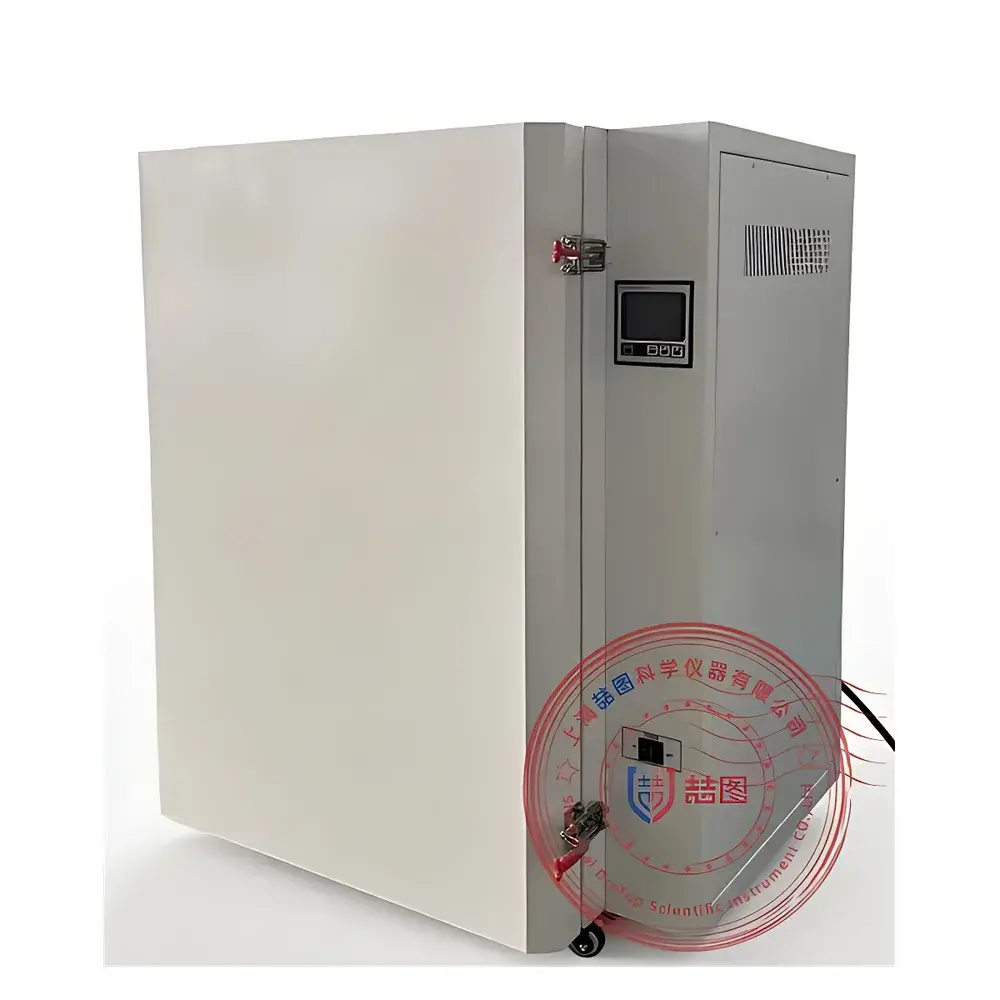
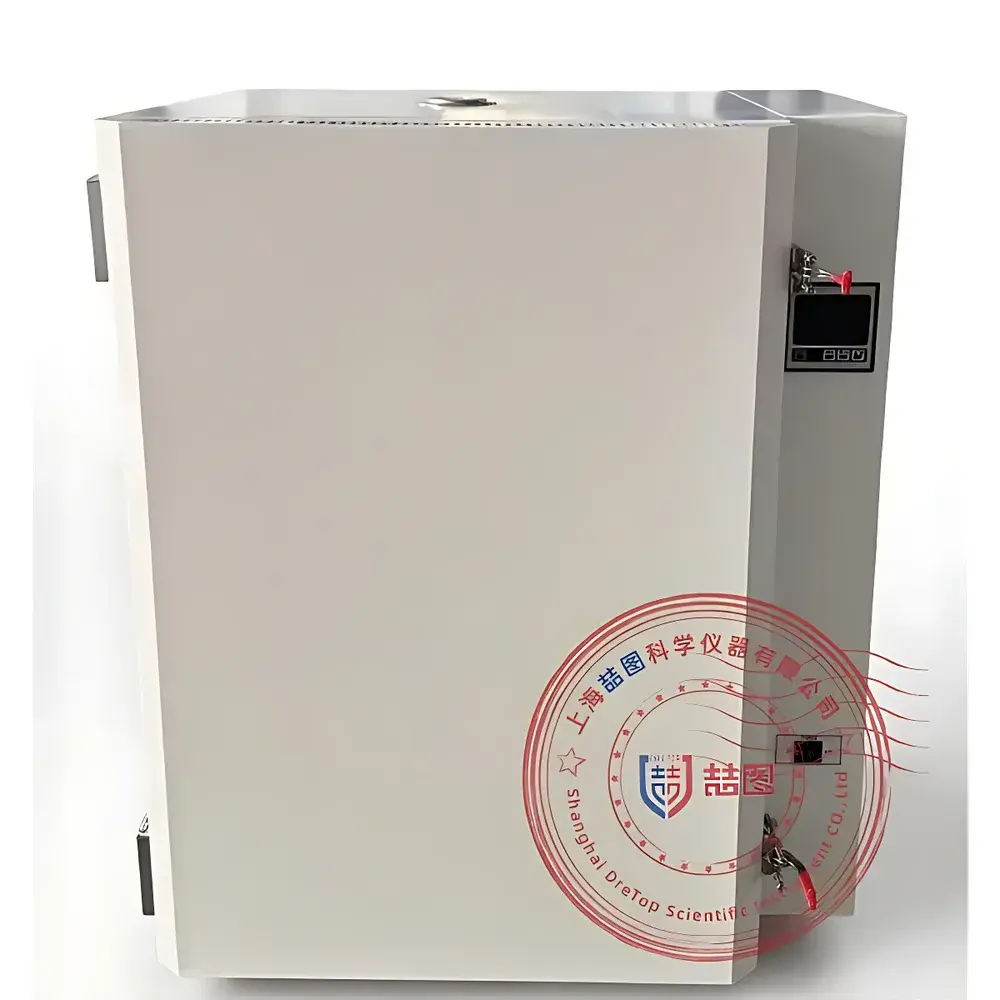
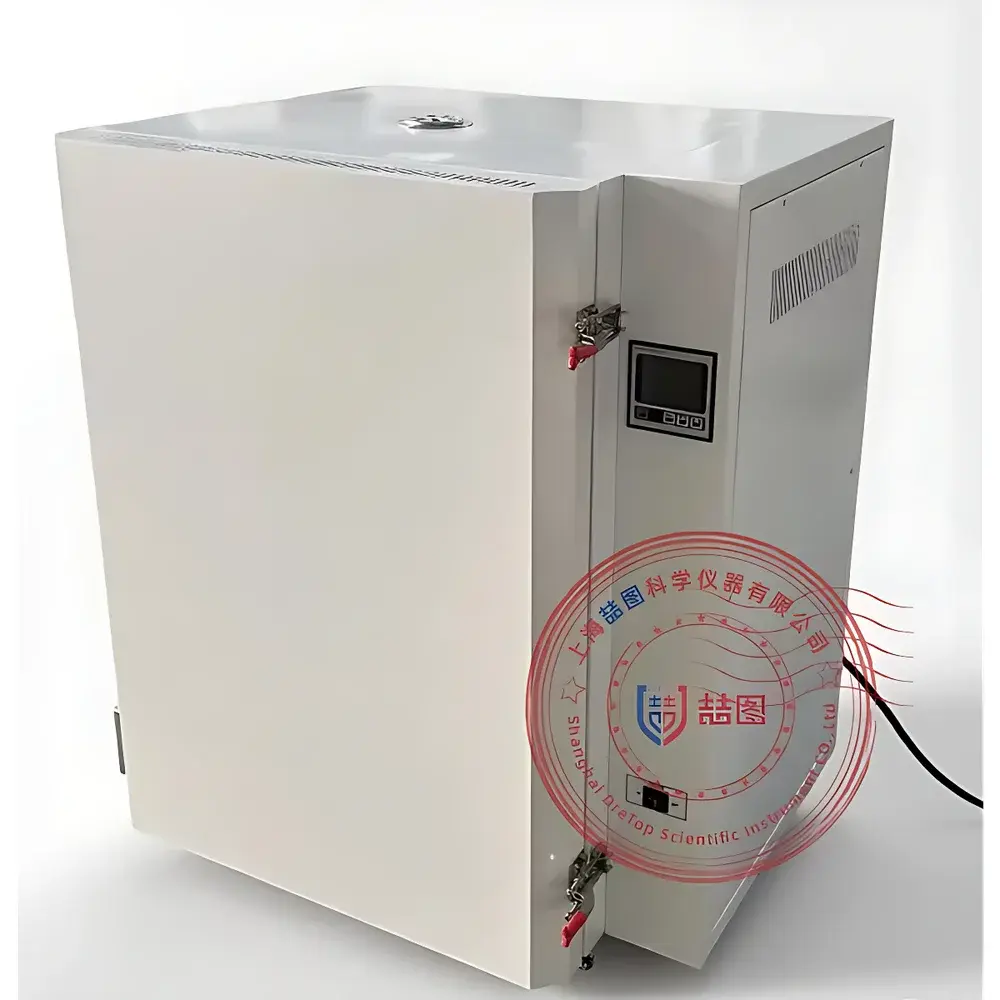
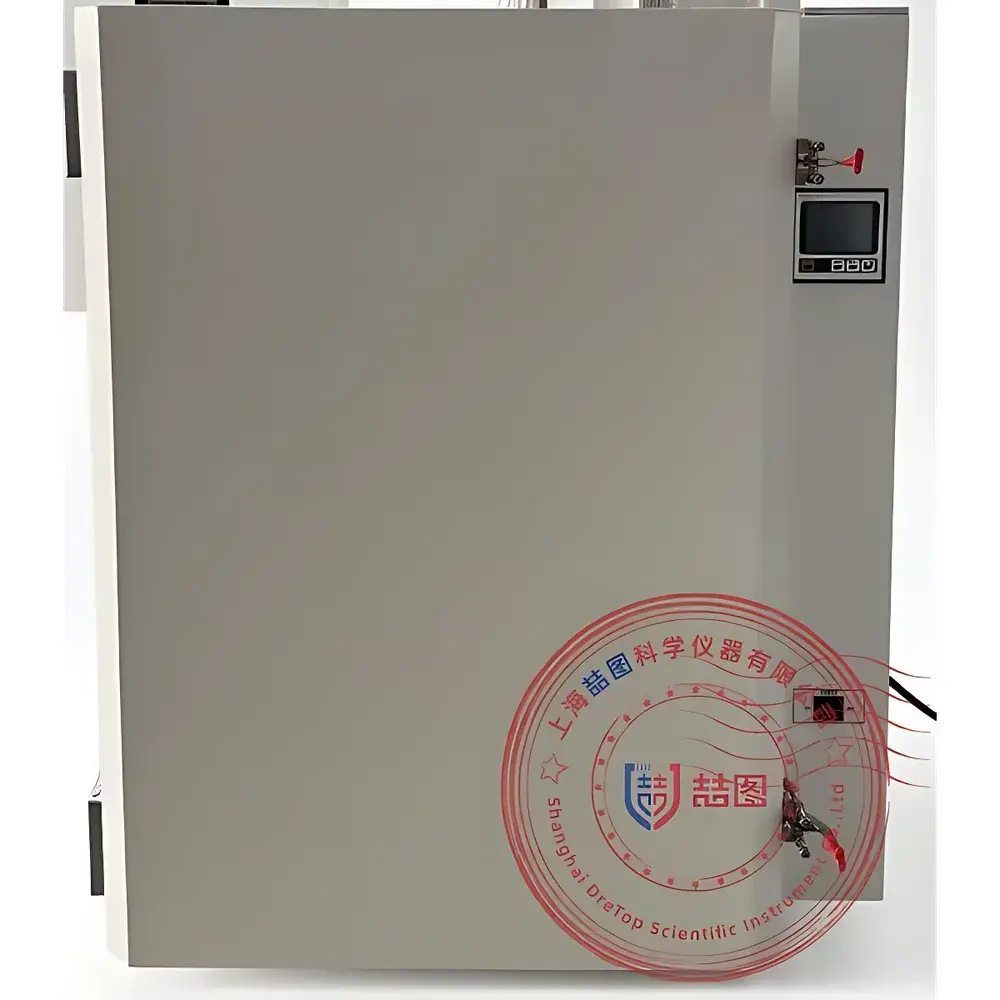
DRETOP MTC5-96 High-Temperature Forced-Air Drying Oven
| Brand | DRETOP |
|---|---|
| Origin | Shanghai, China |
| Model | MTC5-96 |
| Instrument Type | High-Temperature Drying Oven |
| Temperature Range | 200–400 °C |
| Temperature Uniformity | ±1 °C |
| Temperature Fluctuation | ±1 °C |
| Control Range | RT + 20 to 500 °C |
| Temperature Resolution | 0.1 °C |
| Chamber Dimensions (W×D×H) | 400 × 400 × 550 mm |
| External Dimensions (W×D×H) | 770 × 580 × 800 mm |
| Inner Chamber Material | Brushed Stainless Steel (SUS304) |
| Heating Method | Forced Convection with Dual-Air-Channel System |
| Working Ambient Temperature | RT + 5 to 45 °C |
| Insulation | Fiberglass Wool |
| Power Supply | AC 220 V, 50 Hz |
| Rated Power | 3400 W |
| Net Volume | 96 L |
| Safety Features | Overtemperature Protection, Leakage Current Protection, Short-Circuit Protection, Overload Protection, Data Retention After Power Failure |
Overview
The DRETOP MTC5-96 is a precision-engineered high-temperature forced-air drying oven designed for rigorous thermal processing applications in coal science, materials research, and industrial quality control laboratories. It operates on the principle of uniform convective heat transfer via a dual-channel, high-efficiency air circulation system—driven by a low-noise, high-torque centrifugal blower motor and multi-blade impeller—ensuring rapid thermal equilibration and minimal spatial temperature gradients across the 96 L working chamber. Unlike natural convection ovens, the MTC5-96 employs active airflow management to eliminate cold spots and support reproducible thermal treatment of heterogeneous particulate samples—including coal granules, mineral powders, ceramic precursors, and polymer composites—under controlled, non-vacuum atmospheric conditions. Its operational envelope spans from ambient +20 °C up to 500 °C, with sustained stability at elevated setpoints critical for ASTM D3172 (moisture determination in coal), ISO 562 (volatile matter testing), and internal QC protocols requiring precise thermal conditioning prior to proximate or ultimate analysis.
Key Features
- Microprocessor-based PID temperature controller with K-type thermocouple feedback, delivering ±1 °C uniformity and ±1 °C fluctuation across the full operating range;
- Large backlit LCD display with tri-color status indicators, real-time parameter visualization, and intuitive menu navigation;
- Dual independent safety systems: primary PID controller with programmable alarm thresholds and optional standalone mechanical overtemperature limiter (available as accessory);
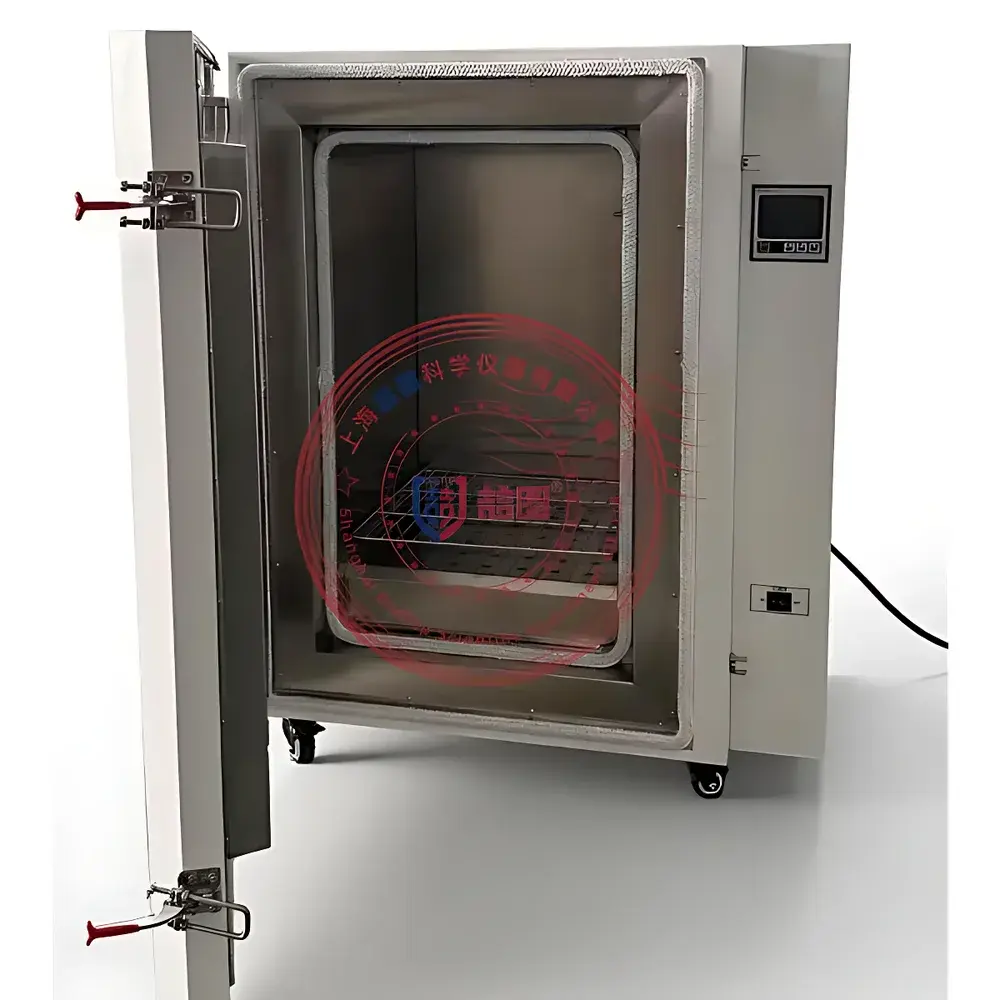
- Brushed stainless steel (SUS304) interior chamber with seamless welds and rounded corners for corrosion resistance and ease of cleaning;
- Electrostatically coated cold-rolled steel exterior with high-density fiberglass insulation, minimizing thermal loss and improving energy efficiency;
- Adjustable, removable stainless steel shelving with drawer-style loading mechanism and customizable vertical spacing;
- High-reliability heating architecture using SSR (Solid-State Relay) or thyristor-based power regulation—eliminating contactor chatter and enabling silent, long-life operation;
- Comprehensive electrical protection suite including ground-fault detection, short-circuit interruption, and thermal cutoff fusing;
- Power-loss recovery function retaining user-defined parameters and timer settings after unexpected shutdown;
- Front-access door with dual-point metal latch and high-temperature silicone gasket (rated to 600 °C) ensuring optimal thermal sealing and longevity.
Sample Compatibility & Compliance
The MTC5-96 accommodates a broad spectrum of solid-phase specimens—from bulk coal pellets and crushed lignite to catalyst supports, battery electrode coatings, and pharmaceutical excipients—without risk of cross-contamination or structural degradation under controlled dry-heat exposure. Its 96 L chamber volume and optimized airflow geometry enable simultaneous processing of multiple standardized sample trays (e.g., ASTM D3173-compliant crucibles or ISO 11722 reference pans). The unit complies with IEC 61010-1:2010 for laboratory electrical equipment safety and meets electromagnetic compatibility requirements per EN 61326-1. While not intrinsically rated for hazardous locations, its design supports integration into GLP/GMP-aligned workflows where traceable temperature validation (e.g., IQ/OQ/PQ documentation), audit-ready calibration records, and deviation logging are required. Optional RS485 communication enables connection to centralized lab monitoring systems compliant with FDA 21 CFR Part 11 when paired with validated software platforms.
Software & Data Management
Standard operation requires no external software—the embedded controller supports up to 9999-minute programmable timing, multi-point temperature alarms, and real-time deviation alerts. For enhanced data integrity and regulatory compliance, optional accessories expand functionality: a USB interface permits direct export of time-stamped temperature logs to FAT32-formatted USB drives; an RS485 port enables Modbus RTU integration with SCADA or LIMS environments; and a color TFT touchscreen module (model G6-96P) introduces multi-segment ramp-soak profiling, graphical trend visualization, and electronic signature-capable user access control. All data outputs adhere to CSV formatting conventions, facilitating post-processing in MATLAB, Python (Pandas), or statistical analysis suites used in method validation studies. Audit trail generation—including operator ID, parameter changes, and alarm events—is supported when configured with firmware version 2.4 or later.
Applications
- Moisture content determination in coal and biomass feedstocks per ASTM D3173 and ISO 589;
- Pre-drying of ash crucibles and silica dishes prior to gravimetric analysis (e.g., ASTM D3174, ISO 1171);
- Thermal stabilization of geological core samples and sedimentary rock powders;
- Heat treatment of catalyst carriers, zeolites, and activated carbon before BET surface area measurement;
- Accelerated aging studies of polymeric insulating materials under controlled oxidative environments;
- Residual solvent removal from formulated coatings and adhesives in R&D settings;
- Conditioning of reference standards and certified reference materials (CRMs) prior to calibration transfers;
- Pre-heating of metal components for interference-fit assembly in metrology labs.
FAQ
What is the maximum continuous operating temperature of the MTC5-96?
The chamber is rated for continuous operation up to 400 °C; however, the control system permits setpoints up to 500 °C for short-duration thermal cycling (≤30 min), provided ambient cooling conditions remain within specification.
Does the MTC5-96 support NIST-traceable calibration?
Yes—external Class A PT100 or K-type reference probes can be inserted via the standard 50 mm test port (optional accessory), enabling field verification against accredited calibration standards.
Can the oven be validated for GxP environments?
When equipped with optional data-logging modules and operated under documented SOPs, the MTC5-96 supports IQ/OQ execution per Annex 15 and satisfies baseline requirements for equipment qualification in pharmaceutical and contract research settings.
Is the interior chamber suitable for acidic or halogenated sample residues?
The SUS304 stainless steel construction resists mild organic acids and chloride-induced pitting under intermittent exposure; for aggressive chemistries (e.g., HF, molten salts), supplemental passivation or quartz-lined inserts are recommended.
What maintenance intervals are specified for the blower assembly?
The sealed bearing motor requires no scheduled lubrication; annual inspection of air filter integrity and impeller balance is advised to sustain airflow performance and thermal uniformity.



