
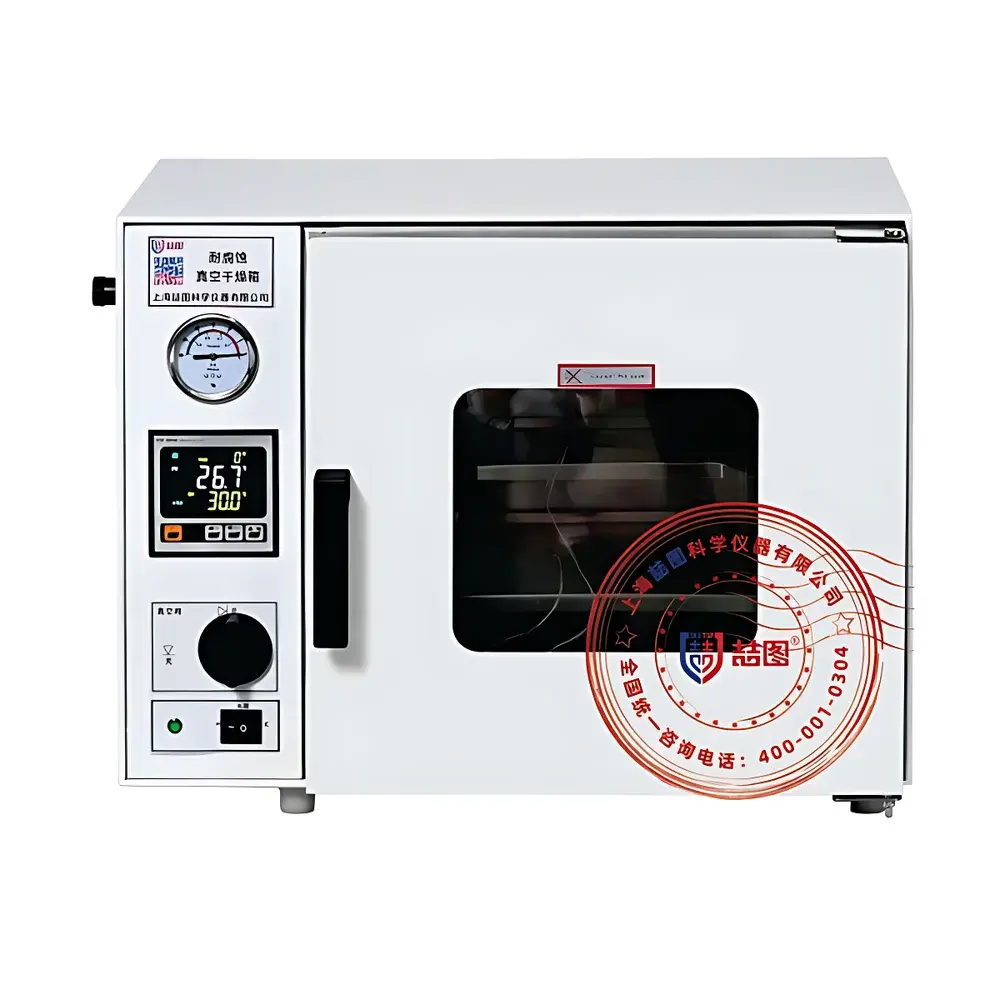
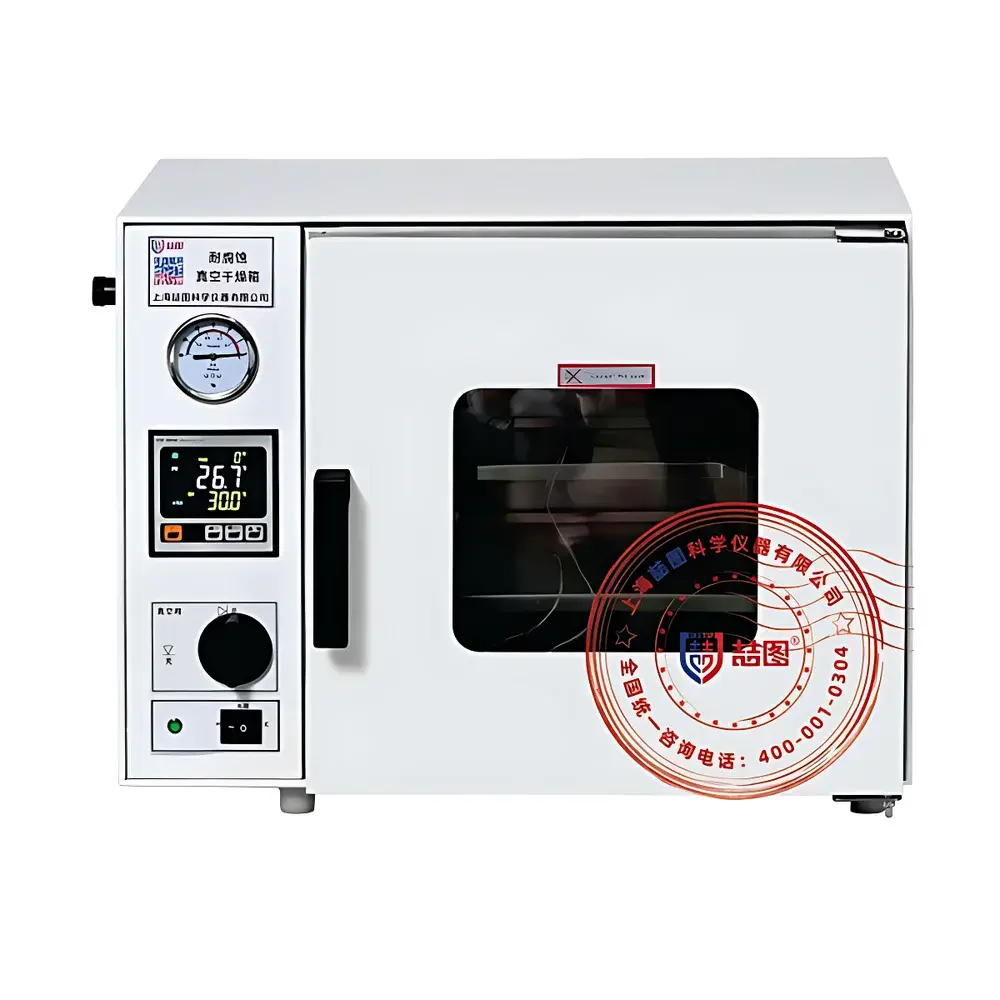
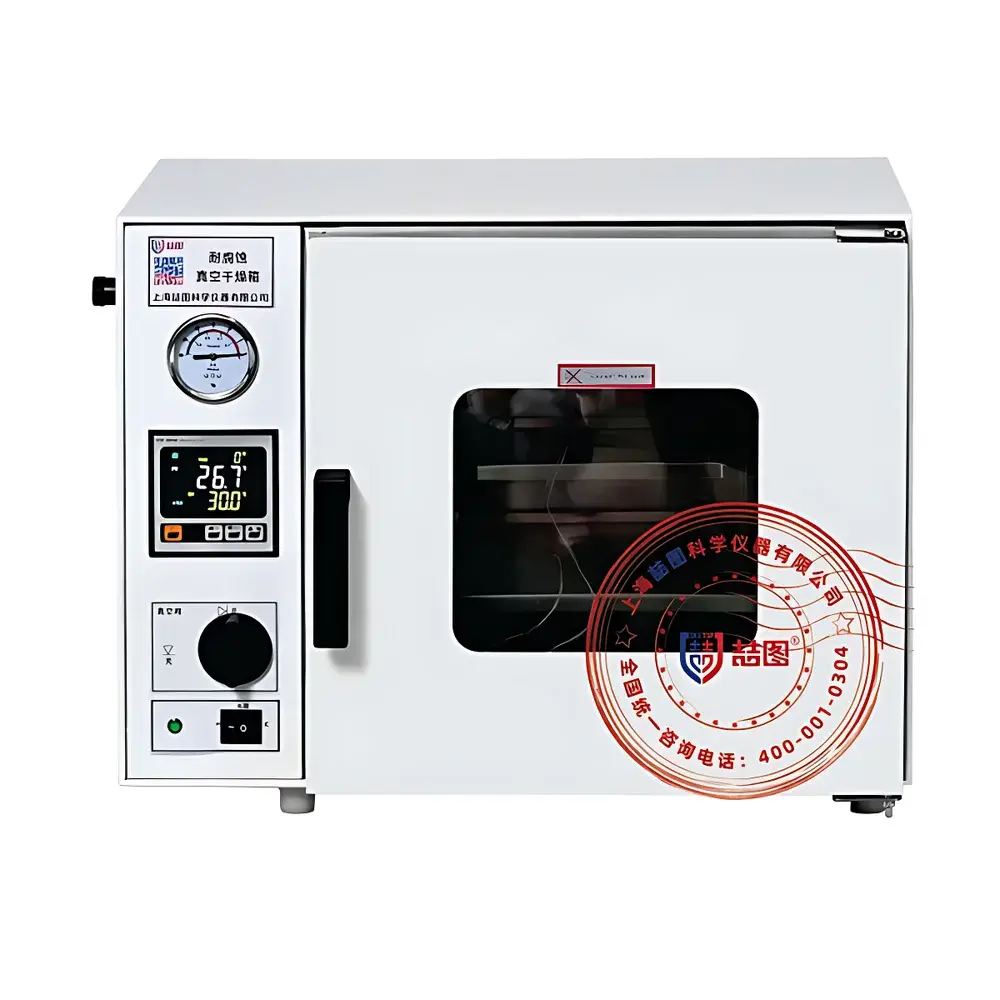
DRETOP PFA-30GC-II Fully Corrosion-Resistant PFA-Coated Vacuum Drying Oven
| Brand | DRETOP |
|---|---|
| Origin | Shanghai, China |
| Manufacturer Type | Direct Manufacturer |
| Instrument Type | Vacuum Drying Oven |
| Model | PFA-30GC-II |
| Temperature Range | RT+10–150 °C |
| Temperature Uniformity | Not specified (consult technical support) |
| Temperature Fluctuation | ±0.5 °C |
| Temperature Resolution | 0.1 °C |
| Vacuum Degree | ≤133 Pa |
| Inner Chamber Dimensions | 320 × 320 × 300 mm (W×D×H) |
| Inner Chamber Material | PFA-coated stainless steel |
| Heating Method | External heating |
| Operating Ambient Temperature | +5–40 °C above ambient |
| Compliance | Designed for GLP/GMP-aligned environments |
Overview
The DRETOP PFA-30GC-II is a fully corrosion-resistant vacuum drying oven engineered for laboratories and production facilities handling highly reactive, moisture-sensitive, or ultra-high-purity materials. Unlike conventional stainless-steel or aluminum-lined ovens, this system employs a high-performance perfluoroalkoxy (PFA) polymer coating applied directly to the inner chamber surface—providing exceptional chemical inertness while preserving dimensional stability under thermal cycling. The PFA layer exhibits near-zero metal ion leaching, making it suitable for applications where trace metallic contamination must be avoided—such as semiconductor wafer processing, nuclear fuel cycle analysis, pharmaceutical active ingredient drying (per ICH Q5C), and analytical reference standard preparation. Operation under deep vacuum (≤133 Pa) eliminates oxygen and residual moisture, enabling low-temperature dehydration of thermolabile compounds without oxidative degradation or hydrolysis. Its external heating architecture ensures uniform thermal distribution across the chamber volume while minimizing localized hot spots that could compromise sample integrity.
Key Features
- PFA-coated inner chamber (320 × 320 × 300 mm) offering superior resistance to concentrated mineral acids (e.g., 98% H₂SO₄, 37% HCl), strong alkalis (e.g., 50% NaOH), halogenated solvents (e.g., chloroform, dichloromethane), and polar organics (e.g., methanol, acetonitrile)
- External heating system with multi-zone thermal compensation, delivering ±0.5 °C temperature fluctuation and 0.1 °C resolution across the full RT+10–150 °C operating range
- Tempered glass observation window integrated into the front door, allowing real-time visual monitoring without vacuum break or thermal disturbance
- Adjustable stainless-steel shelf (1 piece standard) with reinforced support structure, accommodating powders, wafers, foils, or irregularly shaped samples
- Dual-layer safety architecture: over-temperature cut-off, earth leakage protection, and chemically resistant EPDM sealing gasket rated for continuous exposure to acidic/alkaline vapors
- Modular vacuum interface supporting optional integration with corrosion-resistant diaphragm pumps (GF-series) or oil-free dry vacuum systems compliant with ISO 8573-1 Class 0 air purity standards
Sample Compatibility & Compliance
The PFA-30GC-II is validated for use with materials requiring stringent environmental control—including lithium-ion battery cathode precursors, catalyst supports, MOFs, pharmaceutical intermediates, and calibration standards for ICP-MS or GDMS. Its PFA surface meets USP extractables profiling criteria for Class VI polymers and demonstrates compliance with ISO 10993-12 (biological evaluation of medical device extracts). When operated in conjunction with a certified vacuum pump and calibrated pressure transducer, the system satisfies the procedural requirements of ASTM E145 (Standard Specification for Gravity-Convection and Forced-Ventilation Ovens) and ISO 12100 (risk assessment for machinery). For regulated environments, optional audit-trail-enabled controllers support 21 CFR Part 11-compliant electronic records when paired with validated software platforms.
Software & Data Management
The embedded microprocessor controller features a backlit LCD interface with programmable ramp-soak profiles, real-time vacuum and temperature logging (internal memory: 10,000 data points), and USB export capability. Optional Ethernet or RS485 connectivity enables remote monitoring via SCADA-compatible protocols (Modbus RTU/TCP). Data output conforms to CSV and XML schemas aligned with LIMS integration standards (ASTM E1578, ISO/IEC 17025 Annex A.3). All recorded parameters—including chamber pressure, setpoint deviation, and elapsed hold time—are timestamped with NTP-synchronized accuracy and support retrospective validation per FDA guidance on computerized systems.
Applications
- Drying of hygroscopic metal oxides (e.g., Ta₂O₅, Nb₂O₅) without chloride residue formation
- Dehydration of peptide synthesis resins under inert vacuum to prevent racemization
- Post-cleaning bake-out of quartz crystal microbalance (QCM) sensors prior to ultra-high-vacuum deposition
- Stabilization of perovskite thin films for photovoltaic R&D under controlled dew-point conditions
- Removal of residual solvents from API crystallization batches per ICH Q5C thermal stability guidelines
- Pre-conditioning of reference materials for elemental analysis (e.g., NIST SRMs) where sub-ng/g metal contamination thresholds apply
FAQ
What is the maximum allowable vacuum level, and how is it maintained during extended operation?
The chamber achieves and sustains ≤133 Pa using an integrated vacuum sensor feedback loop; long-term stability requires pairing with a corrosion-rated diaphragm pump (e.g., GF-series) and periodic maintenance of the PFA-sealed gasket.
Can the PFA coating withstand repeated thermal cycling between room temperature and 150 °C?
Yes—the PFA layer is bonded using plasma-enhanced surface activation and qualified for ≥5,000 cycles within the specified temperature range without delamination or microcracking.
Is this unit suitable for drying samples containing hydrofluoric acid residues?
No—while PFA resists most strong acids, HF presents unique etching risks even at low concentrations; alternative containment strategies (e.g., quartz liners) are recommended for HF-exposed samples.
Does the system include validation documentation for IQ/OQ/PQ protocols?
Factory-installed calibration certificates (NIST-traceable temperature and pressure sensors) are provided; full qualification packages—including protocol templates and test scripts—are available upon request for GxP-regulated deployments.
How does the external heating design improve temperature uniformity compared to internal heater configurations?
By eliminating heat sources inside the chamber, thermal gradients induced by radiant asymmetry or convection currents are minimized—resulting in improved spatial consistency (<±1.5 °C across load volume) per ASTM E2209 methodology.



