
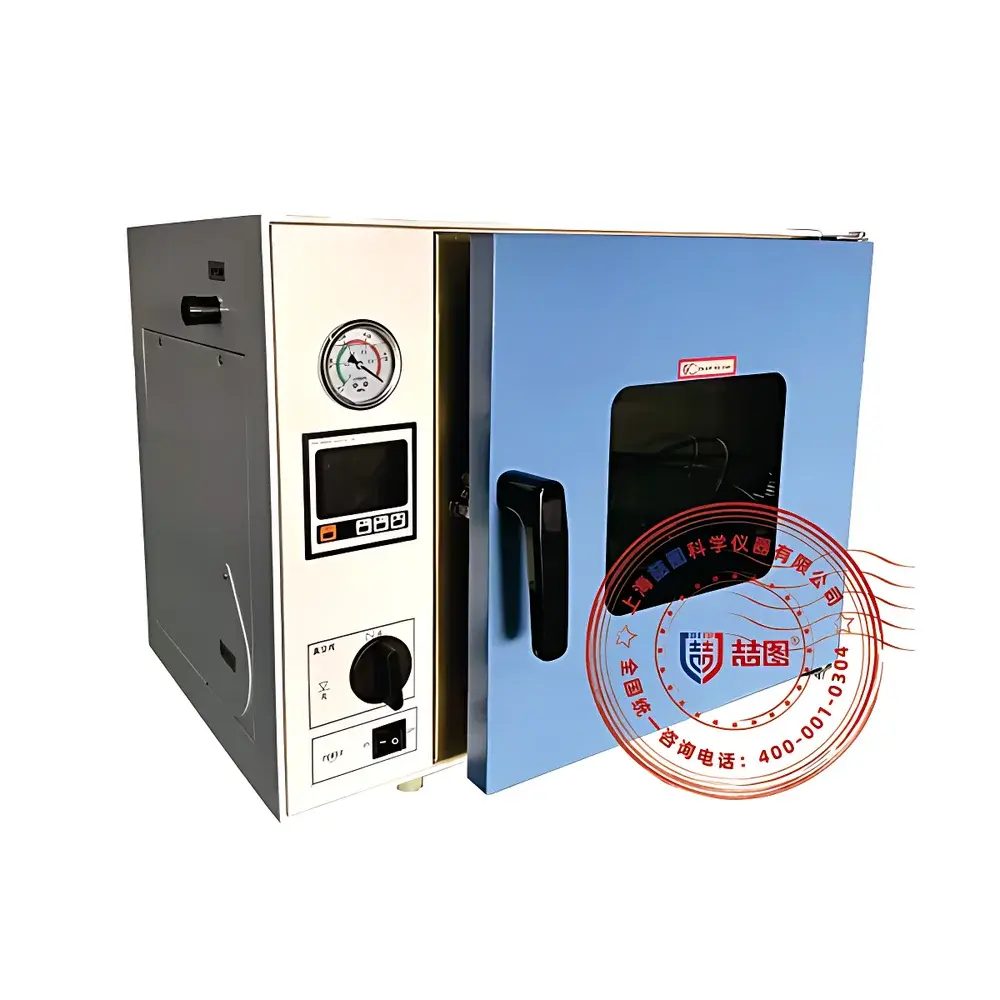
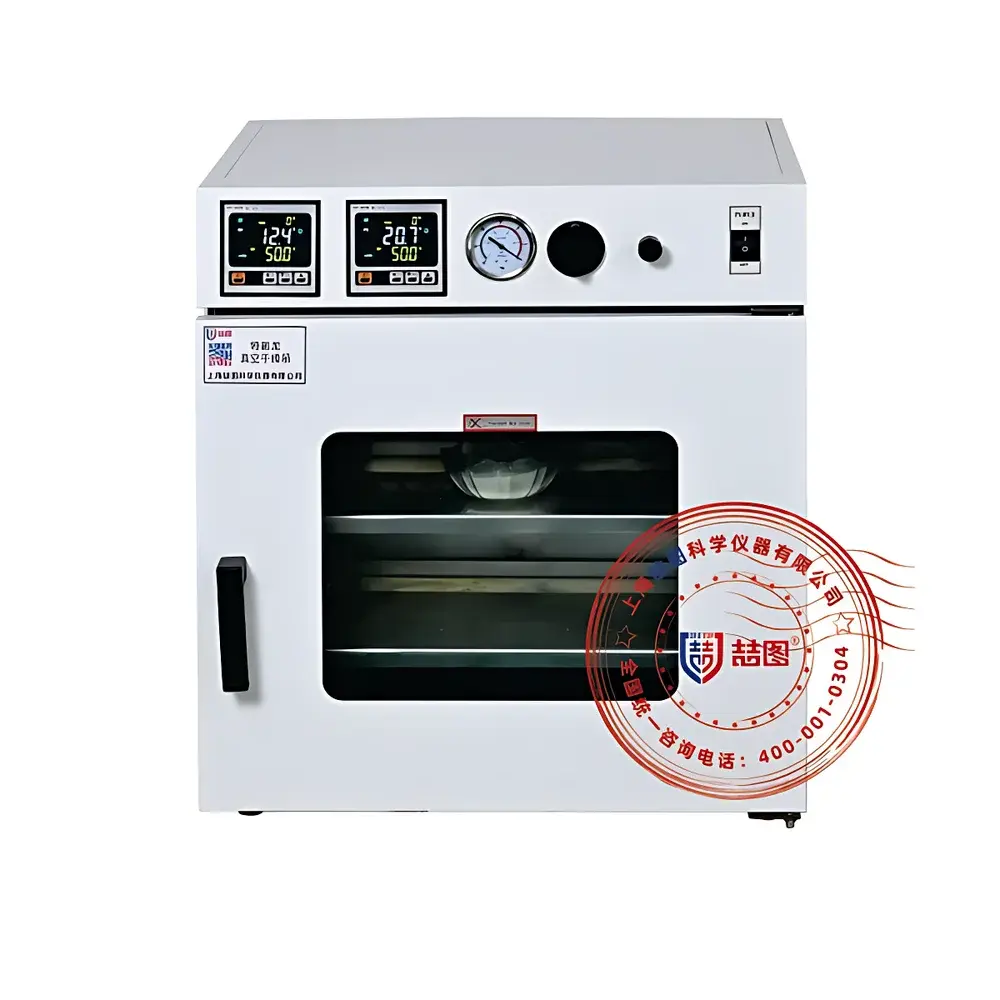
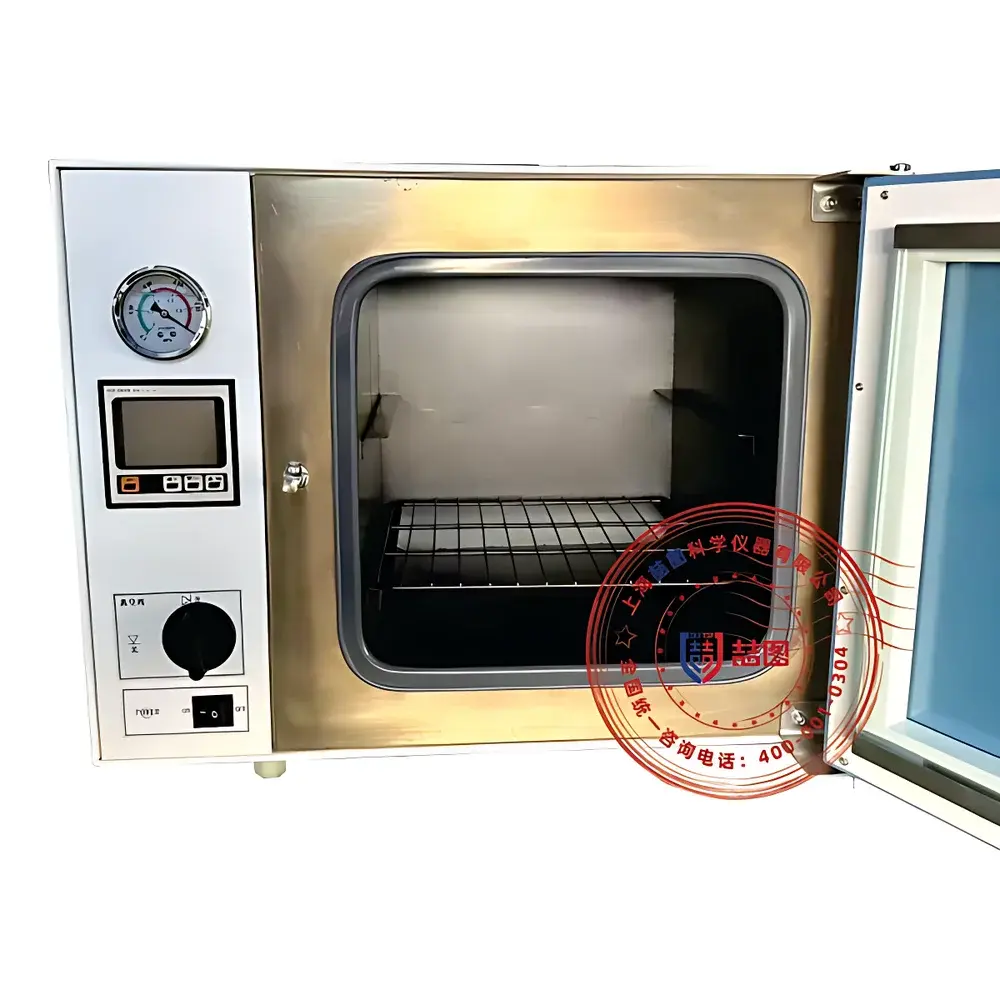
DRETOP PFA-90VC-II Fully Corrosion-Resistant PFA-Coated Vacuum Drying Oven
| Brand | DRETOP |
|---|---|
| Origin | Shanghai, China |
| Manufacturer Type | Direct Manufacturer |
| Product Category | Domestic |
| Model | PFA-90VC-II |
| Instrument Type | Vacuum Oven |
| Temperature Range | RT+10 to 150 °C |
| Temperature Uniformity | ±1 °C |
| Temperature Fluctuation | ±0.5 °C |
| Temperature Resolution | 0.1 °C |
| Vacuum Level | ≤133 Pa |
| Internal Chamber Dimensions | 450 × 450 × 450 mm (W×D×H) |
| Chamber Material | PFA-coated 316L stainless steel |
| Heating Method | Forced-air convection heating |
| Operating Ambient Temperature | 5–40 °C |
| Compliance Options | IQ/OQ/PQ documentation available |
Overview
The DRETOP PFA-90VC-II is a fully corrosion-resistant vacuum drying oven engineered for laboratories and industrial R&D facilities handling highly aggressive chemical environments. It operates on the principle of vacuum-assisted thermal desorption: by reducing ambient pressure inside the chamber to ≤133 Pa, the boiling point of solvents and moisture is significantly lowered—enabling effective drying, degassing, and solvent removal at temperatures as low as RT+10 °C. This eliminates thermal degradation risks for heat-sensitive, oxidation-prone, or hygroscopic materials. Unlike standard stainless-steel ovens, the PFA-90VC-II integrates a uniform, pinhole-free perfluoroalkoxy (PFA) polymer coating directly applied to the interior surfaces of a 316L stainless-steel chamber—providing exceptional resistance to concentrated mineral acids (e.g., 37% HCl, 98% H₂SO₄), strong alkalis (e.g., 50% NaOH), halogenated solvents (e.g., chloroform, dichloromethane), and polar organics (e.g., methanol, acetonitrile). Its architecture conforms to ISO 14644-1 Class 7 cleanroom-compatible design principles, with zero metallic leaching and ultra-low extractables—making it suitable for semiconductor wafer processing, pharmaceutical API drying, nuclear standards preparation, and trace-element analytical sample conditioning.
Key Features
- Chamber construction: 316L stainless-steel body with electrostatically bonded, high-purity PFA coating (ASTM D1709-compliant thickness ≥125 µm), validated for long-term exposure to HF, aqua regia, and hot organic peroxides.
- Precision temperature control: PID-regulated forced-air convection system with dual platinum RTD sensors (Class A tolerance), achieving ±0.5 °C fluctuation and ±1 °C uniformity across the full 450 L working volume.
- Integrated safety architecture: Dual independent overtemperature cutoffs (mechanical + electronic), real-time sensor fault diagnostics, power-loss memory retention, and auto-restart with configurable delay.
- Optically clear dual-pane observation window: Tempered borosilicate glass with resistive heating element (IEC 60529 IP54 rated), preventing condensation during low-temperature vacuum cycles.
- Modular shelving: Three adjustable 316L shelves (standard); optional internal heated shelves (±0.3 °C zone control) available for enhanced thermal coupling with powder or thin-film samples.
- Vacuum interface: Standard KF-25 flange with integrated N₂/Ar purge port (ISO-K standard), supporting vacuum–inert gas cycling protocols per ASTM E1527-22.
Sample Compatibility & Compliance
The PFA-90VC-II is certified for use with samples requiring both chemical inertness and particulate cleanliness. Its PFA surface exhibits <0.1 ng/cm² metallic ion leachables (ICP-MS verified per USP /), meeting requirements for ICH Q5A biopharmaceutical excipient drying and SEM/TEM grid preparation. It complies with GMP Annex 11 data integrity expectations when paired with optional 21 CFR Part 11–compliant software (audit trail, electronic signatures, role-based access). All wetted components meet FDA 21 CFR 177.1550 for fluoropolymer food-contact compliance—enabling safe processing of nutraceutical powders (e.g., probiotics, collagen peptides) without adhesion or cross-contamination. Third-party validation kits (IQ/OQ/PQ) are supplied with full test scripts, acceptance criteria, and raw data logs aligned with EU GMP Annex 15.
Software & Data Management
The embedded 7-inch capacitive touchscreen runs DRETOP’s proprietary DryLogic™ firmware (v4.2), supporting up to 32 programmable ramp-soak profiles with 16 segments each. Real-time logging records temperature, vacuum pressure (capacitance manometer), elapsed time, and alarm status at user-defined intervals (1–300 s). Data exports via USB 2.0 in CSV or encrypted .drl format (AES-256) include digital signatures and timestamped metadata. Optional DryLink™ Ethernet module enables Modbus TCP integration into LIMS or MES platforms, with configurable OPC UA server support. All firmware updates undergo SHA-256 hash verification; rollback capability ensures continuity during qualification revalidation.
Applications
- Pharmaceutical: Low-temperature drying of acid-labile antibiotics (e.g., β-lactams), lyophilization pre-conditioning of monoclonal antibody formulations, and residual solvent removal from controlled-release polymers per ICH Q3C.
- Electrochemical Energy: Moisture-free conditioning of NMC cathode precursors and graphite anodes prior to slurry mixing; electrolyte salt (LiPF₆) dehydration under argon blanket to prevent HF generation.
- Semiconductor: Post-develop rinse drying of photoresist-coated wafers; outgassing of MEMS packaging substrates to eliminate volatile silicones and plasticizers.
- Materials Science: Solvent exchange and supercritical CO₂ drying of MOFs and aerogels; thermal stabilization of perovskite quantum dots without halide migration.
- Environmental Testing: Preparation of EPA Method 5035B soil extracts and ASTM D7575 aqueous samples—ensuring no chloride interference from chamber corrosion.
FAQ
What distinguishes PFA coating from standard PTFE or epoxy coatings?
PFA offers superior melt-processability, higher continuous-use temperature (up to 260 °C), and lower permeability to aggressive vapors—validated per ASTM D543 immersion testing in 48% HF at 60 °C for 168 h with <0.5% mass loss.
Can the oven be validated for GMP manufacturing environments?
Yes—DRETOP provides complete IQ/OQ/PQ protocol packages, including calibration certificates traceable to NIST standards, risk assessments per ISO 14971, and deviation management workflows compliant with EU Annex 15.
Is inert gas purging mandatory for all applications?
No—but recommended for oxygen-sensitive materials (e.g., lithium metal powders, reduced graphene oxide); the standard N₂ inlet supports automated vacuum–purge–evacuate cycles with programmable dwell times.
What vacuum pump compatibility is supported?
The unit accepts KF-25–compatible dry scroll pumps (e.g., Agilent IDP-10), corrosion-resistant diaphragm pumps (e.g., KNF N860.3T), or oil-lubricated rotary vane pumps with cold traps—pump selection depends on required ultimate vacuum and vapor load profile.
How is temperature uniformity verified across the chamber volume?
Uniformity is confirmed using a 9-point thermocouple mapping study per ASTM E2207, conducted at 80 °C and 120 °C under vacuum (≤133 Pa), with results documented in the factory acceptance test report (FATR).



