
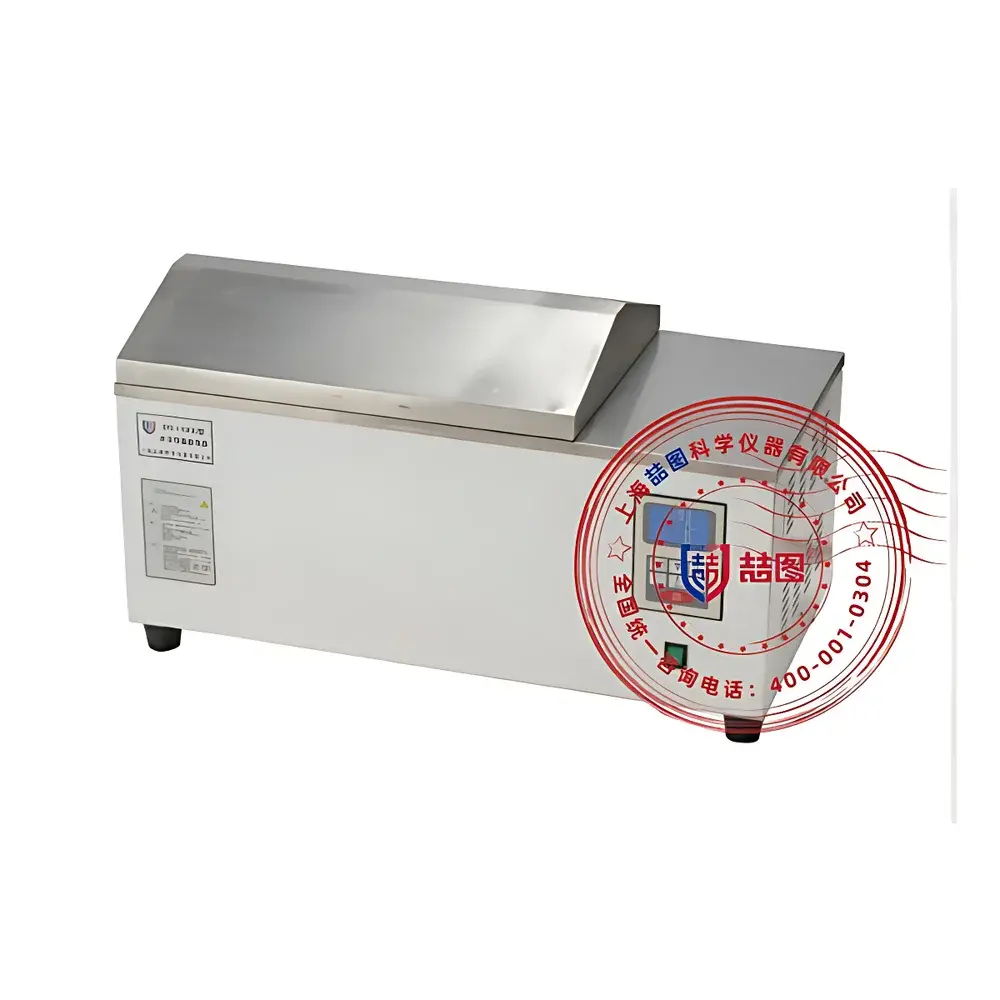
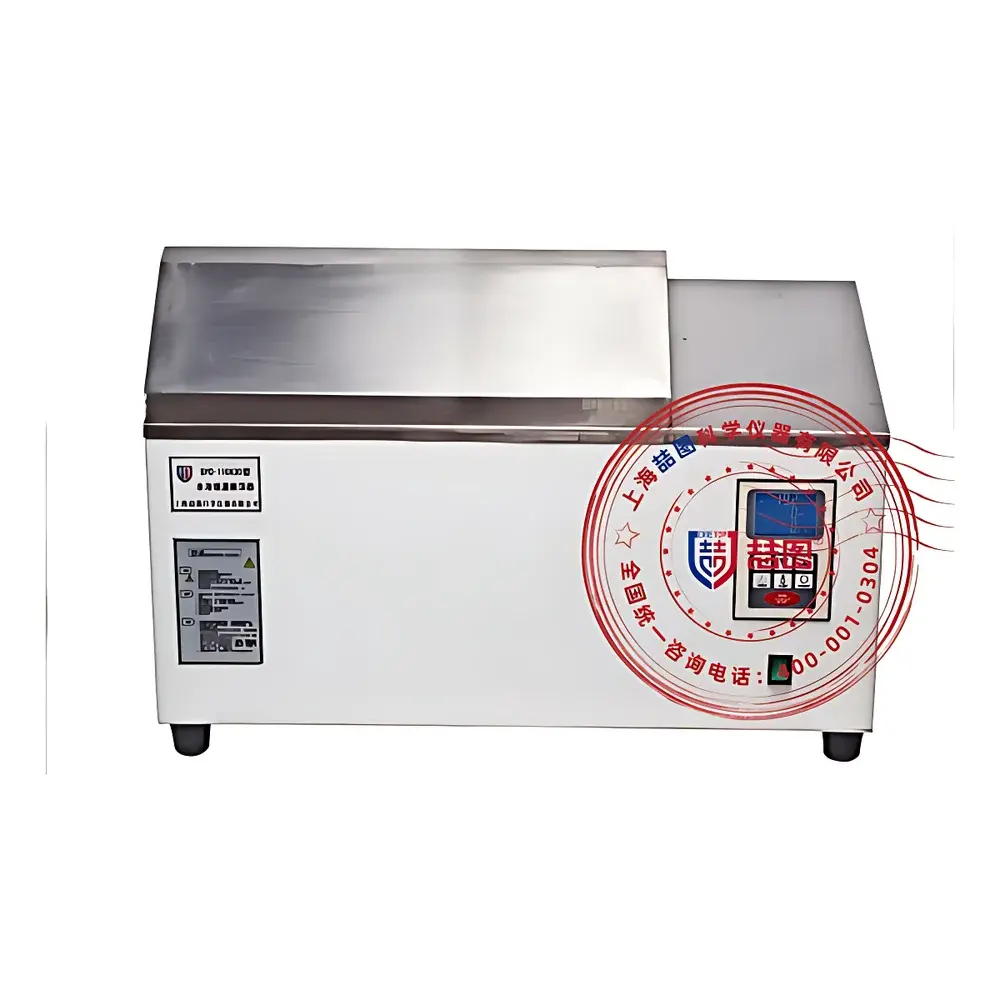
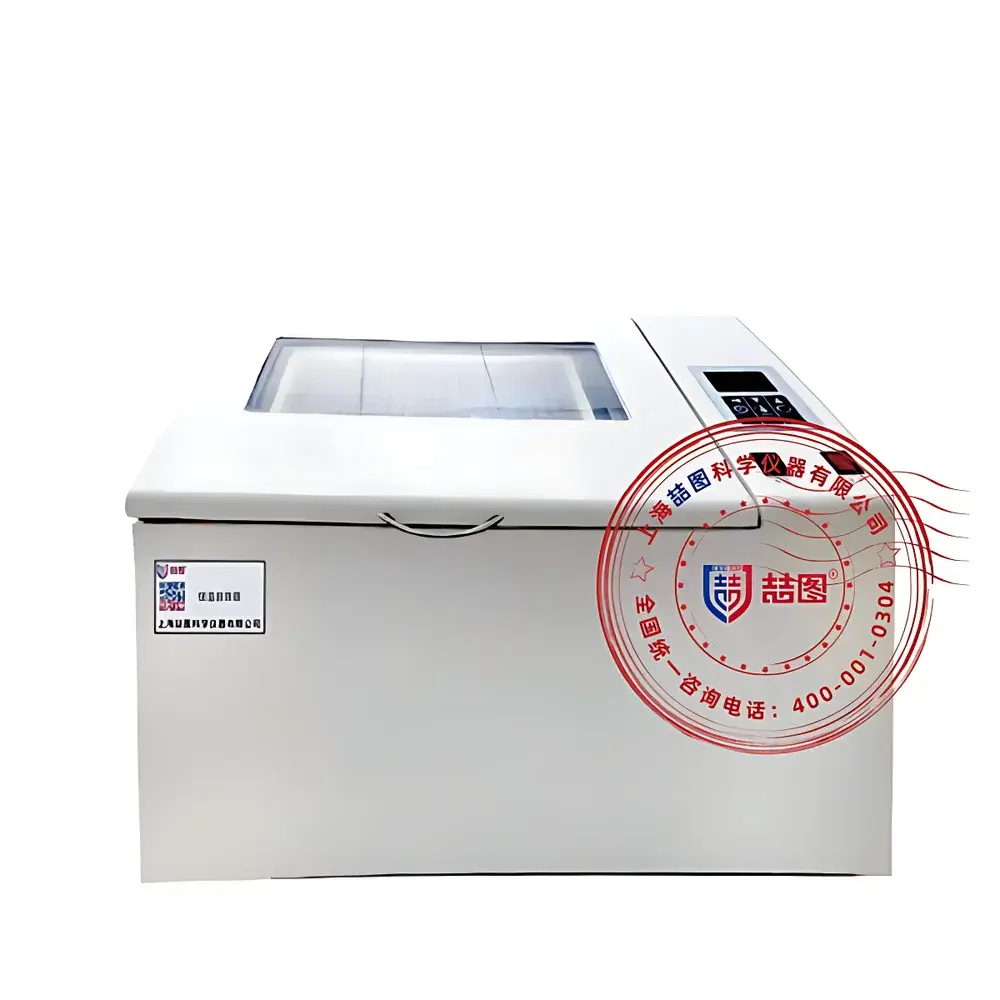
DRETOP QSK-4433RH Low-Temperature Air-Bath Orbital Shaker
| Brand | DRETOP |
|---|---|
| Origin | Shanghai, China |
| Manufacturer Type | Direct Manufacturer |
| Instrument Category | Domestic |
| Model | QSK-4433RH |
| Instrument Type | Air-Bath Constant-Temperature Orbital Shaker / Incubator Shaker |
| Timer Range | 0–9999 min |
| Oscillation Frequency | 0–300 rpm |
| Oscillation Amplitude | 26 mm |
| Temperature Range | 4–65 °C |
| Display Resolution | 0.1 °C |
| Temperature Control Accuracy | ±0.1 °C |
| Temperature Uniformity (Fluctuation) | ±0.5 °C |
| Power Input | 1000 W |
| Tray Dimensions (W × D) | 440 × 330 mm (Spring Platform) |
| Internal Chamber Dimensions (W × D × H) | 530 × 400 × 250 mm |
| External Dimensions (W × D × H) | 950 × 550 × 500 mm |
| Max Capacity | 12 × 250 mL Erlenmeyer Flasks |
Overview
The DRETOP QSK-4433RH Low-Temperature Air-Bath Orbital Shaker is a precision-engineered incubator shaker designed for simultaneous temperature-controlled incubation and orbital agitation of biological and biochemical samples. It operates on the principle of forced-air convection heating and cooling within an insulated chamber, combined with a balanced eccentric drive mechanism to deliver uniform 26 mm orbital motion. Unlike water-bath shakers, this air-bath system eliminates contamination risks associated with liquid media while enabling rapid thermal response and extended low-temperature operation down to 4 °C—critical for cold-sensitive cell cultures, enzyme kinetics, and protein expression studies. Its robust architecture supports continuous operation under GLP-compliant laboratory conditions, making it suitable for academic research labs, pharmaceutical QC environments, and clinical microbiology facilities requiring reproducible, traceable shaking protocols.
Key Features
- High-fidelity PID temperature control using Pt100 platinum resistance sensors, delivering ±0.1 °C setpoint accuracy and ±0.5 °C chamber uniformity across the full 4–65 °C range.
- LED-backlit LCD interface with real-time display of temperature, speed, elapsed time, and remaining timer duration; supports parameter deviation correction, power-failure memory, and automatic restart compensation.
- Orbital motion drive optimized for low-vibration performance at speeds from 0 to 300 rpm, minimizing shear stress on sensitive microbial or mammalian cell suspensions.
- Stainless steel 304 interior chamber and powder-coated steel exterior ensure corrosion resistance, ease of decontamination, and long-term structural integrity in high-humidity or reagent-exposed environments.
- Integrated safety suite including over-temperature cutoff, short-circuit protection, motor overload detection, and audible/visual alarm activation upon fault detection.
- Universal spring platform (440 × 330 mm) accommodates standard labware—including 250 mL Erlenmeyer flasks (up to 12 units), test tubes, culture bottles, and multi-well plates—without requiring accessory adapters.
Sample Compatibility & Compliance
The QSK-4433RH maintains stable thermal and mechanical conditions required for aerobic microbial growth (e.g., E. coli, S. cerevisiae), suspension cell culture (CHO, HEK293), enzymatic assays, solubility testing, and antigen-antibody binding kinetics. Its 4 °C minimum operating temperature enables cold-chain-compatible sample handling prior to downstream processing. The unit conforms to IEC 61010-1:2010 safety standards for laboratory electrical equipment and supports audit-ready documentation practices aligned with ISO/IEC 17025 and FDA 21 CFR Part 11 when integrated with validated LIMS or ELN systems. Chamber geometry and airflow design comply with ASTM E1753-22 guidelines for incubator shaker performance verification.
Software & Data Management
While the QSK-4433RH operates as a standalone instrument with embedded firmware, its digital interface supports manual protocol logging and timestamped parameter recording. For laboratories implementing electronic recordkeeping, the device’s stable analog/digital signal architecture permits integration with external data acquisition systems via RS-232 or optional USB-to-serial modules. All operational parameters—including start/stop events, temperature deviations exceeding ±0.3 °C, and speed anomalies—are retained in non-volatile memory for post-run review. When deployed in GMP-regulated settings, users may configure periodic calibration checks against NIST-traceable reference thermometers and tachometers to fulfill equipment qualification requirements (IQ/OQ/PQ).
Applications
- Microbial cultivation and bioprocess optimization under controlled aeration and thermal profiles.
- Protein expression in E. coli BL21(DE3) strains requiring induction at 16–25 °C to enhance soluble yield.
- Pre-analytical sample homogenization for clinical chemistry assays involving serum, plasma, or CSF specimens.
- Environmental microbiology studies involving soil slurry enrichment or wastewater biofilm development.
- Pharmaceutical stability testing per ICH Q1A(R2), including solution-state degradation kinetics under agitated, temperature-cycled conditions.
- Cell-based assay preparation for flow cytometry or ELISA workflows where consistent suspension density is critical.
FAQ
What is the lowest temperature this shaker can maintain continuously?
The QSK-4433RH is rated for sustained operation at 4 °C, verified under ambient conditions ≤25 °C and 60% RH. Performance at sub-10 °C setpoints may vary with load volume and door-opening frequency.
Does the unit support programmable multi-step protocols?
No—the QSK-4433RH features fixed-parameter operation per run. For gradient or sequence-based temperature/speed profiling, integration with external programmable controllers is recommended.
Is the spring platform compatible with microplate carriers?
Yes, standard 96-well and 24-well plate carriers can be secured directly onto the spring tray; however, plate-specific clamping accessories are not included and must be sourced separately.
How often should temperature calibration be performed?
Per ISO/IEC 17025 recommendations, initial calibration verification is advised upon installation, followed by semi-annual checks or after any physical impact or environmental relocation.
Can the unit be used inside a cold room?
Operation in ambient temperatures below 15 °C is not recommended due to potential condensation ingress and reduced compressor efficiency; internal insulation and fan design assume standard lab conditions (18–28 °C).
Related Products




