
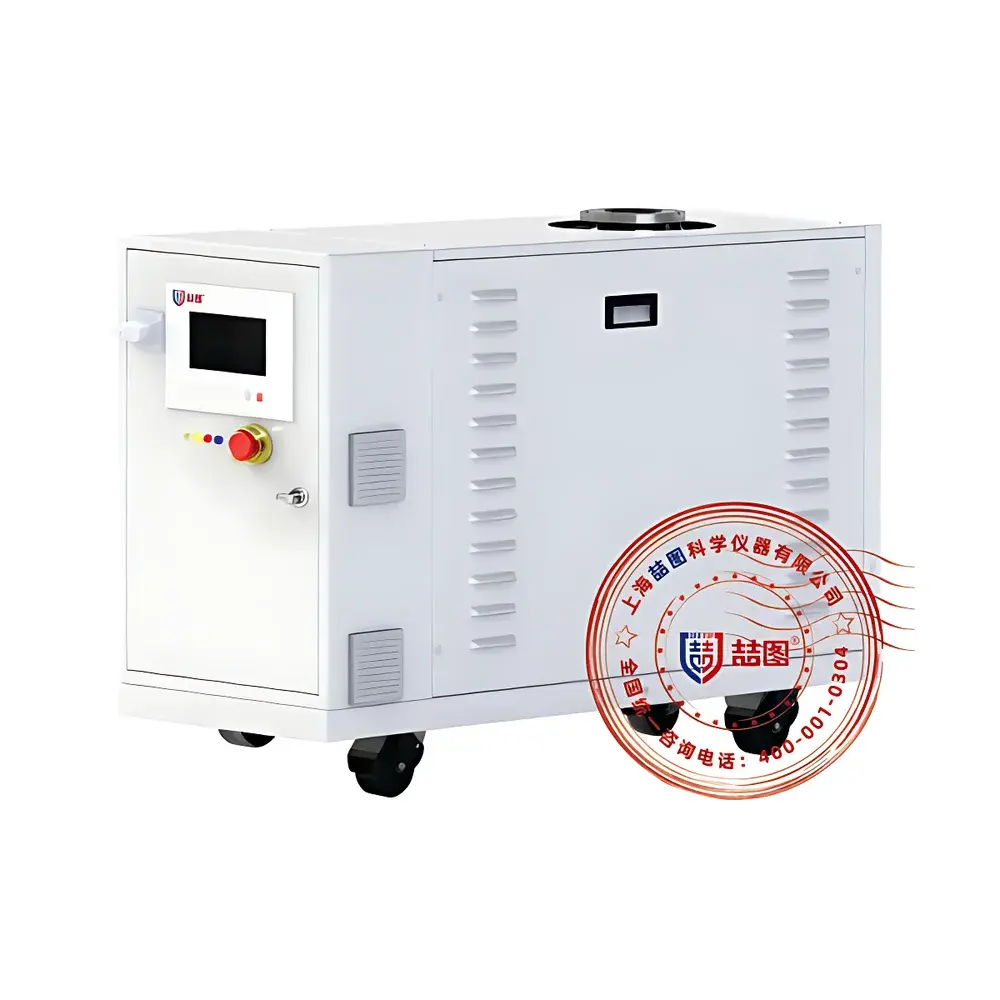
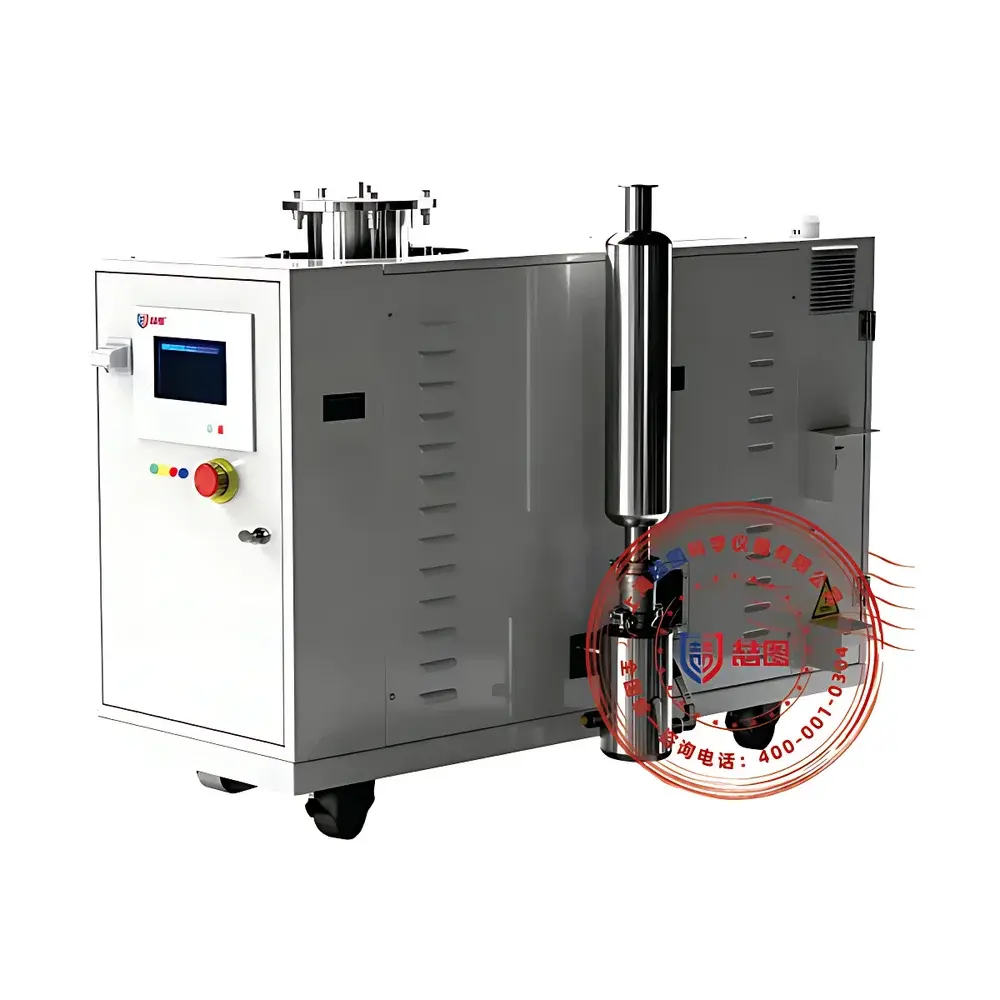
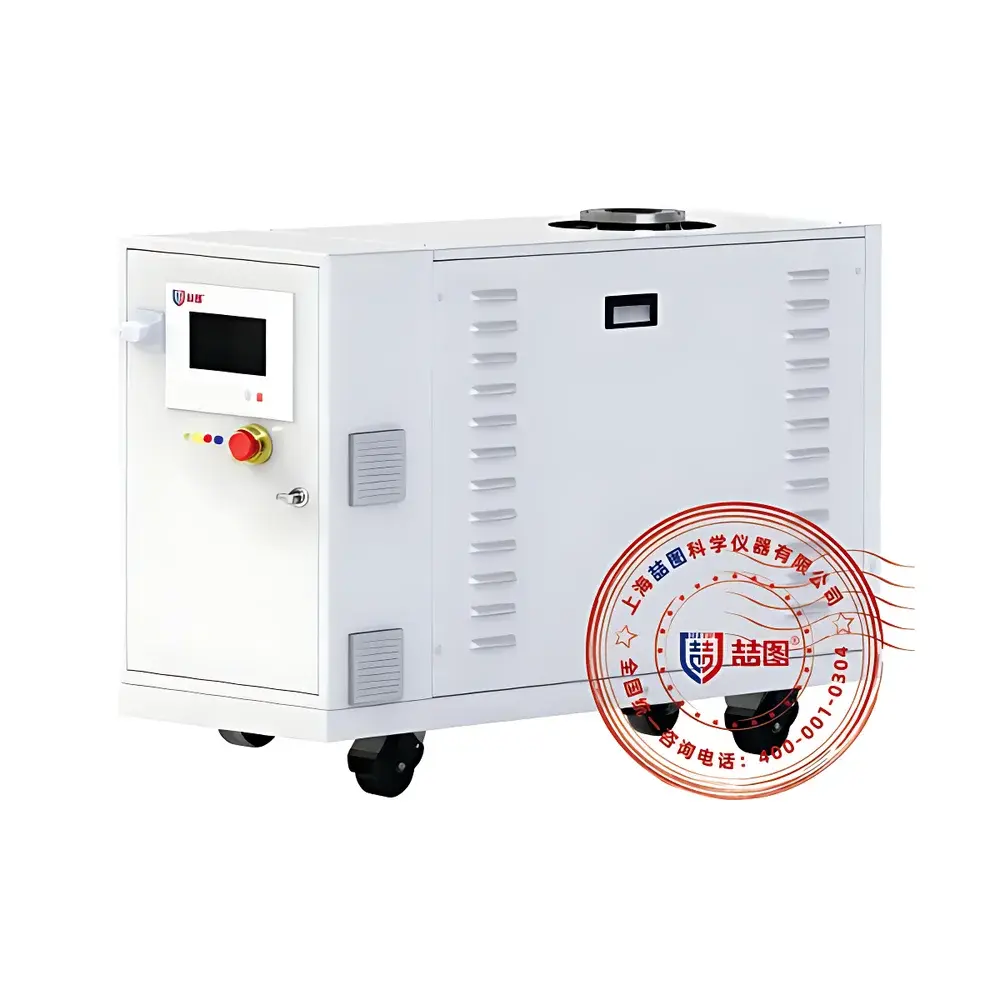
DRETOP RM-600 Dry Multi-Stage Roots Vacuum Pump System
| Brand | DRETOP |
|---|---|
| Origin | Shanghai, China |
| Manufacturer Type | OEM Manufacturer |
| Regional Category | Domestic (China) |
| Model | RM-600 |
| Instrument Type | Other Vacuum Pump System |
| Product Type | Oil-Free Vacuum Pump |
| Pumping Speed | 167 L/s |
| Ultimate Vacuum Pressure | ≤1 Pa |
| Motor Power | 4.5 / 2 kW |
Overview
The DRETOP RM-600 Dry Multi-Stage Roots Vacuum Pump System is an engineered oil-free vacuum solution designed for laboratory-scale and pilot-production applications requiring clean, stable, and controllable vacuum environments. Unlike traditional oil-sealed rotary vane or liquid-ring pumps, the RM-600 employs a multi-stage configuration combining high-efficiency Roots blowers with dry-running, non-contacting rotors—eliminating lubricant contamination and enabling reliable operation in the presence of condensable vapors, mildly corrosive gases, and low-concentration particulates. Its operational principle relies on synchronized, precision-machined Roots rotors operating in close tolerance without physical contact, delivering continuous volumetric displacement across a wide pressure range—from atmospheric down to ≤1 Pa—with minimal backstreaming and no hydrocarbon outgassing. This architecture meets the stringent purity demands of thin-film deposition (PVD/CVD), vacuum drying, thermal annealing, and semiconductor R&D workflows where residual hydrocarbons or oil mist could compromise film adhesion, surface morphology, or analytical integrity.
Key Features
- Dry, oil-free pumping mechanism ensures zero hydrocarbon contamination—critical for UHV-adjacent processes and surface-sensitive applications such as electron microscopy sample preparation or optical coating.
- Multi-stage Roots architecture provides high pumping speed (167 L/s) at medium vacuum (1–100 Pa), bridging the performance gap between roughing pumps and high-vacuum turbomolecular systems.
- Water-cooled thermal management minimizes operational temperature rise, reducing thermal drift in connected vacuum chambers and improving long-term stability during extended duty cycles.
- Robust rotor geometry with optimized clearance sealing maintains consistent performance even with trace particulates (e.g., graphite, silicon dust), avoiding clogging or accelerated wear typical of screw or scroll designs.
- Modular motor configuration (4.5 kW main drive + 2 kW auxiliary stage) enables staged startup and load-adaptive power delivery—reducing inrush current and supporting integration into PLC-controlled vacuum sequences.
- Optional nitrogen purge interface (N₂吹扫) mitigates oxidation of internal surfaces and prevents accumulation of reactive residues, extending service intervals in aggressive chemical environments.
Sample Compatibility & Compliance
The RM-600 is compatible with non-reactive, mildly corrosive, and condensable gas streams commonly encountered in academic and industrial labs—including water vapor (e.g., freeze-drying, solvent removal), organic vapors (e.g., ethanol, acetone), and inert carrier gases (N₂, Ar). For strongly acidic (e.g., HCl, HF), alkaline (e.g., NH₃), or halogenated process gases, optional corrosion-resistant coatings (e.g., nickel-phosphorus or ceramic composite) can be applied to rotor surfaces and housing internals per customer specification. The system complies with IEC 61000-6-3 (EMC emission limits) and IEC 60034-1 (rotating electrical machines). While not certified to ISO 8573-1 Class 0 for compressed air purity, its oil-free design inherently satisfies Class 0 requirements for vacuum-side cleanliness. It supports GLP-compliant vacuum process documentation when integrated with validated PLC control modules meeting FDA 21 CFR Part 11 data integrity criteria.
Software & Data Management
The RM-600 supports analog (0–10 V / 4–20 mA) and digital (RS-485 Modbus RTU) interfaces for integration into centralized lab automation platforms. When equipped with optional PLC control, it enables real-time monitoring of inlet pressure, motor current, coolant flow rate, and thermal sensor readings—loggable via timestamped CSV export or OPC UA server. Audit trails record all parameter changes, emergency stops, and maintenance alerts with user attribution and ISO 8601 timestamps, satisfying basic GxP traceability requirements. Firmware updates are performed via secure USB or Ethernet connection, with version rollback capability and SHA-256 signature verification. No proprietary cloud dependency: all data remains on-premise unless explicitly configured by the end user.
Applications
- Vacuum metallurgy R&D: degassing of reactive metal alloys (Ti, Mg) under inert atmosphere prior to arc melting or sintering.
- Thin-film research: base-pressure conditioning and process-gas evacuation for e-beam evaporation, magnetron sputtering, and ALD reactor loading.
- Pharmaceutical development: solvent recovery from lyophilization cycles and vacuum-assisted granulation where residual oil would invalidate extractables/leachables testing.
- Materials science: controlled thermal treatment (annealing, brazing) of nanostructured ceramics and battery electrode materials in oxygen-free environments.
- Electronics packaging: vacuum impregnation of conformal coatings and hermetic seal validation testing per MIL-STD-883 Method 1014.
FAQ
What vacuum level can the RM-600 achieve without a backing pump?
The RM-600 is a multi-stage Roots system and requires a primary roughing pump (e.g., dry scroll or diaphragm pump) to reach its ultimate pressure of ≤1 Pa. It cannot start from atmosphere independently.
Is the RM-600 suitable for pumping hydrogen or helium?
Yes—its high-speed Roots stages maintain effective compression ratios for light gases; however, pumping speed for He is approximately 60–70% of the rated N₂ value due to molecular mass effects.
Can the RM-600 be installed vertically?
No—mounting must be horizontal per manufacturer specifications to ensure proper rotor alignment, thermal expansion compensation, and coolant distribution.
Does the system include vibration isolation mounts?
Standard configuration includes elastomeric mounting feet; active anti-vibration platforms are available as optional accessories for ultra-low-noise environments (e.g., TEM labs).
What maintenance intervals are recommended for laboratory use?
With continuous operation at ≤80% of max speed and clean gas conditions, rotor bearing inspection is recommended every 12,000 operating hours; full service (seal replacement, alignment check) every 24,000 hours or biannually—whichever occurs first.



