
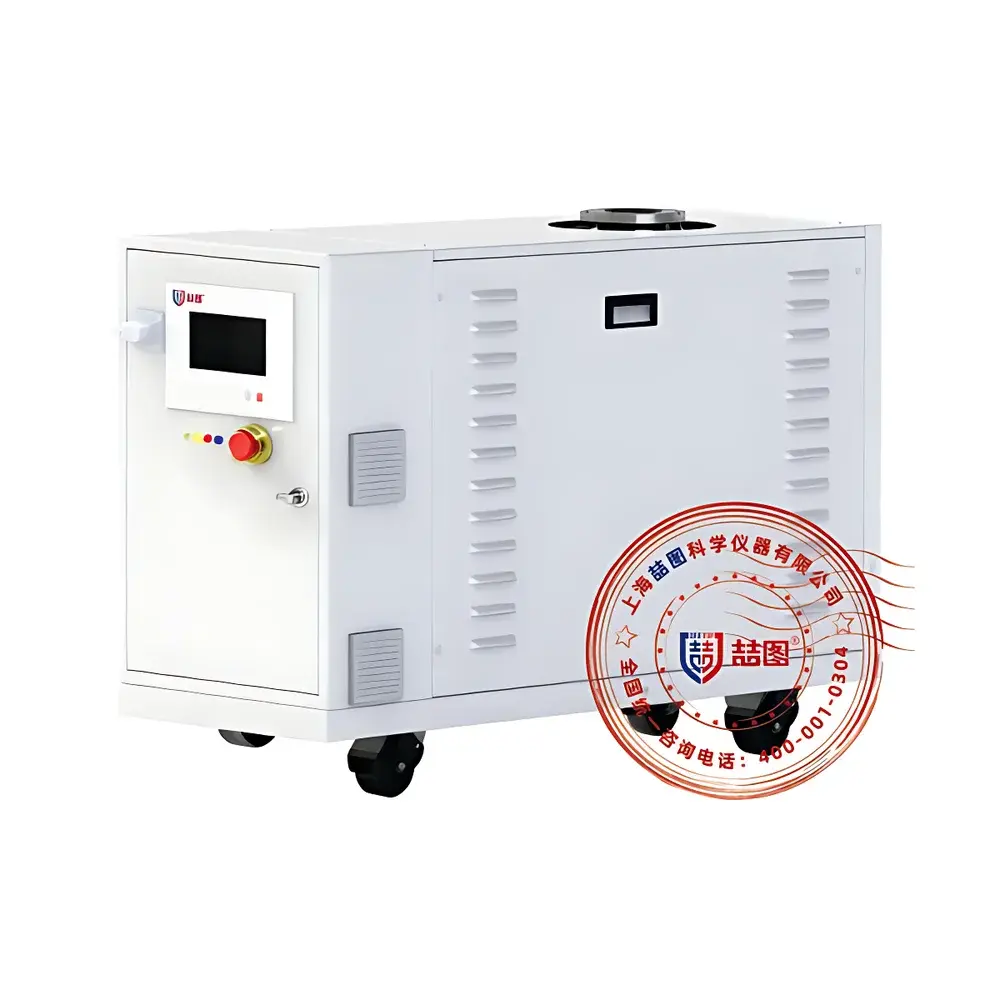
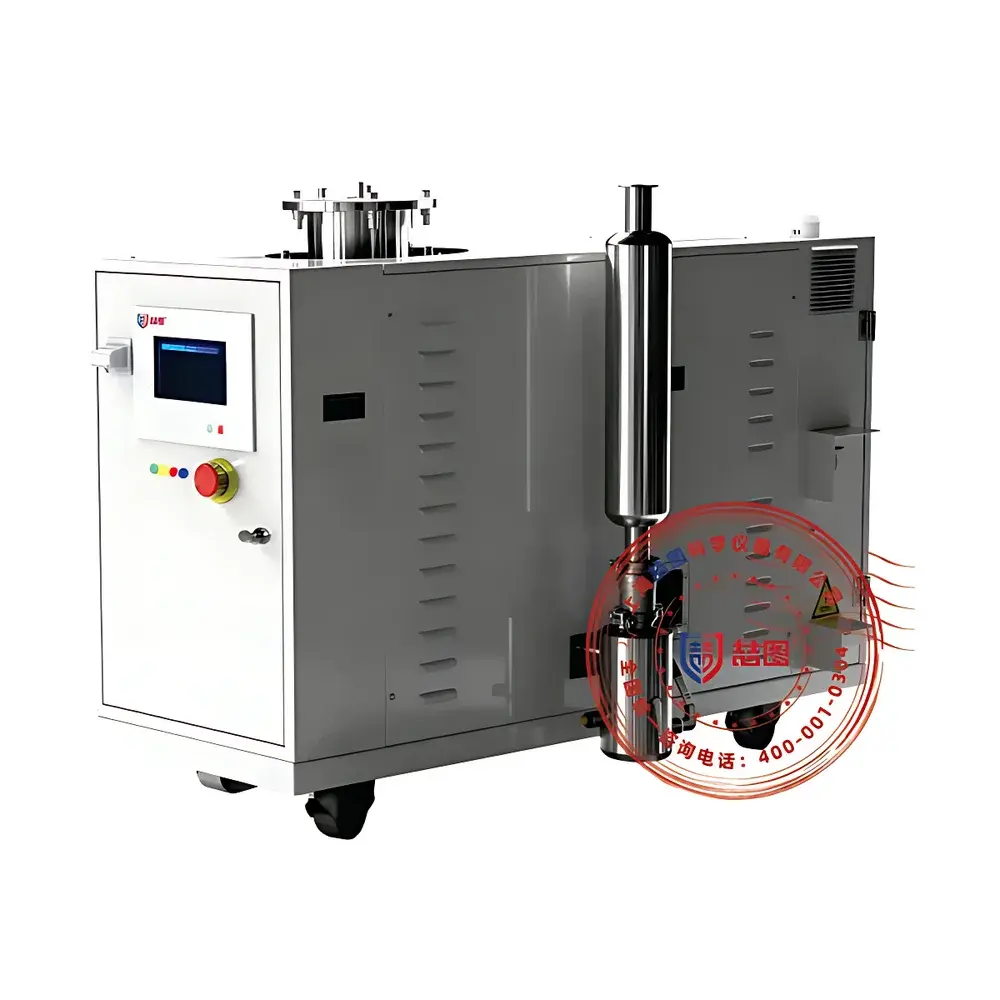
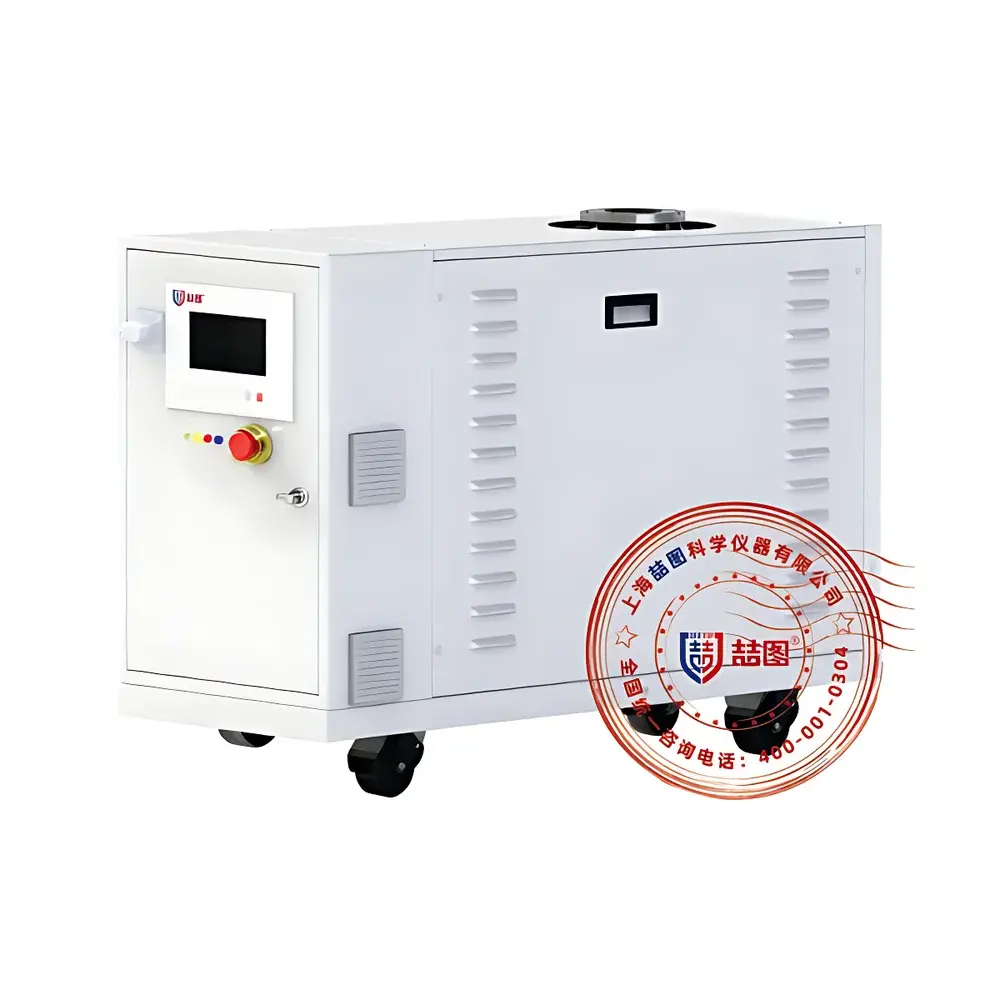
DRETOP SBJR-1200 Dry Screw–Roots Vacuum Pump System with Variable Pitch & Diameter Rotors
| Brand | DRETOP |
|---|---|
| Origin | Shanghai, China |
| Manufacturer Type | Direct Manufacturer |
| Regional Category | Domestic (China) |
| Model | SBJR-1200 |
| Instrument Type | Other Vacuum Pump Systems |
| Product Type | Oil-Free Vacuum Pump |
| Pumping Speed | 333 L/s |
| Ultimate Pressure | ≤0.1 Pa |
| Motor Power | 4.5 / 4.5 kW |
Overview
The DRETOP SBJR-1200 is a high-performance, oil-free vacuum pump system integrating a variable-pitch and variable-diameter dry screw pump with a robust roots booster stage. Engineered for demanding industrial and laboratory vacuum applications, it operates on the principle of positive displacement via non-contacting, precisely machined screw rotors—eliminating lubricants from the gas path and ensuring contamination-free vacuum environments. Unlike conventional oil-sealed rotary vane or liquid-ring pumps, the SBJR-1200 delivers clean, dry vacuum across a wide operating range—from atmospheric pressure down to ≤0.1 Pa—without oil carryover, vapor backstreaming, or hydrocarbon residue. Its dual-stage architecture enables rapid evacuation of large-volume chambers while maintaining thermal stability and low exhaust temperature, making it especially suitable for processes sensitive to particulate generation, condensable vapors, or corrosive process gases.
Key Features
- Variable-Pitch & Variable-Diameter Screw Technology: Optimized rotor geometry reduces internal compression losses, lowers operating temperature, and improves energy efficiency by up to 20% compared to fixed-pitch equivalents—critical for continuous-duty applications in lithium-ion battery manufacturing, semiconductor thin-film deposition, and pharmaceutical freeze-drying.
- Oil-Free, Dry Operation: Entire gas path is free of lubricating oils; no oil mist, no hydrocarbon outgassing, and zero risk of product contamination—essential for ISO Class 5+ cleanrooms and FDA-regulated GMP facilities.
- Corrosion-Resistant Surface Options: Optional plasma-sprayed ceramic or nickel-based alloy coatings (e.g., NiCrBSi, Al₂O₃) on rotors and housing enable reliable operation with aggressive media including HCl, HF, NH₃, SO₂, and organic solvents—validated per ASTM B117 salt-spray testing.
- Integrated Water-Cooled Thermal Management: Closed-loop cooling system maintains rotor surface temperatures below 80 °C under full load, minimizing thermal expansion-induced clearance drift and extending bearing life beyond 30,000 hours (MTBF).
- Dust-Tolerant Architecture: Straight-through gas path and optimized inter-stage gap design reduce particle accumulation; compatible with optional nitrogen purge (N₂ blowdown) for silicon powder, graphite dust, or metal oxide particulates—common in CVD, ALD, and sintering processes.
- Low-Vibration & Low-Noise Design: Dynamic rotor balancing (G2.5 grade per ISO 1940-1) combined with multi-layer elastomeric mounting yields vibration <0.5 mm/s RMS and acoustic noise ≤68 dB(A) at 1 m—meeting stringent requirements for metrology labs and R&D cleanrooms.
Sample Compatibility & Compliance
The SBJR-1200 is certified for handling non-explosive, non-radioactive process gases containing condensables (e.g., water vapor, solvent vapors), fine particulates (<50 µm), and moderately corrosive compounds. It complies with CE Machinery Directive 2006/42/EC, RoHS 2011/65/EU, and meets electromagnetic compatibility (EMC) requirements per EN 61000-6-2/-4. For regulated environments, the system supports integration with audit-trail-capable PLC controllers compliant with FDA 21 CFR Part 11 when paired with validated SCADA software. All wetted materials—including stainless steel 316L housing, Hastelloy C-276 rotor shafts (optional), and FKM/Viton® seals—conform to USP Class VI and EP 3.1.11 extractables testing protocols.
Software & Data Management
The standard configuration includes a programmable logic controller (PLC) with Modbus TCP/IP and RS-485 interfaces for seamless integration into factory automation networks (OPC UA-ready). Real-time monitoring covers inlet/outlet pressure (via calibrated Pirani + capacitance manometers), motor current, coolant flow rate, and bearing temperature. Data logging is configurable to local SD card or cloud-hosted time-series databases (e.g., InfluxDB), with export in CSV/Excel formats for QA documentation. Optional validation packages include IQ/OQ documentation templates aligned with ISO 9001:2015 and GAMP 5 guidelines—supporting equipment qualification in pharmaceutical and medical device manufacturing.
Applications
- Semiconductor & Thin-Film Processing: High-throughput pumping for PVD, CVD, and ALD tools requiring stable base pressures <1×10⁻¹ Pa and immunity to halogenated precursors.
- Lithium-Ion Battery Manufacturing: Electrode drying ovens, electrolyte filling chambers, and formation cell evacuation—where hydrocarbon-free vacuum prevents SEI layer degradation.
- Pharmaceutical Freeze-Drying: Continuous primary drying under ≤0.1 Pa with minimal water vapor load on the pump; integrated condensate management reduces ice buildup.
- Vacuum Metallurgy & Heat Treatment: Brazing, sintering, and annealing furnaces processing reactive metals (Ti, Mg, Zr) without oxygen or oil contamination.
- Research & Development Labs: Multi-chamber UHV systems (when backed by turbomolecular pumps), electron microscopy sample prep, and accelerator beamline vacuum maintenance.
FAQ
What is the maximum allowable particulate concentration for continuous operation?
The SBJR-1200 is rated for continuous duty with airborne particulates ≤10 mg/m³ (ISO 12103-1 A4 test dust); optional N₂ purge extends tolerance to 50 mg/m³ in controlled environments.
Can this system be used as a standalone roughing pump for turbomolecular pumps?
Yes—its ≤0.1 Pa ultimate pressure and 333 L/s speed make it suitable as a forepump for TMUs with compression ratios >10⁶; recommended minimum foreline pressure: 10 Pa.
Is the system compatible with automated process recipes?
Fully compatible—PLC interface supports recipe-driven ramp rates, pressure setpoints, and interlock sequences (e.g., pump start delay after chamber venting).
What maintenance intervals are recommended under 24/7 operation?
Rotors and bearings require inspection every 12,000 operating hours; coolant filter replacement every 6 months; N₂ purge filters every 3 months in dusty environments.
Does DRETOP provide installation support and commissioning services?
Yes—factory-trained engineers offer remote diagnostics, on-site commissioning, and FAT/SAT documentation per client-specified protocols (ASME BPE, SEMI E10).



