
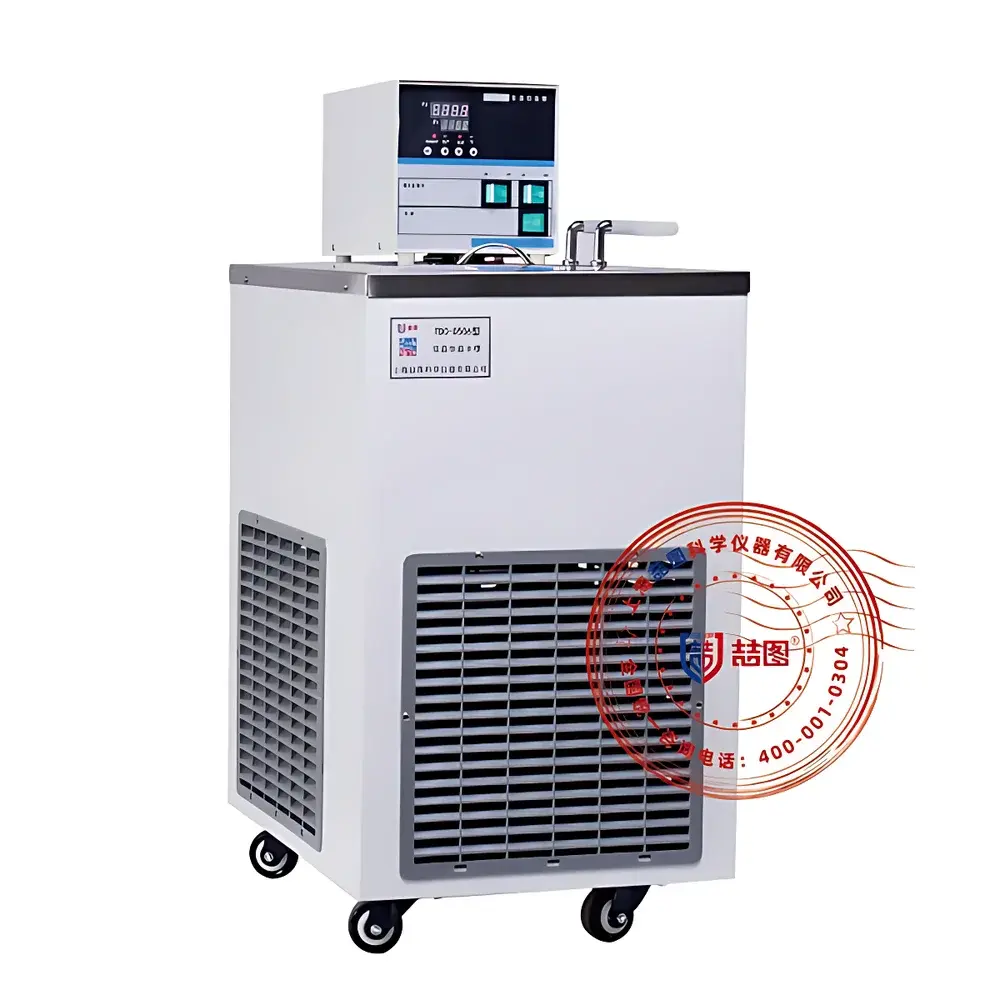
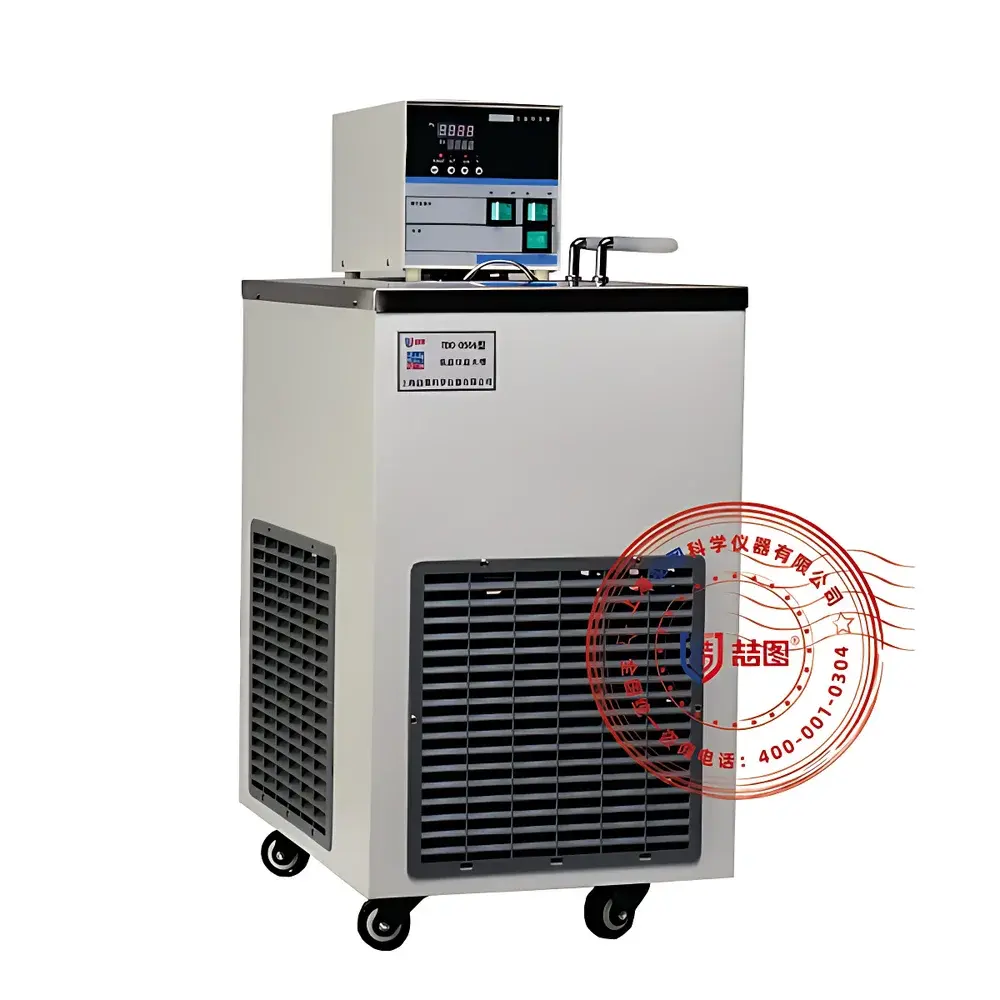
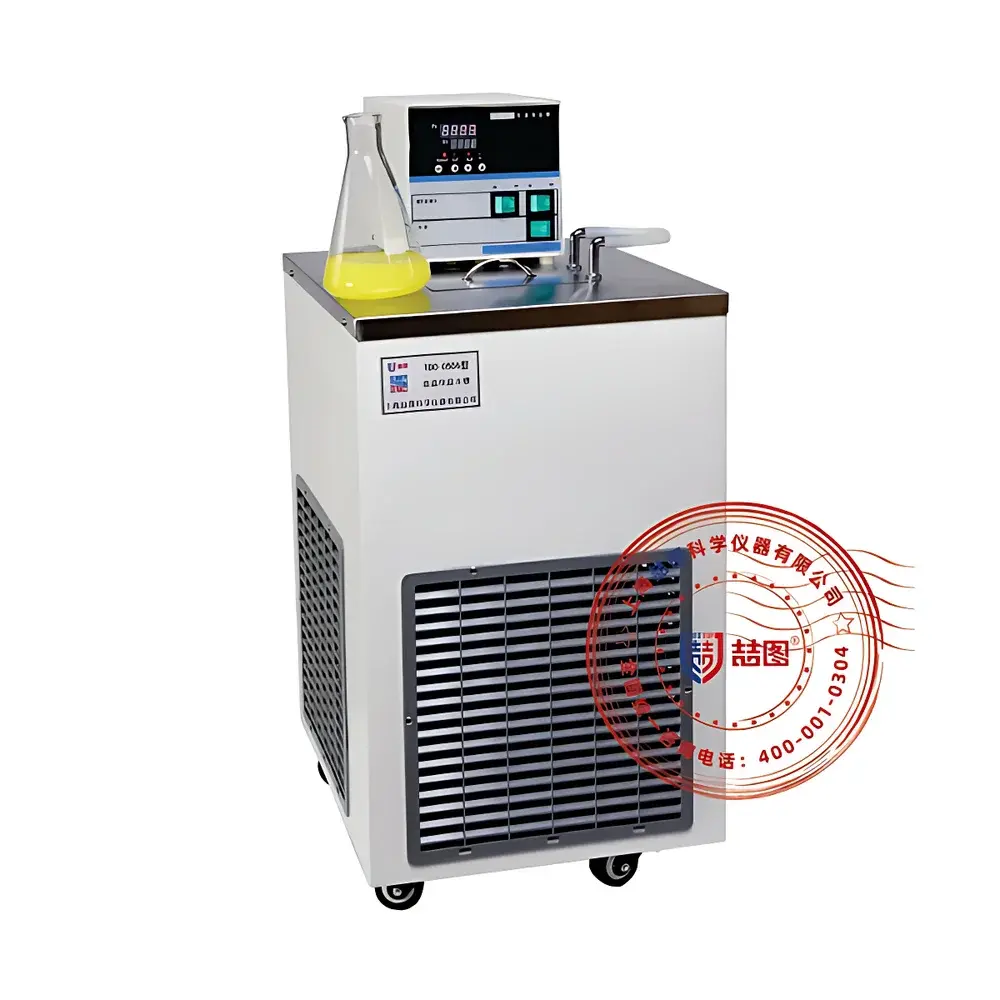
DRETOP TDC-1010M High-Precision Low-Temperature Circulating Bath
| Brand | DRETOP |
|---|---|
| Origin | Shanghai, China |
| Model | TDC-1010M |
| Bath Volume | 10 L |
| Temperature Range | −10 °C to 100 °C |
| Temperature Stability | ±0.005 °C |
| Temperature Resolution | ±0.001 °C |
| Control Method | PID-based digital temperature control |
| Circulation Type | Internal recirculation (external circulation configurable) |
| Heating/Cooling Mode | Integrated thermoelectric + compressor-based dual-mode |
| Construction | 304 stainless steel tank and work surface |
| Power Supply | AC 220 V |
| Safety Protections | Over-temperature alarm, low-level fluid detection, compressor overheat & overcurrent protection, power-fail memory |
Overview
The DRETOP TDC-1010M High-Precision Low-Temperature Circulating Bath is an engineered thermal management system designed for laboratories requiring stringent temperature control across a broad operational range (−10 °C to 100 °C). Unlike standard thermostatic baths, the TDC-1010M integrates a high-efficiency refrigeration circuit with precision resistive heating and a zero-heat-generation centrifugal circulation pump—enabling sub-millikelvin thermal stability (±0.005 °C) and resolution down to ±0.001 °C. Its measurement architecture relies on dual-sensor feedback (PT100 platinum resistance thermometers) with real-time PID algorithm optimization, ensuring minimal overshoot and rapid thermal equilibration. The unit operates as both a direct immersion environment and a remote temperature source—supporting external jacketed reactors, condensers, synthesis modules, and analytical instrumentation via configurable inlet/outlet ports. As a Class I laboratory-grade circulating bath, it meets foundational requirements for ISO/IEC 17025-compliant calibration workflows and GLP-regulated material testing.
Key Features
- High-resolution 4.3-inch capacitive touchscreen interface with intuitive menu navigation and programmable ramp-soak profiles
- 304 stainless steel bath chamber and top plate—corrosion-resistant, non-porous, and compatible with aqueous, glycolic, alcoholic, and silicone-based heat transfer fluids
- Dual-mode thermal regulation: hermetically sealed scroll compressor for sub-ambient cooling + high-stability ceramic heating elements for precise above-ambient control
- Zero-heat-addition circulation: brushless DC centrifugal pump eliminates self-heating artifacts, preserving bath uniformity (±0.005 °C spatial deviation)
- U-shaped multi-orifice internal flow path ensures turbulent, homogeneous fluid dynamics—validated per ASTM E2251 for thermal uniformity in liquid baths
- Integrated drain valve and dual quick-connect fluid ports (inlet/outlet) support rapid medium exchange and seamless transition between internal and external circulation modes
- Comprehensive safety suite: hardware-level over-temperature cutoff, fluid level sensor with auto-shutdown, compressor thermal overload protection, and brownout recovery memory
Sample Compatibility & Compliance
The TDC-1010M is compatible with a wide spectrum of sample containment formats—including glass beakers, metal reaction vessels, jacketed columns, and OEM-integrated analytical platforms (e.g., viscometers, spectrophotometer cuvette holders, calorimeter cells). Its open-bath geometry (180 × 140 mm aperture) accommodates standard labware up to 150 mm in height. Fluid compatibility adheres to standard thermal bath material guidelines: deionized water (5–80 °C), 30–50% ethylene glycol/water mixtures (−10–100 °C), anhydrous ethanol (≥99.5%, −80–20 °C), or specialty low-volatility synthetic heat transfer fluids (e.g., polyalkylene glycols). All wetted surfaces comply with USP Class VI biocompatibility standards and exhibit no leachable metals per ASTM F2129. The unit supports audit-ready operation under FDA 21 CFR Part 11 when paired with validated third-party data logging software.
Software & Data Management
While the TDC-1010M operates autonomously via its embedded controller, optional RS485/Modbus RTU and USB-B interfaces enable integration into centralized lab automation systems (LIMS, SCADA). Real-time temperature logs—with timestamps, setpoint history, and alarm event flags—are exportable as CSV files. Firmware supports user-defined calibration offsets (per ISO 17025 Clause 6.5.2) and maintains traceable instrument configuration records. For regulated environments, optional 21 CFR Part 11-compliant software packages provide electronic signatures, role-based access control, and immutable audit trails—fully aligned with GMP/GLP documentation requirements for QC labs in pharmaceutical, biotech, and materials science sectors.
Applications
- Calibration of reference thermometers, RTDs, and thermocouples per ISO/IEC 17025 and ASTM E74
- Temperature-controlled kinetic studies in physical chemistry and catalysis research
- Stability testing of polymers, adhesives, and coatings under ISO 2812-3 and ASTM D2245 protocols
- Thermal conditioning of optical components, semiconductor wafers, and MEMS devices prior to metrology
- Supporting chilled mirror hygrometers, differential scanning calorimeters (DSC), and dynamic mechanical analyzers (DMA)
- QC/QA validation of temperature-sensitive reagents, vaccines, and biologics per USP and Ph. Eur. 2.2.44
FAQ
What heat transfer fluids are recommended for operation at −10 °C?
Ethylene glycol/water (1:1 v/v) is optimal—providing a freezing point of ≈−35 °C while maintaining low viscosity and minimal corrosion risk toward 304 stainless steel.
Can the TDC-1010M sustain ±0.005 °C stability during external circulation?
Yes—when configured with insulated tubing ≤3 m in length and flow rates ≤2 L/min, stability remains within specification; extended loops require auxiliary insulation and flow calibration.
Is the unit suitable for use with flammable solvents like ethanol?
It may be used with anhydrous ethanol only in well-ventilated areas, with ignition sources excluded; the bath lacks ATEX certification and is not rated for continuous operation above 20 °C with alcohol-based media.
How often should the heat transfer fluid be replaced?
Deionized water: every 3–6 months; glycol solutions: annually or upon visible discoloration/microbial growth; synthetic fluids: every 18–24 months or per manufacturer’s viscosity specification.
Does the TDC-1010M support protocol-driven temperature ramps?
Yes—the onboard controller allows up to 10 multi-step programs with independent ramp rates (0.1–10 °C/min), soak durations (1 min–99 h 59 min), and cycle repeats—exportable for SOP alignment.



