
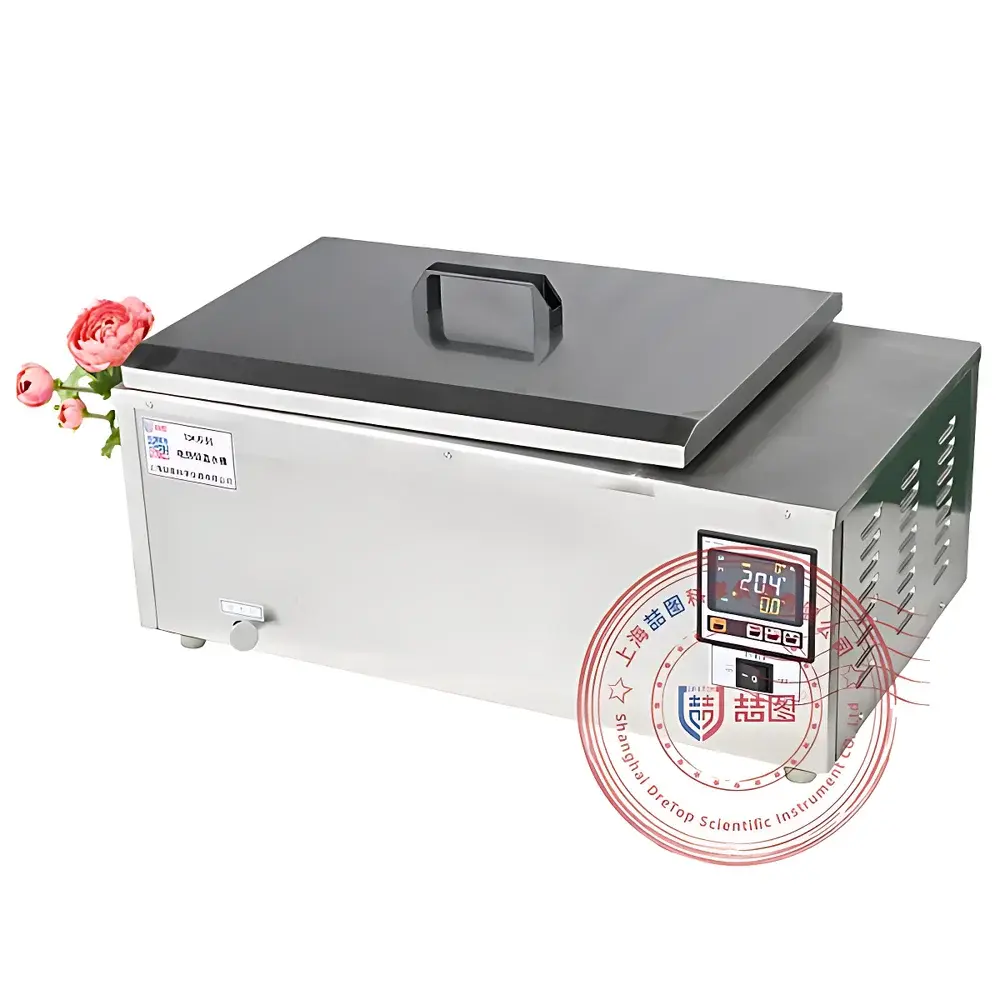
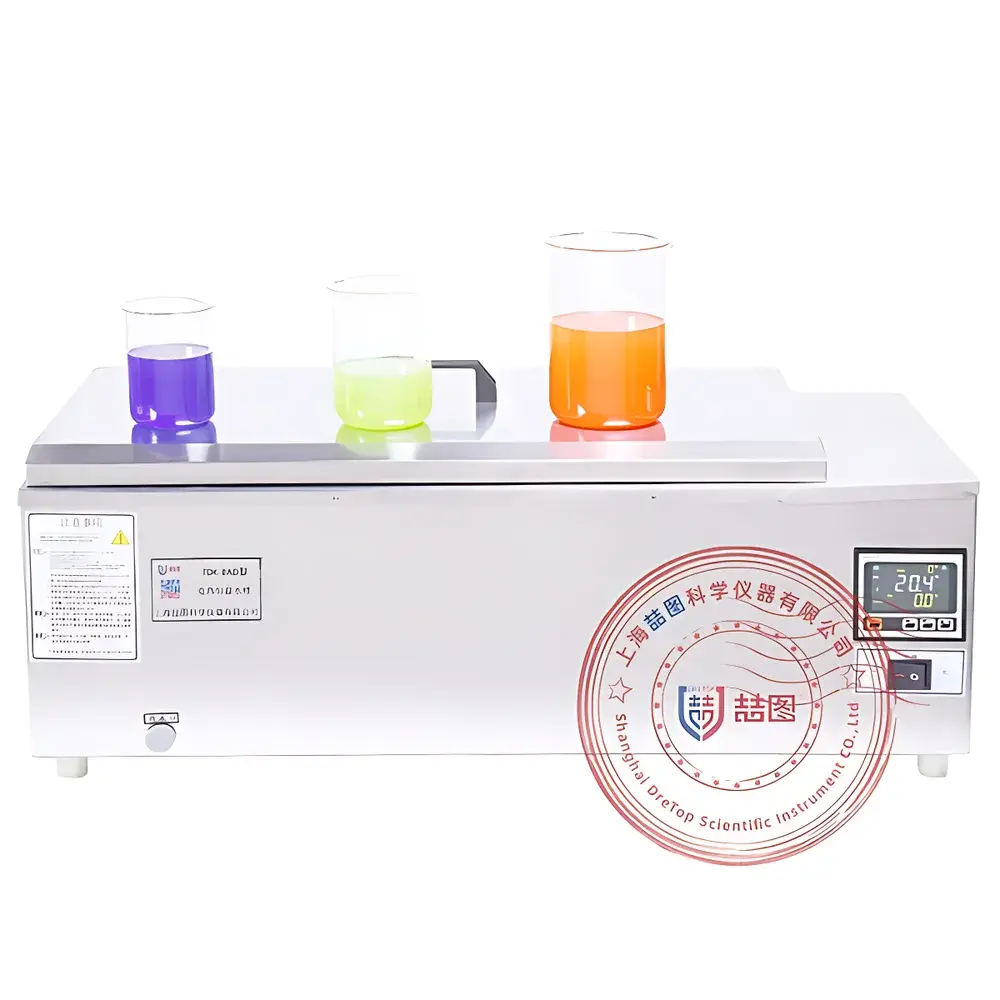
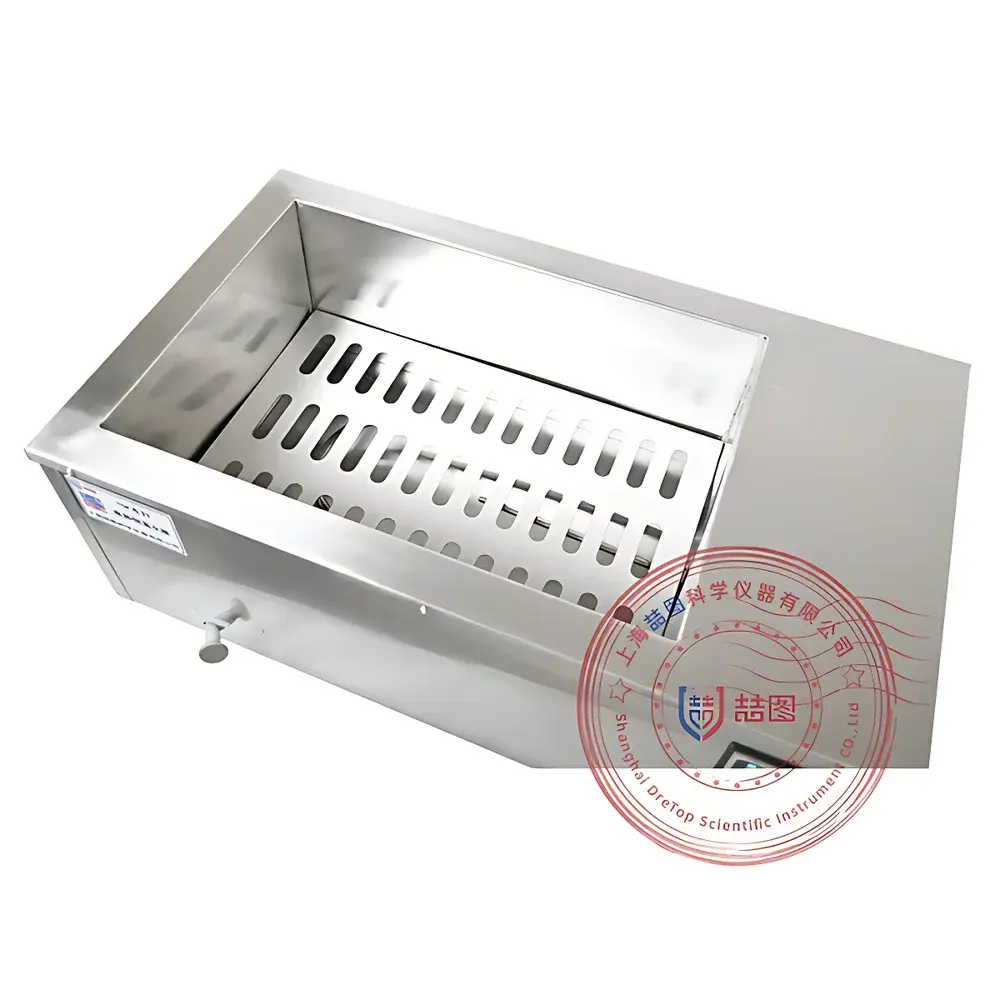
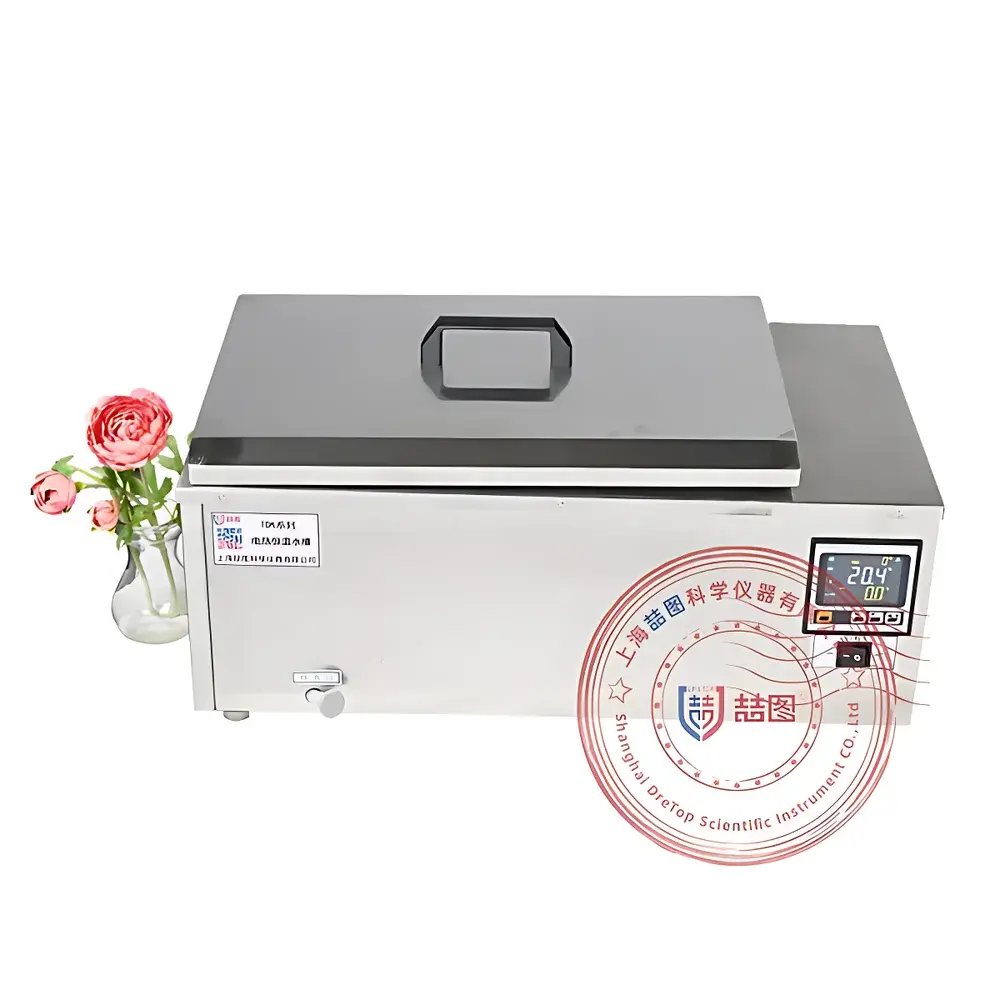
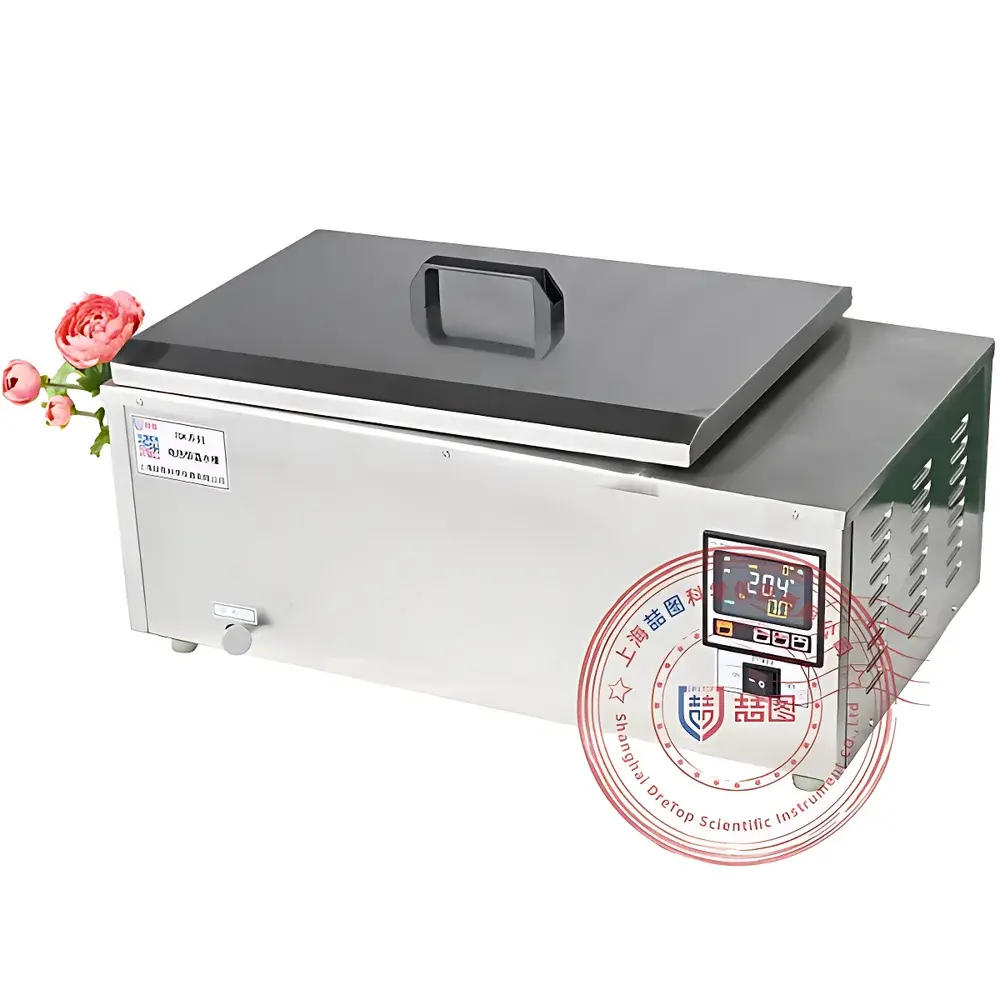
DRETOP TDK-36R Low-Temperature Constant-Temperature Water Bath
| Brand | DRETOP |
|---|---|
| Origin | Shanghai, China |
| Manufacturer Type | Authorized Distributor |
| Product Category | Domestic |
| Model | TDK-36R |
| Price Range | USD 590 – 910 |
| Temperature Range | 0–100 °C (standard operation 5–100 °C) |
| Inner Chamber Dimensions | 300 mm × 300 mm × 400 mm (W×D×H) |
| Bath Depth | 400 mm |
| Visual Chamber | Transparent Front Panel |
| Construction | 304 Stainless Steel Interior & Lid, Electrostatically Sprayed Steel Exterior |
| Heating System | Submersible Sealed Immersion Heater |
| Control System | Microprocessor-Based PID Controller with LED Display, Timer Function, Auto-Tuning |
| Safety Features | Dry-run Protection (Water Level Sensor), Over-Temperature Alarm & Cut-off, Power-Fail Parameter Memory, Auto-Recovery on Power Restoration |
| Optional | Integrated Circulation Pump (for Uniform Temperature Distribution), R-Series Compressor Cooling Module (for sub-ambient operation down to –10 °C), 30-Stage Programmable Temperature Ramp Profile, Auto-Fill Kit (external water source required) |
Overview
The DRETOP TDK-36R Low-Temperature Constant-Temperature Water Bath is a precision thermal management instrument engineered for laboratory environments requiring stable, uniform, and programmable liquid-phase temperature control across a broad operational range (0–100 °C). Unlike basic heating baths, the TDK-36R integrates thermodynamic design principles—such as optimized heat transfer via submersible sealed heaters, multi-layer insulated chamber walls, and optional forced circulation—to minimize thermal gradients and ensure spatial temperature uniformity within ±0.1 °C under steady-state conditions. Its architecture supports both passive immersion applications (e.g., enzyme incubation, sample equilibration) and active thermal coupling with external devices—including jacketed reactors, condensers, and analytical instrumentation—making it suitable for GLP-compliant quality control labs, academic research facilities, and pilot-scale process development settings.
Key Features
- Microprocessor-driven PID temperature controller with auto-tuning capability, delivering high reproducibility and long-term stability (±0.05 °C setpoint accuracy at 37 °C, typical)
- Large-format LED display with intuitive menu navigation, real-time temperature readout, and integrated timer function for timed experiments or unattended operation
- 304 stainless steel interior and lid—electropolished and laser-cut—resistant to corrosion from aqueous buffers, saline solutions, and mild organic solvents; seamless welds prevent microbial entrapment
- Multi-layer insulation system including vacuum-gap side panels and silicone-gasketed transparent front panel, minimizing heat loss and enabling visual monitoring without compromising thermal integrity
- Dual-safety architecture: embedded water level sensor triggers immediate heater shutdown and audible alarm upon low-fluid detection; independent over-temperature cutoff circuit interrupts power if sensor drift exceeds preset deviation threshold
- Modular expansion support: optional integrated circulation pump ensures ≤0.2 °C axial/radial gradient in full-volume operation; R-series compressor module enables continuous sub-zero operation (–10 °C to 100 °C) when paired with compatible coolant
Sample Compatibility & Compliance
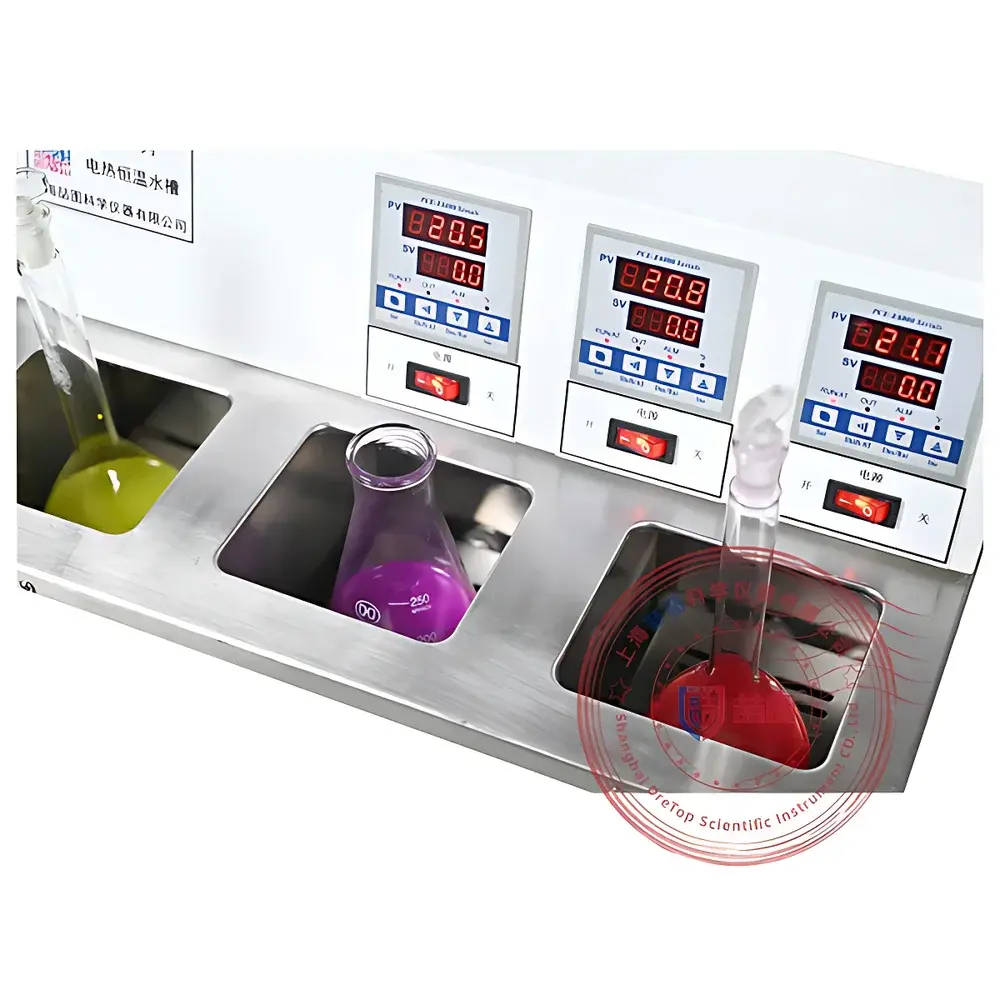
The TDK-36R accommodates a wide variety of sample formats—including glassware (Erlenmeyer flasks, beakers, test tubes), bioreactor vessels, and jacketed reaction systems—within its 300 × 300 × 400 mm working volume. Its non-reactive 304 stainless steel bath chamber complies with ISO 8573-1 (compressed air purity) for cleanroom-adjacent use and meets material compatibility requirements outlined in USP for depyrogenation validation support. While not intrinsically certified for IEC 61010-1, the unit conforms to Class II electrical safety standards when operated within specified ambient conditions (15–30 °C, <80% RH non-condensing). All firmware versions include audit-trail-capable event logging (power cycles, alarms, setpoint changes), supporting alignment with FDA 21 CFR Part 11 when deployed with validated networked data capture software.
Software & Data Management
Standard configuration includes local parameter storage with non-volatile memory—retaining user-defined setpoints, timer values, and PID coefficients after power interruption. Optional RS-485/Modbus RTU interface enables integration into centralized lab automation platforms (e.g., LabVantage, Thermo Fisher SampleManager). For advanced thermal profiling, the 30-stage programmable controller (optional) supports ramp-hold sequences with slope resolution of 0.1 °C/min and hold duration up to 99 hours 59 minutes per segment—ideal for accelerated stability testing per ICH Q1A(R3) guidelines. Raw temperature logs (1-second sampling interval) export via USB to CSV format, compatible with JMP, MATLAB, and Python-based statistical analysis workflows.
Applications
- Biological: Enzyme kinetics assays, cell culture media pre-warming, DNA hybridization protocols, and cryoprotectant equilibration at controlled sub-physiological temperatures
- Chemical: Reflux condensation support, solvent extraction temperature control, polymer dissolution studies, and calorimetric reference baths for DSC calibration
- Pharmaceutical: Dissolution apparatus water bath compliance (USP ), endotoxin assay temperature staging, and lyophilization cycle development
- Materials Science: Thermal aging of composites, viscosity standardization baths for rotational rheometers, and coefficient-of-expansion measurements using dilatometry fixtures
- Environmental: BOD incubation at 20 °C per APHA Standard Methods 5210B, and sediment toxicity bioassays requiring precise thermal regulation
FAQ
What is the recommended working fluid for optimal longevity and performance?
Deionized water (≥18.2 MΩ·cm resistivity) or ASTM Type III reagent water is strongly recommended. Tap water introduces scale-forming ions (Ca²⁺, Mg²⁺) that accelerate heater fouling and impair sensor response time.
Can the TDK-36R operate continuously at 4 °C without the R-series cooling module?
No. The base model lacks active refrigeration; ambient-cooled operation below ~15 °C is unreliable and thermally unstable. Sub-ambient capability requires factory-installed compressor-based R-series retrofit.
Is dry-run protection active during startup?
Yes. The water level sensor initiates continuous monitoring immediately upon power-on, preventing heater activation unless minimum fill level is detected.
Does the circulation pump option meet ISO 17025 traceability requirements?
The pump itself does not require calibration, but flow rate verification (using calibrated flowmeter) is advised annually as part of laboratory equipment qualification per ISO/IEC 17025:2017 Clause 6.4.3.
How often should descaling maintenance be performed when using deionized water?
Under normal usage with ≥18.2 MΩ·cm water, no routine descaling is necessary. Annual inspection of heater surface and sensor mounting points is sufficient for preventive maintenance planning.



